
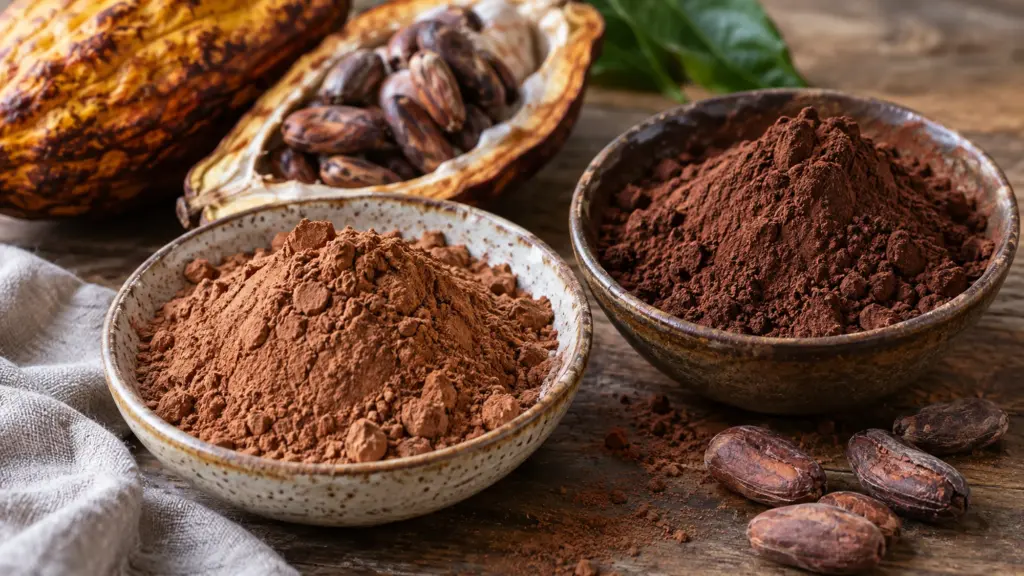
Two brown powders, two similar names, and a brownie recipe waiting on the counter: the cacao vs cocoa question can make a simple shopping trip surprisingly confusing. The useful distinction is usually how a product was processed and what you want it to do.
Cacao and cocoa come from the same cacao bean, and their names overlap. “Cacao” does not automatically mean raw or more nutritious. For baking, check whether the powder is natural or Dutch-process, whether it is unsweetened, and which kind your recipe specifies.
I prefer treating the front of the package as an introduction and the ingredient list as the explanation. That approach leaves more room for good chocolate flavor and less room for expensive guesswork.
Cacao vs cocoa: what do the names mean?
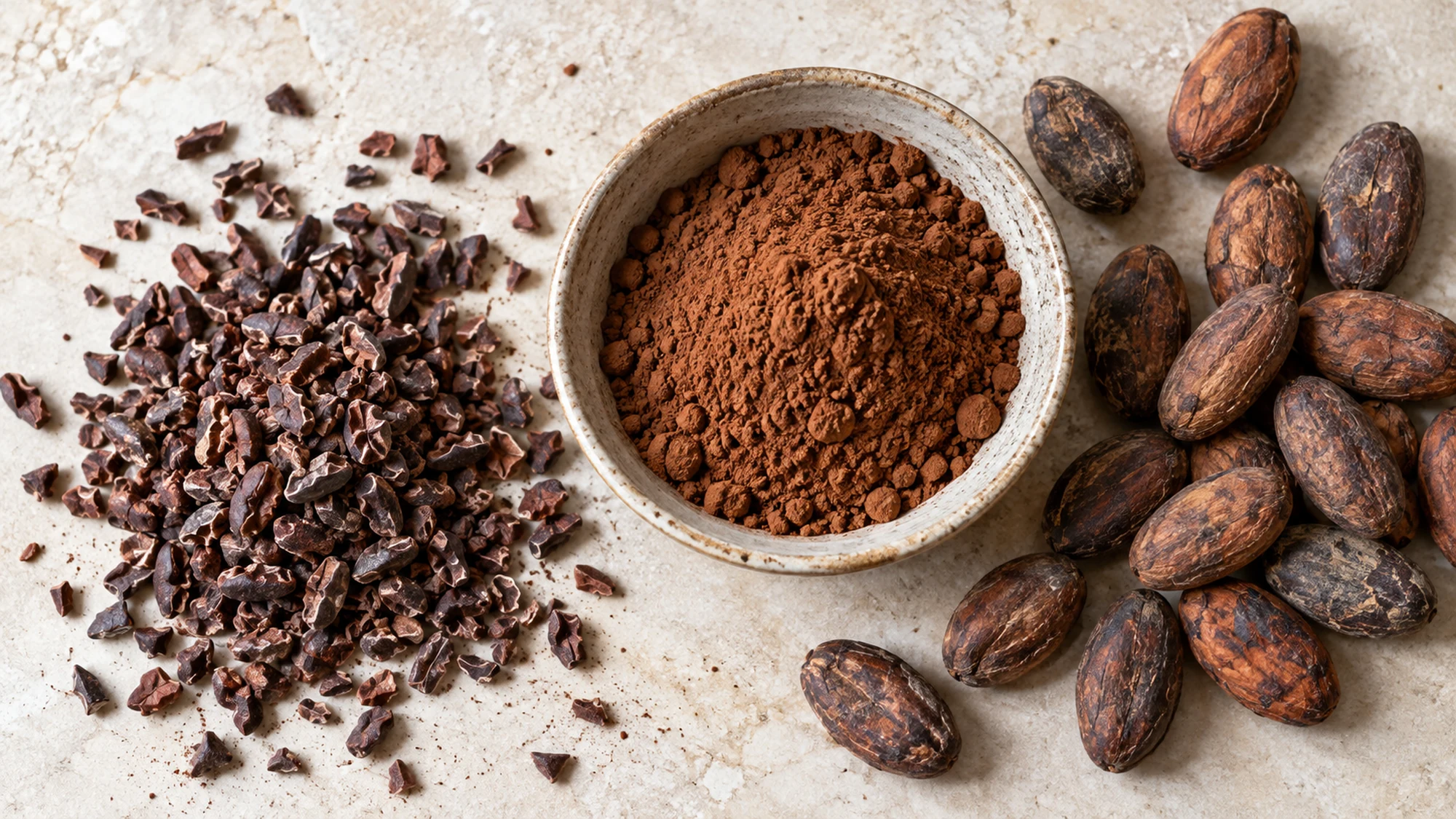
Chocolate maker Guittard explains that cacao and cocoa are technically interchangeable terms, although the industry often uses cacao for the agricultural ingredient and cocoa for products such as powder and butter. Everyday package wording is less tidy than a strict raw-versus-roasted rule suggests.
A useful real-world example is Navitas Organics Cacao Powder: its manufacturer describes the beans as fermented and briefly roasted, and explicitly says the powder is not raw. That establishes the process for that product, rather than defining every powder sold as cacao.
| Term | What it tells you | Check before using |
|---|---|---|
| Cacao powder | A powder made from cacao beans | Processing and added ingredients |
| Natural cocoa | Cocoa that has not been alkalized | Recipe’s leavening instructions |
| Dutch-process cocoa | Cocoa treated with alkali | Whether the recipe calls for it |
| Drinking chocolate or cocoa mix | A prepared drink ingredient | Sugar, milk and other ingredients |
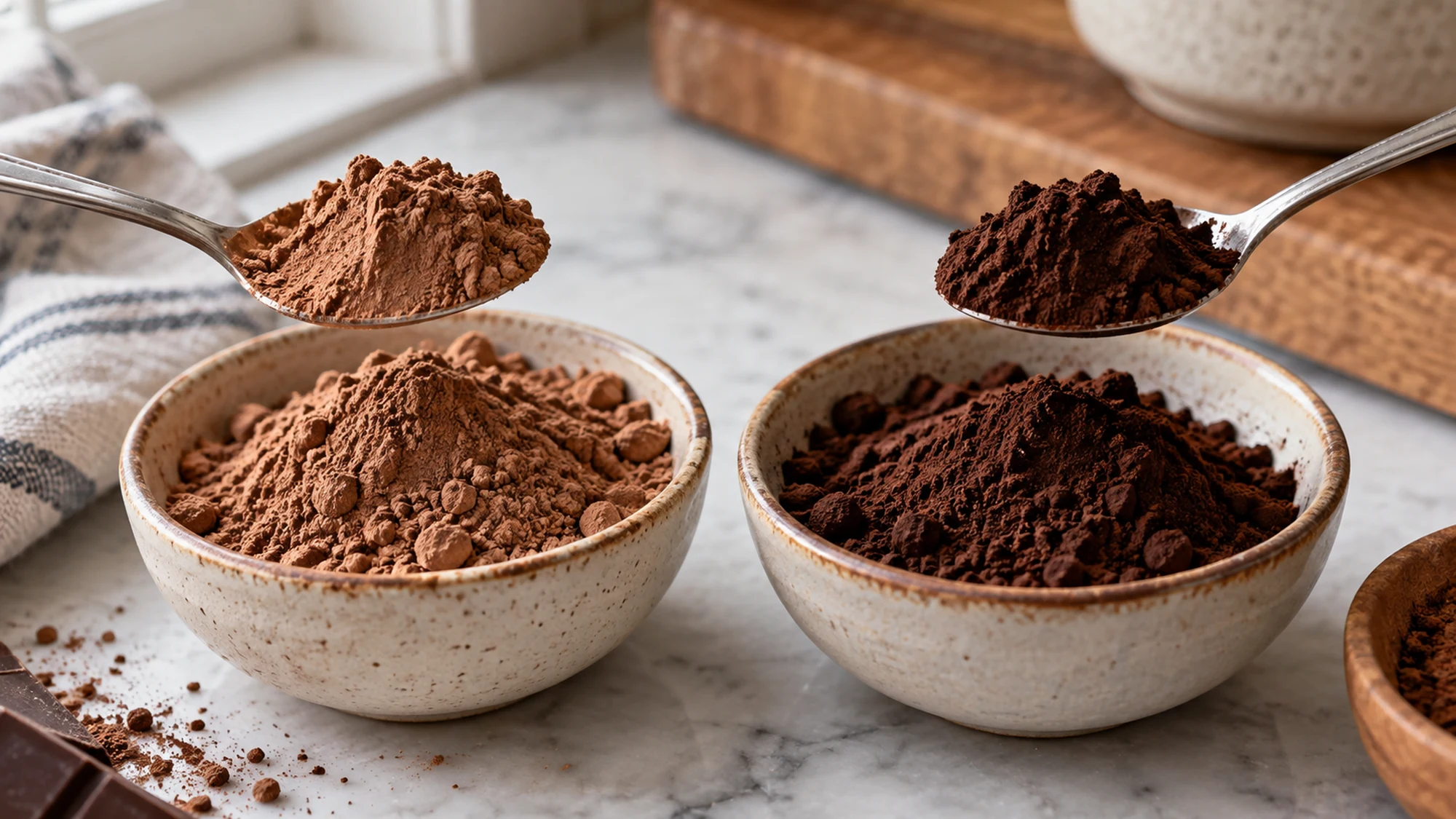
Natural and Dutch-process powders behave differently
Natural cocoa retains acidity. Dutch-processing uses an alkalizing treatment that changes acidity, color and flavor; the result is often darker and more mellow. Guittard’s technical explanation also identifies fat content as an important difference between powders, so color alone cannot describe everything in the tin.
The distinction matters most in a batter that depends on an acid-and-baking-soda reaction. King Arthur Baking’s comparison explains why natural cocoa often accompanies baking soda, while Dutch-process recipes commonly use baking powder. Other ingredients affect that balance, too; one line on a recipe is more useful than guessing from powder color.
Can you substitute cacao for cocoa?
Sometimes, but first identify what both products actually are. An unsweetened, non-alkalized cacao powder is a much closer match for natural unsweetened cocoa than a sugary hot-chocolate mix is. Do not replace baking cocoa with a drink mix spoon for spoon and expect the same sweetness, structure or chocolate intensity.
- For a cake or quick bread, follow the specified cocoa type and keep the leaveners unchanged unless the recipe gives a tested substitution.
- For a sauce, frosting or drink without chemical leavening, flavor and texture leave more room for preference.
- Check the amount by weight when the recipe provides grams; a heaped spoon and a level spoon are different measurements.
- If the package is unclear about alkalization, check the maker’s product page before changing a carefully balanced batter.
I’d choose the powder the recipe names for a first attempt. Comparing powders in a simple drink is easier than troubleshooting a cake. Also keep powder separate from solid chocolate: Dishora’s tahini date bark uses melted chocolate for its crisp top, a different job from flavoring a batter with cocoa.
Is cacao healthier than cocoa?
The word cacao does not establish a product’s nutrient amounts or prove a health benefit. Compare the Nutrition Facts for the same weight of product, then check added sugar and the ingredient list. An unsweetened cocoa powder should not be judged against a sweetened drink mix as though the names alone explain the difference.
A small spoonful mixed into yogurt and several tablespoons used in a dessert also represent different amounts. Consider the finished food and your usual portion rather than awarding a powder a health halo. If you want information about a particular nutrient or processing method, look for the manufacturer’s actual product data.
Choose for the food you want to make
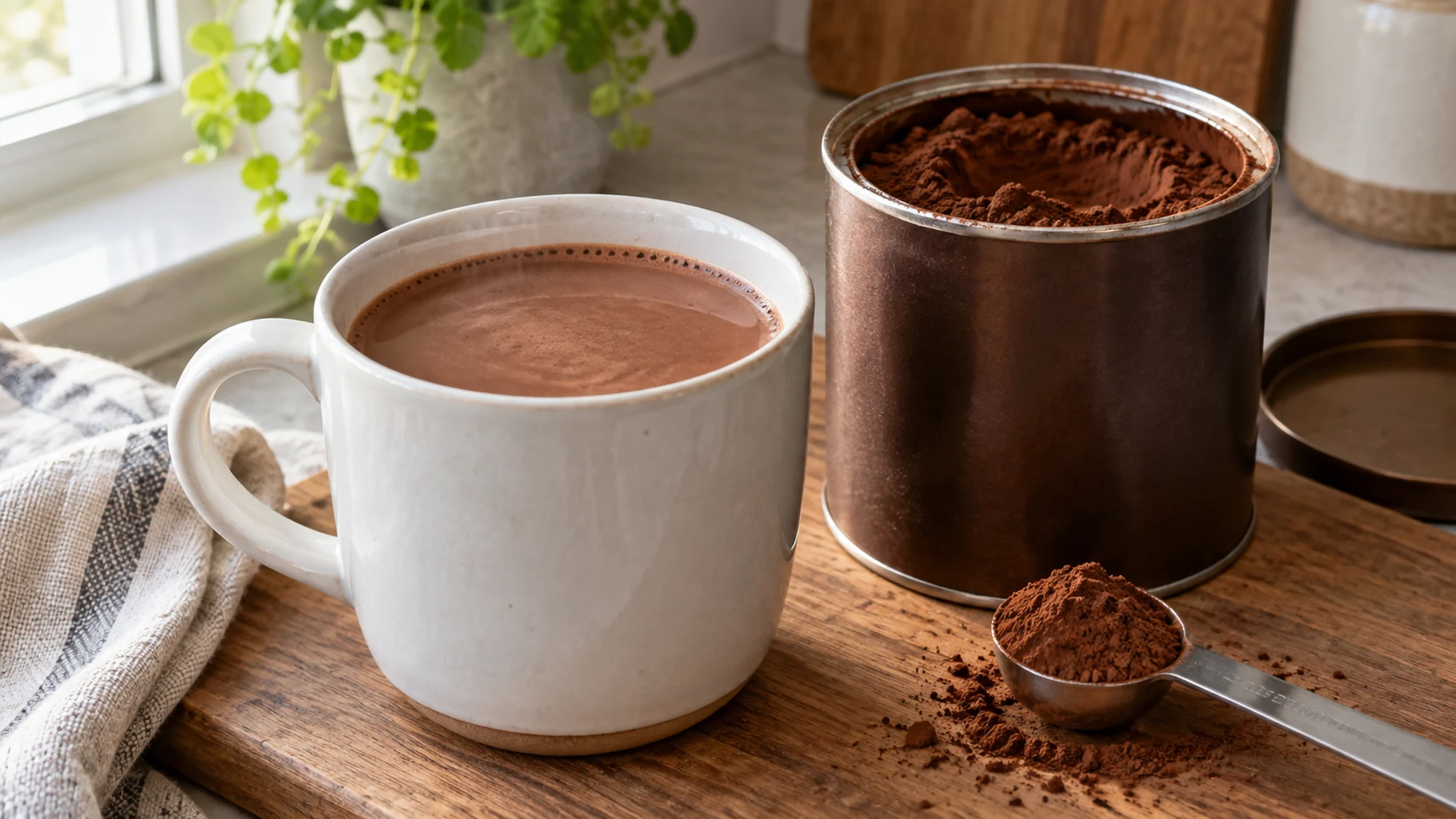
For a warm drink, I prefer starting with an unsweetened powder so the sweetness stays adjustable. In baking, keep the recipe’s natural-or-Dutch instruction close to the top of the shopping list. Paying extra for a different word on the label will not rescue a mismatched ingredient.
The practical answer to cacao vs cocoa is to read beyond the name: choose an unsweetened product, confirm natural or Dutch-process when baking, and compare like portions. Let a clear label and the recipe guide the purchase; let your taste decide between suitable options.
Sources
- Guittard: cacao, cocoa and chocolate glossary
- Navitas Organics: current cacao powder processing information
- Guittard: processing, fat and cocoa performance
- King Arthur Baking: natural and Dutch-process cocoa

Emily Parker is DISHORA’s recipe-writing persona, bringing a warm, practical voice to everyday cooking. Her focus is simple ingredients, comforting flavors and clear steps that make a dish feel approachable. From cozy dinners to something sweet, Emily’s recipes invite readers to try something delicious and make it their own.