
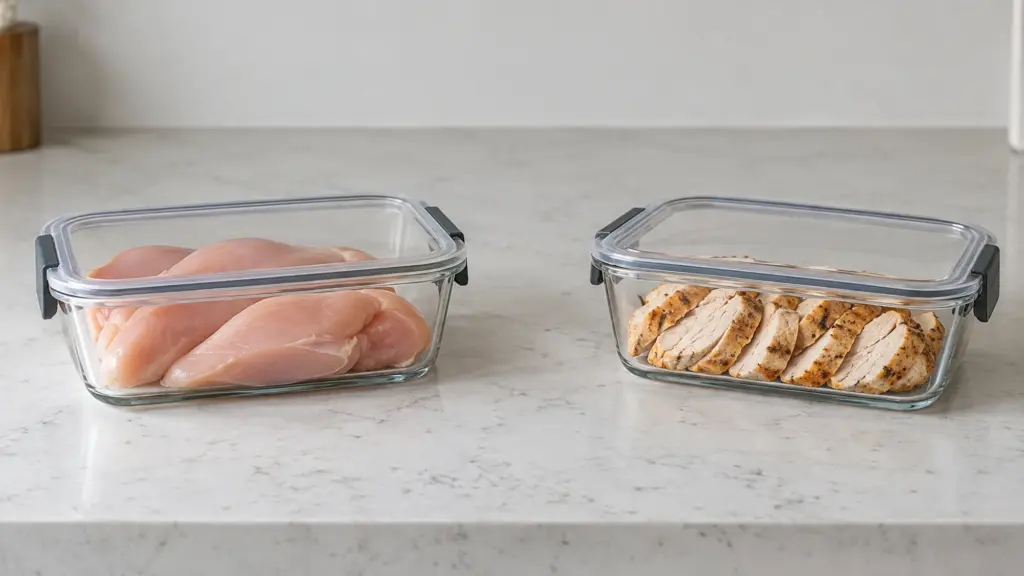
A container of chicken can look perfectly ordinary even when its storage history has become a guess. How long does chicken last in the fridge? Start with whether it is raw or cooked, then check the temperature and how quickly it was chilled.
Keep raw chicken for 1–2 days and cooked chicken for 3–4 days in a refrigerator at 40°F (4°C) or below. These limits assume safe handling and prompt refrigeration.
I’d put a date on the container when the chicken goes in. It is a small, practical step that saves you from trying to reconstruct a grocery trip or dinner several days later.
How long does chicken last in the fridge? Use this chart
The FoodSafety.gov cold-storage chart gives the same short refrigerator window for a raw whole chicken and raw pieces. Ground chicken also needs prompt use; cooking changes the storage category, but it does not erase unsafe handling beforehand. A store date does not replace these home-storage limits. Check the package’s handling directions too, and do not use an unopened seal as a reason to give raw chicken a week in the refrigerator.
| Chicken | Fridge at ≤40°F (4°C) | Freezer at ≤0°F (−18°C)* |
|---|---|---|
| Raw whole chicken | 1–2 days | 1 year |
| Raw chicken pieces | 1–2 days | 9 months |
| Ground chicken | 1–2 days | 3–4 months |
| Cooked chicken leftovers | 3–4 days | 2–6 months |
*Freezer times describe best quality. Food kept continuously frozen at 0°F (−18°C) or below remains safe indefinitely if it was safe when frozen. A longer freezer window is not permission to leave chicken in the fridge beyond its refrigerated limit.
The clock includes more than the fridge
Refrigerator days only help when the chicken was chilled promptly. Federal chilling guidance says to refrigerate perishable food within two hours, or within one hour when the surrounding temperature is above 90°F (32°C).
- Bring chicken home promptly and refrigerate it as soon as possible.
- Count unrefrigerated time across preparation and serving; briefly putting it back does not undo earlier warm time.
- Discard perishable chicken left out beyond those limits.
- Use an appliance thermometer; a fridge that feels cool may still be too warm.
- For a long trip, use a cooler that keeps the chicken at 40°F (4°C) or below; include travel time when considering how long it has been warm.
A storage date and a verified cold temperature work together; neither replaces the other.
Store raw chicken separately and cool leftovers promptly
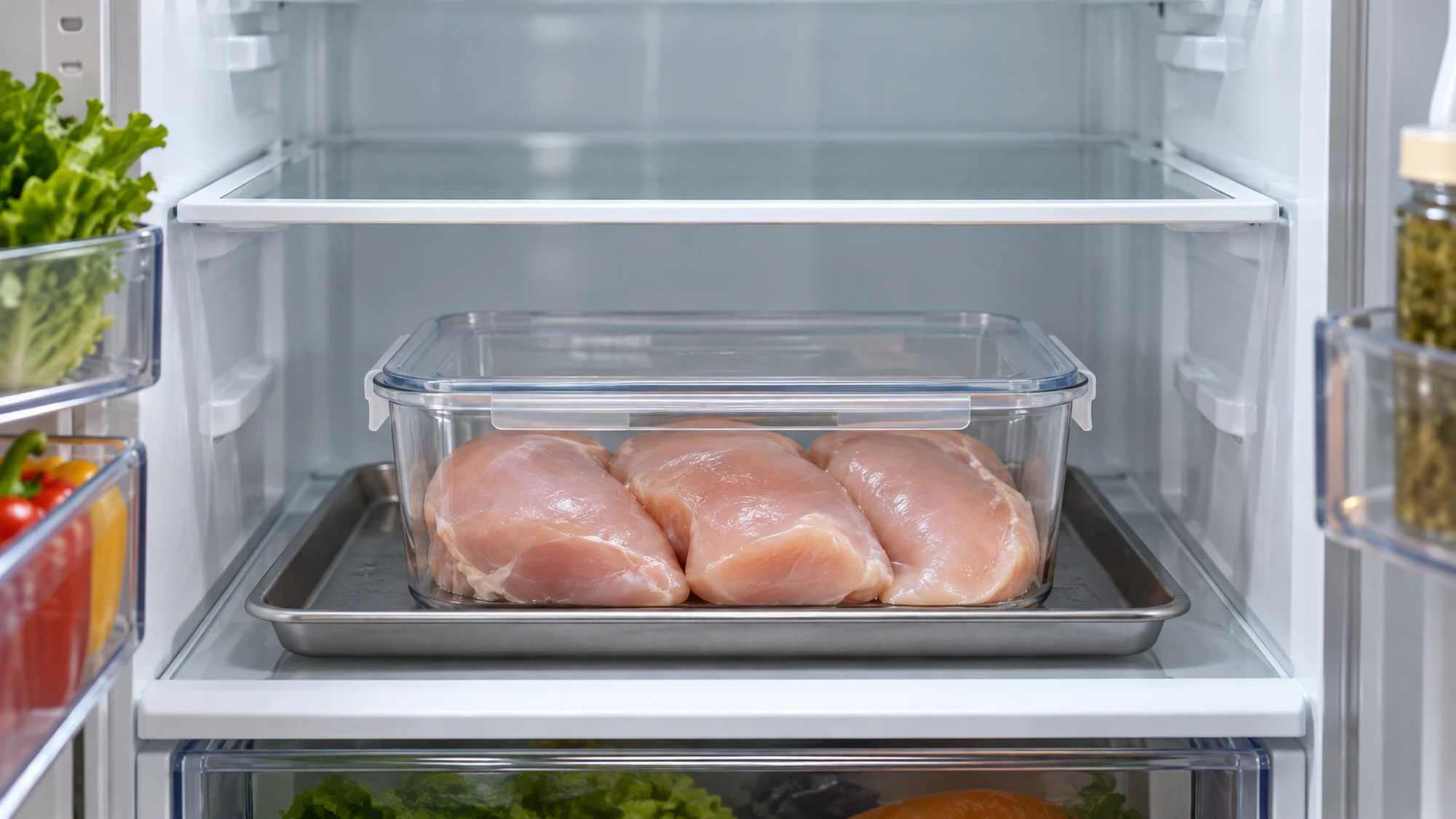
Keep raw chicken in a sealed, leakproof container or bag, with a tray underneath to contain drips. Store it below ready-to-eat food so raw juices cannot fall onto a salad, cooked meal or fruit.
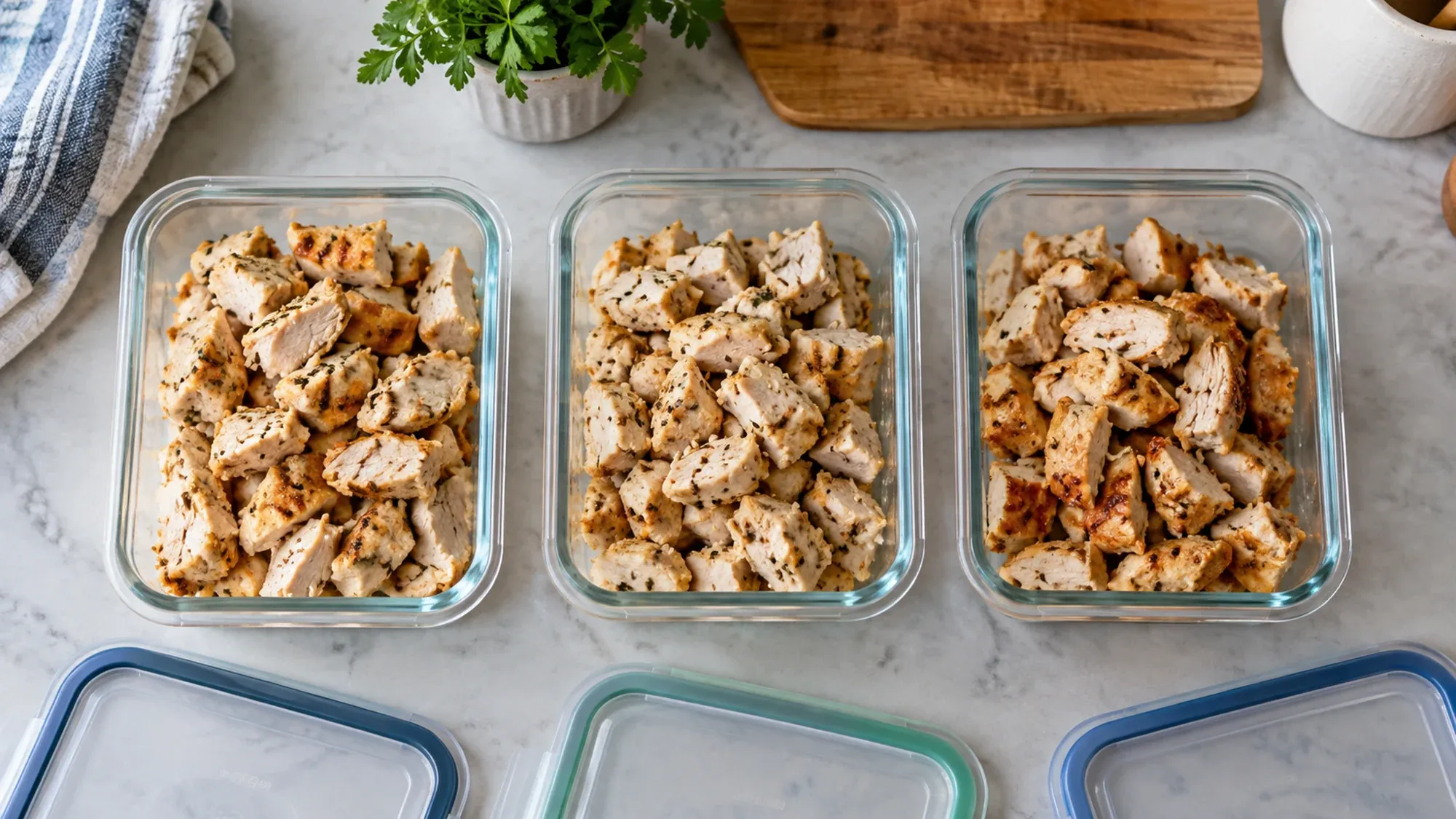
- Divide cooked chicken into small portions in shallow containers for quicker cooling.
- Refrigerate promptly rather than waiting for a large batch to cool on the counter.
- Cover stored food and label the cooking date.
- Freeze portions you will not eat within the 3–4-day leftover window while they are still safe.
I prefer dividing tomorrow’s lunch from later portions right away, because it makes the next decision obvious. Whether the dish is plain chicken or chicken in a creamy tomato sauce, the same prompt-chilling principle matters.
Smell cannot confirm that chicken is safe
An unpleasant smell, slime or visible spoilage means discard it. But passing a sniff test cannot extend the storage window: the FDA explains that food can contain harmful bacteria without looking, smelling or tasting spoiled.
- Do not taste a questionable piece to check it.
- If you cannot establish when chicken was stored or whether it stayed cold, discard it.
- Do not rely on reheating to rescue food with an unsafe storage history.
Use time and temperature records to make the decision; a normal smell is not a safety certificate.
Freeze for later, then cook or reheat safely
If dinner plans change, freeze raw chicken within its short refrigerator window instead of giving it another day and hoping. Use freezer-suitable wrapping, mark the date and keep portions sized for the meals you actually expect to make.
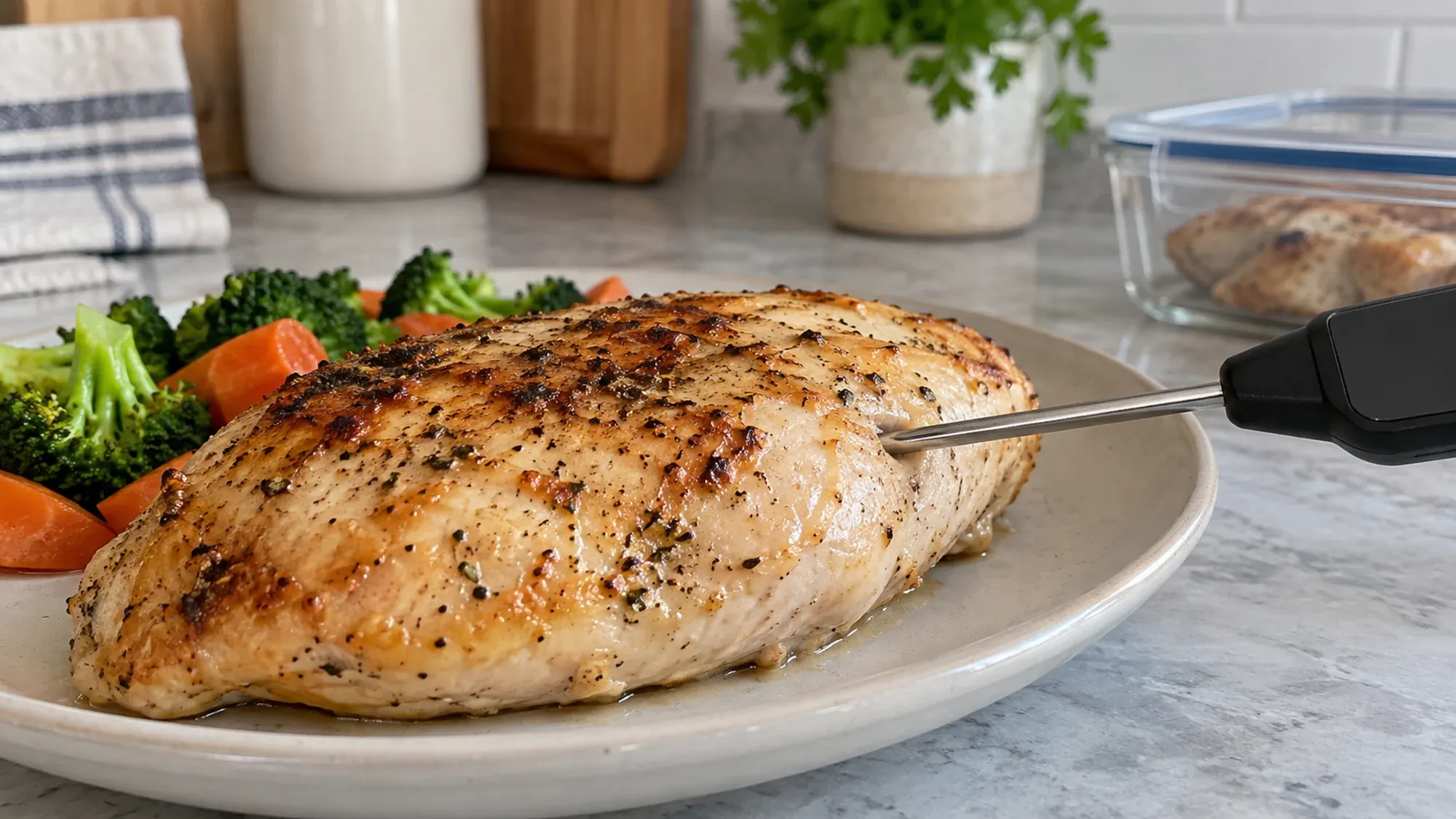
Thaw in the refrigerator, keeping raw juices contained. When cooking chicken or reheating leftovers, use a food thermometer: the safe minimum internal temperature is 165°F (74°C). Check the thickest part without touching bone; color alone does not replace that reading.
- Reheat the portion you intend to eat rather than repeatedly warming the whole batch.
- Keep raw-food utensils away from cooked chicken and ready-to-eat sides.
- Wash hands and clean food-contact surfaces during preparation.
My simplest plan is to date it, keep it cold and freeze the extra early. When the storage history is uncertain, start with a fresh portion.
Sources
- FoodSafety.gov: cold-storage chart
- FoodSafety.gov: clean, separate, cook and chill
- FDA: safe storage and spoilage limits
- FoodSafety.gov: cooking and reheating temperatures

Emily Parker is DISHORA’s recipe-writing persona, bringing a warm, practical voice to everyday cooking. Her focus is simple ingredients, comforting flavors and clear steps that make a dish feel approachable. From cozy dinners to something sweet, Emily’s recipes invite readers to try something delicious and make it their own.