
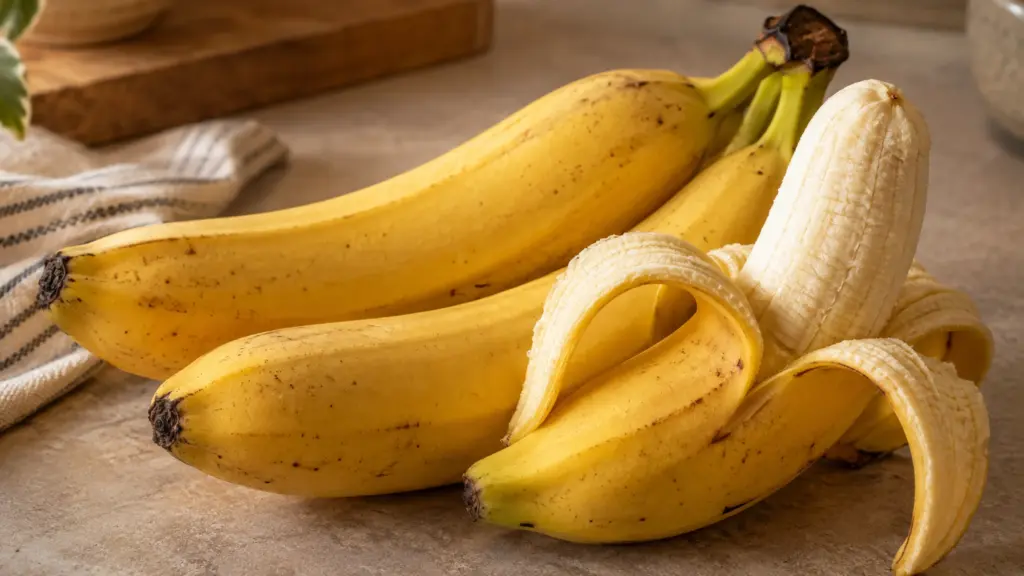
A banana is easy to tuck into a bag; the number to enter in a food log can be less obvious. If you’re asking how many carbs in a banana, a useful starting point is about 27 grams of total carbohydrate in a medium, 118-gram banana. The weight refers to the edible fruit, without its peel.
A whole medium banana has about 27 grams of total carbs; half has about 13.5 grams. Start with the portion you actually eat.
I’d use that number as a practical estimate, then check the weight when precision matters. Two bananas called “medium” can still differ, and fruit does not arrive with factory-standard dimensions.
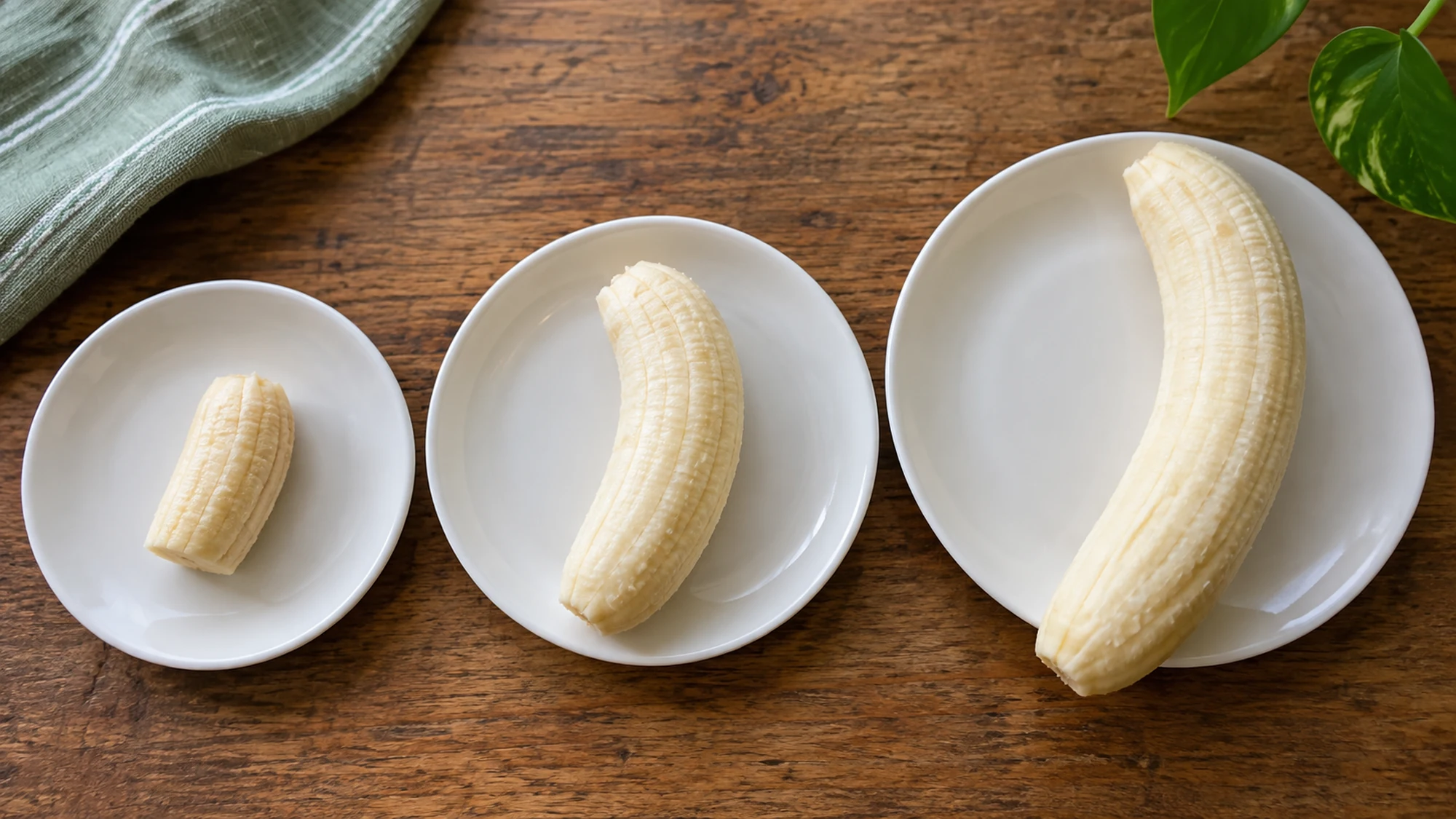
How many carbs in a banana by portion?
Dole’s banana Nutrition Facts sheet lists 27 grams of carbohydrate and 3 grams of fiber for a 118-gram edible serving. The estimates below scale that rounded carbohydrate figure; they are a portion guide, not laboratory measurements of your fruit.
| Edible portion | Weight | Total carbs |
|---|---|---|
| Half the reference banana | 59 g | 13.5 g |
| A weighed portion | 100 g | About 23 g |
| Whole reference banana | 118 g | 27 g |
| A larger weighed portion | 150 g | About 34 g |
The FDA’s raw-fruit reference uses a different medium banana: 126 grams and 30 grams of carbohydrate. That difference is a good reminder to compare weights and references rather than treating the word “medium” as an exact measurement.
Total carbs, sugar, and net carbs are different
Carbohydrate includes sugars, starches, and fiber. A sugar figure alone therefore does not describe all the carbohydrate in a banana. On a U.S. Nutrition Facts label, look at Total Carbohydrate before examining the lines underneath it.
Subtracting the reference banana’s 3 grams of fiber from its 27 grams of total carbohydrate gives roughly 24 grams, sometimes called “net carbs.” That calculation is a convention, not a second measurement of the fruit or a guaranteed prediction of its effect on blood glucose.
A study of bananas at different ripeness stages found that the balance of starch, sugars, and measured fiber changes during ripening. That does not make a greener banana carb-free, or let you calculate exact carbs from the number of brown spots. Keep portion size in the picture.
- For ordinary food logging, keep total carbohydrate and fiber as separate entries.
- Do not add the fiber figure to total carbohydrate; it is already included.
- If you count carbs for insulin, use the approach your diabetes team has taught you rather than changing it to match an online net-carb calculation.
Weigh the fruit when a closer estimate helps
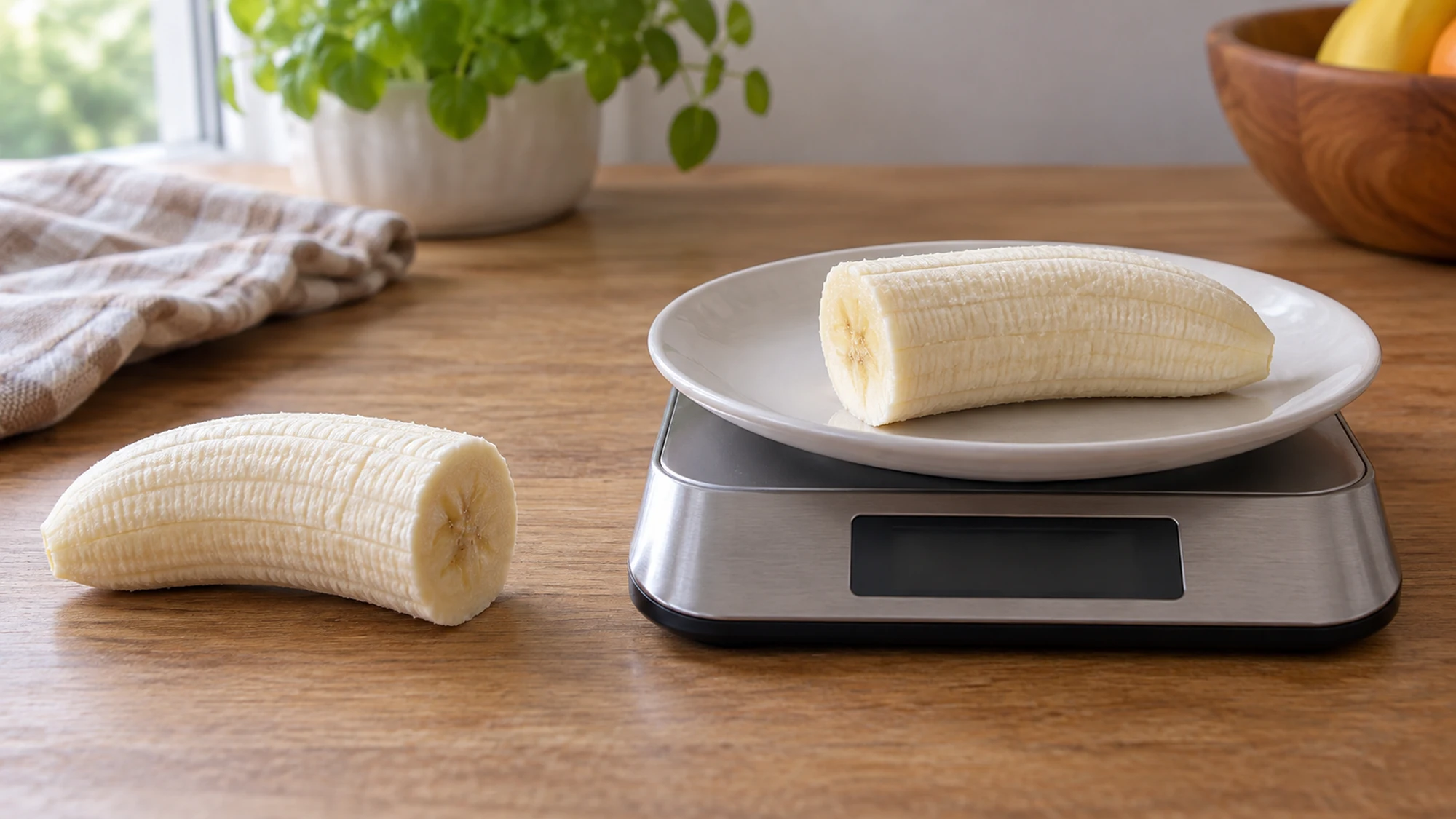
A kitchen scale removes one of the biggest sources of guesswork: portion size. I prefer weighing the peeled fruit over measuring its curve with a ruler. It also works when you only want a few slices.
The calculation from the 118-gram reference is simple: edible grams × 27 ÷ 118. A 90-gram portion, for example, works out to approximately 21 grams of total carbohydrate. Keep the result sensibly rounded because the starting label is rounded too.
- Place a bowl on the scale and reset it to zero.
- Add the peeled banana or the slices you plan to eat.
- Record that amount, then include any other foods separately.
Count the whole breakfast, not just the banana
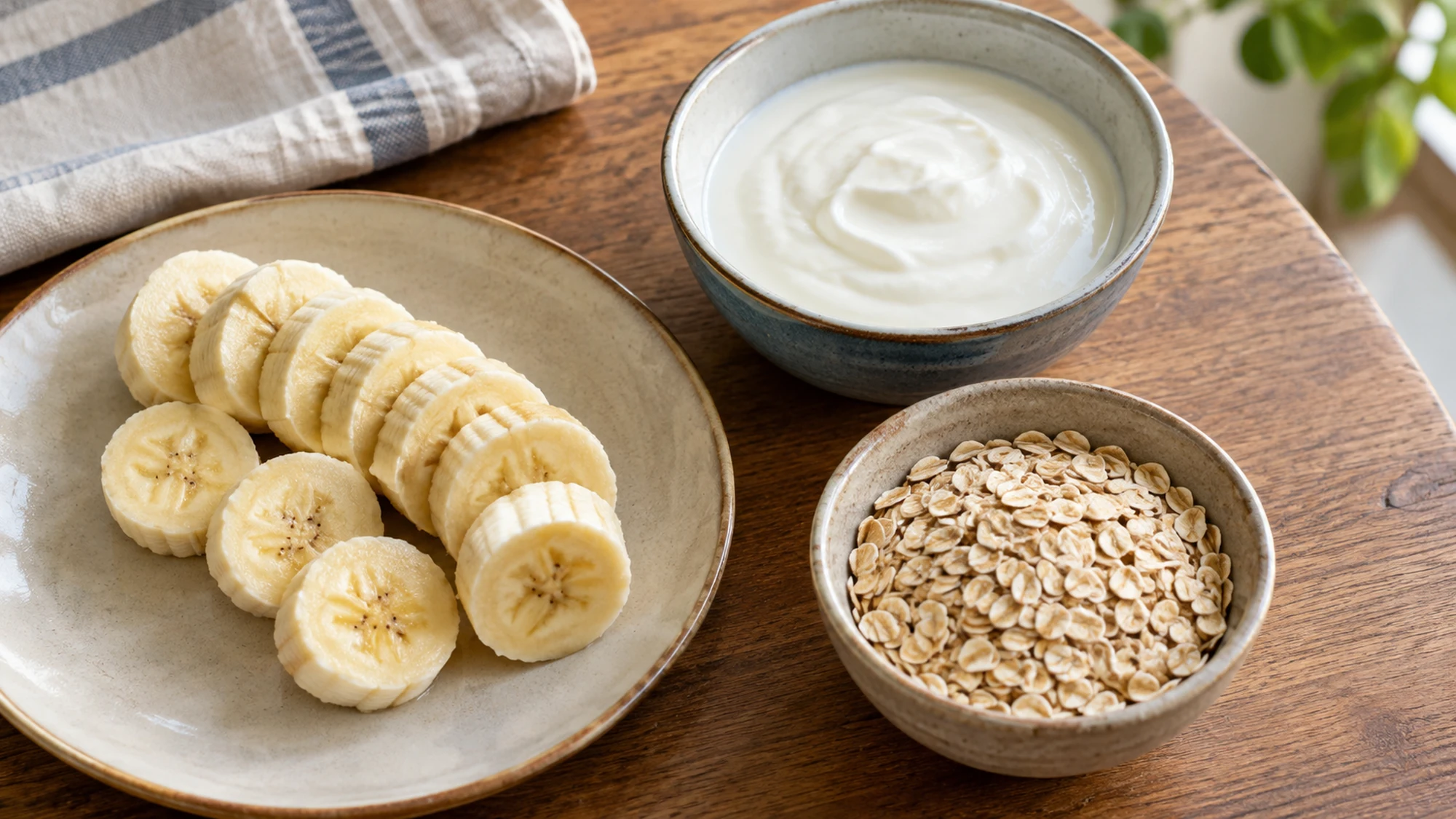
Adding banana to oatmeal, yogurt, or a smoothie changes the meal’s total. The fruit’s carbohydrate does not replace the oats, milk, honey, or other ingredients already there. For a mixed batch, total the ingredients first and divide by the portions actually served. For a smoothie poured into two glasses, check whether the glasses are genuinely equal before assuming each contains exactly half the fruit.
For a practical breakfast idea, DISHORA’s overnight oats guide shows why the base and toppings belong in the same calculation. I’d decide how much banana sounds good before slicing it into the bowl; a few coins can easily become the whole fruit.
- Fresh or plain frozen banana: estimate the amount you use.
- Dried banana or banana chips: use the package’s serving and nutrition information.
- Sweetened smoothies and banana desserts: account for the complete ingredients, rather than borrowing a raw-fruit entry.
Does counting carbs mean avoiding bananas?
No single carb number decides whether a food belongs in your day. NIDDK’s diabetes eating guidance includes fruit among foods that can fit a healthy meal plan. Portions, medicines, activity, and individual needs all matter.
The CDC explains that a carb serving is about 15 grams, which is a meal-planning unit rather than a rule that every food portion must contain 15 grams. Your own targets should come from your care plan, especially if medication dosing is involved.
Keep the useful number and the useful habit together: about 27 grams for the reference banana, and a portion check for the banana in front of you.
Sources
- Dole: banana serving and Nutrition Facts
- FDA: raw-fruit reference portions
- CDC: carbohydrate counting
- NIDDK: healthy living with diabetes
- PLOS ONE: banana carbohydrate composition and ripeness

Emily Parker is DISHORA’s recipe-writing persona, bringing a warm, practical voice to everyday cooking. Her focus is simple ingredients, comforting flavors and clear steps that make a dish feel approachable. From cozy dinners to something sweet, Emily’s recipes invite readers to try something delicious and make it their own.