
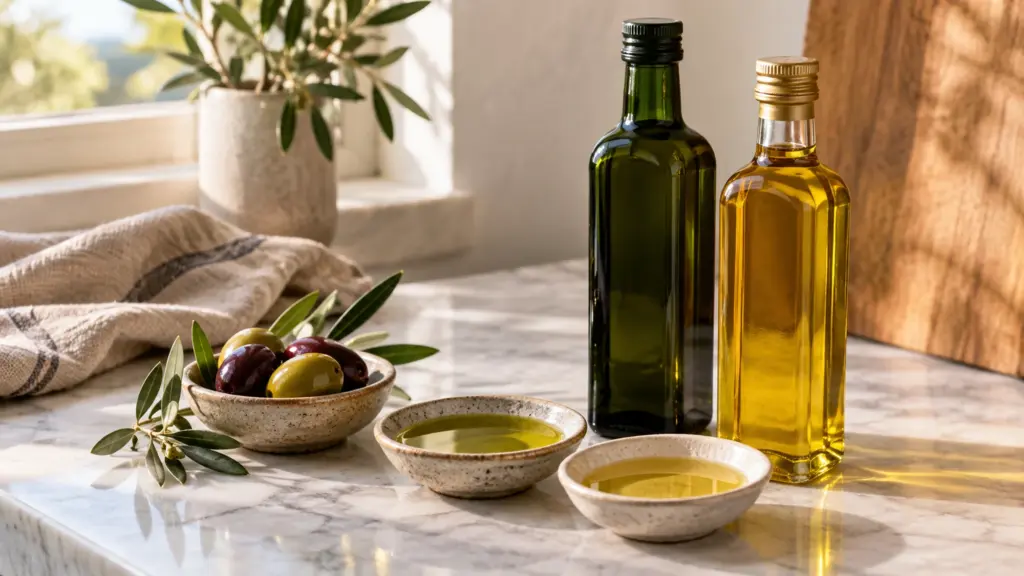
You reach for olive oil, then notice one bottle says “extra virgin” while another simply says “olive oil.” Both belong in the same family, but they can bring quite different flavors to a bowl of beans or a pan of vegetables.
Olive oil and extra virgin are not two unrelated oils. Extra virgin is an unrefined grade made by mechanical or physical extraction and meeting specific quality standards. The grade labeled olive oil blends refined and virgin olive oils, usually with a milder flavor.
I’d choose by the job first: a flavorful finishing drizzle deserves an oil you enjoy tasting, while a neutral background may call for something gentler. A higher price or greener color alone cannot settle that decision.
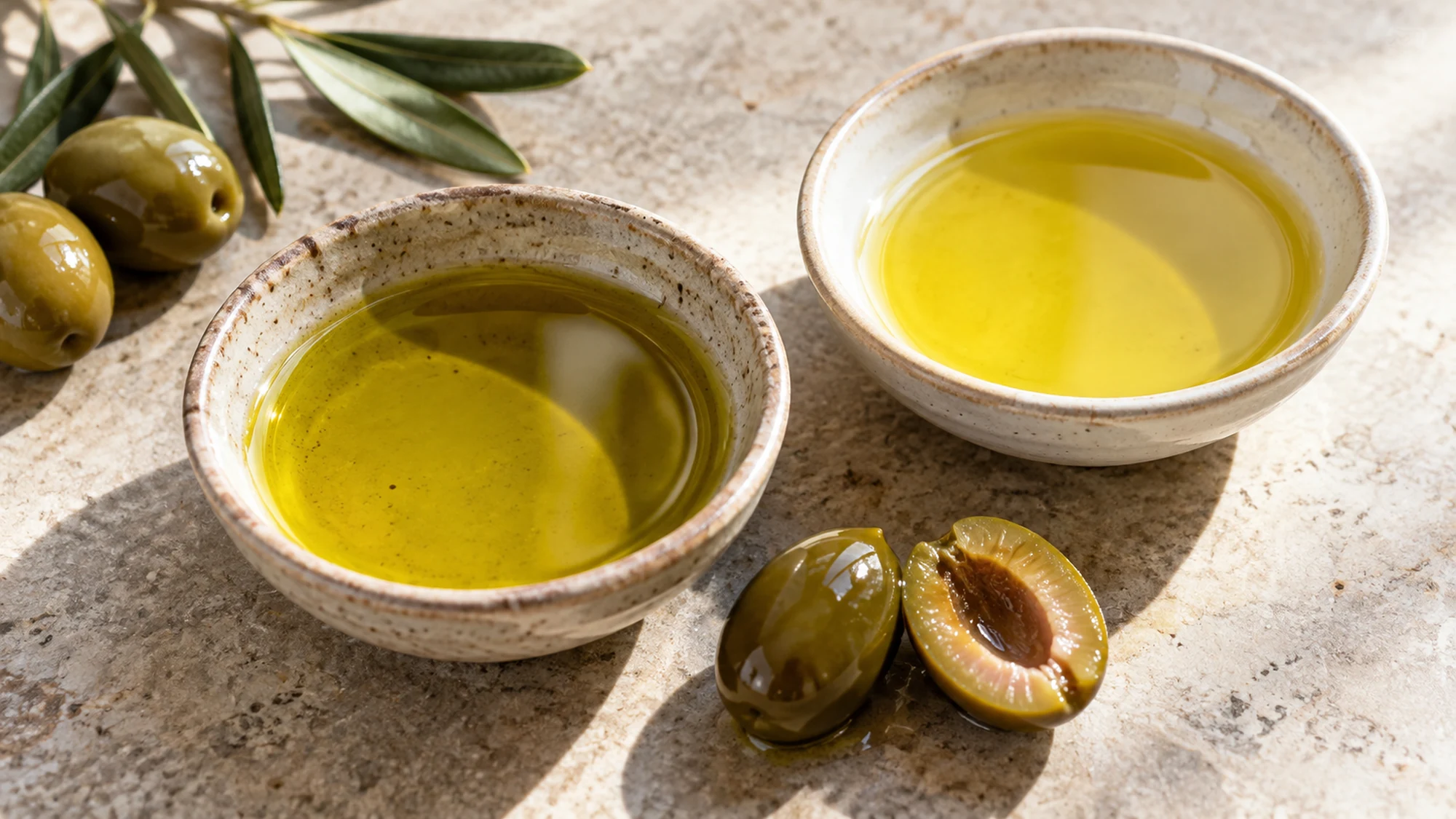
Olive oil and extra virgin: what the grades mean
The category is broader than the wording on the front label. The USDA olive-oil standard defines virgin oil by mechanical or physical extraction, with limited treatments such as washing, filtering and centrifuging. Extra virgin also has to meet sensory and chemical requirements.
USDA’s grade descriptions specify no sensory defects, some fruitiness and free acidity no higher than 0.8 grams per 100 grams for U.S. extra virgin. That acidity is a laboratory measure, not a sour flavor you can judge with a spoon.
| Label | Processing | Flavor direction |
|---|---|---|
| Extra virgin olive oil | Mechanically extracted; not refined | Fruity, sometimes bitter or peppery |
| Virgin olive oil | Mechanically extracted; different quality limits | Olive character; varies by oil |
| Olive oil | Blend of refined and virgin olive oils | Generally milder |
| Light-tasting olive oil | Refining reduces flavor and color | Milder; not lower in calories |
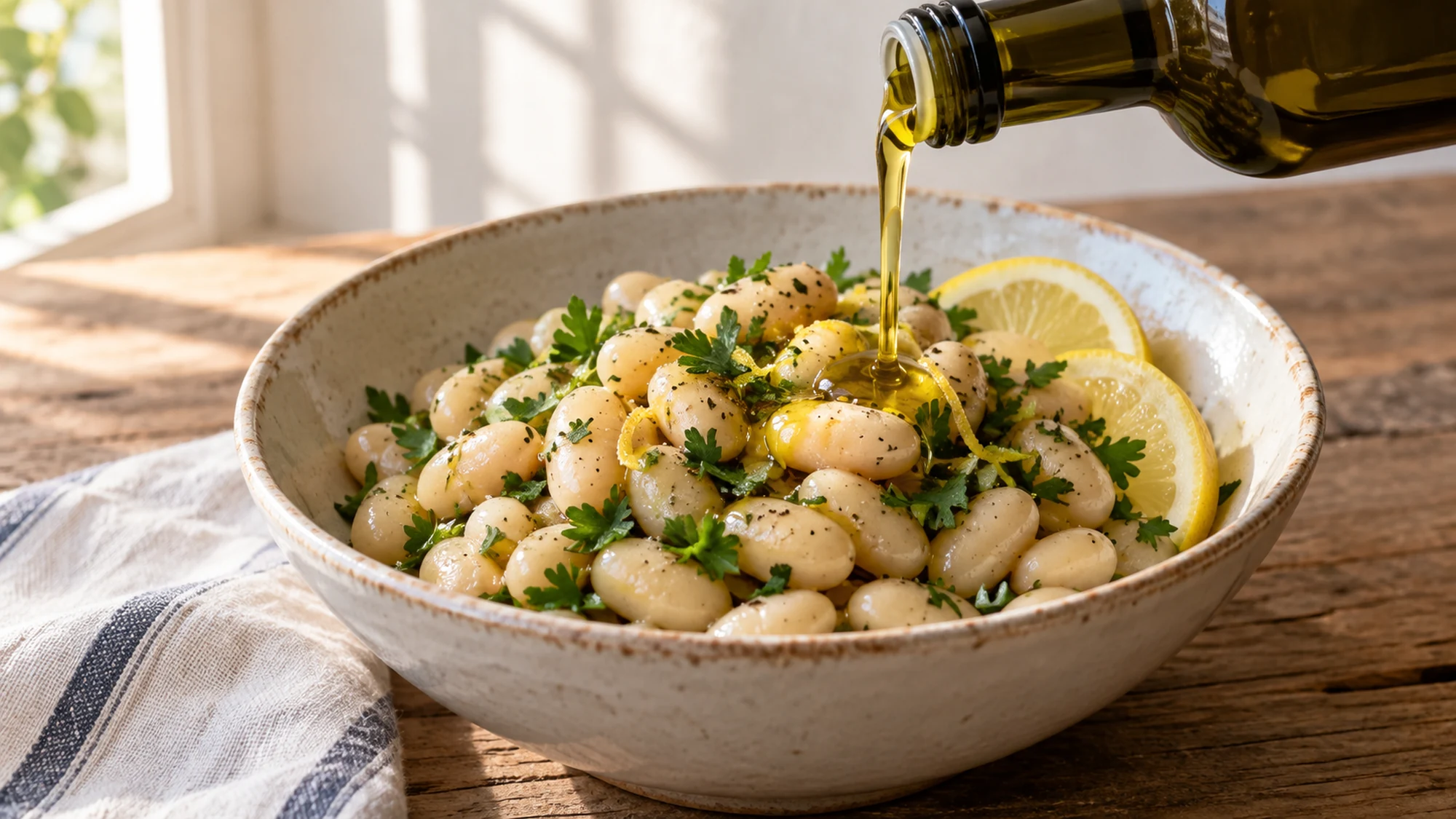
Which bottle belongs in a salad or skillet?
Extra virgin suits dressings, dips and finishing drizzles when you want its flavor to show. A peppery oil can give plain beans a welcome little nudge; a gentler fruity oil may sit more quietly alongside delicate vegetables.
It can also go into the pan. UC Davis explains that extra virgin olive oil works for cooking, including stir-frying, and that smoke point depends on grade, quality and freshness. You do not need to reserve the bottle exclusively for cold food.
For a mild bake or a dish where olive aroma would compete, a milder olive oil may be the more useful choice. Follow the recipe and control the heat; an oil label is not an invitation to leave a pan smoking.
- Dressing or finishing: choose a fresh oil with flavor you like.
- Sautéing vegetables: extra virgin can do the job.
- A delicate bake: consider whether you want olive flavor.
- Shopping on a budget: buy for actual use, not imagined occasions.
Does extra virgin mean fewer calories or better health?
No grade is a low-calorie version of oil. UC Davis’s olive-oil facts explains that “light” refers to the milder color, aroma and flavor after refining, rather than an energy reduction. Compare equal amounts when reading nutrition labels.
Extra virgin generally retains more phenolic compounds because it is minimally processed. Refined olive oils still provide monounsaturated fat. Those differences do not establish that one bottle will prevent illness or that generous extra spoonfuls improve a meal’s nutritional balance.
Choose the grade for flavor and use, then consider the portion and the overall meal. “Light” on an olive-oil bottle is not a calorie discount.
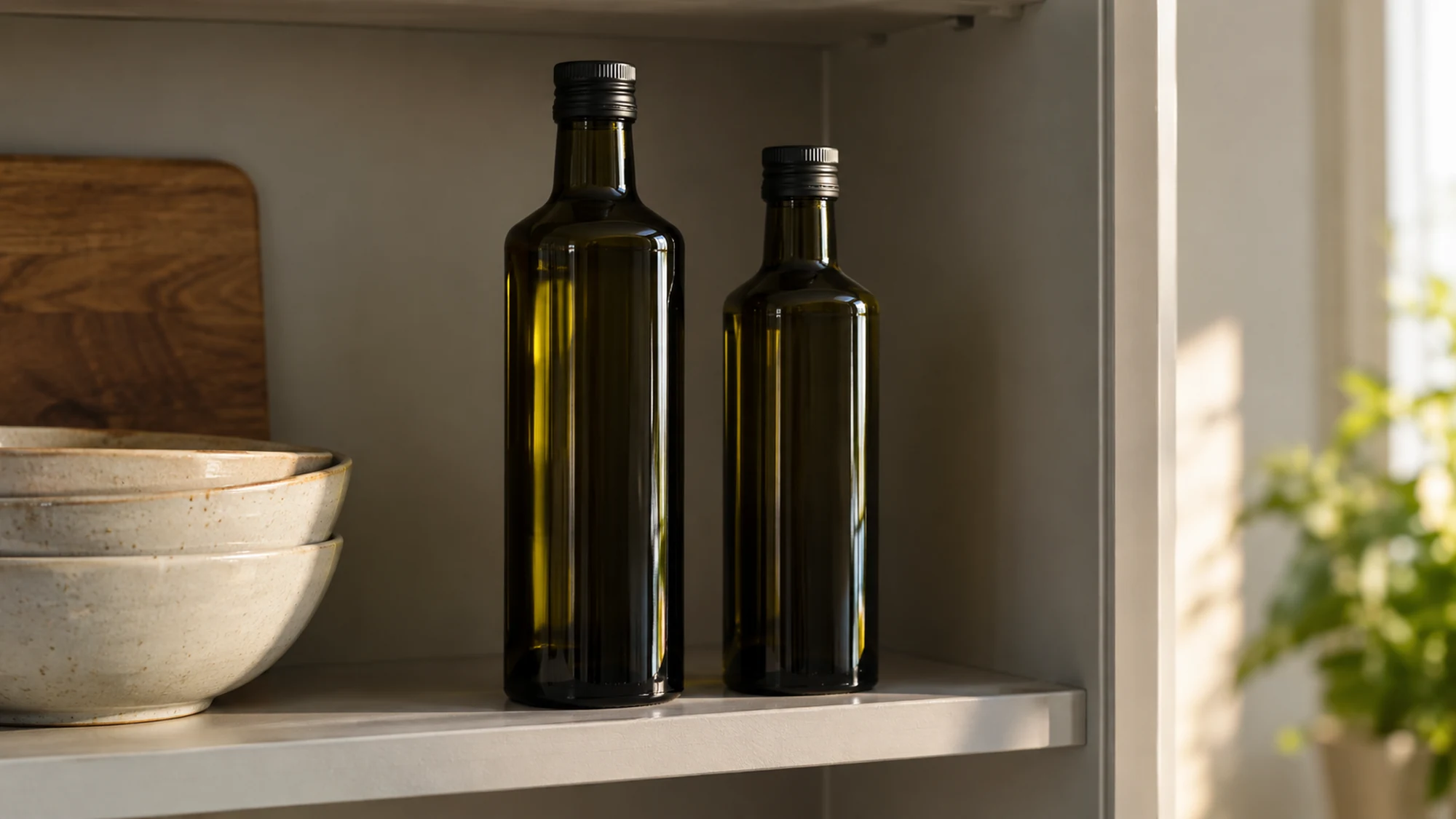
Read the label and keep the oil fresh
Start with the grade, then inspect dates, package size and storage instructions. A harvest date gives different information from a best-by date. Neither an attractive bottle nor an expensive label can guarantee what a laboratory or trained sensory panel would find.
Keep the oil tightly closed in a cool, dark cabinet, away from the stove. UC Davis’s storage guidance notes that heat, light and air reduce freshness. A smaller bottle can be a better purchase if a large one would linger after opening.
I prefer that practical calculation to treating oil as a collectible: choose an amount you can actually use while it tastes fresh. If an oil smells stale or tastes unpleasant, covering it with stronger ingredients does not restore its quality.
A straightforward way to choose
Begin with one fresh extra virgin oil whose flavor you enjoy. If that flavor clashes with certain dishes, add a milder olive oil for those jobs. You do not need a cupboard of bottles to cook thoughtfully.
Want to untangle the source question too? Our guide to whether olive oil is a seed oil explains where the oil comes from. This comparison concerns processing, grades and use; both questions help make a label easier to understand.
Extra virgin offers more olive character; a refined-and-virgin blend offers a milder option. Match the bottle to the food, keep it well and enjoy it while it is fresh.

Emily Parker is DISHORA’s recipe-writing persona, bringing a warm, practical voice to everyday cooking. Her focus is simple ingredients, comforting flavors and clear steps that make a dish feel approachable. From cozy dinners to something sweet, Emily’s recipes invite readers to try something delicious and make it their own.