
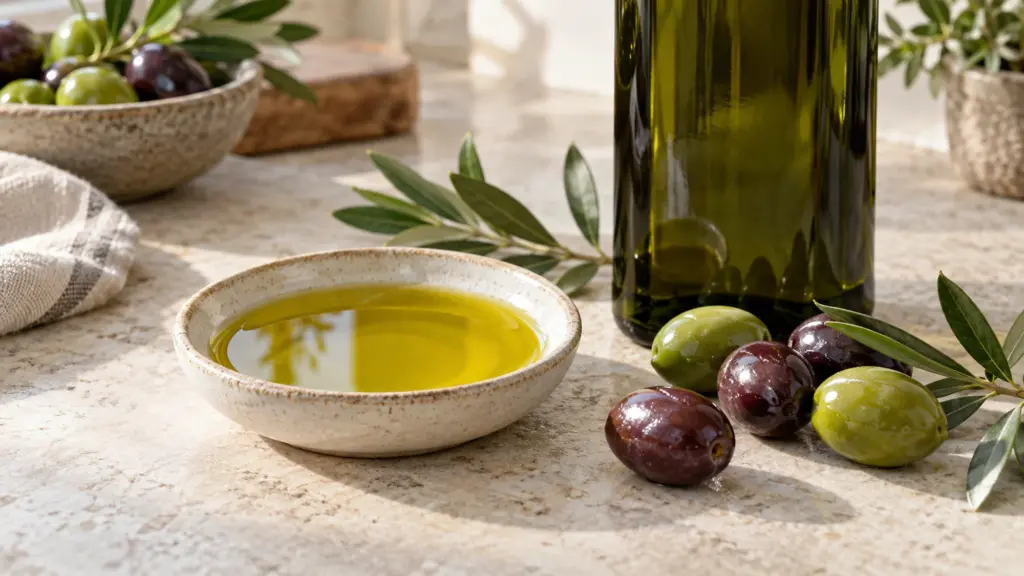
The cooking-oil aisle can turn a simple purchase into a vocabulary test: extra virgin, refined, blended—and then the question, is olive oil a seed oil? Before deciding which bottle belongs beside your stove, it helps to separate where an oil comes from from how it is processed.
No, olive oil is not classified as a seed oil. It comes from olive fruit, with most of the oil stored in the fleshy tissue around the pit. Extra virgin and refined olive oils share that olive origin.
I prefer to begin with that straightforward distinction. “Seed oil” describes a source; it is not, by itself, a reliable verdict on flavor, processing or health. Those questions deserve their own answers, preferably without turning dinner into a chemistry examination.
Is olive oil a seed oil? The fruit distinction
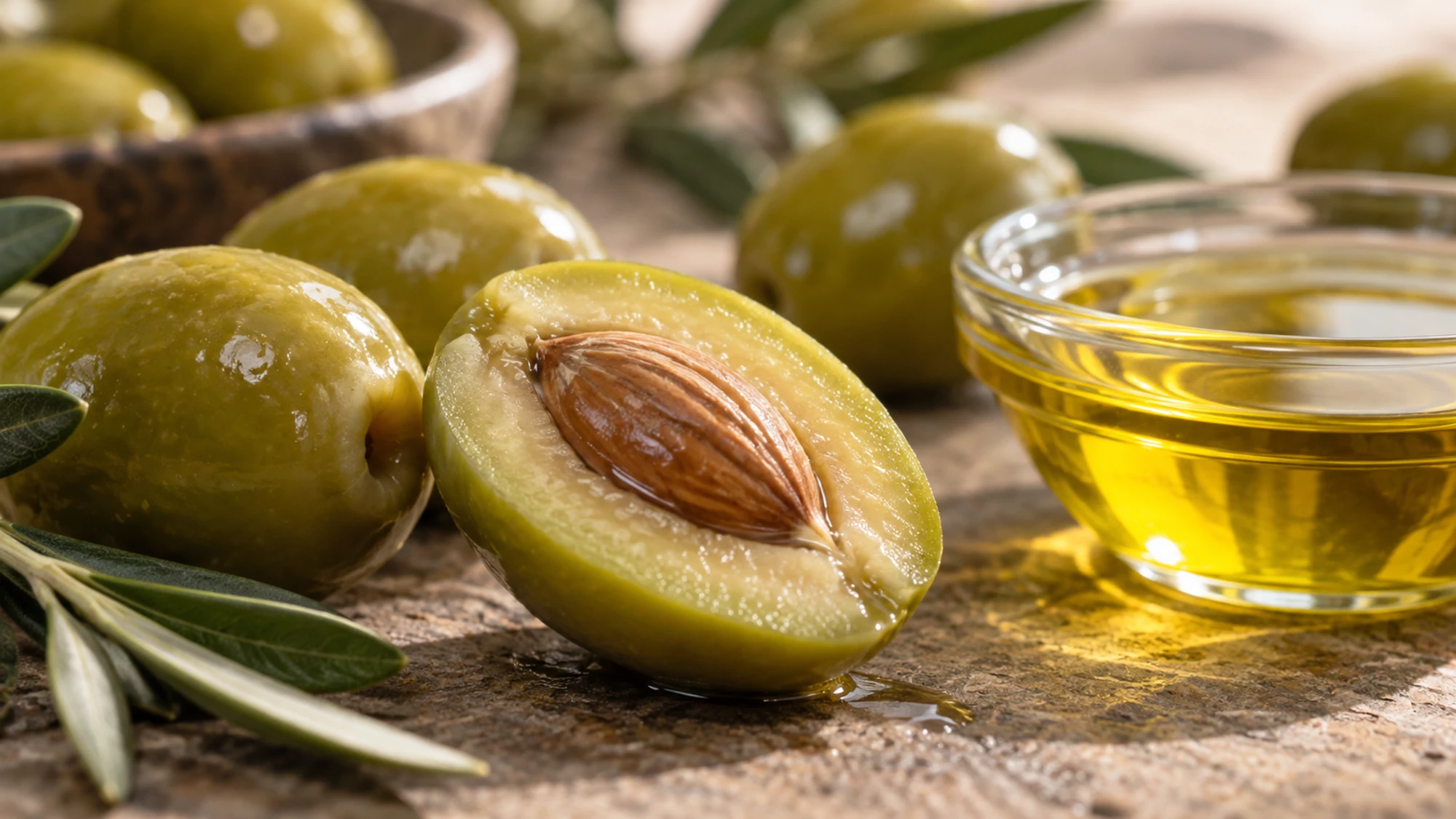
An olive contains a pit and a seed, but most of its oil is held in the fleshy mesocarp surrounding them. Research comparing oil from olive flesh and seeds makes this distinction clear. The seed can contribute some oil, so “not a seed oil” should not be read as a guarantee that olive seeds play absolutely no part in production.
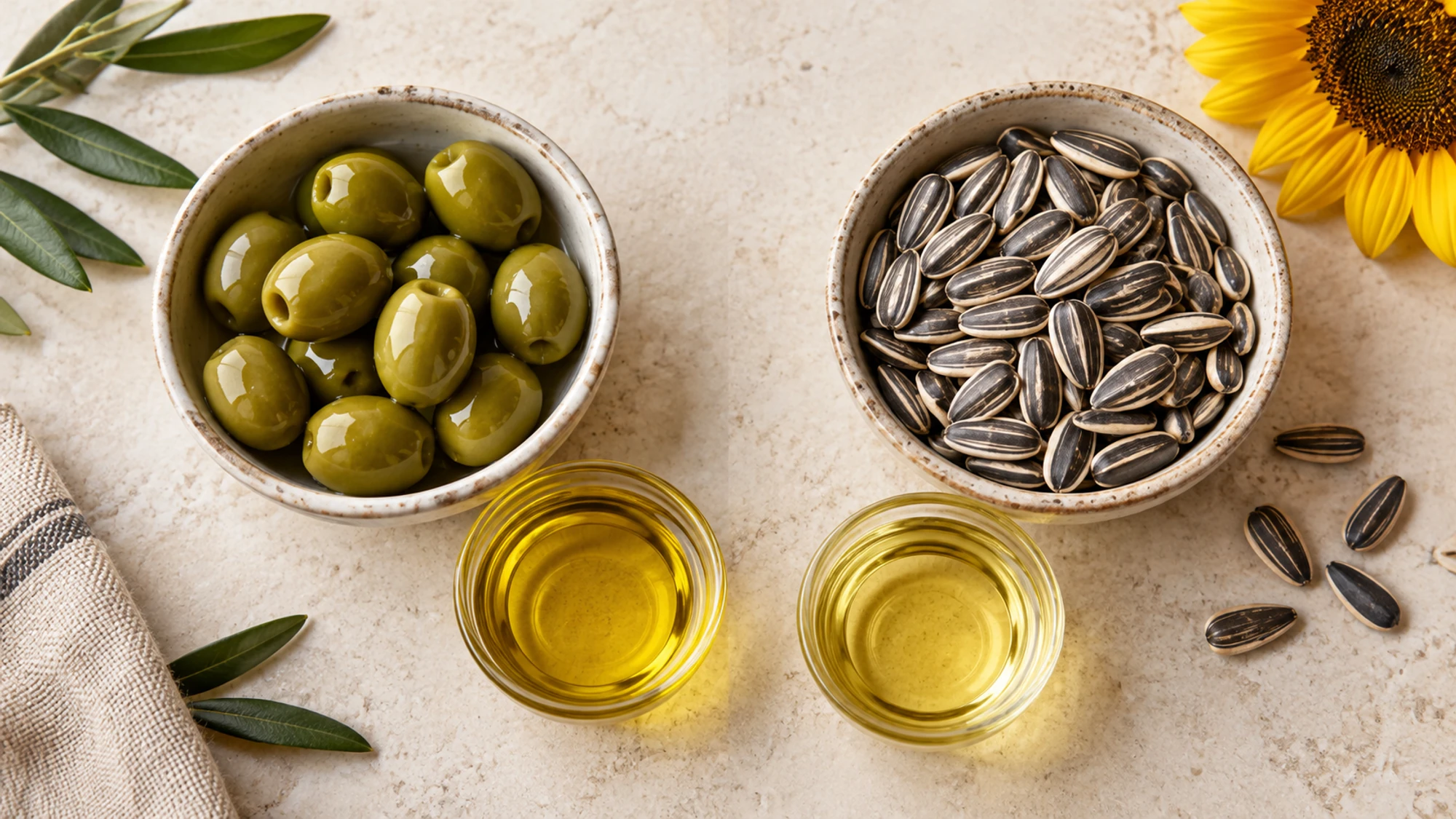
The useful comparison is the main plant material supplying the oil. These examples follow Codex definitions of vegetable-oil sources; they describe origin rather than ranking the oils.
| Oil | Main source | Seed oil? |
|---|---|---|
| Olive | Olive fruit | No |
| Sunflower | Sunflower seeds | Yes |
| Canola | Low-erucic rapeseeds | Yes |
| Sesame | Sesame seeds | Yes |
What extra virgin and refined actually mean
Processing is a separate question. The International Olive Council defines virgin olive oils as obtained from olive fruit through mechanical or other physical means, with limited treatments such as washing, centrifuging and filtering. Refining changes the processing category, not the original crop.
- Extra virgin: a virgin olive oil that meets specific chemical and sensory standards, including fruitiness and no sensory defects under the USDA grade standards.
- Olive oil: under those standards, this category combines refined olive oil with virgin olive oil. It is still olive-derived.
- Olive-pomace oil: a separate category made from olive-processing residue. Do not confuse that name with extra virgin or ordinary olive oil.
What the evidence says about health
Olive oil supplies mainly monounsaturated fat. The American Heart Association explains that replacing saturated fat with monounsaturated fat can help lower LDL cholesterol. The replacement matters: adding oil to an otherwise unchanged meal is a different choice from replacing butter.
- Inflammation: a 2017 meta-analysis of 30 randomized trials involving 1,377 adults found no significant overall increase in blood inflammatory markers with higher linoleic-acid intake.
- Limits: larger intake changes might influence C-reactive protein, and some markers had limited evidence. These findings do not prove every oil or eating pattern has identical effects.
I would give the whole meal more attention than a “seed-free” slogan. Ingredient source, the type of fat being replaced and how you use the oil are more informative together than a single category name.
How to read the bottle before buying
Start with the oil’s name and any ingredient list. A blend containing olive oil and sunflower oil contains both sources; the olive oil has not changed botanical identity. The blend simply needs to be understood as a blend.
- Choose the category deliberately. Look for “extra virgin” when that is the oil you intend to buy, rather than assuming every olive-colored bottle contains it.
- Read past the front label. Check named oils in blends and flavored products instead of treating “made with olive oil” as a complete description.
- Match size to use. I would choose a manageable bottle over an impressive bargain jug that will spend months open.
Using and storing olive oil
Let flavor help with the everyday decision. An olive oil you enjoy can bring a finishing drizzle to creamy white bean dip or round out the lemon dressing in chickpea cucumber salad. Start with the recipe’s measured amount, then decide whether its flavor suits the dish.
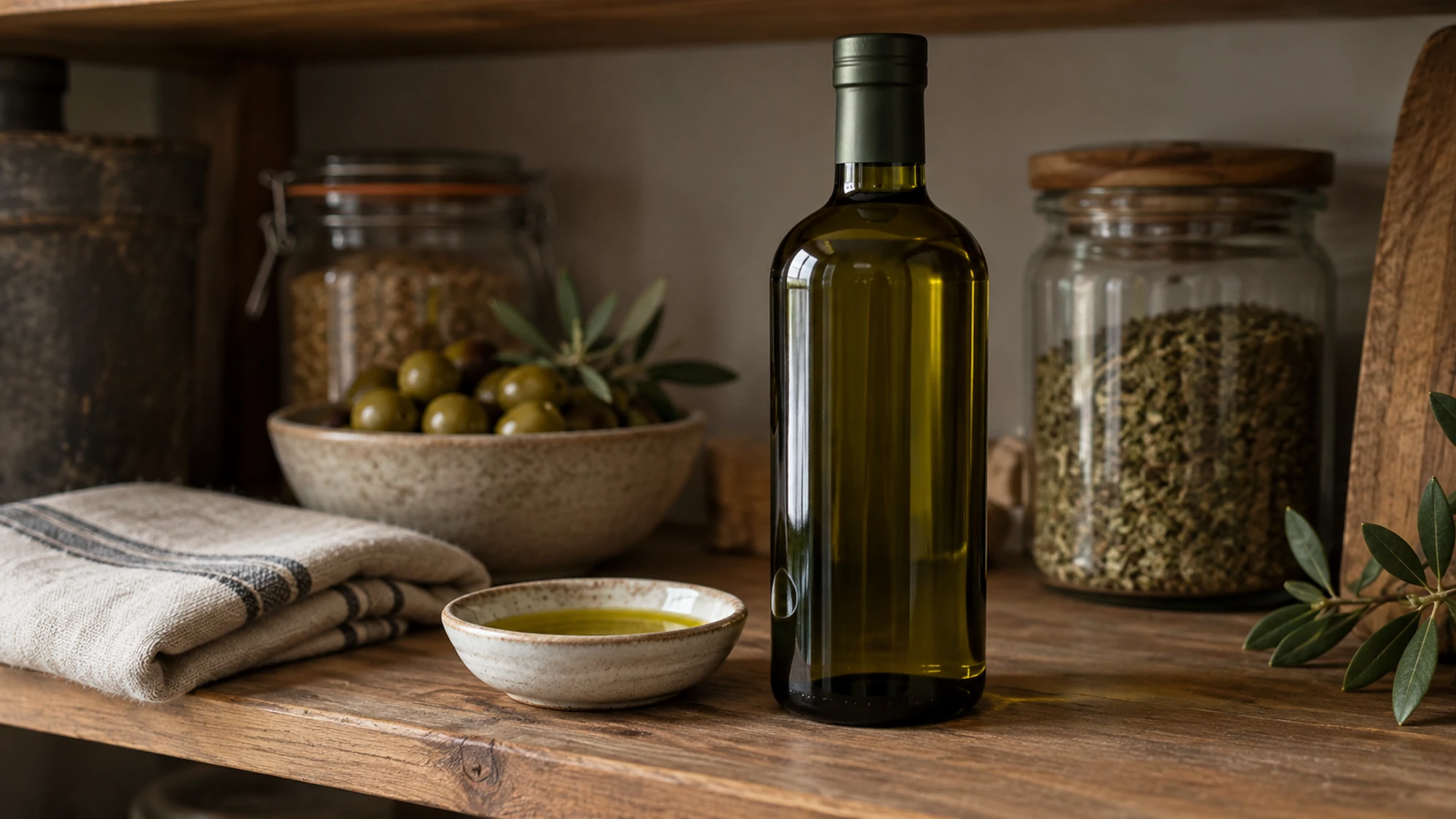
Olive oil can also be used for cooking. The American Heart Association’s cooking-oil guidance includes olive oil, advises against using oil once it smokes, and recommends a cool, dark storage place. Keep the cap closed and choose smaller containers when you use oil slowly.
Olive oil comes mainly from olive flesh. Read the category and blend ingredients, choose an oil that suits your food, and store it thoughtfully. That gives you a more useful decision than the seed-oil label alone.
Sources
- García-Inza and colleagues: olive mesocarp and seed oils (2016).
- FAO/Codex: named vegetable-oil definitions.
- International Olive Council: olive-oil definitions, Annex B.
- USDA: olive-oil grades and standards.
- Su and colleagues: linoleic acid and inflammatory markers (2017).
- American Heart Association: monounsaturated fats; cooking-oil guidance.

Emily Parker is DISHORA’s recipe-writing persona, bringing a warm, practical voice to everyday cooking. Her focus is simple ingredients, comforting flavors and clear steps that make a dish feel approachable. From cozy dinners to something sweet, Emily’s recipes invite readers to try something delicious and make it their own.