
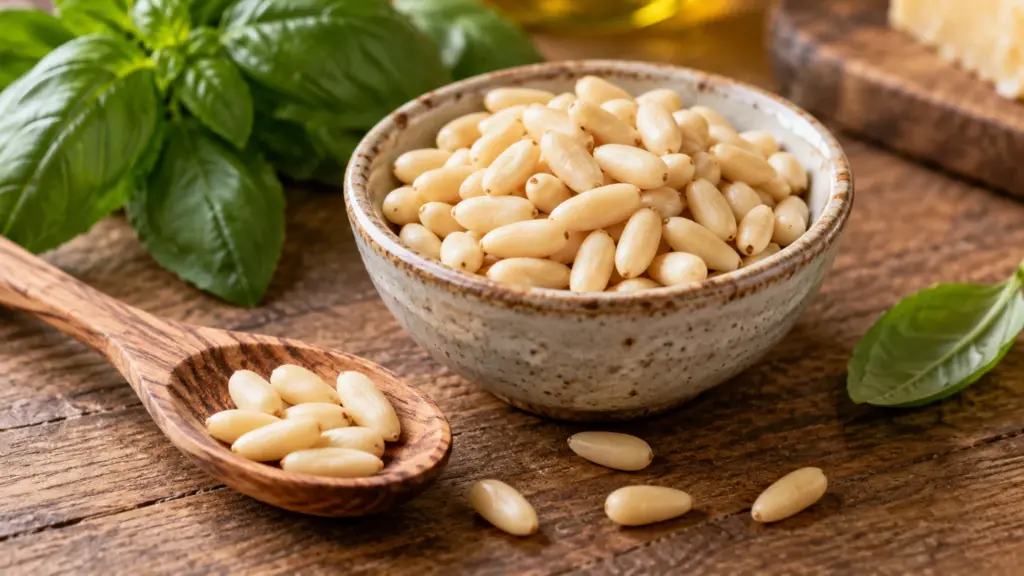
A pesto ingredient list says pine nuts, while the shop sells a small bag labeled pine kernels. Before buying both, it helps to know that the wording usually describes the same food at a different level of detail.
Pine kernels and pine nuts usually refer to the edible seeds of pine trees. Kernel specifically means the edible inner part after the shell is removed; pine nuts may be sold shelled or in the shell, so check the package.
I’d look at the actual contents before treating the names as two ingredients. The more useful shopping questions are whether they are shelled, plain or seasoned, and how much you will use while they still taste fresh.
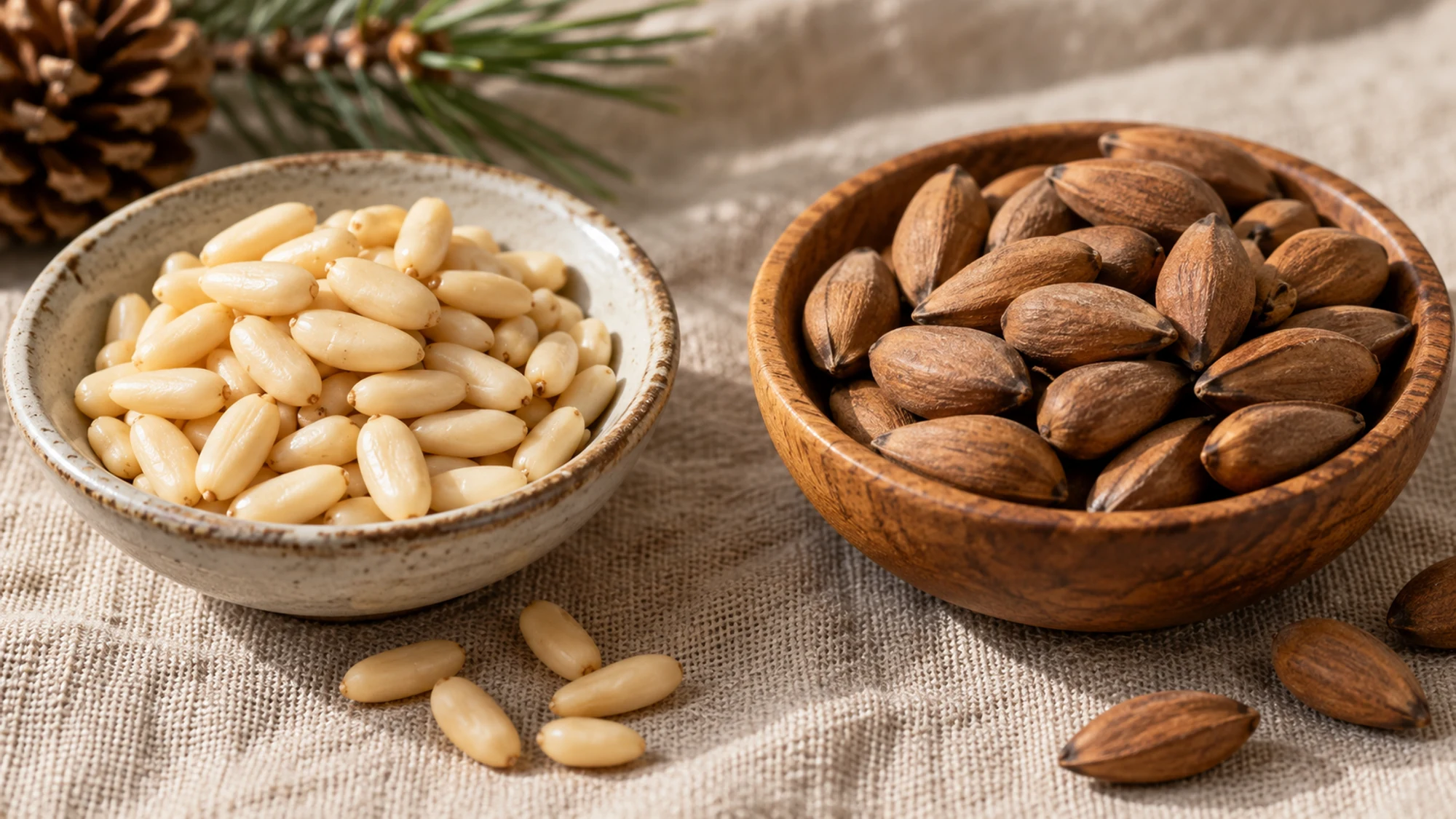
The shell explains the main distinction
The UNECE pine-nut-kernel standard describes the shelled product and identifies several pine species used for food. In everyday shopping, a bag of pale kernels is generally ready to use without cracking individual shells.
Pine nuts is the broader culinary name, and the product can still be in its hard shell. Do not compare the total weight of an in-shell bag with the same weight of shelled kernels as though both provide the same amount of edible food.
| Package wording | What it usually means | Useful check |
|---|---|---|
| Pine kernels / shelled pine nuts | Edible seed with shell removed | Plain, toasted, salted or flavored? |
| In-shell pine nuts | Seed still inside a hard shell | Allow for shelling and shell weight |
| Piñon / pinyon nuts | A name associated with pinyon pines | Origin, shell and preparation |
| Pine nut mixture | A product with additional ingredients | Full ingredient and allergen list |
Check the ingredient list as well as the photograph to see whether anything has been added.
Different pines can mean different kernels
Pine nuts are not one uniform seed from one tree. The U.S. Forest Service describes the edible seeds of twoneedle pinyon, while the UNECE document also names species such as Mediterranean stone pine and Korean pine.
Size, shape and flavor can vary, so one packet may not look exactly like another. That variation is separate from the kernel-versus-nut wording; compare the product’s origin and species information when the producer provides it.
Buy a useful amount and store it cold
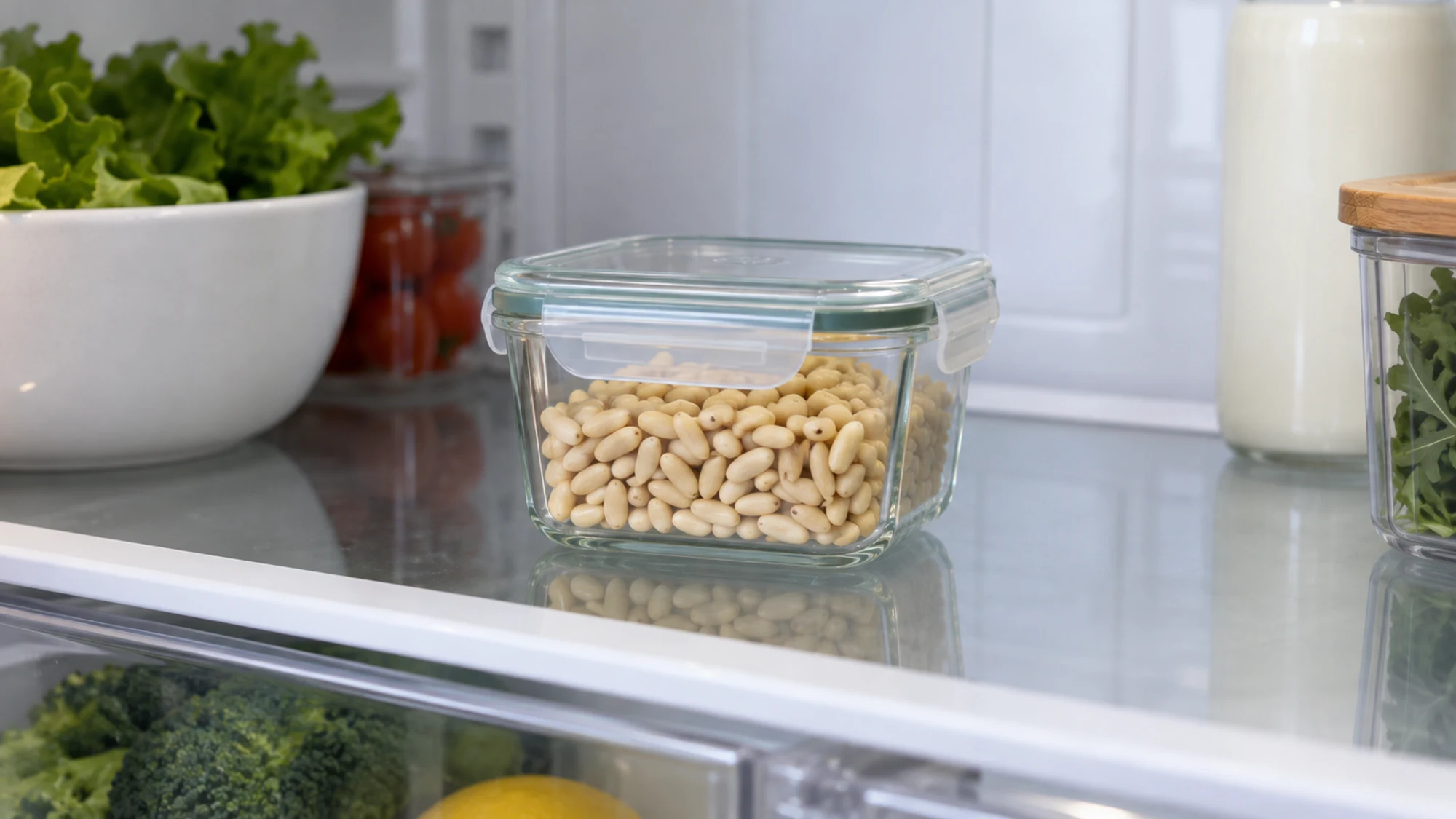
Choose intact packaging and follow its best-quality and storage directions. For plain shelled pine nuts, a smaller bag can make more sense than a large one if you only need an occasional garnish.
New Mexico State University’s storage guide lists about three months in the refrigerator and nine months in the freezer for pine nuts. Treat those as general storage guidance, with the current package directions and the product’s condition taking priority.
- After opening, use a clean, dry, tightly sealed container and note the date.
- Keep a small portion available and freeze the remainder if you will not use it soon.
- Keep kernels away from strong-smelling foods so their mild flavor is not overwhelmed.
UC Agriculture and Natural Resources explains that warmth speeds rancidity and that shelled nuts absorb moisture and outside odors. Replace kernels with an unpleasant rancid smell or flavor rather than trying to cover it with toast or seasoning.
Use their flavor where you will notice it
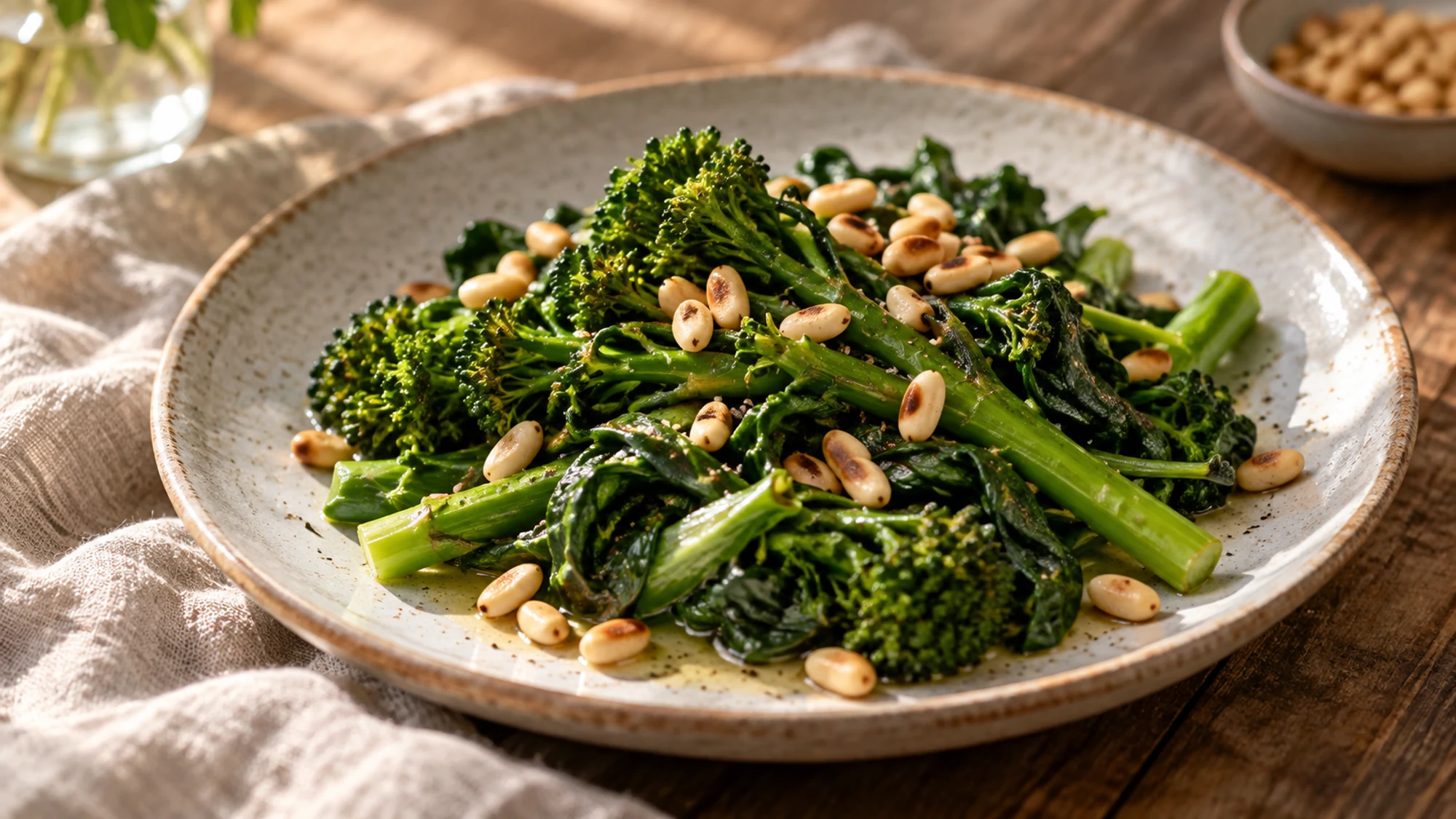
Plain kernels bring a mild, rich bite to salads, cooked greens, grain bowls and sauces. They do not need to cover the whole plate to contribute texture.
Toasting changes the flavor and color, so keep an eye on a small batch and move it off the hot surface once it is lightly golden. I prefer a delicate toast when the point is to keep basil or another fresh ingredient recognizable.
- Scatter a modest amount over vegetables or a salad just before serving.
- Choose plain kernels when you want to control salt and other seasonings yourself.
- Expect a different flavor if you replace them with walnuts, pumpkin seeds or another ingredient; check the eater’s needs before making that swap.
DISHORA’s pesto guide puts pine nuts beside basil, Parmesan, garlic and olive oil. It also explains a walnut variation, which changes the result rather than making the two ingredients identical.
Seed does not mean allergy-free
The American Academy of Allergy, Asthma & Immunology describes allergic reactions to pine nuts and uncertainty about cross-reactivity with other nuts. If food allergy is involved, an allergist’s individual advice matters more than the botanical name.
A separate issue is “pine mouth,” a lingering bitter or metallic taste reported after some pine nuts. The FDA describes historical reports and substitution of non-food pine species; that account does not establish how often it occurs today.
For most shopping decisions, kernels means shelled and pine nuts names the food more broadly. Check the contents, buy an amount you can use and protect the delicate flavor with sensible storage.
Sources
- UNECE: pine nut kernel definition and species
- U.S. Forest Service: edible pinyon seeds
- New Mexico State University: pine nut storage
- UC ANR: nut storage and rancidity
- AAAAI: pine nut allergy
- FDA: historical pine-mouth reports

Emily Parker is DISHORA’s recipe-writing persona, bringing a warm, practical voice to everyday cooking. Her focus is simple ingredients, comforting flavors and clear steps that make a dish feel approachable. From cozy dinners to something sweet, Emily’s recipes invite readers to try something delicious and make it their own.