
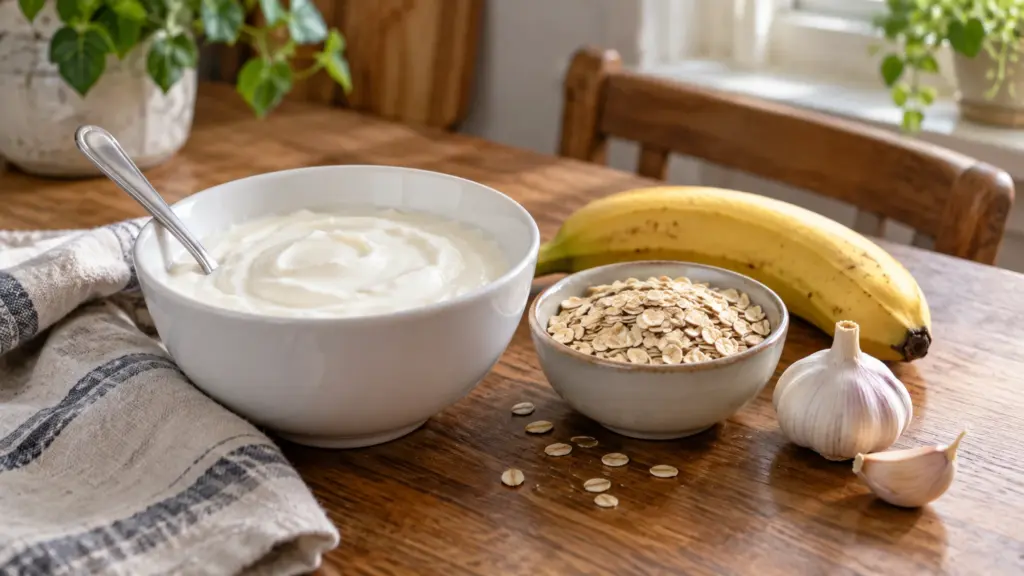
The yogurt aisle can turn a simple grocery trip into a vocabulary test. Prebiotic vs probiotic sounds like a tiny spelling difference, yet the terms describe different things—and neither word guarantees that a product will solve a digestive problem.
Prebiotics are substances selectively used by your body’s microorganisms that provide a health benefit. Probiotics are live microorganisms that provide a demonstrated benefit when consumed in adequate amounts. Think of the distinction as a useful substrate versus living microbes, with evidence required for both.
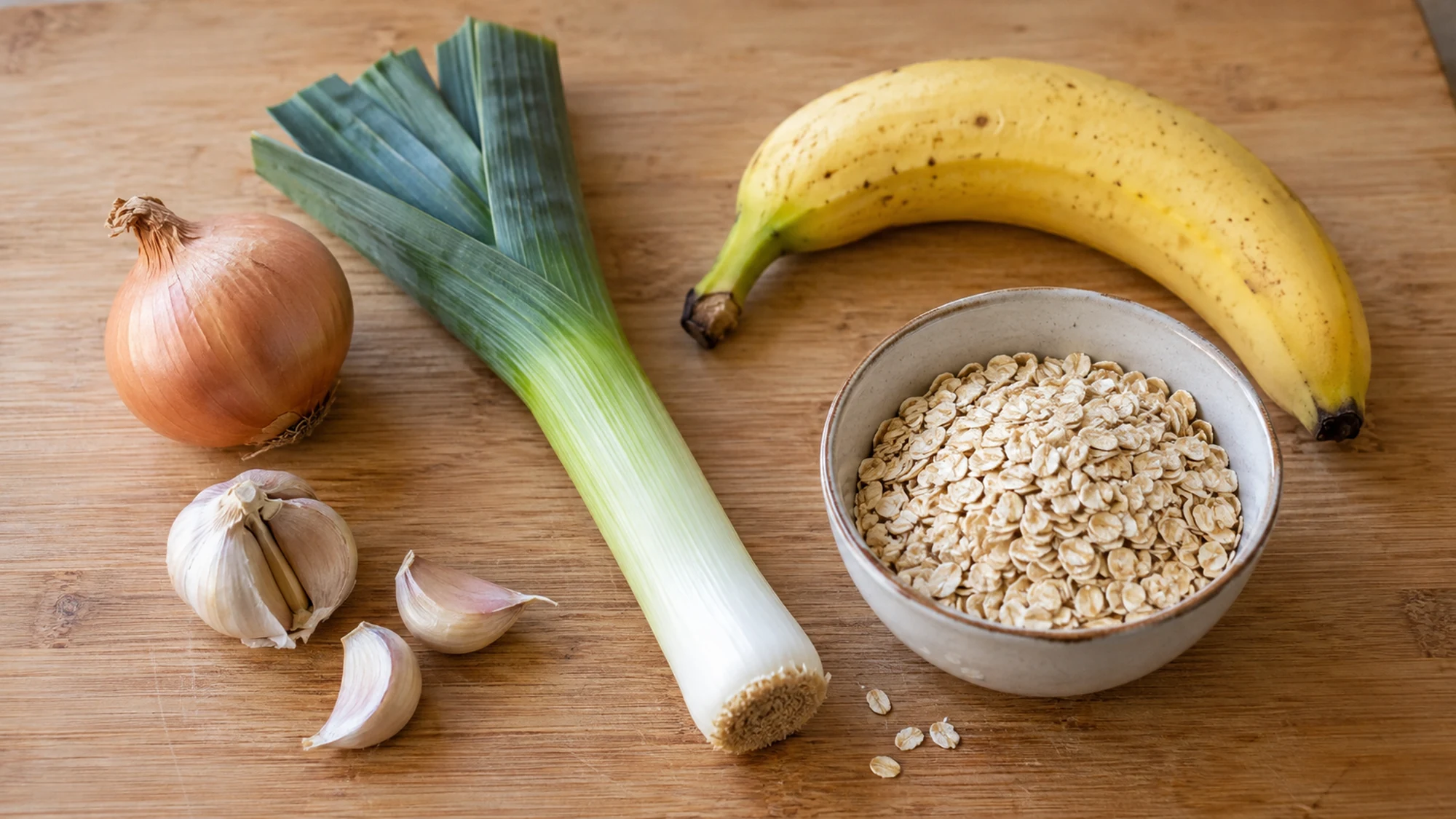
Prebiotic vs probiotic: the basic difference
The 2017 scientific consensus on prebiotics makes the health-benefit requirement important. Something does not qualify simply because microbes can ferment it. Likewise, the probiotic consensus definition requires more than the presence of living bacteria.
| Term | What it describes | Key qualification |
|---|---|---|
| Prebiotic | A substance used by selected host microbes | Evidence of a health benefit |
| Probiotic | Living microorganisms | Adequate amount and demonstrated benefit |
The two are not competing versions of the same ingredient. A food can supply fiber without supplying live microbes, while a cultured food can contain microbes without supplying much fiber. That is why comparing the words alone tells you little about the whole food.
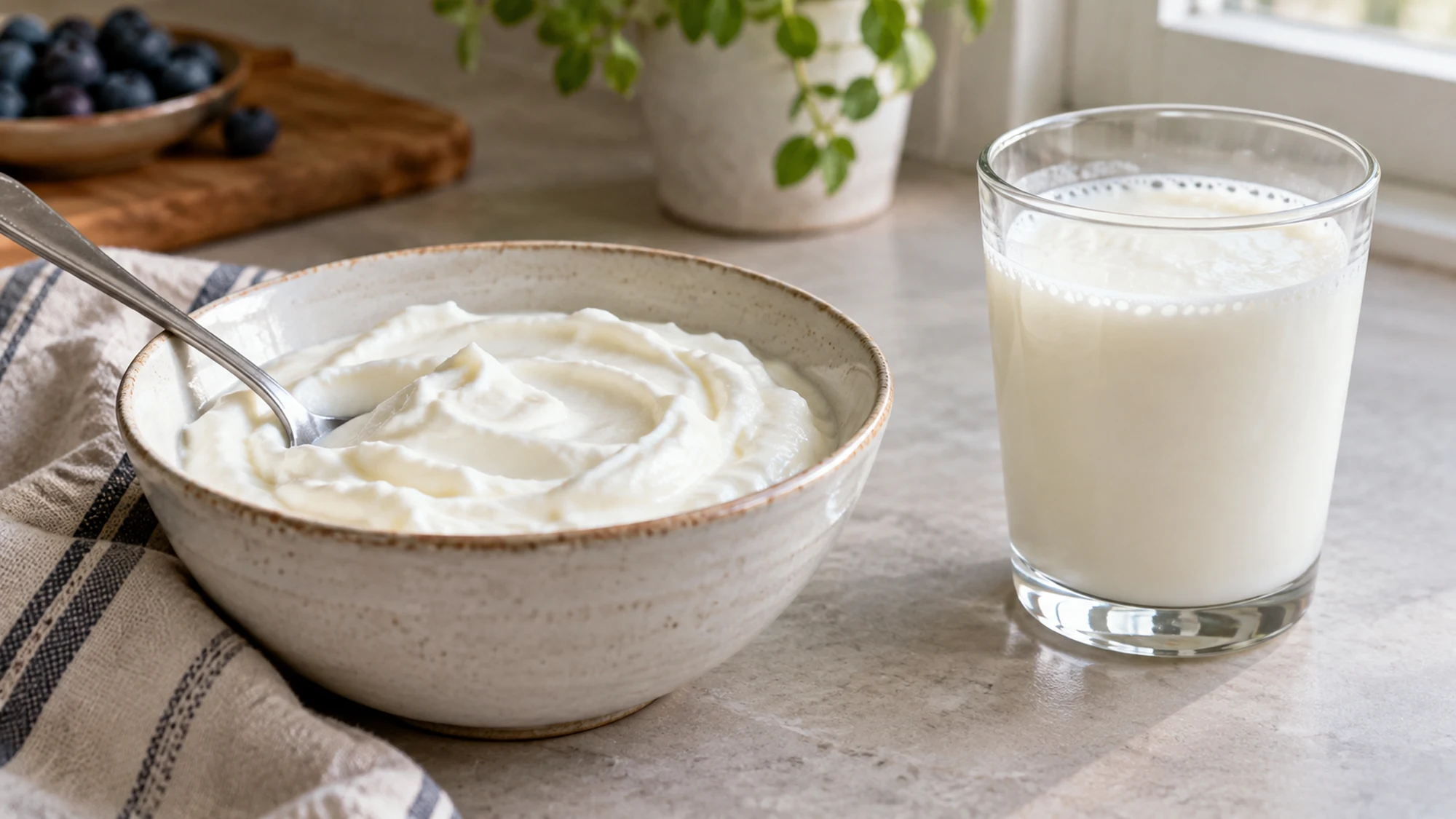
Fiber and fermented foods need their own labels
Some well-studied prebiotic substances include inulin, fructooligosaccharides and galactooligosaccharides. The prebiotic consensus distinguishes qualifying substrates from the broader fiber category: not every fiber has established prebiotic effects.
- Fiber-rich foods: Oats, beans, fruit and vegetables can contribute to a varied eating pattern without needing a special claim.
- Fermented foods: Yogurt and kefir are made through microbial activity, but their specific contents and supporting evidence vary.
- Heat-treated products: Some foods undergo processing that removes or kills live microorganisms.
The scientific consensus on fermented foods explains why “fermented” and “probiotic” are not interchangeable. Live cultures alone do not prove a particular product delivers a particular benefit.
I’d choose a yogurt I enjoy eating before paying extra for an impressive-sounding label. Creamy texture and a pleasant tang are things a spoonful can tell you; clinical effectiveness needs a different kind of evidence.
Read the evidence, then the probiotic label
According to the NIH Office of Dietary Supplements, probiotic effects can be strain-specific. Evidence for one organism and use cannot automatically be transferred to another blend, dose or health concern. A product studied for one narrowly defined outcome may not answer a different question. Check whether research used the same strain and amount as the item on the shelf, rather than assuming all products sharing a familiar species name are equivalent.
- Look for the organism’s genus, species and strain rather than only a broad word such as bacteria.
- Check the amount, serving instructions, expiration date and storage directions.
- For colony-forming units, look for viable amounts through the end of shelf life; a larger number alone does not establish greater benefit.
The National Center for Complementary and Integrative Health notes that much remains unknown about which probiotics help, how much is needed and who is most likely to benefit. A promising study is not a universal shopping recommendation.
Make everyday food choices manageable
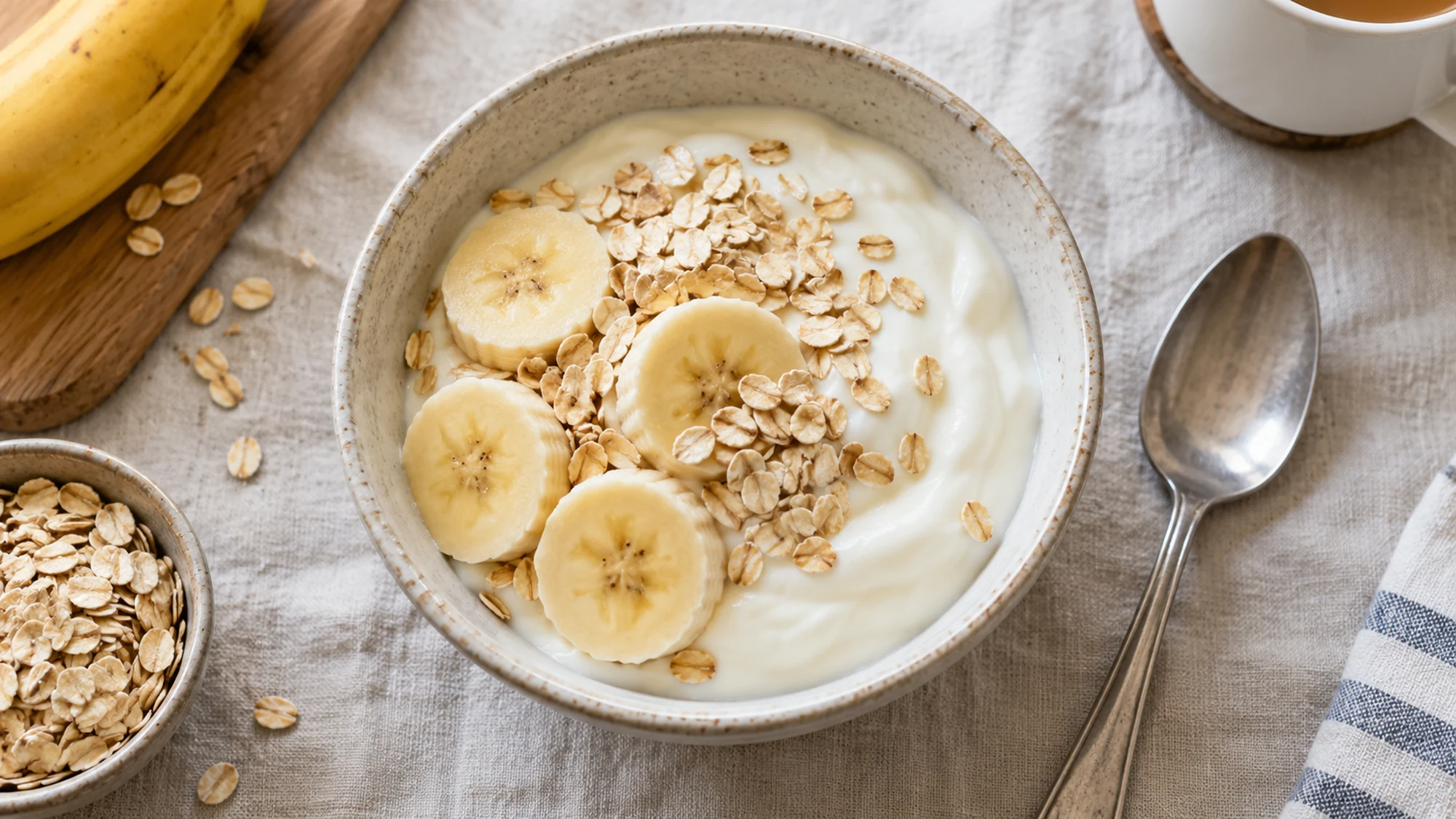
You do not need to turn breakfast into a supplement schedule. A bowl of oats, fruit or plain yogurt can be a food choice first. Combining them does not, by itself, prove that the meal is a clinically tested gut-health treatment.
If you are increasing fiber, the NIDDK recommends adding it gradually and drinking enough fluids to help it work. Start with changes you tolerate, especially if a sudden increase leaves you uncomfortable.
- Add beans or lentils to a meal you already like.
- Rotate fruits, vegetables and whole grains instead of relying on one fashionable ingredient.
- For a sweet yogurt idea, try DISHORA’s yogurt biscuit cups. Treat them as a dessert, not evidence of a probiotic effect.
I prefer one comfortable food change to a cupboard full of products with overlapping promises. A meal that suits your appetite and routine is easier to keep making.
Know when individual advice matters
Probiotics are not automatically appropriate for everyone. NCCIH reports greater risks in people with severe illness or compromised immune systems; discuss supplement use with a qualified health professional in those circumstances.
Persistent or troubling digestive symptoms deserve assessment rather than an endless cycle of new products. Food preferences, medical conditions and individual tolerance can change what is sensible for you.
The useful takeaway: prebiotics concern qualifying substrates, while probiotics concern qualifying live microbes. Keep that distinction, look for evidence behind the specific claim, and let ordinary meals remain ordinary meals.
Sources
- ISAPP: prebiotic consensus
- ISAPP: probiotic consensus
- ISAPP: fermented-food consensus
- NIH: probiotics and labels
- NCCIH: evidence and safety
- NIDDK: fiber and fluids

Emily Parker is DISHORA’s recipe-writing persona, bringing a warm, practical voice to everyday cooking. Her focus is simple ingredients, comforting flavors and clear steps that make a dish feel approachable. From cozy dinners to something sweet, Emily’s recipes invite readers to try something delicious and make it their own.