

The carton says large, the breakfast plate holds two eggs, and the nutrition app wants a number. How much protein in an egg should you actually count? Start with the edible egg and its size, then keep additions such as milk or cheese separate.
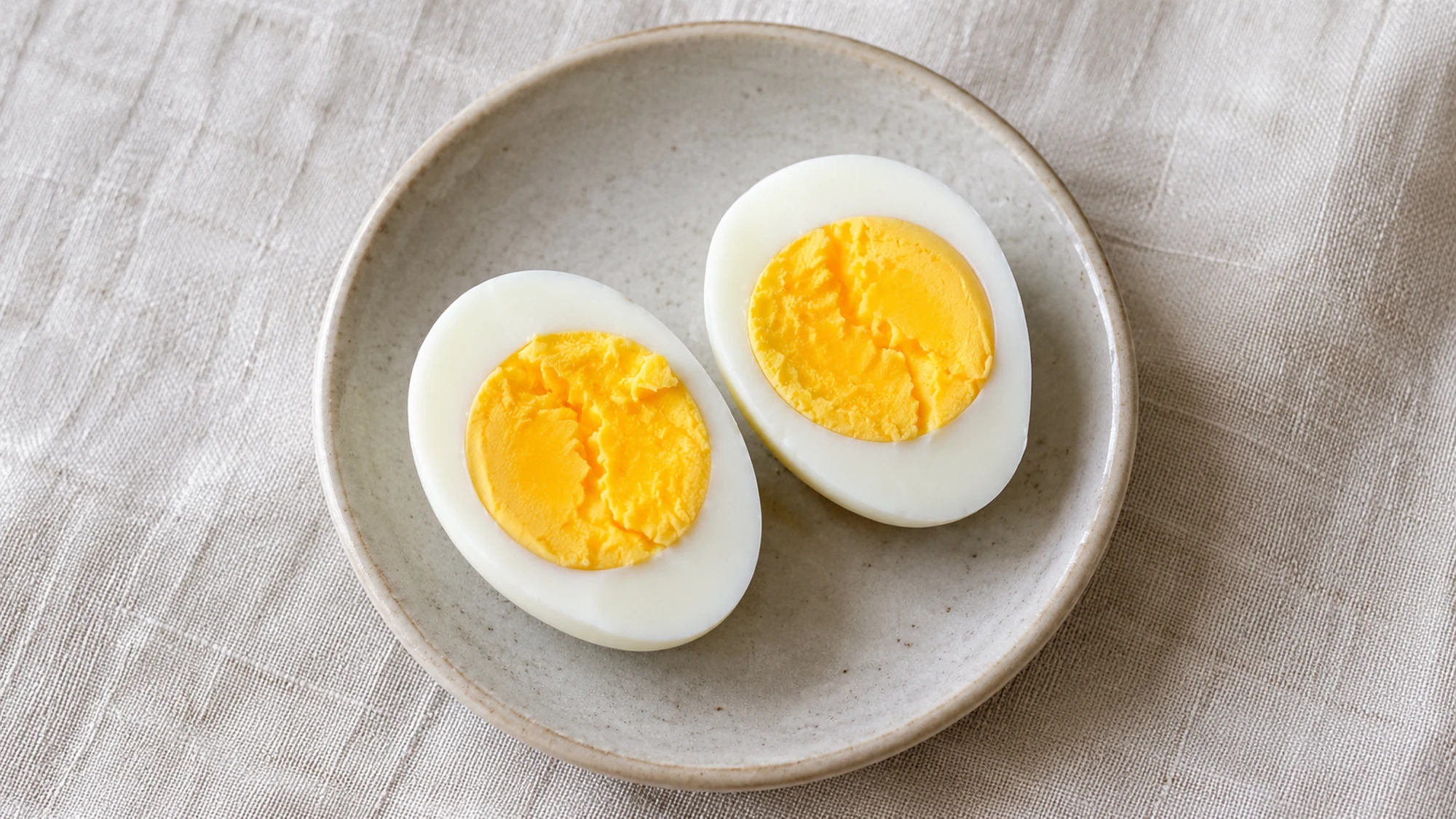
One large chicken egg provides about 6.3 grams of protein. The white supplies around 3.6 grams and the yolk about 2.7 grams, so discarding the yolk also removes some protein. These are rounded reference values, not an exact measurement of every egg.
How much protein in an egg: a useful comparison
University Hospitals’ nutrient references list about 6.29 grams for a large whole egg, 3.6 grams for its white and 2.7 grams for its yolk. The table rounds those figures for practical use.
| Portion | Protein |
|---|---|
| Whole egg | About 6.3 g |
| White only | About 3.6 g |
| Yolk only | About 2.7 g |
The raw entries provide a consistent comparison; they are not advice to eat eggs raw. Smaller eggs generally contain less edible material, while product sizes and database entries can differ. Check the carton or product label when you need a closer estimate.

The white is useful, but the yolk counts too
The white contributes more than half of the protein in this reference egg, but it is not the whole story. Keeping the yolk gives you the remaining protein as well as the egg’s richer flavor and a different nutrient mix.
- Whole egg: A straightforward option when you want both the white and yolk.
- White only: Useful when the dish calls for whites; count the amount you actually use.
- Carton whites: Read the serving size rather than assuming every splash equals one egg white.
Replacing one whole egg with one white also lowers the protein amount. Two large whites provide about 7.2 grams using these references, but that does not make them nutritionally identical to a whole egg.
I’d keep the yolk when it suits the meal rather than treating it as wasted space. Eggs also provide choline, an essential nutrient; a protein total does not describe every useful part of a food.
Cooking changes more than the texture
A 1998 study of egg-protein digestion found higher digestibility for cooked than raw egg protein. It involved only five people with ileostomies and specially prepared test meals, so its percentages should not be treated as precise predictions for everyone’s breakfast.
That study concerns how protein is digested, which is different from the grams listed in a nutrient table. Cooking does not turn a single egg into a much larger protein serving; changes in water content and added ingredients can make comparisons per 100 grams look different.
- Compare the same number or weight of eggs when possible.
- Count milk, cheese, beans or other additions separately.
- Do not assume that drinking raw eggs gives a protein advantage.
Count the eggs in the meal you eat
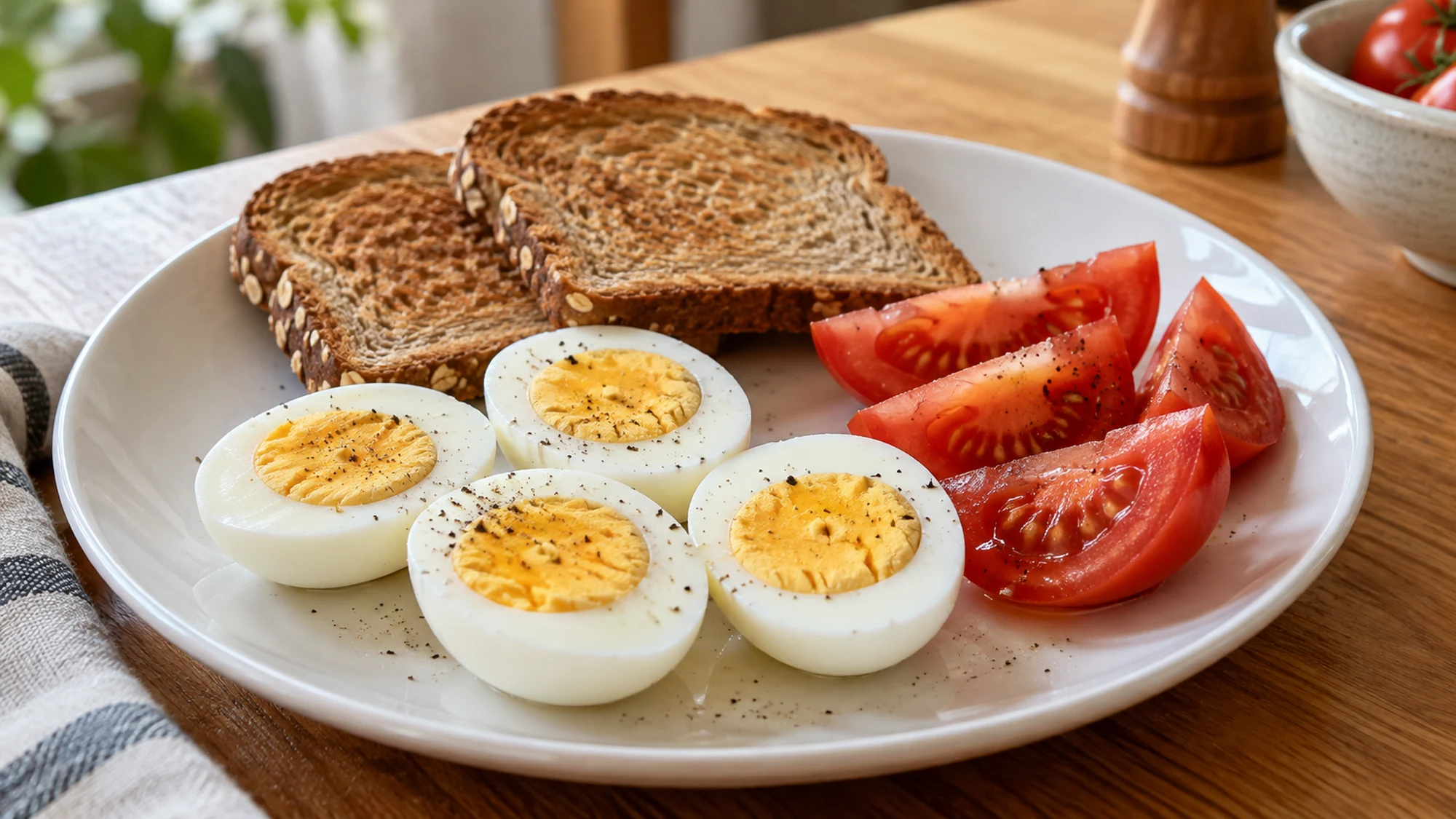
Using the whole-egg reference, two large eggs contribute about 12.6 grams of protein before additions. For a shared dish, count the eggs in the batch and divide by the portions actually served; a small slice and a generous slice are different amounts.
For example, DISHORA’s shakshuka uses six eggs for three generous servings. That is two eggs per serving, although the sauce and any bread bring their own nutrients. I prefer that clear count to guessing from how full the skillet looks.
- Food-group amounts differ from protein grams: USDA MyPlate counts one egg as one ounce-equivalent of Protein Foods. That does not mean it contains an ounce of pure protein.
- Think about variety: Beans, soy foods, fish, dairy and other choices can contribute alongside eggs, depending on what you eat.
- Check liquid products: Cartons may contain whole eggs, whites or other ingredients. Compare the protein grams for the stated serving and measure that portion rather than judging the amount by eye.
Keep the protein choice food-safe
The FDA’s egg-safety guidance recommends cooking until both white and yolk are firm. Egg dishes should reach 160°F (71°C); use a thermometer for dishes where the center is hard to judge.
- Keep eggs refrigerated at 40°F (4°C) or below.
- Use hard-cooked eggs within one week and refrigerate them promptly.
- For foods served raw or undercooked, use appropriately pasteurized eggs or egg products.
Use about 6.3 grams as a practical starting point for one large egg, then adjust for the actual portion. Keep the preparation safe and the rest of the meal in view; breakfast does not need a spreadsheet to be useful.
Sources
- University Hospitals: whole egg
- University Hospitals: egg white
- University Hospitals: egg yolk
- Evenepoel and colleagues: digestion study
- NIH: choline
- USDA MyPlate: Protein Foods
- FDA: egg safety

Emily Parker is DISHORA’s recipe-writing persona, bringing a warm, practical voice to everyday cooking. Her focus is simple ingredients, comforting flavors and clear steps that make a dish feel approachable. From cozy dinners to something sweet, Emily’s recipes invite readers to try something delicious and make it their own.