
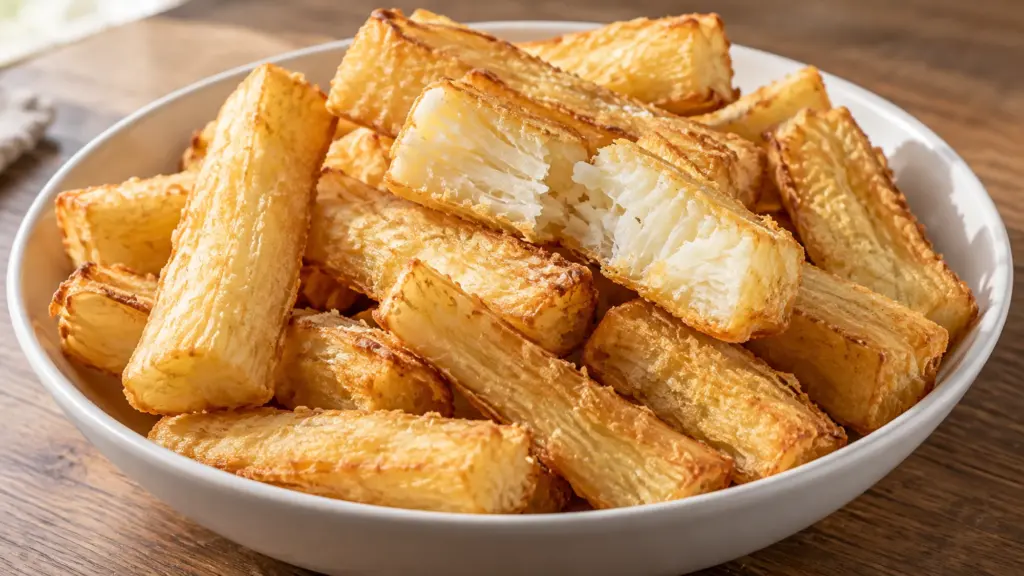
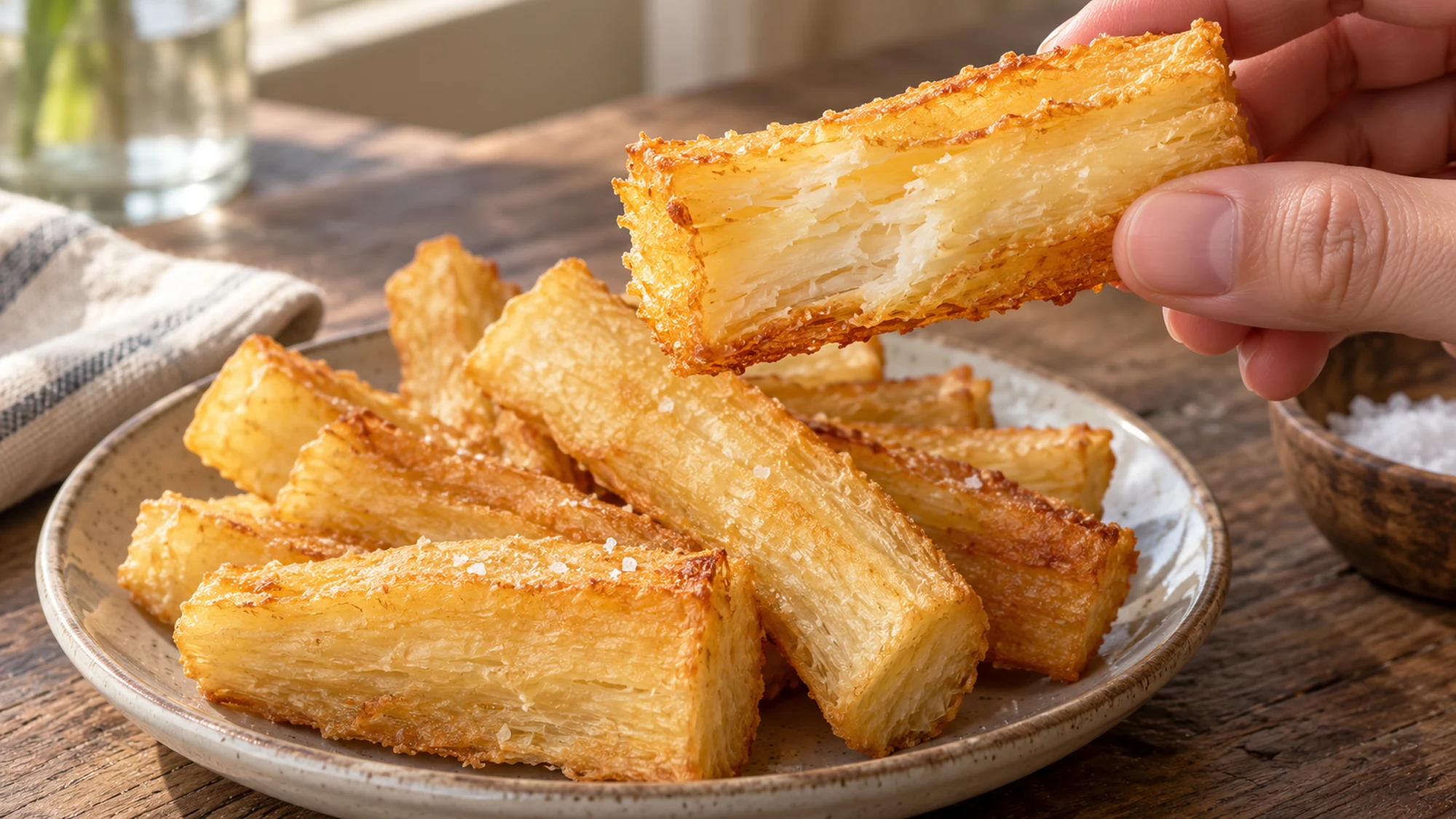
A plate of yuca fries belongs on the table while the edges are still crackly and the centers are soft enough to pull apart. These thick cassava wedges have a denser, creamier bite than potato fries. The method is simple: cook the yuca fully in water, dry it well, then fry in small batches.
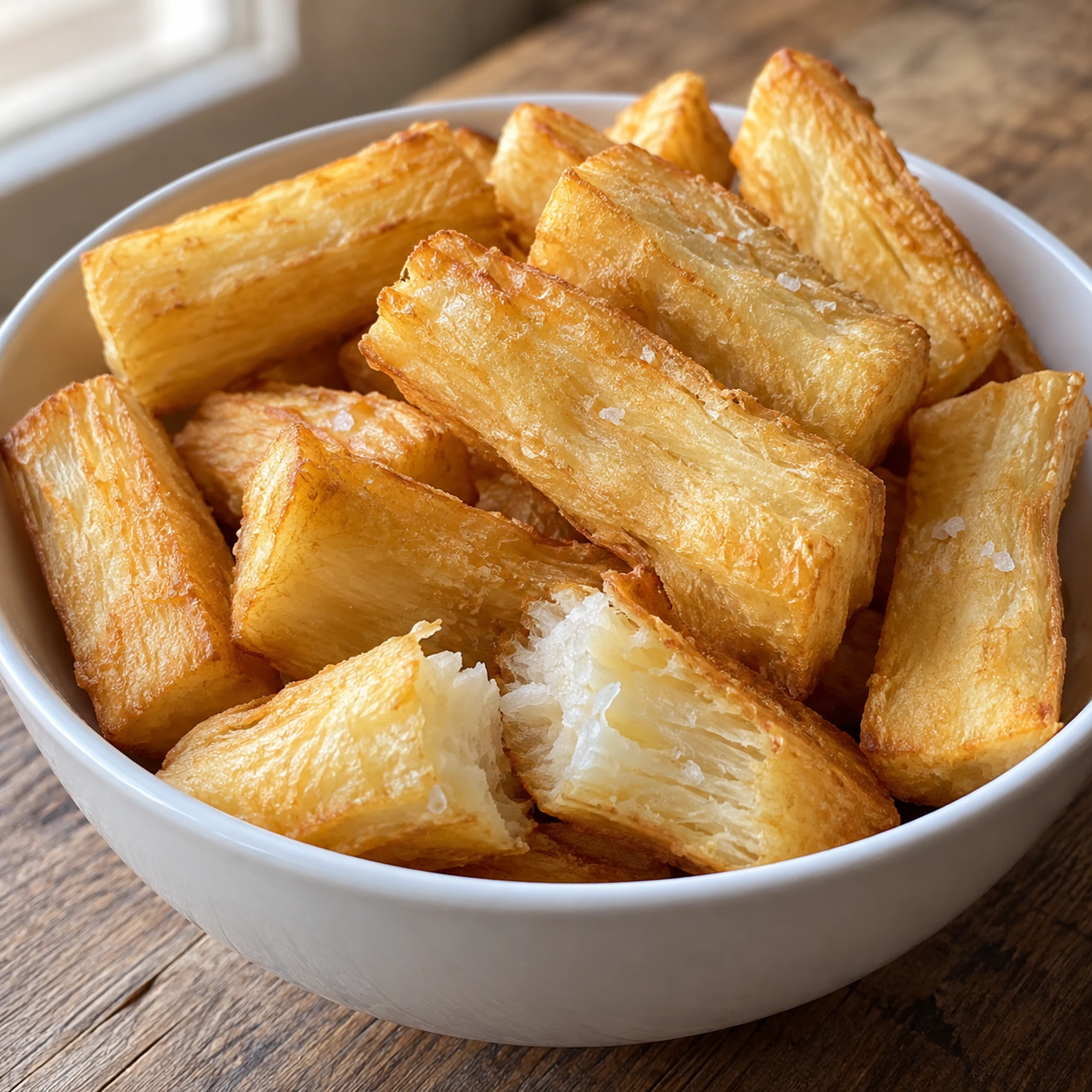
Start with packaged peeled yuca meant for cooking, follow its preparation directions, and never skip the boiling stage before frying.
This version uses frozen peeled cassava, which saves the work of removing the tough outer skin. It is not the same as a bag of ready-to-heat fries. Check the label carefully. I like this starting point because the ingredients stay simple while the preparation feels manageable.
Serving suggestions
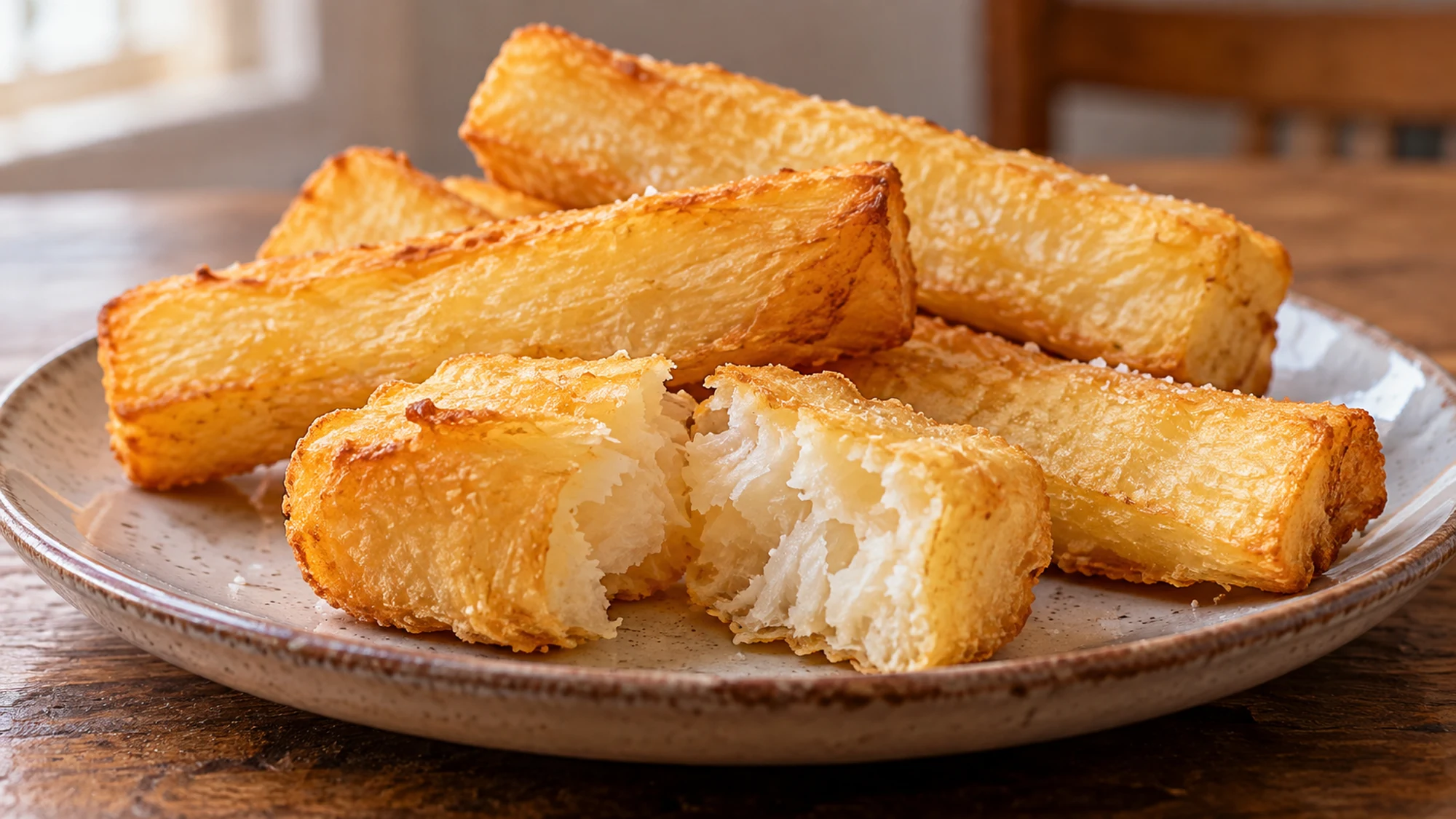
Bring the fries to the table as soon as they have drained and received their final seasoning. A shallow bowl or platter lets steam escape better than a deep covered container. Serve beside grilled fish, roast chicken, or beans with rice, leaving room for something crisp and fresh.
A little dip can be welcome, but serve it separately so it does not soften the crust. Garlic sauce, a bright herb sauce, or plain ketchup are optional accompaniments rather than ingredients in this recipe. Start with a small amount; the mild cassava flavor is easy to overwhelm.
For a fuller spread, a bowl of sopa de lima makes an aromatic first course on another occasion. When frying for several people, set out the sides before the last batch goes into the oil. Fries are not especially patient dinner guests.
Keep the platter uncovered, the dips separate, and the route from the frying pot to the table short.
Variations
The card deliberately keeps the seasoning to salt. Once the basic version is familiar, try a small pinch of smoked paprika after frying, or offer lime wedges at the table. Add powders lightly, because a thick coating can hide the natural texture and taste dusty.
Use a neutral frying oil such as canola oil. Its quiet flavor lets the yuca stand out. The amount in the pot is a cooking medium, not a prediction of how much oil the fries absorb. A thermometer is useful for keeping the temperature steady between batches.
Fresh cassava requires careful identification and peeling; this card is written for a packaged, peeled cooking product. Do not substitute an unknown or bitter cassava root. If your package specifies a longer boil, follow that direction and wait for the centers to become fully tender before continuing.
Build flavor after frying, and keep the ingredient choice and complete cooking steps consistent with the package you use.
Health benefits
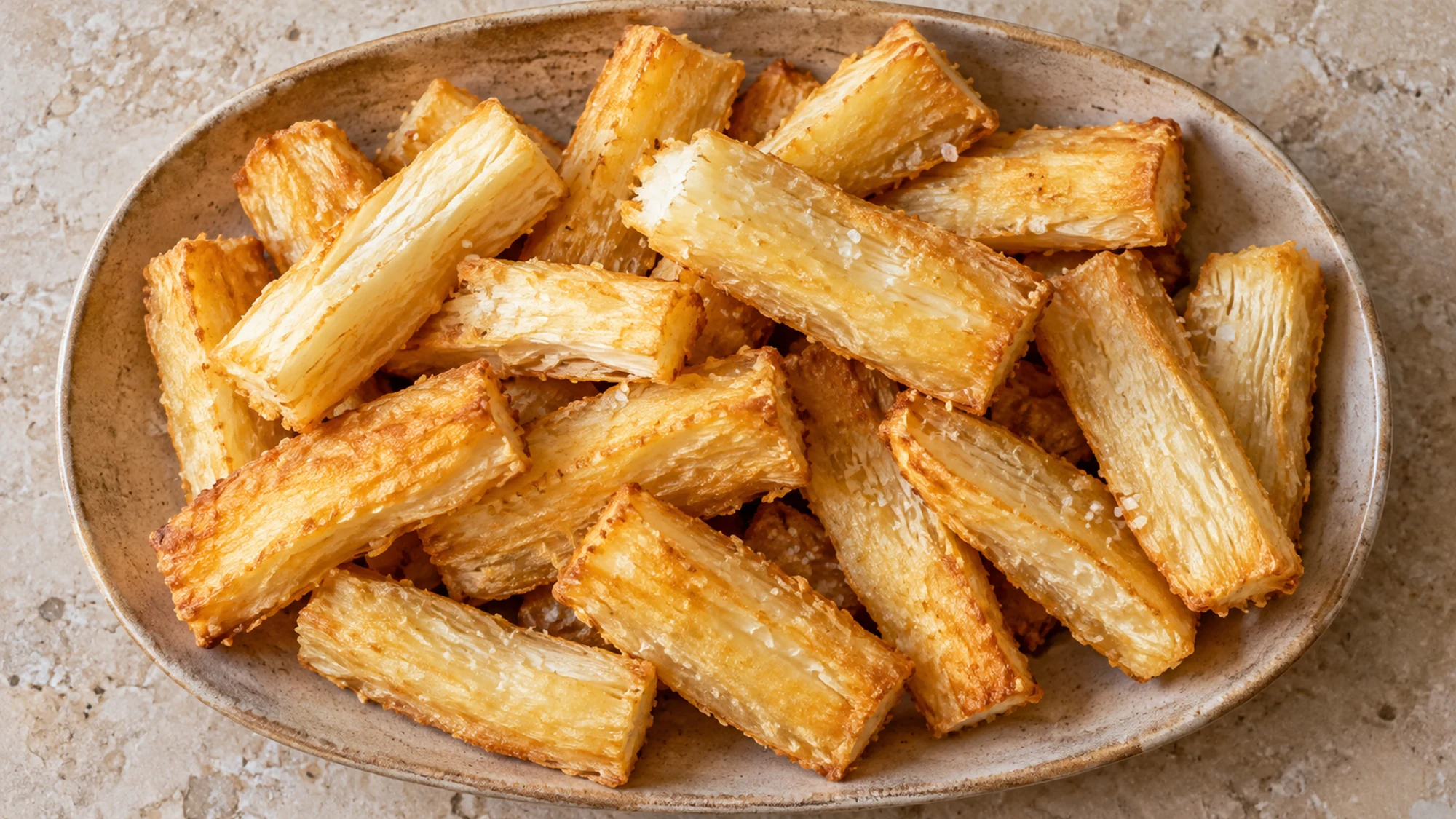
Cassava is a starchy root that contributes carbohydrate. These fries can be one part of a varied meal, but deep frying adds fat and energy. I would serve a modest portion with a protein food and vegetables rather than treat the fries as a complete lunch.
The plain ingredients contain no wheat, egg, or dairy, although packaged products and shared frying oil still need checking for individual dietary needs. There is no reason to make a sweeping health claim about a fried side. Its main appeal is the contrast between a golden exterior and a tender center.
Never taste raw or undercooked cassava. Discard the boiling water, remove any woody central strands, and dry the cooked pieces before they approach hot oil. Keep water away from the frying pot, lower the fries carefully, and leave generous headroom so the oil cannot overflow.
Enjoy the texture in a portion that suits the meal, and give the preparation and hot oil your full attention.
Give the drying step a little time
Once the yuca is tender, it may split into natural sections. That is helpful rather than a problem. Let it cool enough to handle, remove the firm central fiber, and cut reasonably even wedges. The shapes can be rustic; the important thing is a dry surface and similar thickness.
Have the draining rack ready before heating the oil. Frying in batches takes a little attention, but it keeps the wedges from crowding and cooling the pot. Stop when the outsides are lightly golden. The cooked centers are already soft, so this final stage is about building the crust.
Tender first, dry second, golden last: that sequence gives yuca fries their inviting contrast.
Yuca Fries Recipe

Ingredients
- 1 1/2 lb frozen peeled yuca (cassava) packaged for cooking; not ready-to-heat fries
- 6 cups water for boiling; discard after cooking
- 1 tsp salt divided
- 4 cups canola oil for frying in a deep heavy pot; adjust pot size to provide 1 1/2 inches depth without filling more than halfway
Equipment
- 1 Large pot
- 1 Deep heavy Dutch oven
- 1 Frying thermometer
- 1 Colander
- 1 Wire rack over a rimmed sheet pan
- 1 Knife and cutting board
- 1 Long-handled slotted spoon
- Measuring jug and spoons
Instructions
- Pour 6 cups of water into a large pot, add 1/2 teaspoon of the salt, and bring to a boil.
- Carefully add the frozen yuca. Return to a boil, reduce to a steady simmer, and cook until fully fork-tender, about 20–30 minutes, or longer if the package directs. Never eat raw or undercooked cassava. Drain and discard the cooking water.
- Cool until safe to handle. Remove and discard any woody central strands. Cut into wedges about 1/2–3/4 inch thick. Spread on a rack and let dry for about 15 minutes; pat away all surface moisture.
- Heat the oil to 350°F in a deep heavy Dutch oven, leaving generous headroom and never filling it more than halfway. Lower dry wedges carefully into the oil in small batches. Fry for 3–5 minutes until lightly golden, turning as needed. Return oil to 350°F between batches.
- Lift with a slotted spoon and drain on the rack. Sprinkle with the remaining 1/2 teaspoon salt and serve promptly. Let the oil cool completely before handling or disposing of it.
Video
Notes
Tried this recipe?
Let us know how it turned out!Emily Parker is DISHORA’s recipe-writing persona, bringing a warm, practical voice to everyday cooking. Her focus is simple ingredients, comforting flavors and clear steps that make a dish feel approachable. From cozy dinners to something sweet, Emily’s recipes invite readers to try something delicious and make it their own.