

A bowl of mac and cheese is most inviting when the sauce stays on the pasta and the first spoonful feels creamy rather than heavy. This homemade mac and cheese recipe uses a pale butter-and-flour roux, whole milk, and freshly grated cheddar. The useful trick comes at the end: take the pan off the heat before adding the cheese.
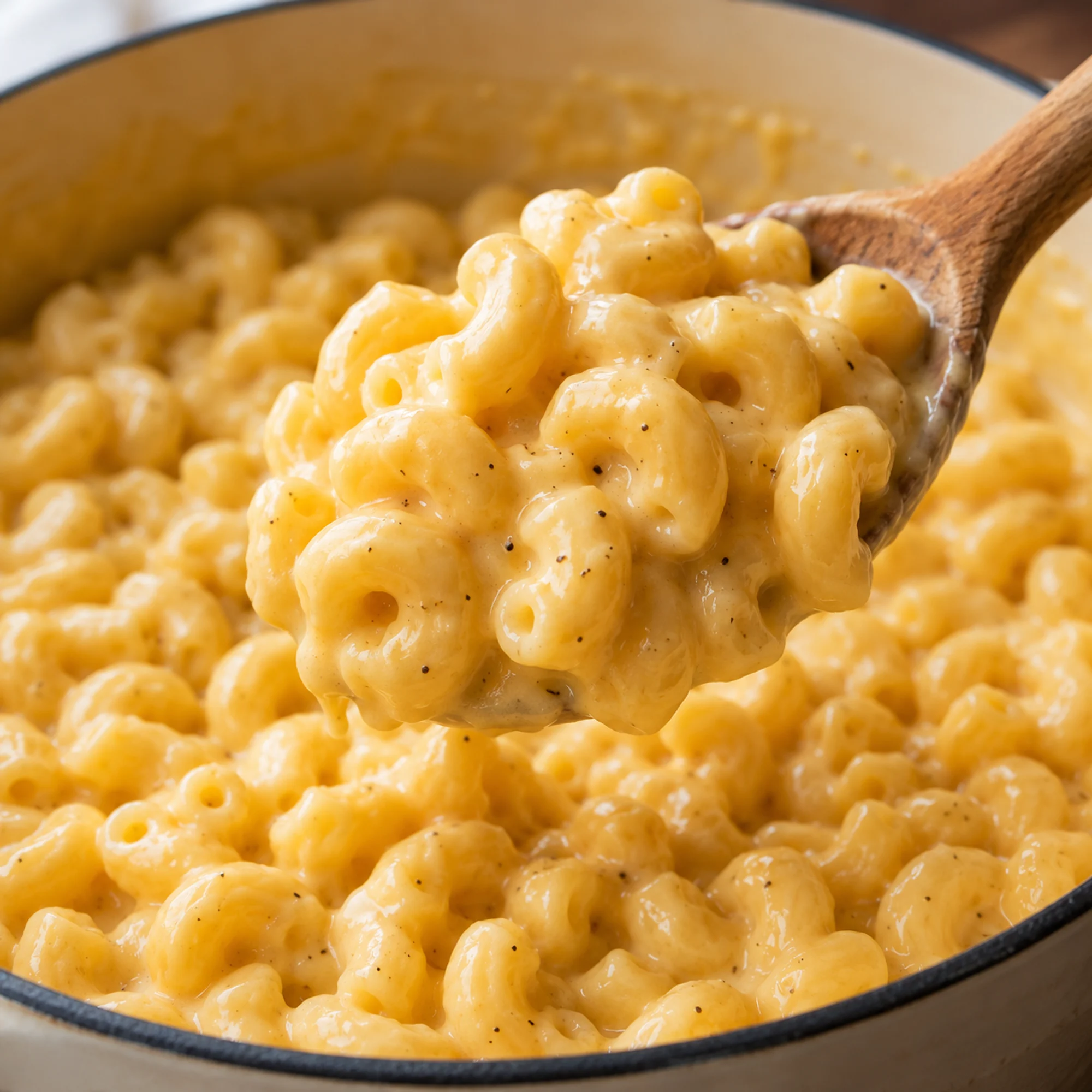
Cook the milk sauce until lightly thickened, then melt the cheddar in small handfuls off the heat. Gentle handling helps the sauce stay smooth.
I prefer a plain stovetop version for this recipe. It lets the cheddar flavor and tender elbows do the work, without a baked crust or extra toppings. A small spoonful of Dijon adds a savory edge, while the sauce remains familiar and mild enough for a simple dinner.
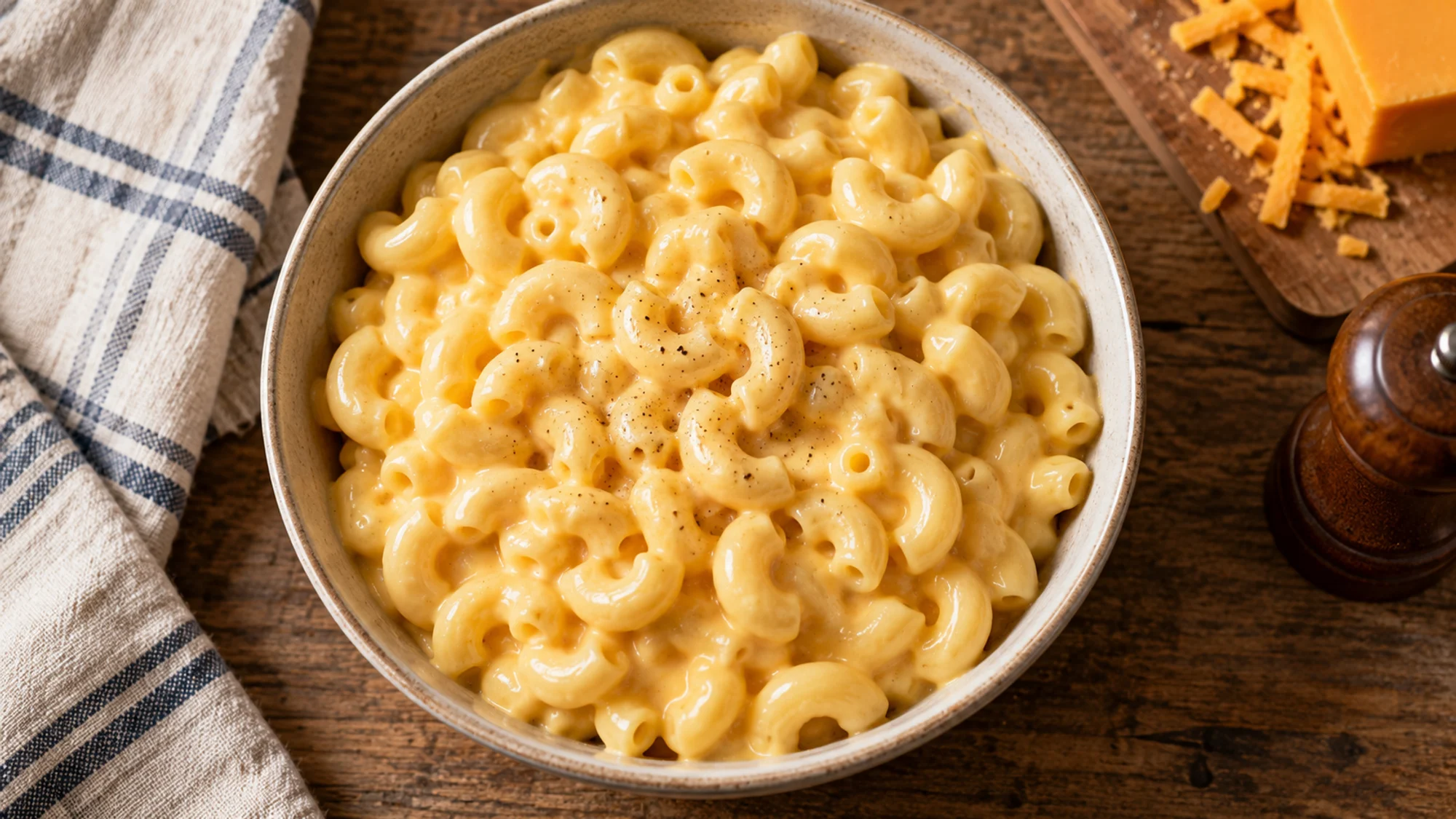
Serving suggestions for homemade mac and cheese
Bring the macaroni to the table as soon as it is coated. The sauce thickens as it stands, so this is a dish to serve from the stove rather than hold over a hot burner. Use warm bowls if you have them, and give the pot a gentle stir before dividing it.
A crisp vegetable side balances the soft pasta. Dishora’s carrot ribbon salad offers a fresh contrast, while steamed broccoli or a simple green salad also works. I would keep the side lightly dressed so the cheddar stays the main flavor.
The measured batch makes six servings. It can be a main dish with vegetables or a smaller side beside a simply cooked protein. Set out black pepper for anyone who wants more, rather than automatically adding extra salt to the whole pot.
Serve while the sauce is loose and creamy, with a crisp vegetable alongside.
Homemade mac and cheese recipe variations
Use a medium or sharp cheddar you enjoy eating, and grate it from a block. Very aged cheese can behave differently in a sauce, so the measured version is a useful place to start. I like keeping one clear cheese flavor before experimenting with a blend.
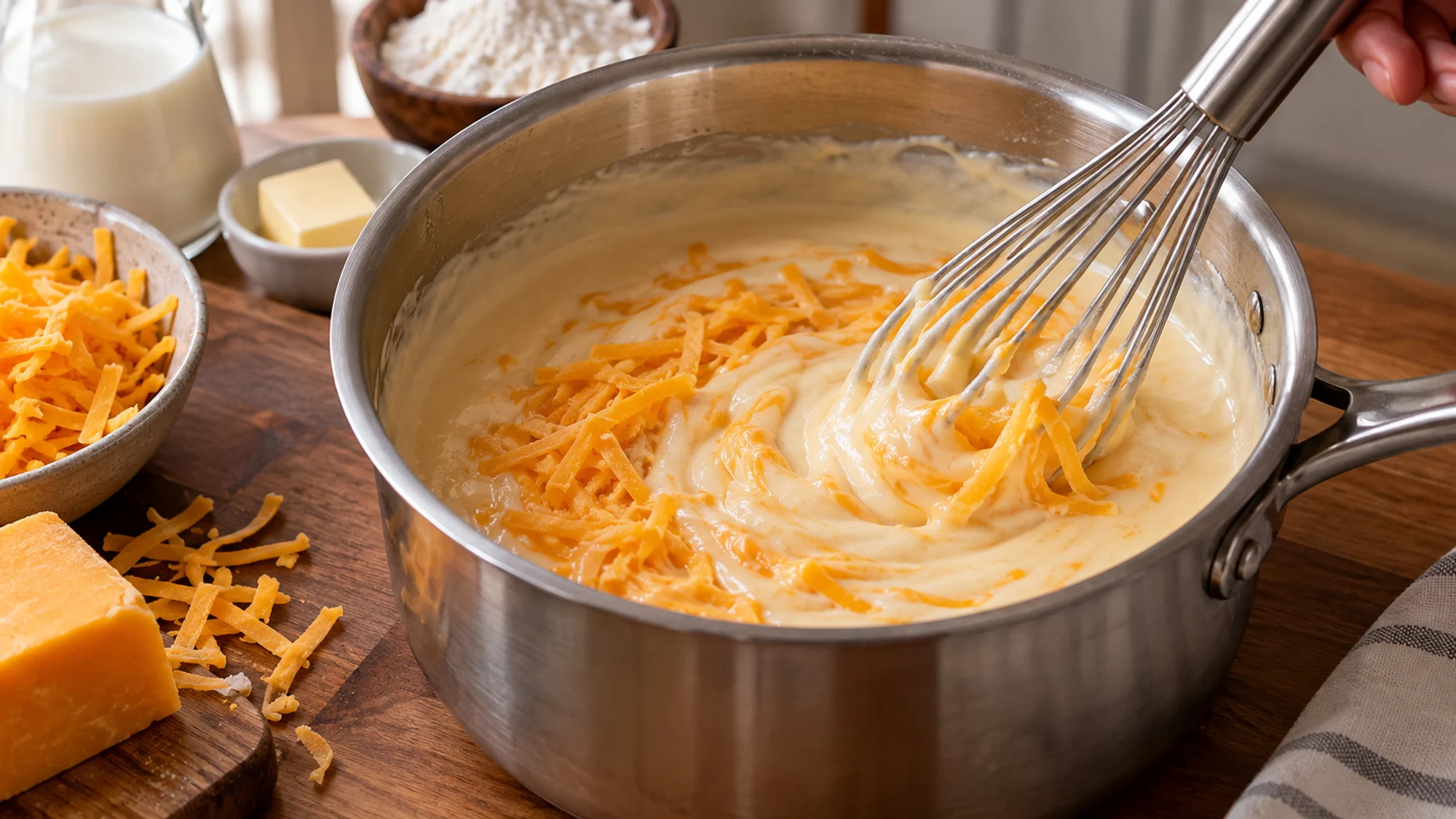
For a milder variation, replace a quarter of the cheddar with Monterey Jack. Keep the total cheese weight the same. A small pinch of smoked paprika can add another flavor, but it is an optional change rather than part of the base recipe.
Small shells can replace elbows if their cooking time is similar. Cook them just until tender, since they continue to absorb sauce after mixing. Avoid adding uncooked pasta directly to the cheese sauce; that requires a different amount of liquid and a different method.
Measure the flour level rather than packing it into the spoon. This flour measuring guide explains why packed flour changes a mixture. Too much flour makes the sauce pasty, while a pale, properly measured roux gives it enough body to coat the pasta.
Change the cheese or pasta shape thoughtfully, while keeping the measured sauce and gentle finish.
Health benefits and balance
Milk and cheese contribute protein and calcium, while pasta provides energy. The butter and cheese also make this a rich dish, so portion it in a way that suits the rest of the meal. A generous vegetable side adds a different texture and food group.
This recipe contains dairy and wheat, and Dijon may matter for someone avoiding mustard. Check ingredient labels when cooking for allergies. A dairy-free or gluten-free version needs ingredients that melt and thicken differently; it should be treated as a separate variation rather than a guaranteed direct swap.
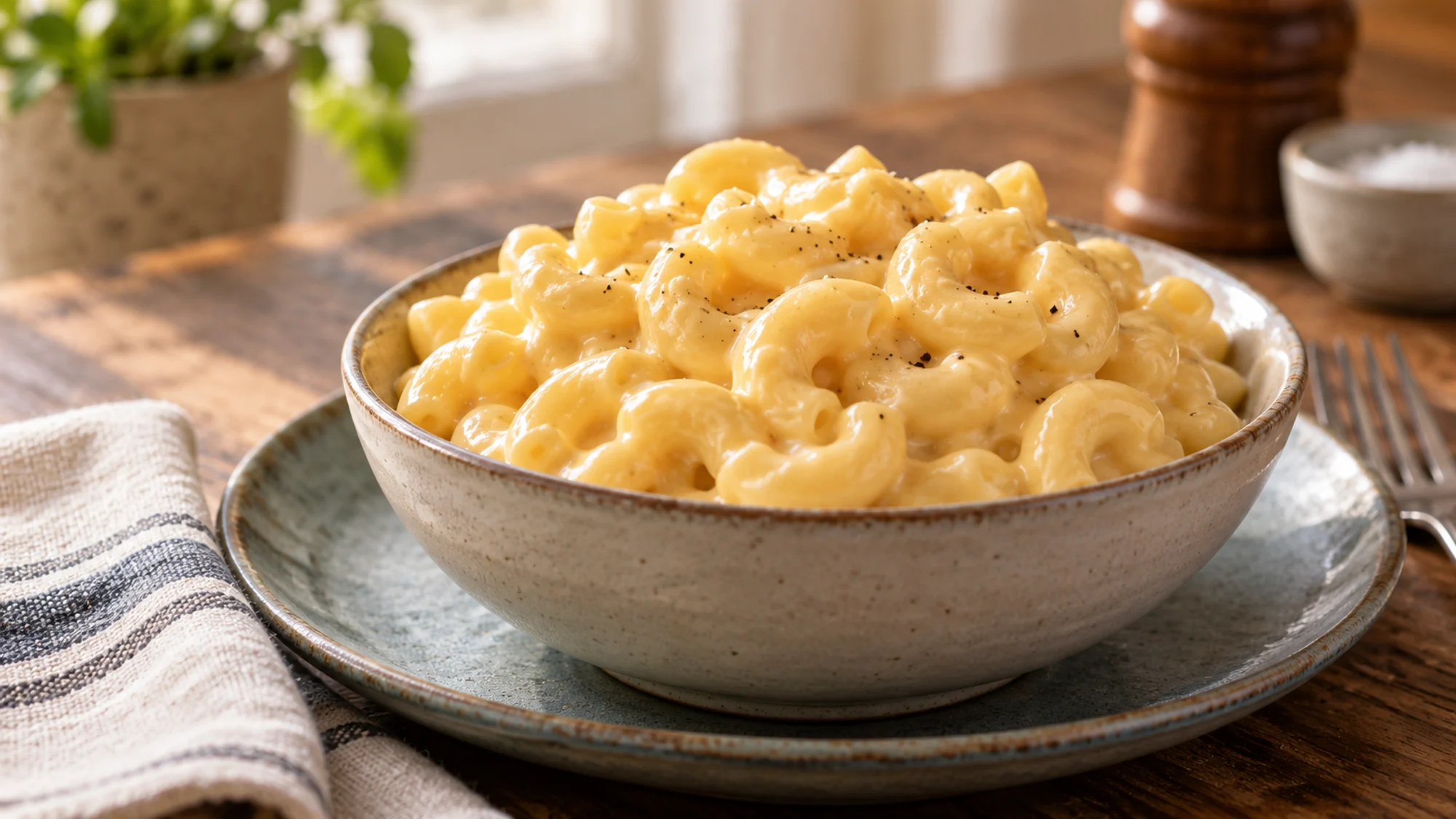
Cool extra portions promptly and refrigerate in shallow covered containers. This leftover handling guide covers storage and reheating. Add a little milk when warming leftovers, stir gently, and make sure the food reaches 165°F throughout.
Enjoy the creamy pasta as part of a varied plate, with portions and sides chosen to fit the meal.
Motivation conclusion
Grate the cheese and measure the sauce ingredients before the pasta water comes to a boil. That small setup keeps you from trying to grate cheddar while the milk needs whisking. Use the pasta’s cooking time to build the sauce, then bring the two together while both are warm.
Keep the roux pale, add the milk gradually, and pause the heat before the cheese goes in. The sauce should look smooth before you add the macaroni. Fold gently and serve right away. I would focus on those few cues rather than adding more ingredients; they are what make a simple cheddar sauce satisfying.
A pale roux, a gentle simmer, and cheese melted off the heat give this comfort-food bowl its creamy finish.
Homemade Mac and Cheese Recipe

Ingredients
- 12 oz elbow macaroni
- 3 tbsp unsalted butter
- 3 tbsp all-purpose flour
- 3 cups whole milk
- 12 oz sharp cheddar cheese freshly grated
- 1 tsp Dijon mustard
- 3/4 tsp kosher salt plus salt for the pasta water
- 1/4 tsp ground black pepper
Equipment
- Large pot
- Colander
- Large saucepan
- Whisk
- Box grater
- Measuring cups and spoons
- Wooden spoon
Instructions
- Grate the cheddar and set it aside; measure the milk, butter, and flour.
- Bring a large pot of water to a boil and salt it lightly. Cook the macaroni according to the package directions until just tender. Drain in a colander.
- Meanwhile, melt butter in a large saucepan over medium heat. Whisk in flour and cook 1 minute, stirring, without browning.
- Slowly whisk in the milk, a little at a time at first, until smooth. Bring to a gentle simmer and cook 3 to 5 minutes, whisking, until the sauce lightly coats a spoon.
- Remove the saucepan from the heat. Stir in grated cheddar a handful at a time until smooth. Stir in Dijon, 3/4 teaspoon kosher salt, and black pepper. Do not boil after adding the cheese.
- Fold the drained macaroni into the sauce with a wooden spoon. Serve right away while creamy.
Notes
Tried this recipe?
Let us know how it turned out!Emily Parker is DISHORA’s recipe-writing persona, bringing a warm, practical voice to everyday cooking. Her focus is simple ingredients, comforting flavors and clear steps that make a dish feel approachable. From cozy dinners to something sweet, Emily’s recipes invite readers to try something delicious and make it their own.