
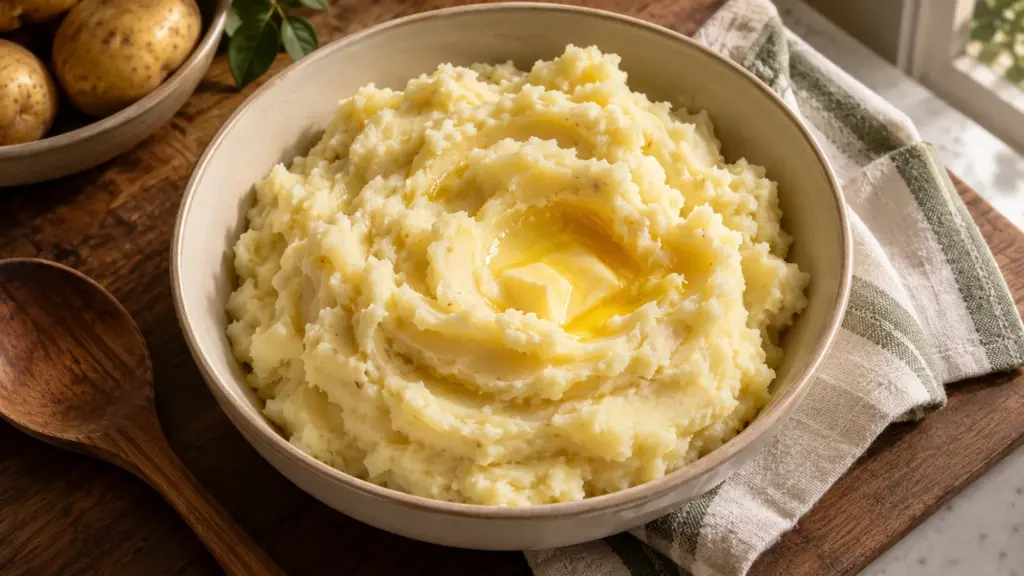
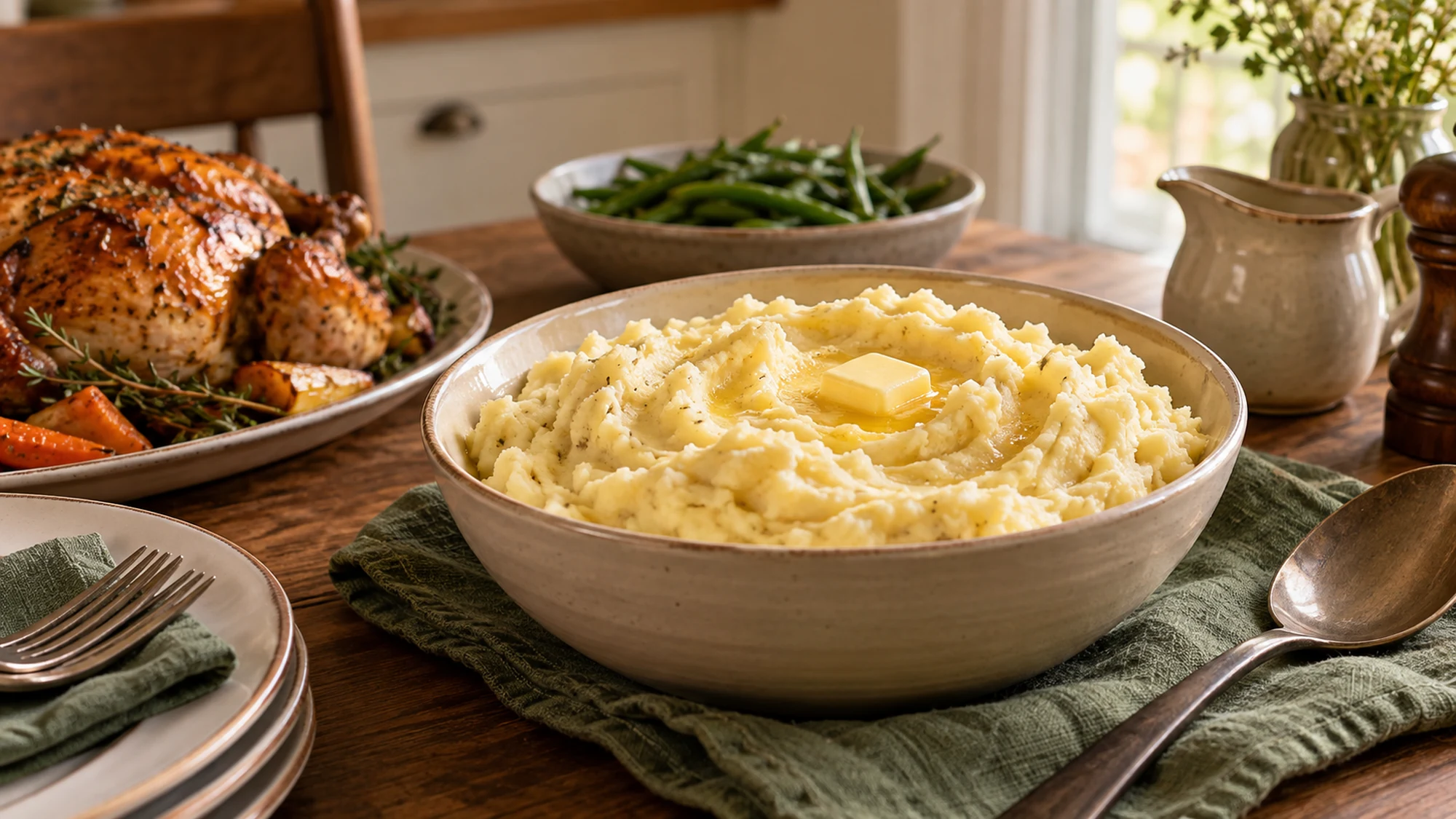
Good mashed potatoes should hold a soft mound on the plate without turning into glue. Learning how to make mashed potatoes starts with evenly cut potatoes, thorough cooking and a gentle finish. This version uses Yukon Golds, warm milk and measured butter for six side portions. A simple hand masher keeps the texture fluffy with a few small, pleasant irregularities.
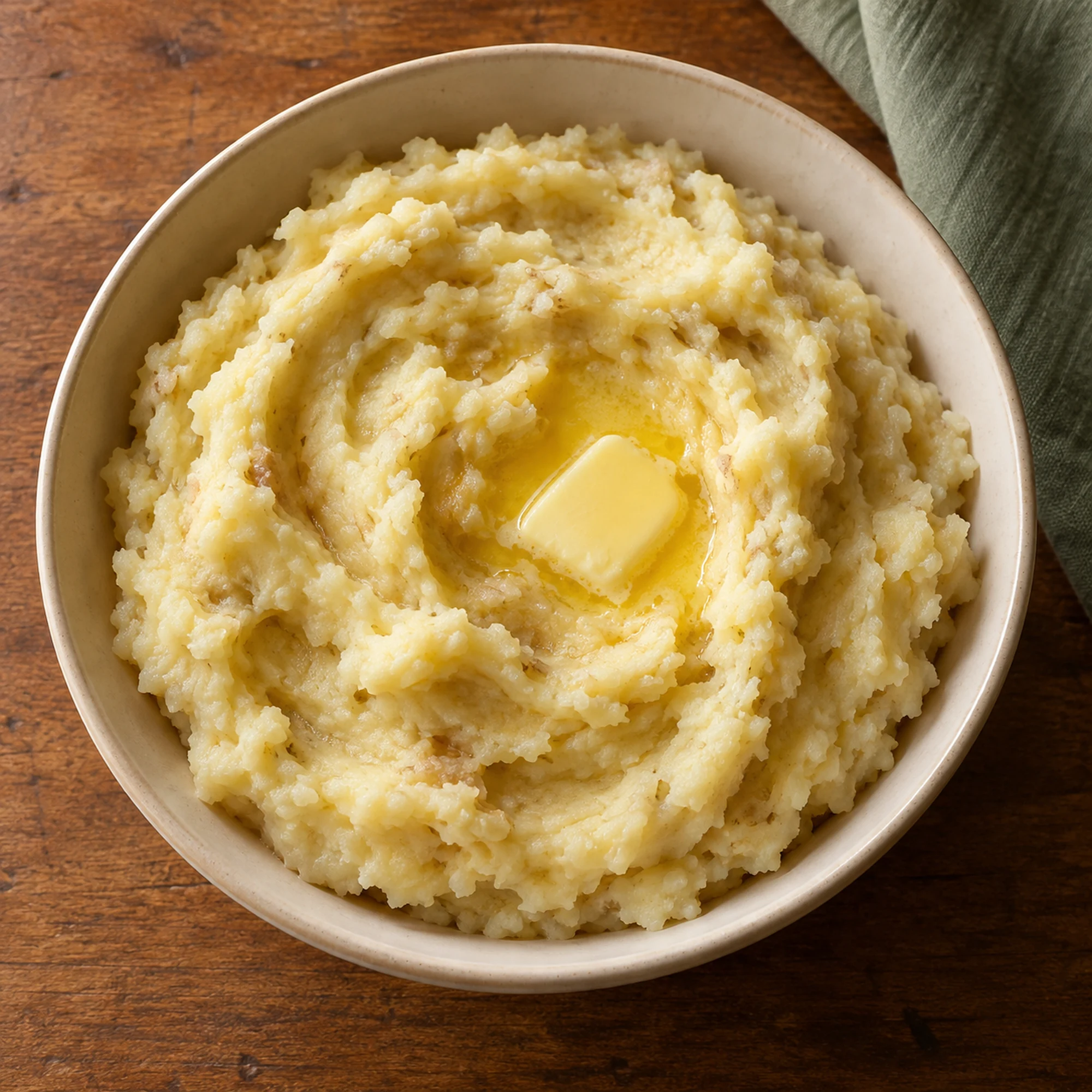
Cook the potatoes until completely tender, drain them well and mash gently before folding in warm milk.
I prefer a little texture to a perfectly polished puree, especially with an everyday dinner. A handheld masher also makes it easier to stop before the potatoes become overworked. A food processor is the wrong tool here: its fast blades can produce a sticky result. If you like smoother mash, use a potato ricer and keep the final mixing gentle.
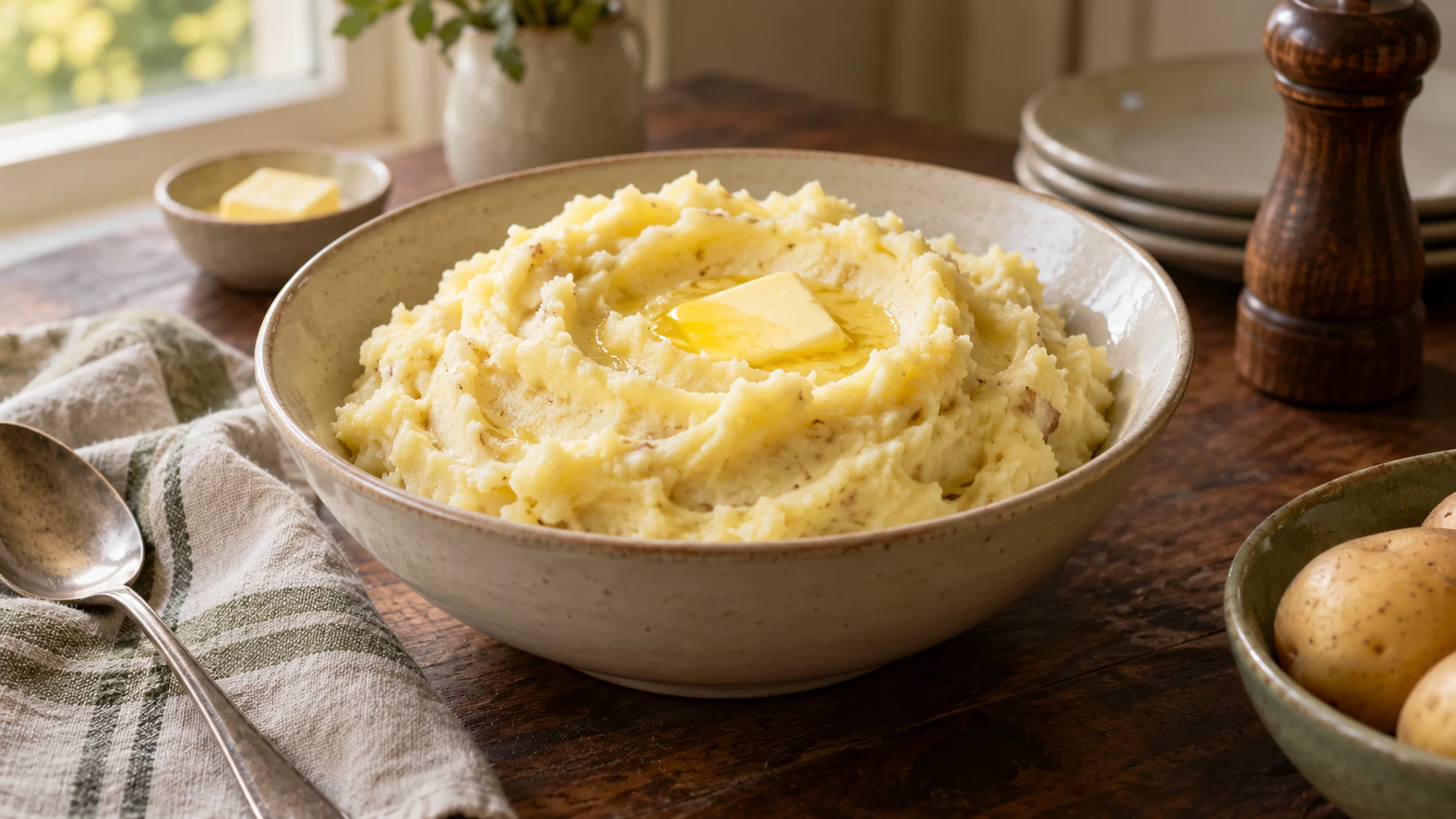
Serving mash while it is warm and soft
Bring the bowl to the table soon after mashing. Potatoes become firmer as they sit, so a little reserved warm milk is useful if dinner is delayed. Add it gradually, folding rather than beating. I would choose a warm serving bowl for a leisurely meal; it buys a little time without adding more butter just to keep everything loose.
- Serve a modest mound beside cooked fish, roast chicken or a vegetable main.
- Pair with Dishora’s cabbage and white bean skillet for creamy potatoes beside tender cabbage.
- Put gravy or sauce at the table so people can choose how much to add.
- Use a broad spoon to fold in warm milk if the potatoes become too stiff before serving.
Store leftovers promptly in a shallow covered container in the refrigerator and use within three to four days. Reheat with a splash of milk until steaming hot throughout, stirring gently so the bottom does not scorch. A big cold pot takes longer to cool than several shallow portions. Plan storage before dinner rather than leaving the serving bowl on the counter overnight.
Serve promptly, and loosen thickened mash with a little warm milk rather than vigorous mixing.
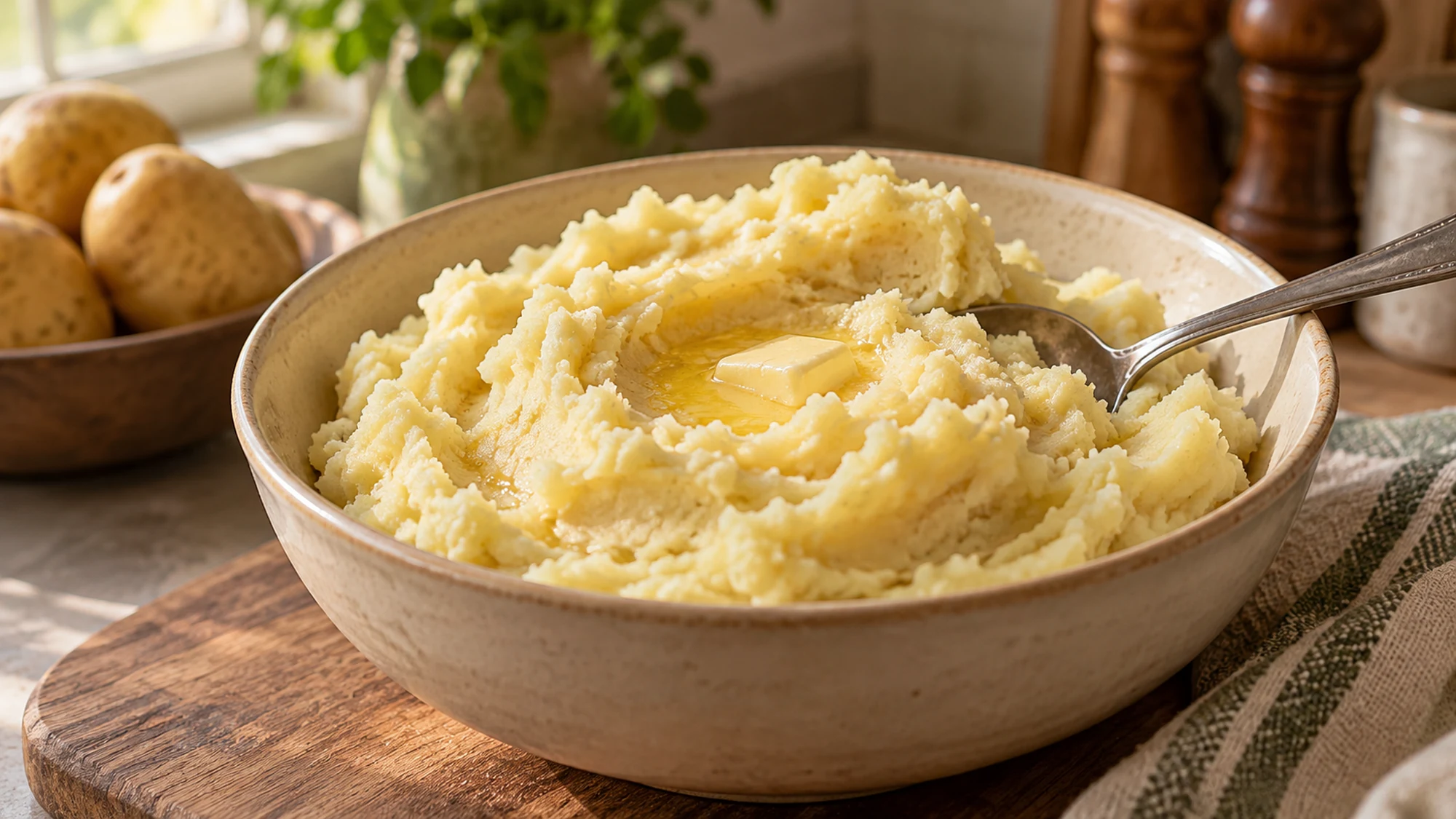
Variations for flavor and texture
Russets can replace Yukon Gold potatoes in the same weight, though the finished texture will differ. Small waxy salad potatoes are less likely to give a fluffy result. The potato-type guide is useful when choosing among unfamiliar bags. Drain any variety thoroughly and give it a brief steam-drying moment before adding the dairy.
- For roasted-garlic flavor, fold in a small amount of freshly prepared soft garlic.
- For an herb finish, add a little finely chopped chive just before serving.
- For smoother potatoes, choose a ricer rather than a blender or food processor.
- For a dairy-free version, use suitable unsweetened plant milk and a plant-based butter, expecting a different flavor.
Milk should be warm, not rapidly boiling, and it goes in gradually because potatoes vary in how much moisture they hold. Sour cream can replace part of the milk for a tangier mash, but it changes both the texture and the nutrition. Avoid pouring in several extras at once. Taste after each change, particularly when adding salty cheese or seasoned butter.
Choose the potato for the texture you want, then make small additions and keep the mixing light.
Health benefits and a balanced plate
Potatoes contribute carbohydrate, some fiber and potassium, while milk adds a little protein and calcium. Peeling reduces the fiber compared with leaving the skin on. Butter contributes richness and most of the added fat. This is a side dish, so the vegetables and protein served alongside it matter more than attaching a broad health promise to one scoop.
- The card estimates one-sixth of the whole recipe, with all measured milk and butter included.
- Use a comfortable serving size rather than treating the bowl as a single portion.
- Taste before adding extra salt, especially when serving with gravy.
- Milk and butter are dairy ingredients; check substitutions carefully when cooking for an allergy.
The vegetable-group guide offers a useful way to think about variety across the plate. Mash can sit alongside leafy vegetables, beans or another contrasting texture. I prefer that practical balance to describing potatoes as either virtuous or something to avoid. The estimate will change if you add cheese, cream or a generous extra butter topping.
Let potatoes be one part of a varied meal, and count rich toppings as additions to the recipe.
Let tenderness do the work
The easiest mash begins before the masher appears: evenly cut pieces, enough cooking time and a thorough drain. Once the potatoes are tender, a gentle hand and warm milk do the rest. Taste, fold in what the texture needs and serve while the bowl is invitingly soft. There is no need to chase an elaborate finish for a satisfying side.
How to Make Mashed Potatoes Recipe

Ingredients
- 2 lb Yukon Gold potatoes 907 g, peeled and cut into evenly sized 1-inch pieces
- 4 tablespoons unsalted butter 56 g
- 3/4 cup whole milk 180 ml, warmed
- 1 teaspoon fine salt About 6 g, divided; adjust to taste
- 1/4 teaspoon ground black pepper
- cold water Enough to cover potatoes by 1 inch; discarded after cooking
Equipment
- Large saucepan or pot
- Peeler, knife and cutting board
- Colander
- Handheld potato masher
- Small saucepan and measuring jug
- Wooden spoon
Instructions
- Peel the potatoes and cut into even 1-inch pieces. Put in a large pot and add cold water to cover by about 1 inch.
- Add half the salt, bring to a boil, then lower to a gentle simmer. Cook for 15 to 20 minutes after the water reaches a simmer, until a knife goes through the center easily.
- Drain well and return the potatoes to the warm pot off the heat for 1 to 2 minutes so surface moisture can evaporate. Warm the milk gently in a small saucepan.
- Mash the potatoes by hand with the butter. Fold in the warm milk gradually until soft and spoonable. Add pepper and the remaining salt as needed. Avoid beating or processing the potatoes. Serve warm.
Nutrition
Video
Notes
Tried this recipe?
Let us know how it turned out!Emily Parker is DISHORA’s recipe-writing persona, bringing a warm, practical voice to everyday cooking. Her focus is simple ingredients, comforting flavors and clear steps that make a dish feel approachable. From cozy dinners to something sweet, Emily’s recipes invite readers to try something delicious and make it their own.