
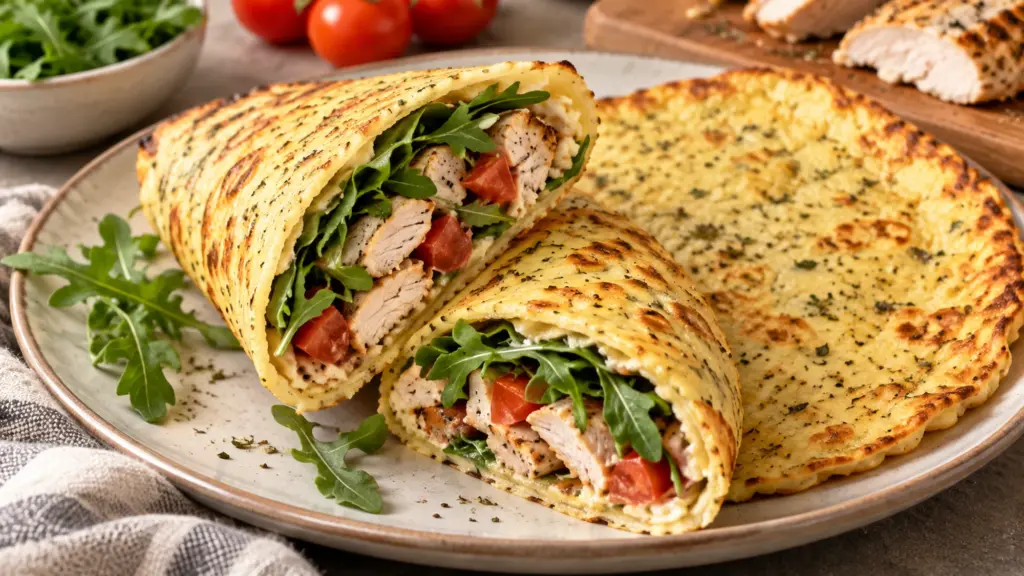
Cottage cheese flatbread turns a short list of everyday ingredients into a soft sheet you can fold around lunch. Blend cottage cheese and eggs with a little seasoning, spread the batter on greased parchment, then let the oven do the work. Once cool, the sheet cuts into two generous wraps. It has a mild savory flavor, gently golden edges and enough give to hold a filling without needing flour or yeast.
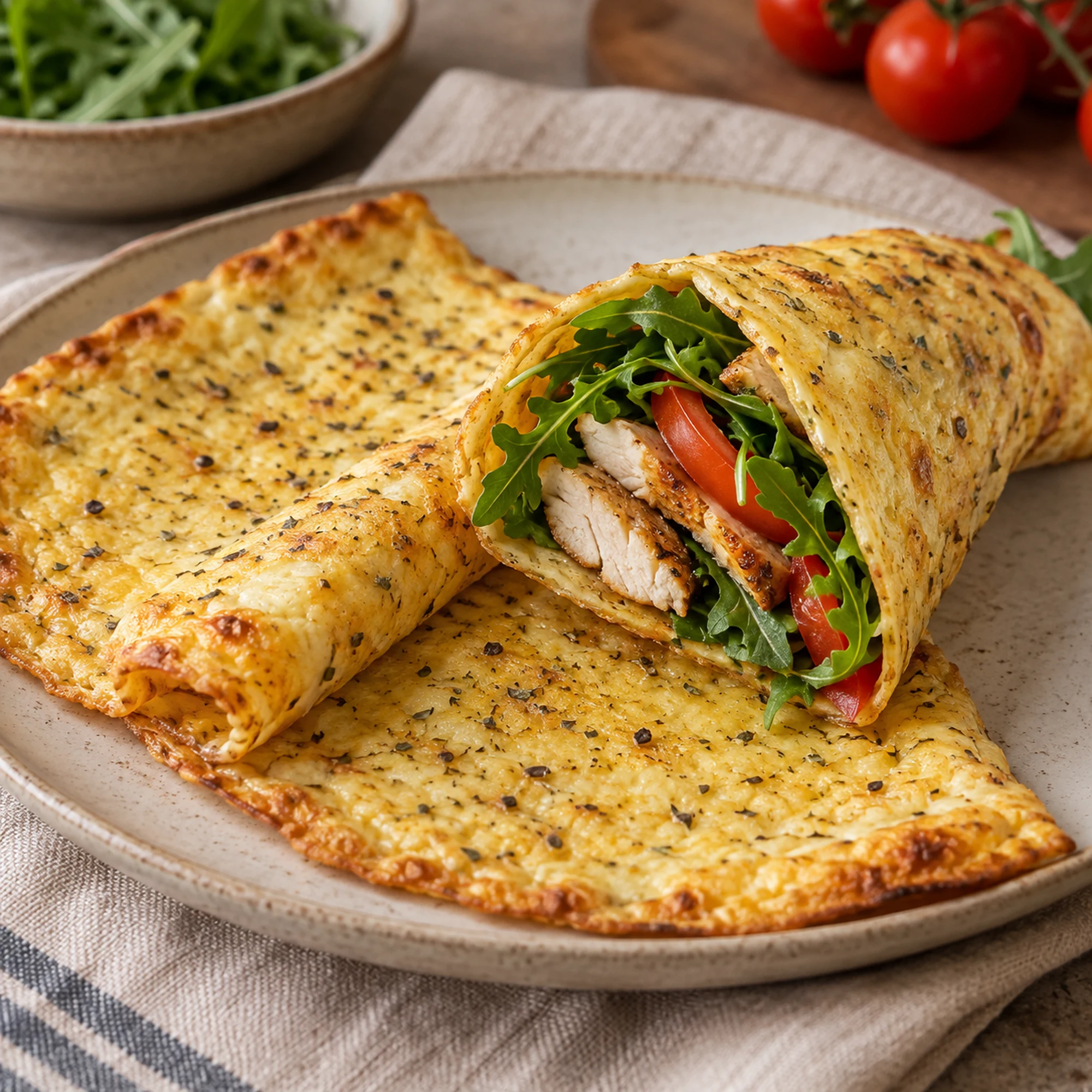
The simple secret: spread the batter evenly, bake until the center is dry, and let the sheet cool before peeling it from the parchment.
This recipe uses a 9-by-13-inch rimmed pan and a 350°F oven. The exact five ingredients, quantities and timings are in the card below. The American Egg Board’s egg flatbread wrap uses the same cottage-cheese-and-egg base and stresses greased parchment and cooling, two useful details for a sheet that releases cleanly.
Serving suggestions for cottage cheese flatbread
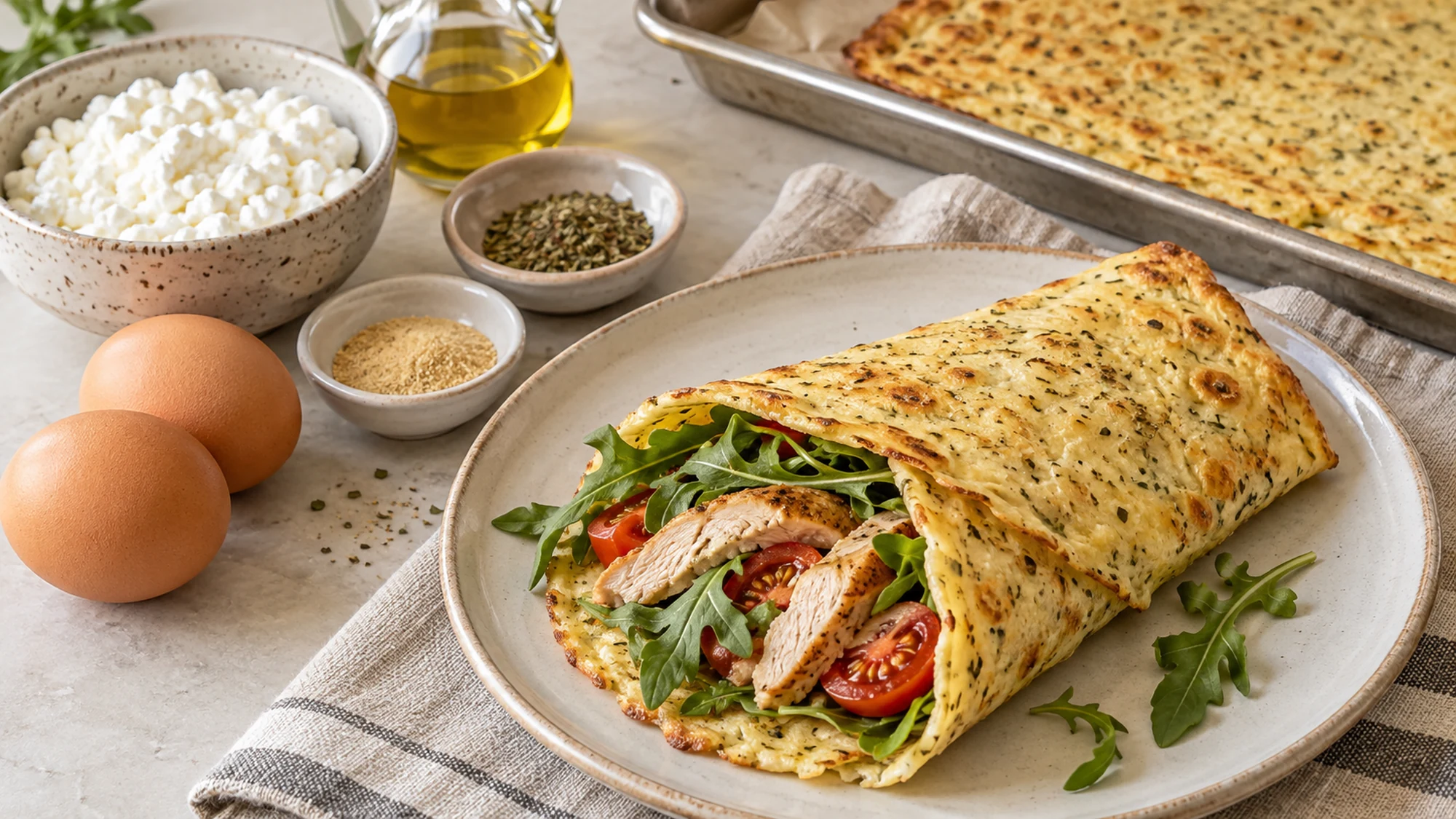
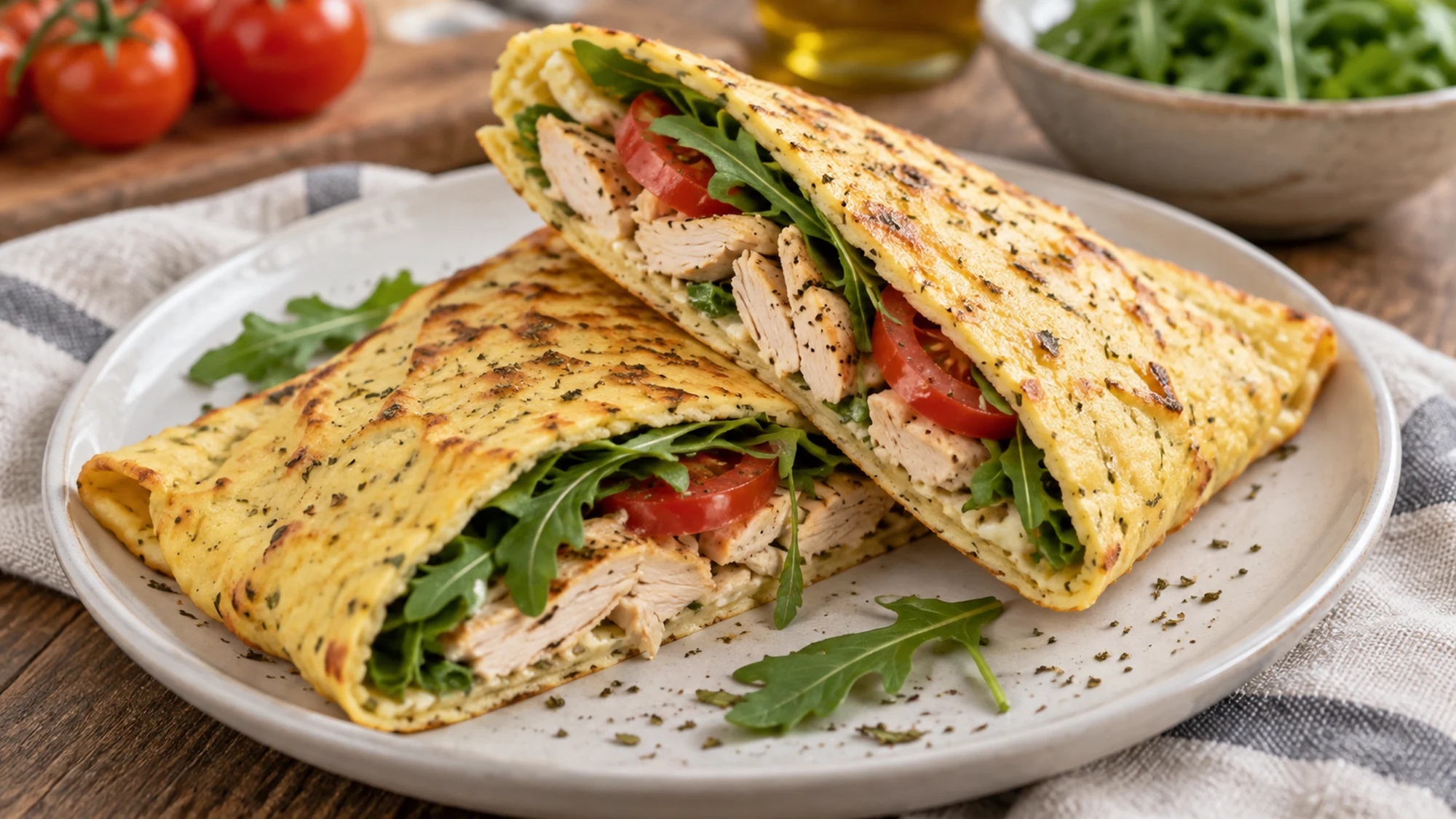
For a quick lunch, lay a cooled half-sheet flat and add cooked chicken, tomato and crisp greens. Keep wet sauces modest or spread a thin layer over the filling rather than soaking the bread itself. Fold from one side, then cut across the middle. The flatbread tastes best when the warm, savory sheet meets something cool and crunchy.
It also makes a simple breakfast wrap with scrambled eggs, sliced avocado and a little salsa. Try Dishora’s pico de gallo on the side so its juices do not soften the wrap before eating. If you prefer a lighter plate, cut the sheet into smaller strips and serve them beside a vegetable soup or a salad.
Warm leftover pieces briefly in a dry skillet before filling. That revives the edges without making the center rubbery. If they are cold from the refrigerator, allow a moment over gentle heat; high heat can brown the outside before the middle warms.
Build the wrap just before serving, especially when tomatoes or sauces are involved.
Variations and texture tips
Italian seasoning and garlic powder make a flexible savory base. For a different direction, substitute the Italian seasoning with dried dill or smoked paprika in the same quarter-teaspoon amount. The batter should remain mostly cottage cheese and egg; large additions of wet vegetables can make it harder to set. Add crunchy vegetables after baking as a filling instead.
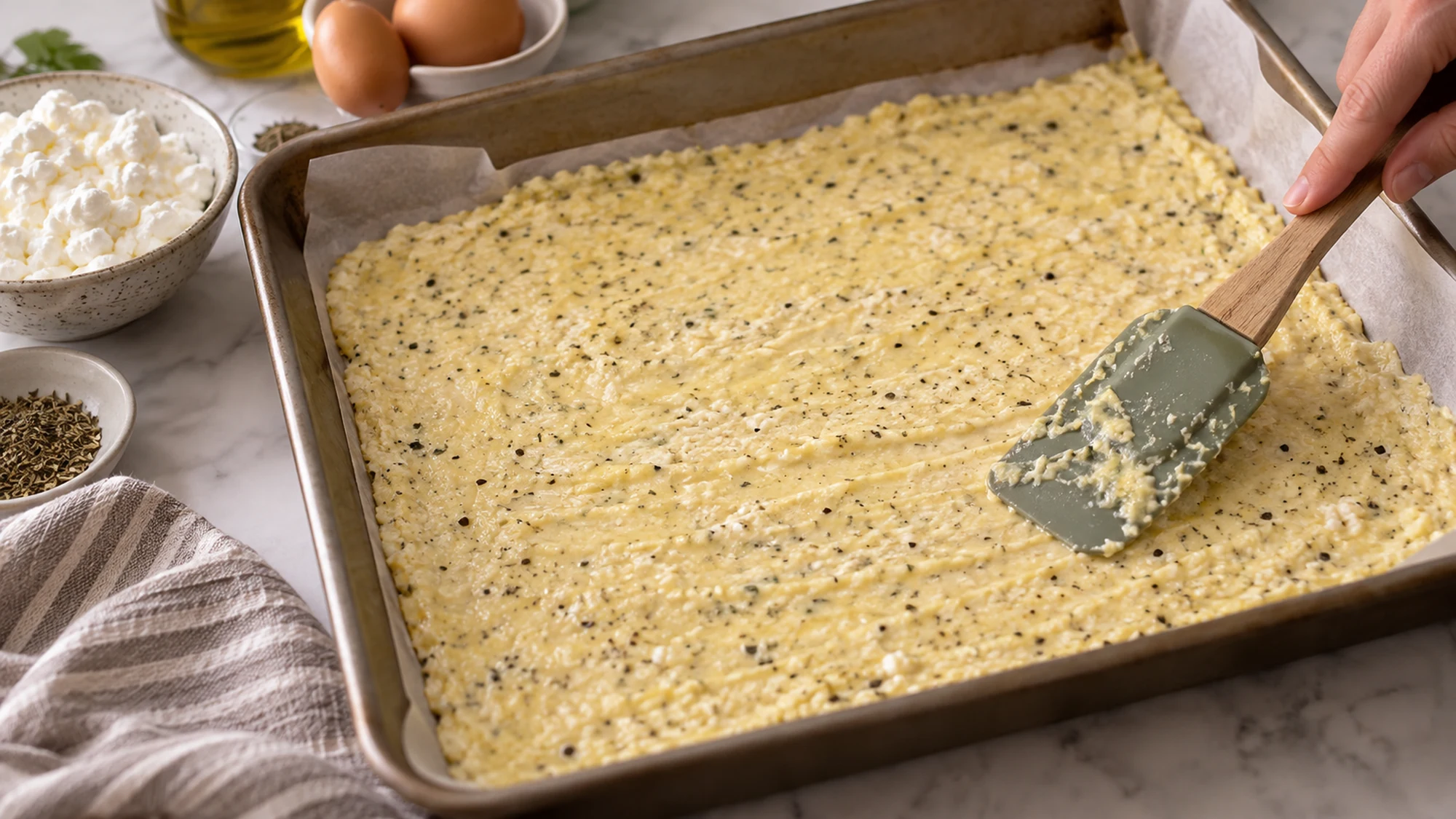
Use a blender to smooth the curds. A few tiny flecks are harmless, but a smooth batter spreads more evenly and bakes into a flexible sheet. A 9-by-13-inch pan gives the batter enough area to cook through without becoming paper thin. If your pan is much larger, keep the batter in a similar rectangle rather than chasing it to every corner.
Parchment is important here, yet bare parchment can still cling to an egg-based bake. Brush the measured teaspoon of olive oil across the full area that will hold the batter, including its edges. When the top looks golden and dry, leave the pan on a rack for ten minutes. Pulling hot flatbread away too early is the easiest way to tear it.
A smooth batter and patient cooling are what make the sheet foldable.
Health benefits and practical balance
Cottage cheese and eggs contribute protein, which makes this a useful base for a satisfying meal. The recipe does not include flour, but that does not make every finished wrap low in carbohydrate: the filling and sauce matter too. Pair it with colorful vegetables and an appropriate portion of your favorite protein rather than treating the wrap alone as a complete meal.
Cottage cheese varies in sodium by brand. If you monitor salt, compare labels and choose a product that fits your needs; the written batter does not add extra salt. Egg and dairy are the clear allergens. The pictured chicken and vegetables are serving ideas, not part of the five-ingredient flatbread card or its cost estimate.
Let leftovers cool, then cover and refrigerate the unfilled pieces for up to three days. Keep cooked fillings stored according to their own food-safety needs, and combine them only when ready to eat. If you are packing a wrap for later, place juicy ingredients in a separate container until lunchtime.
The flatbread provides a protein-rich base; the filling is your chance to add freshness and variety.
Why make this easy wrap base
A single sheet can become two lunches, a breakfast wrap or strips for dipping. The ingredient list is short, and the active work is mostly blending and spreading. Make the flatbread while you prepare fillings, then let it cool as you finish the rest of the meal. That small wait pays off when the parchment lifts away without a fight.
Start with the greased pan, blend the four batter ingredients, and spread them level. Bake until the center is set, cool for ten minutes, and cut the sheet in half. The card gives the exact measurements and sequence. There is also a Clean & Delicious flatbread demonstration if you want to see the texture as it comes out of the oven.
Bake one sheet today and give tomorrow’s lunch an easy head start.
Cottage Cheese Flatbread Recipe

Ingredients
- 1 tsp olive oil For greasing parchment
- 1 cup low-fat cottage cheese About 225 g
- 2 large eggs
- ¼ tsp garlic powder
- ¼ tsp Italian seasoning
Equipment
- 1 9-by-13-inch rimmed baking pan Quarter sheet pan
- 1 sheet Parchment paper Grease before adding batter
- 1 Blender For a smooth batter
- 1 Silicone spatula For spreading batter
- 1 set Measuring spoons For oil and seasoning
- 1 Cooling rack For the pan after baking
Instructions
- Preheat the oven to 350°F and line a 9-by-13-inch rimmed baking pan with parchment paper; brush the parchment with 1 teaspoon olive oil.
- Blend the cottage cheese, eggs, garlic powder, and Italian seasoning until smooth, about 30 seconds. Scrape down the sides once if needed.
- Pour the batter onto the prepared parchment and spread it into an even rectangle, keeping it within the pan edges.
- Bake for 30 to 35 minutes, until the top is golden and dry and the center feels set. Do not remove it while the middle is wet.
- Set the pan on a cooling rack for 10 minutes. Gently peel the flatbread from the parchment, cut it in half, and fill or fold each piece as a wrap.
Video
Notes
Tried this recipe?
Let us know how it turned out!Emily Parker is DISHORA’s recipe-writing persona, bringing a warm, practical voice to everyday cooking. Her focus is simple ingredients, comforting flavors and clear steps that make a dish feel approachable. From cozy dinners to something sweet, Emily’s recipes invite readers to try something delicious and make it their own.