
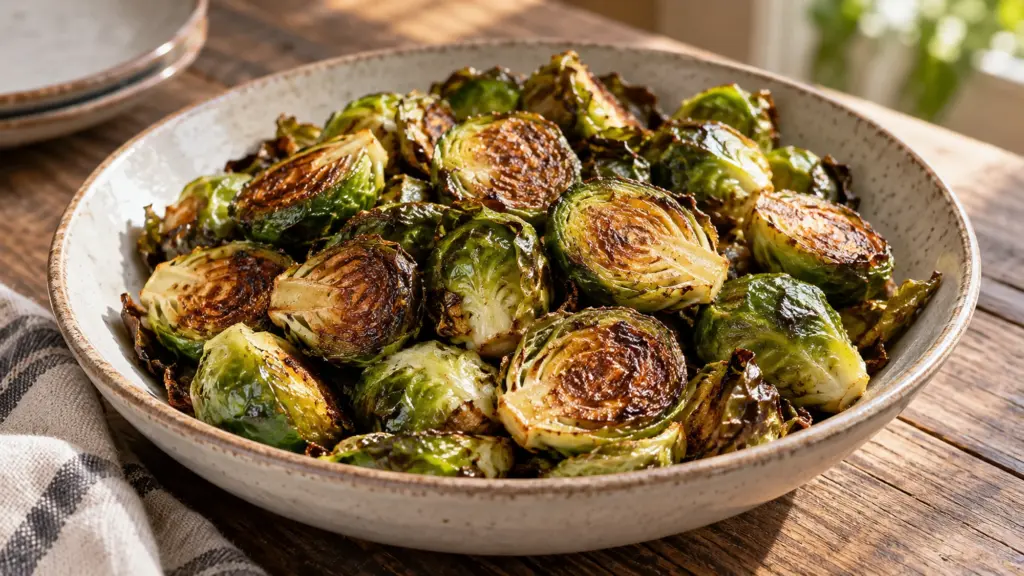
Brussels sprouts can come out of the oven pleasantly browned or disappointingly soft, even with the same seasoning. The difference often begins before roasting: dry them well, cut the larger ones evenly and give each piece room. If you are wondering how to roast Brussels sprouts, this recipe uses a hot oven and a metal sheet pan, with the flat cut sides facing down for direct contact.
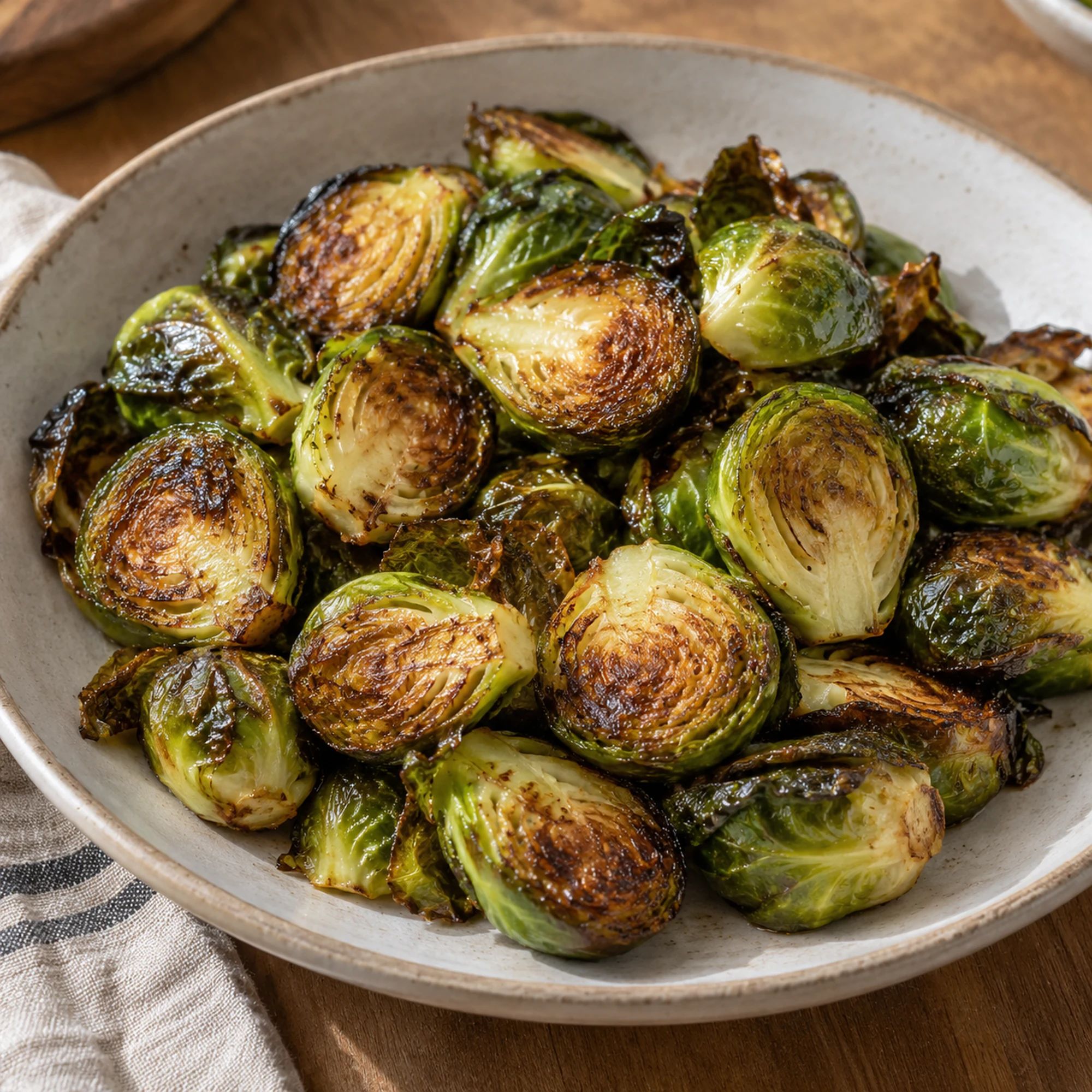
Dry the sprouts, leave space between the halves and roast cut-side down so browning happens before the centers turn overly soft.
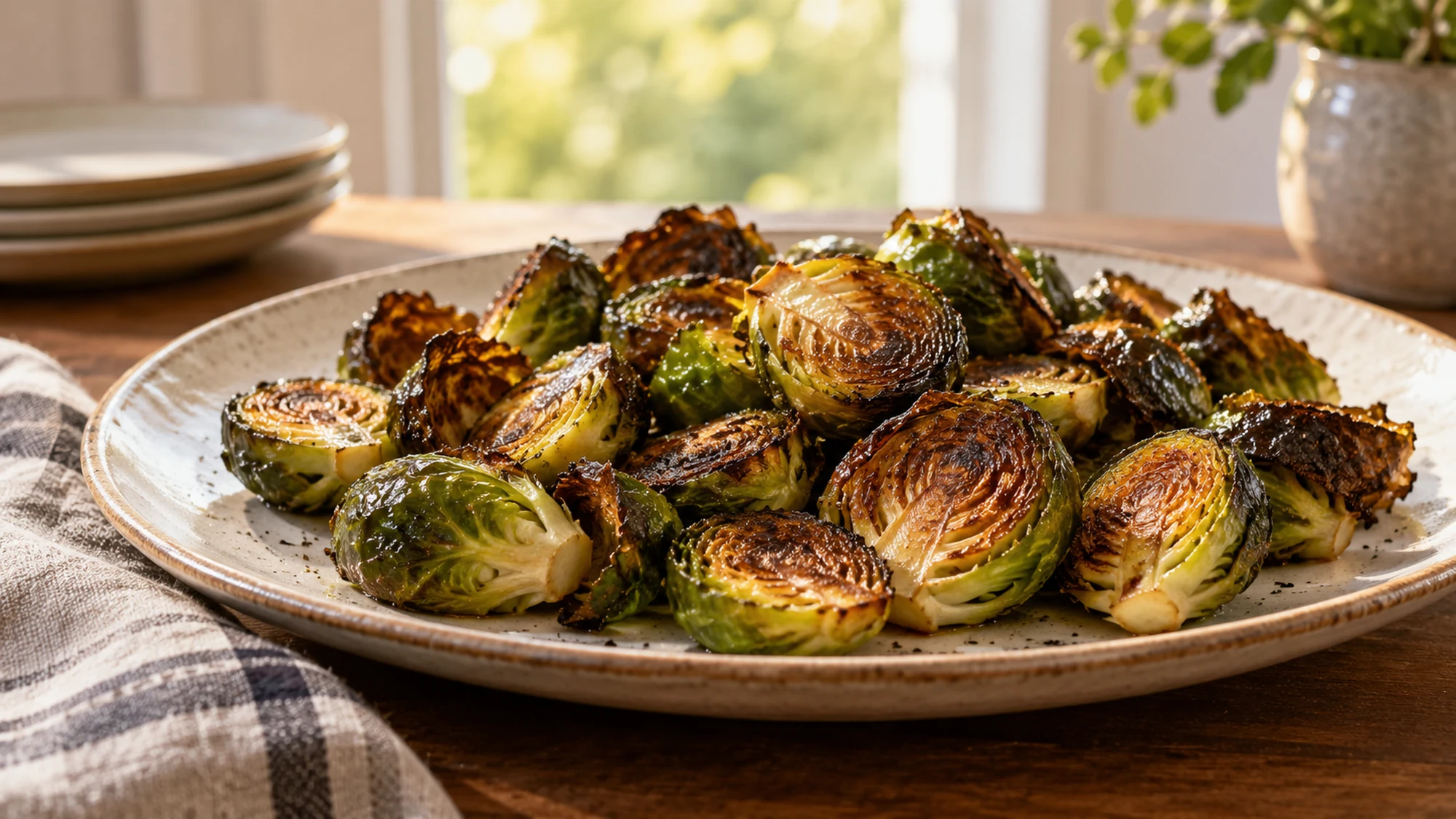
The ingredient list stays short: olive oil, salt, pepper and lemon juice. That gives the browned edges a chance to be the main flavor, with acidity added at the end. I prefer that bright finish to a heavy glaze when the sprouts are sharing the plate with a rich main dish. Look for tender centers and dark golden edges, rather than aiming to make every leaf black.
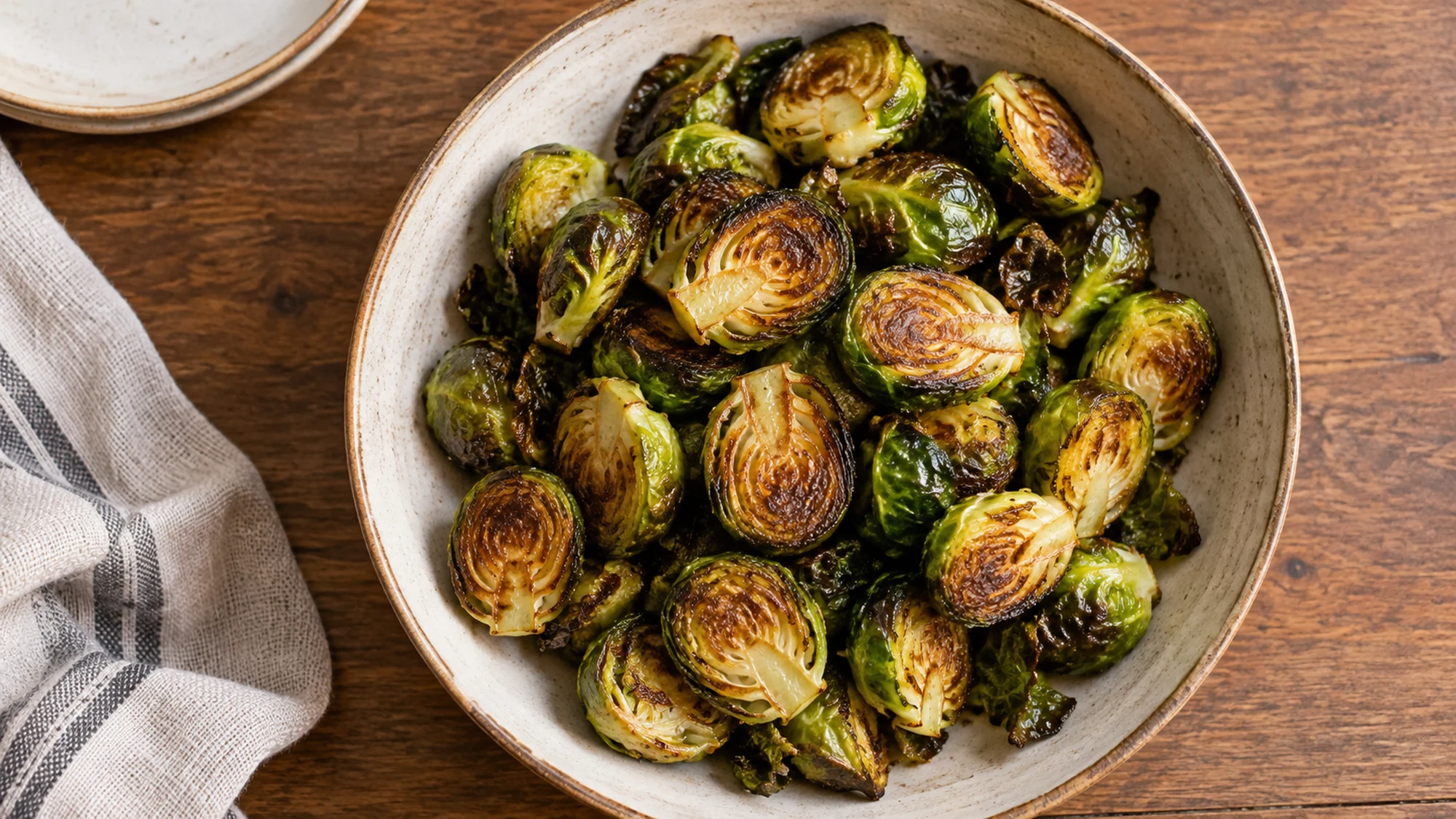
Serving suggestions while the edges are crisp
Bring the sprouts to the table soon after roasting. The loose outer leaves can be especially crisp, but they soften as they sit, and a covered serving dish traps steam. A wide platter is a useful choice. Add the lemon just before serving, toss lightly and let the recipe’s browned surface stay visible instead of burying it under toppings.
- Alongside a main: The lemon finish works with pan-seared salmon or roast chicken. Keep their cooking pans separate if they crowd each other.
- Over grains: Put warm sprouts beside cooked rice or quinoa and a protein food. Add a dressing sparingly so the roasted texture remains noticeable.
- With creamy potatoes: A smooth side balances the firmer vegetable. Serve the sprouts beside the mash, rather than leaving them submerged in it.
- For leftovers: Rewarm on an uncovered sheet pan until hot. The edges may recover some texture, although they will not exactly match the first serving.
Serve the sprouts promptly on a wide platter, with lemon added at the end and room for the browned edges to shine.
Variations and common roasting fixes
This method depends on surface moisture, pan space and the size of each piece. More seasoning cannot make up for a crowded tray. I’d use two pans before stacking a double batch onto one, and allow extra oven time if the pans reduce airflow. A dark pan can brown faster than a pale one, so check the underside before the shortest suggested cooking time.
- Uneven sizes: Halve ordinary sprouts and quarter very large ones. Keeping pieces reasonably similar helps their centers soften at the same pace.
- Another oil: A suitable neutral cooking oil can replace olive oil. The flavor changes, while the need for a light, even coating stays.
- A different finish: Add a little grated Parmesan or chili after roasting if desired. Those additions change the ingredients and estimated nutrition.
- Frozen sprouts: They release more moisture and will behave differently. This card is written for fresh sprouts; do not expect an identical crisp result.
Fix moisture and crowding before adding more flavorings; evenly sized pieces and direct pan contact do most of the practical work.
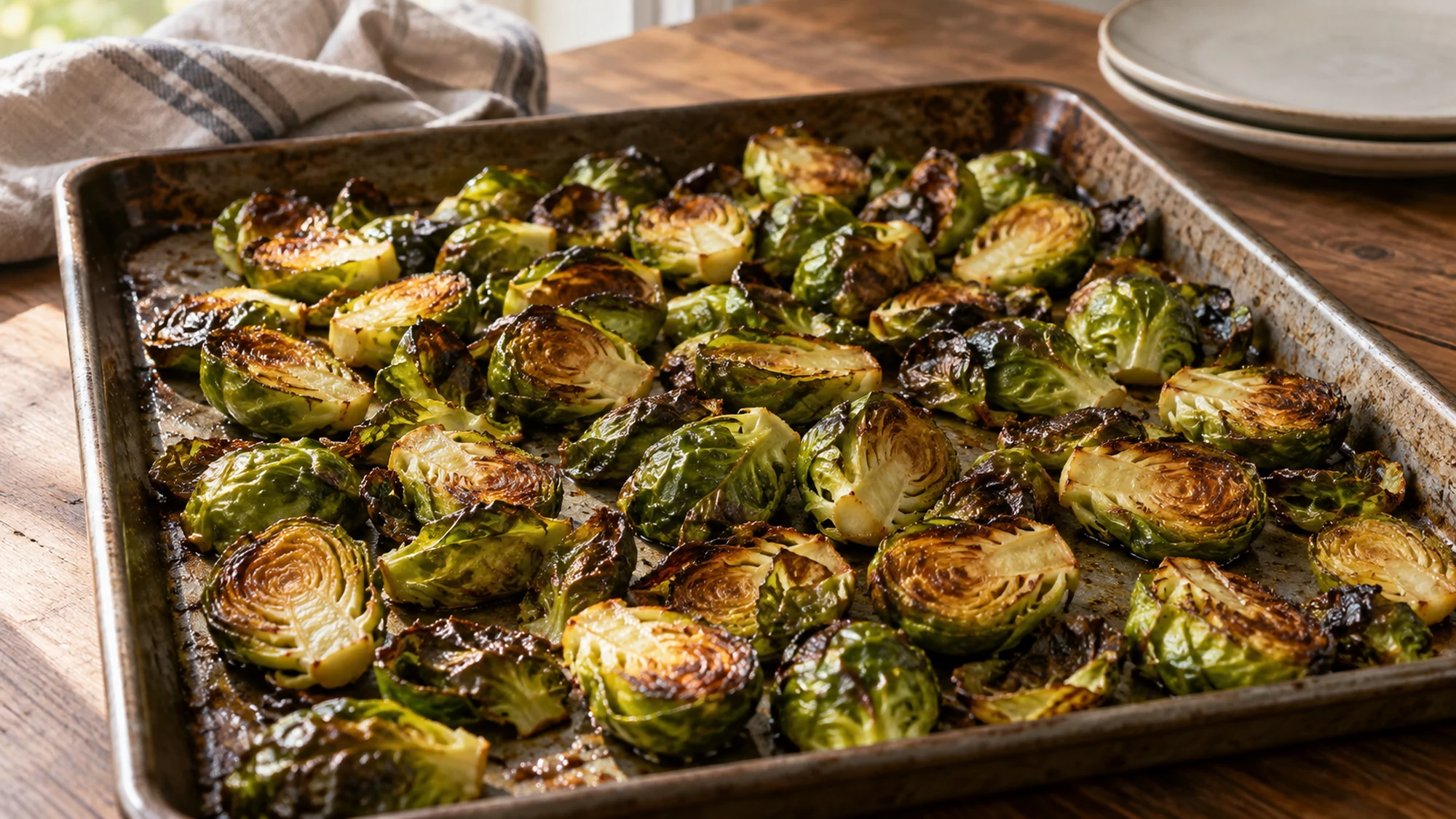
Health benefits with the meal in mind
Brussels sprouts contribute fiber and several micronutrients as part of the vegetable group. Roasting makes them useful in a meal, but it does not create a special detox effect or cancel the rest of the plate. The oil contributes energy and fat, and the salt contributes sodium. The card estimates one quarter of the recipe, with no cheese or other finishing additions.
- Vegetable variety: Include sprouts alongside other vegetables over the week. A varied mix offers more than repeatedly choosing one fashionable ingredient.
- Fiber: A portion contributes dietary fiber. Cooking softens the vegetable’s structure, while the actual amount you eat still matters.
- Seasoning choices: Taste before adding extra salt at the table. Lemon supplies acidity without requiring a salty prepared sauce.
- Storage: Refrigerate leftovers within two hours, in a shallow container at 40°F (4°C) or colder. Use within three to four days and reheat thoroughly.
Treat roasted sprouts as a flavorful vegetable side, with fiber, measured oil and seasoning that fits the rest of your meal.
Give a simple vegetable a better landing
Take a minute to dry the rinsed sprouts thoroughly and turn the cut faces onto the metal pan. If the pan looks crowded before it goes into the oven, make room then.
Check for a browned underside and a center that yields to a knife, then stop cooking when that balance is right. Finish with lemon and serve while the contrast between crisp edges and tender centers is still at its best.
How to Roast Brussels Sprouts Recipe

Ingredients
- 1 1/2 pounds Brussels sprouts 680 g; trimmed and halved
- 2 tablespoons olive oil 27 g
- 1/2 teaspoon fine salt 3 g
- 1/4 teaspoon ground black pepper
- 1 tablespoon lemon juice 15 mL
Equipment
- Large rimmed metal baking sheet
- Mixing bowl
- Chef’s knife and board
- Spatula
- Measuring spoons
Instructions
- Heat the oven to 425°F (220°C). Rinse the Brussels sprouts, dry thoroughly, trim only the tough stem ends, then halve them lengthwise; quarter unusually large sprouts.
- Toss the sprouts with the olive oil, salt and pepper. Arrange in a single uncrowded layer on a large rimmed metal baking sheet, flat cut sides down. Use two pans if necessary.
- Roast for 20–30 minutes, checking around 18–20 minutes, until the undersides are deeply golden and the centers are tender when pierced. Rotate the pan if your oven browns unevenly; remove loose leaves early if they become too dark.
- Toss the hot sprouts with the lemon juice and serve promptly. Divide into 4 side servings.
Nutrition
Video
Notes
Tried this recipe?
Let us know how it turned out!Emily Parker is DISHORA’s recipe-writing persona, bringing a warm, practical voice to everyday cooking. Her focus is simple ingredients, comforting flavors and clear steps that make a dish feel approachable. From cozy dinners to something sweet, Emily’s recipes invite readers to try something delicious and make it their own.