
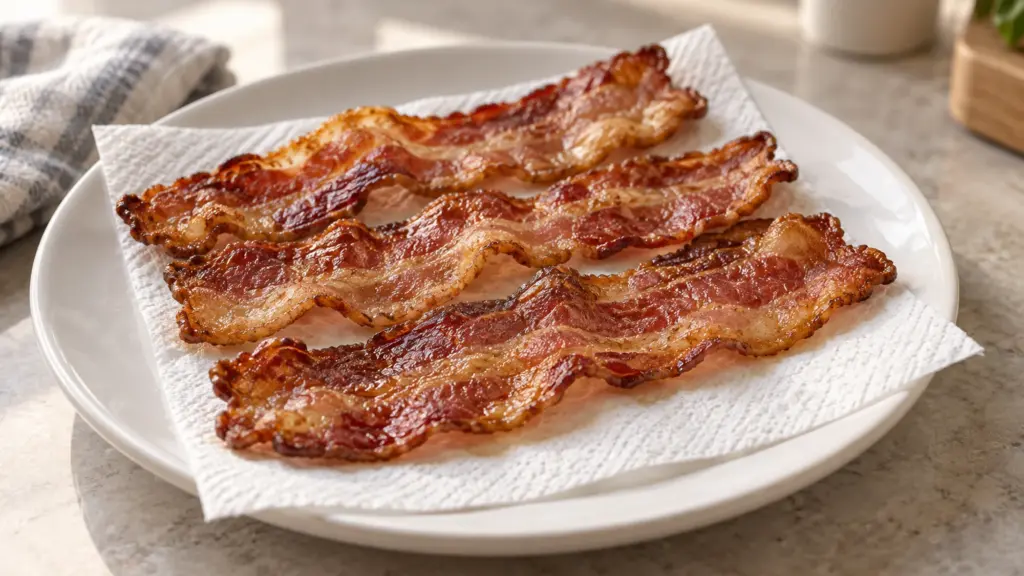
A few slices of bacon should not require a hot skillet and a splattered stovetop. Microwave bacon works well for a small batch: lay regular-cut strips on a paper-towel-lined microwave-safe plate, cook in short stages, and let them finish crisping as they cool. The towel catches much of the rendered fat, while the plate gives you room to keep the strips separate.
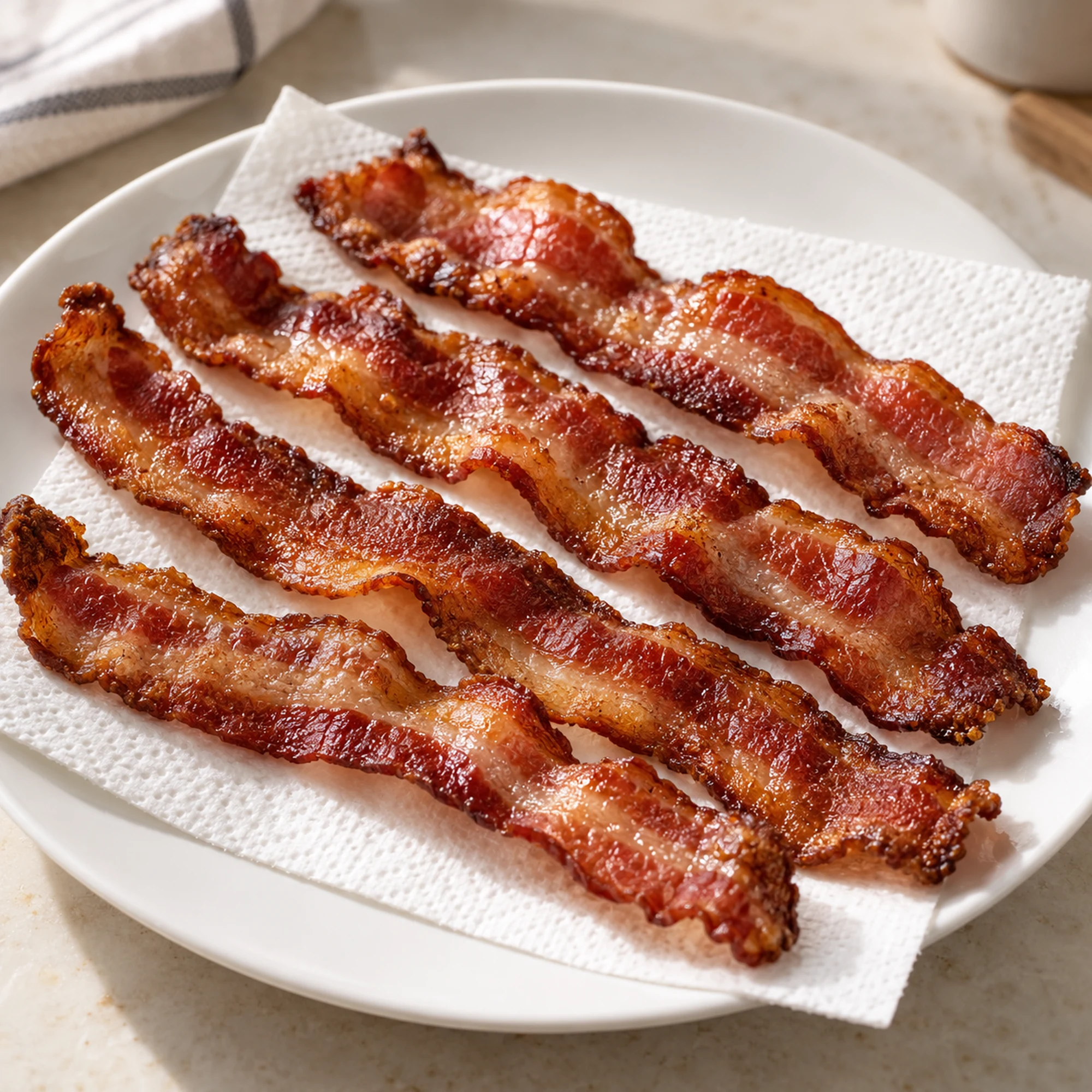
For crisp microwave bacon, cook no more than four regular slices in one layer, check early, and add time in short bursts.
Microwaves and bacon thickness vary, so a fixed number of minutes is only a starting point. I prefer to stop when the strips are deeply browned with no soft, translucent fat, then give them a minute on fresh towel. They firm up as they cool. Keep an oven mitt close: the plate and hot grease are much less forgiving than the recipe.
Serving suggestions for microwave bacon
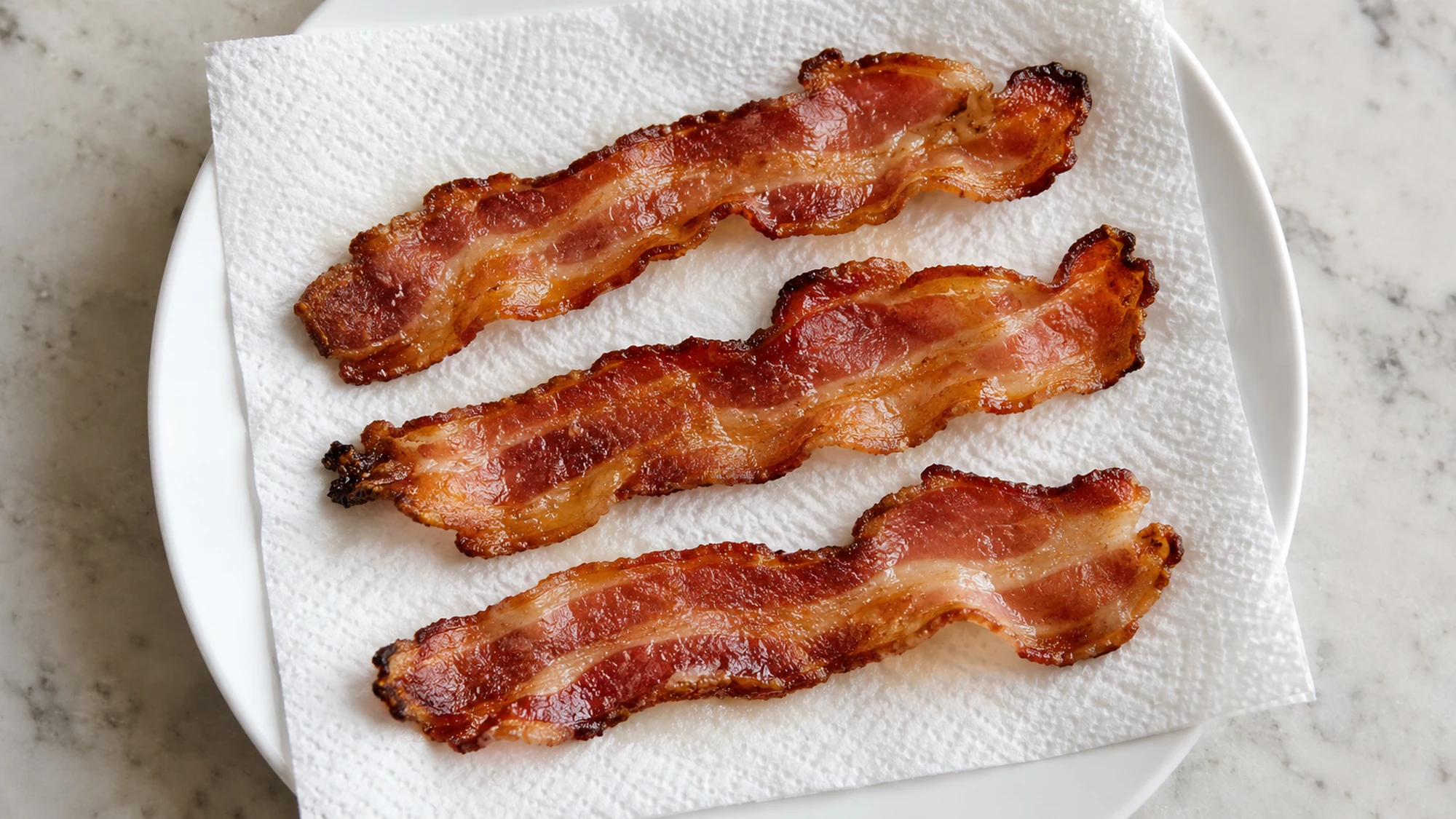
Two slices make a useful savory accent beside eggs, folded into a breakfast sandwich, or crumbled over a salad. Let the strips drain before adding them to bread, so the bread keeps its texture. If you want the bacon to stay crisp for a few minutes, spread it out rather than stacking hot slices.
- At breakfast, pair it with fruit or vegetables for contrast. Dishora’s sweet potato breakfast casserole is another option when you need to feed a larger table.
- For a sandwich, cook the bacon a shade crisper than you would eat it alone; warm bread and fillings soften it quickly.
- For soup or a dip, crumble cooled strips at the table. Adding them early gives up the crisp edge you worked for.
The microwave is especially convenient when you need a handful of strips, rather than an entire package. I would cook a big brunch batch in the oven, but for one or two plates this method keeps the timing easy to watch.
Serve the bacon after a short drain, while the browned edges still have their snap.
Variations and timing choices
Regular-cut pork bacon is the most predictable starting point. Thick-cut slices need more time, and very thin slices can go from flexible to scorched quickly. Begin with a shorter cook than you expect, then add 20- to 30-second intervals. Rotate the plate if your microwave has a hot spot, and watch for smoking or a burnt smell.
- Paper towels: use plain, microwave-safe towels below the bacon and one loose sheet above it to catch splatter. Replace soaked towels between batches.
- Microwave rack: a microwave-safe bacon rack can lift strips above the grease. Follow its maker’s directions and check early, because its timing may differ.
- Turkey bacon: follow its package directions. Its leaner texture and different thickness mean the pork-bacon timing is only a guide.
Do not overlap strips to fit an extra slice on the plate. Crowding traps moisture and leaves pale, floppy patches. If your plate holds only three comfortably, cook three.
Treat the first batch as a timing guide for your own microwave; adjust each later batch by what you can see.
Health benefits and balance
Bacon contributes protein and concentrated smoky flavor, so a small amount can make a simple meal more satisfying. It also contains sodium and saturated fat. Microwaving with paper towels may drain some visible grease, but it does not turn bacon into a low-sodium or low-fat food; the amount left depends on the cut and brand.
For a balanced plate, use a couple of slices alongside foods that bring fiber and color, rather than treating bacon as the whole breakfast. Labels vary substantially, especially for center-cut and turkey products, so check the package you actually buy if you track sodium or other nutrients. A two-slice serving in the recipe card uses a representative bacon label as an estimate, not a laboratory measure of your batch.
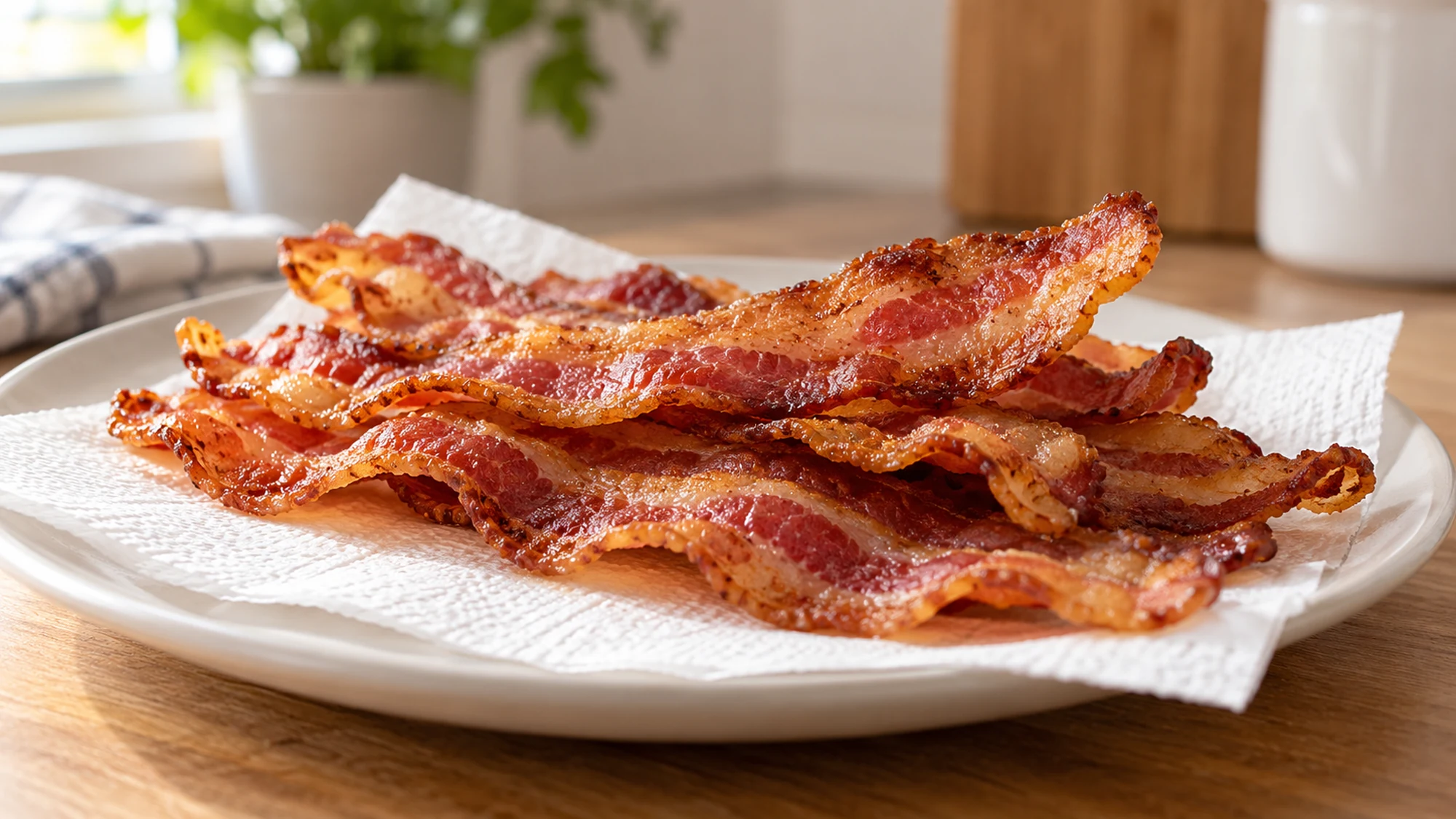
A little crisp bacon adds flavor; build the rest of the meal around what you want on the plate.
Why make microwave bacon
The real advantage is control over a small batch. You can see the strips through the microwave door, pause before they burn, and avoid heating a skillet for two servings. Once you know your microwave’s pace, the method is easy to repeat.
Set out the plate, towels, tongs and oven mitt before opening the package. Cook four strips at a time, change the towels for the next round, and keep the grease on the plate until it cools. Never pour hot fat down the sink. Refrigerate cooked leftovers promptly in a covered container and use them within four to five days. The recipe card gives the batch amounts and the visual cues that matter more than any single timer setting.
Microwave Bacon Recipe

Ingredients
- 8 slices regular-cut pork bacon About 8 ounces; cook four slices per batch in a 1000-watt microwave as a starting point.
Equipment
- Microwave-safe dinner plate Large enough for four strips in one layer.
- Paper towels Use fresh towels for each batch.
- Kitchen tongs and oven mitts The plate and fat become very hot.
Instructions
- Line a large microwave-safe plate with two paper towels. Arrange four bacon strips in a single layer without overlapping. Cover loosely with another paper towel.
- Microwave on high for 2½ minutes. Check through the door, then continue in 20–30-second intervals until the strips look browned and the edges are firm, about 3–4 minutes total for a batch in a 1000-watt microwave. Time varies with thickness and microwave power; stop if bacon smokes.
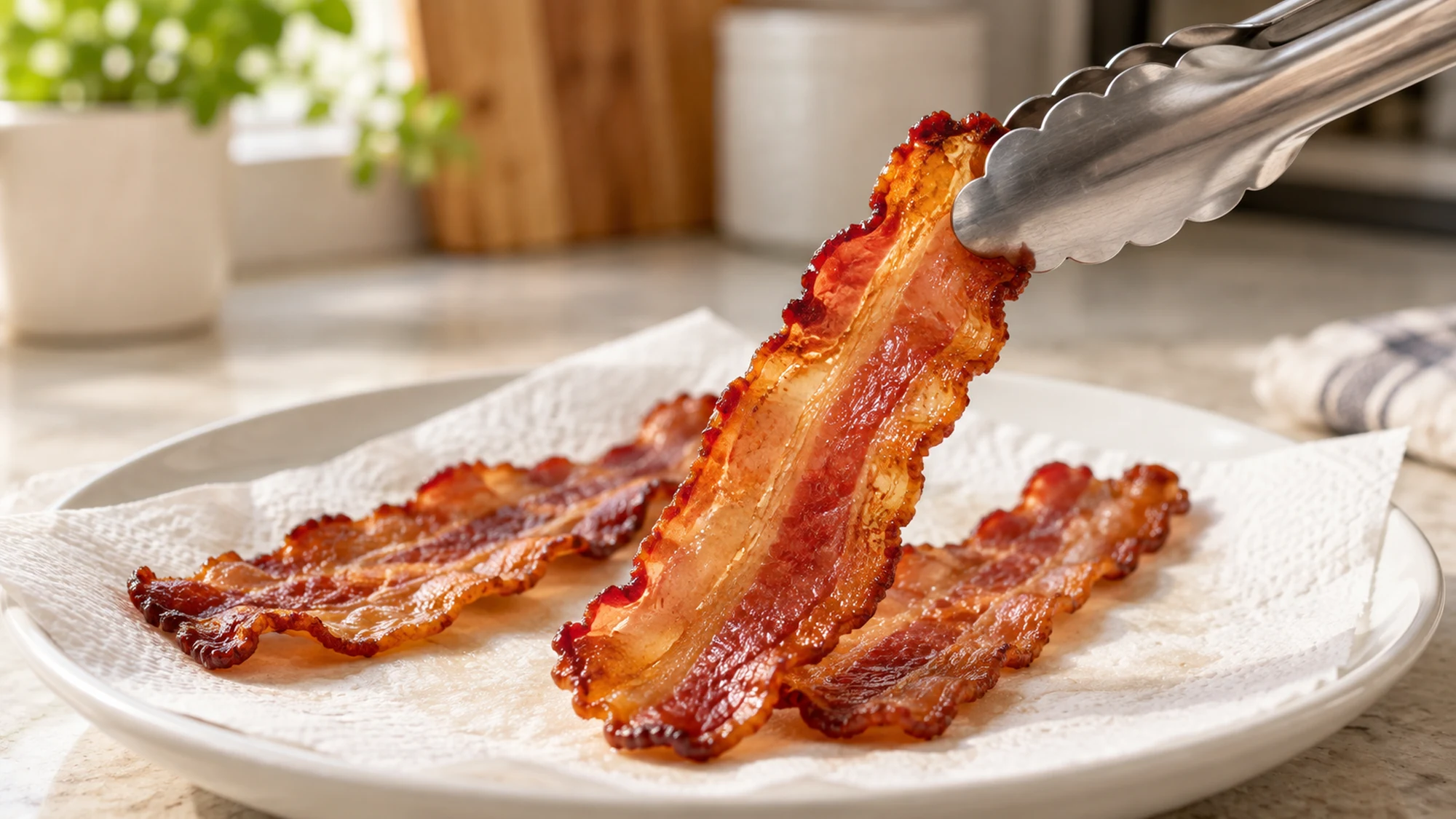
- Use oven mitts to remove the hot plate. Transfer the strips with tongs to a clean paper towel and let stand about 1 minute; they firm up as they cool.
- Carefully replace the greasy towels with fresh ones and cook the remaining four strips the same way. Let the rendered fat cool before disposing of it. Serve two slices per person.
Nutrition
Video
Notes
Tried this recipe?
Let us know how it turned out!Emily Parker is DISHORA’s recipe-writing persona, bringing a warm, practical voice to everyday cooking. Her focus is simple ingredients, comforting flavors and clear steps that make a dish feel approachable. From cozy dinners to something sweet, Emily’s recipes invite readers to try something delicious and make it their own.