
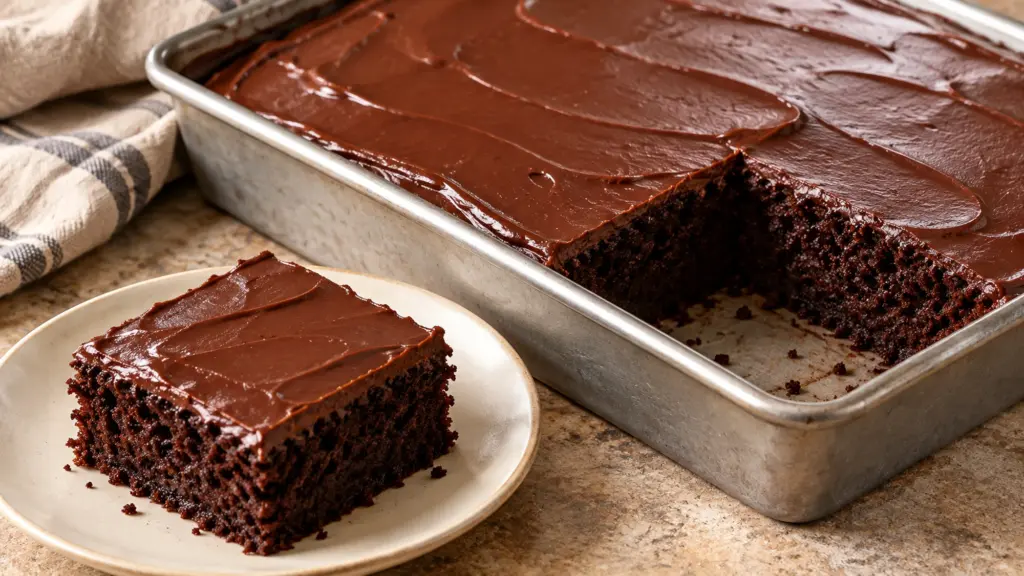
A birthday, a potluck, or simply a long week can call for chocolate cake without a tower of layers to assemble. This chocolate cake recipe bakes in one rectangular pan, with a soft cocoa crumb and a thin ganache topping. The batter is deliberately loose; adding more flour to thicken it would change the cake.
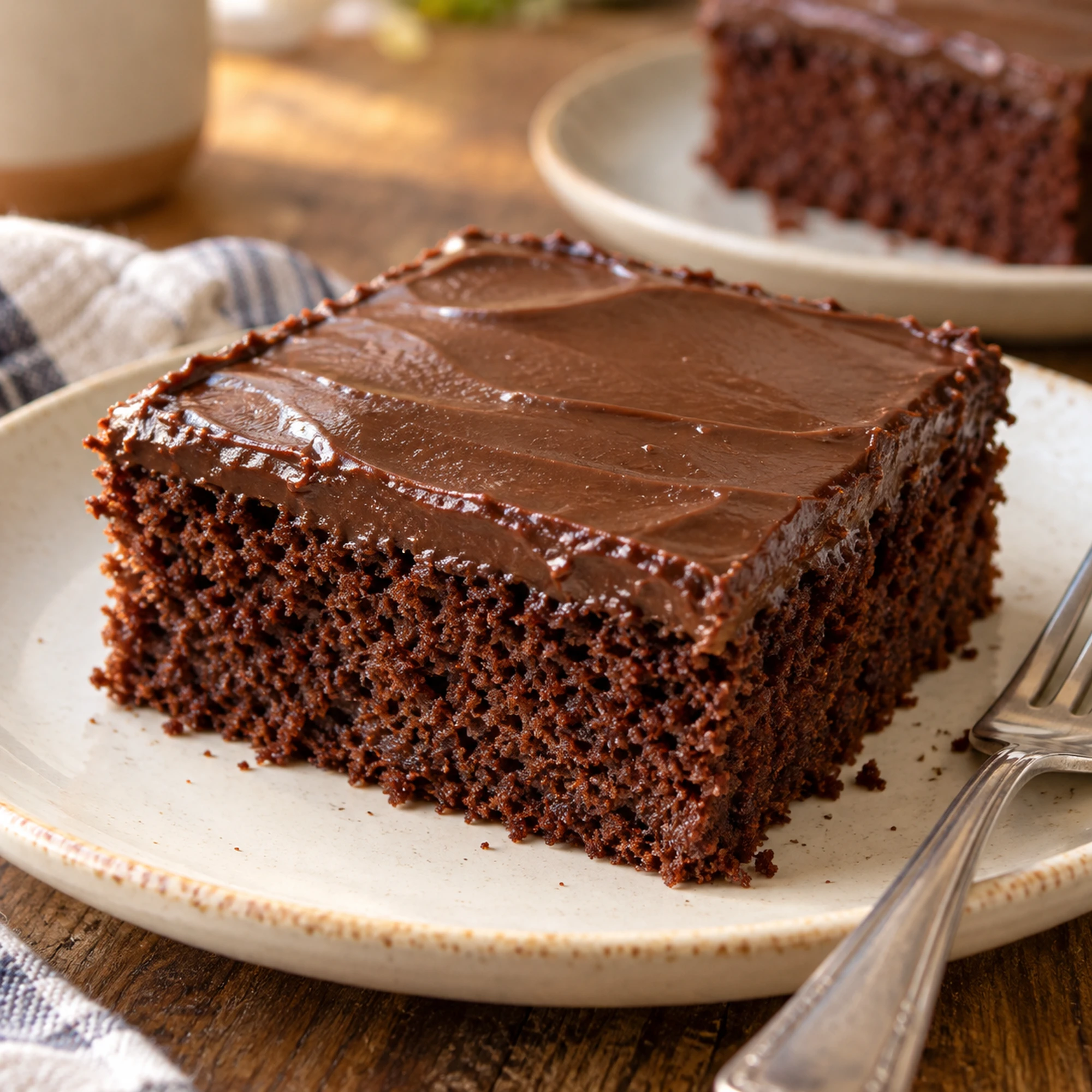
Use natural unsweetened cocoa, measure the flour lightly, and let the cake cool completely before adding the ganache. Those small choices keep the chocolate flavor clear, the crumb tender, and the topping neatly on the cake rather than soaking into it.
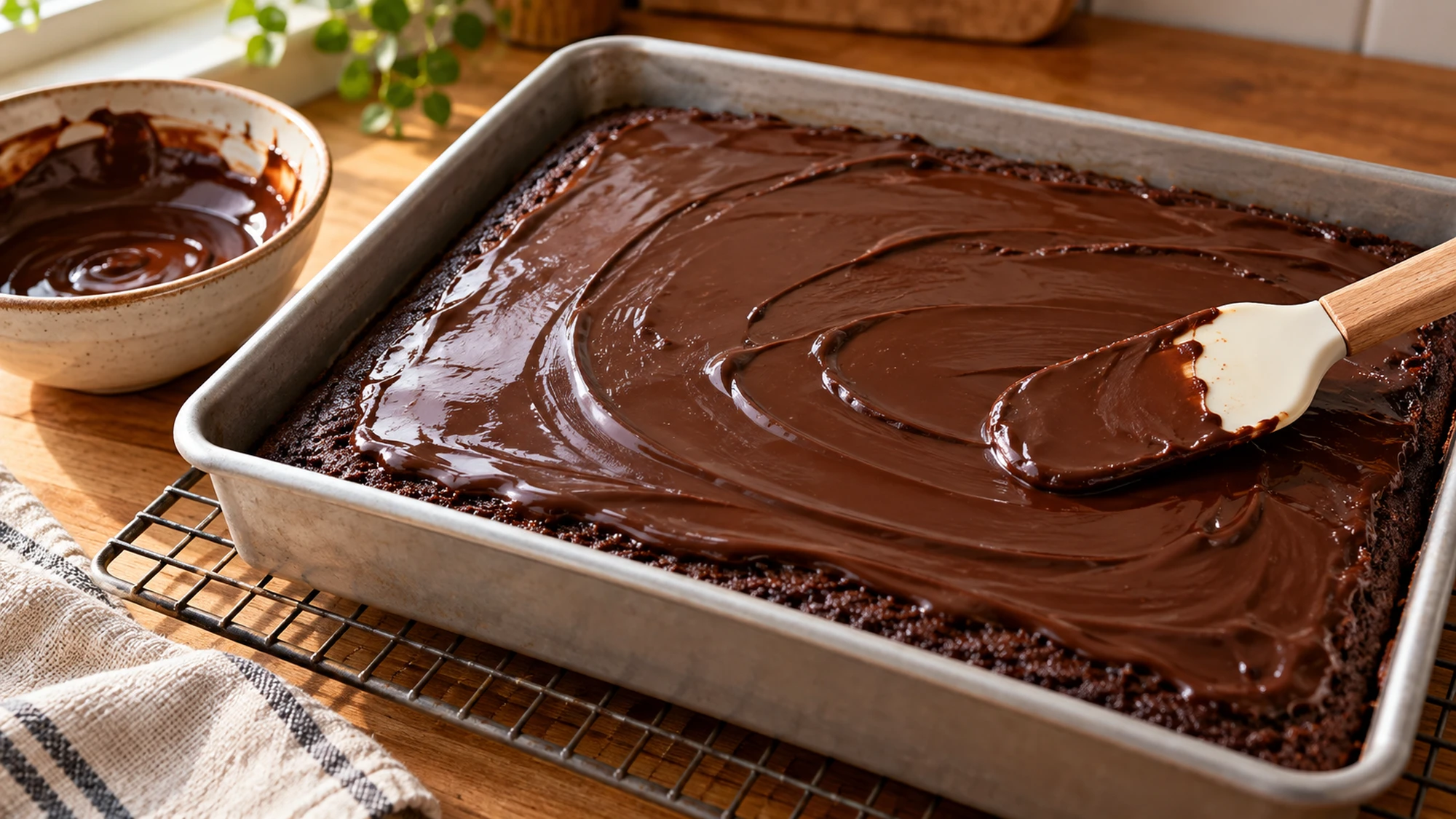
I prefer a modest layer of ganache here because it gives each bite a smooth chocolate finish without overwhelming the sponge. A plain square looks inviting on its own, and the pan makes both carrying and portioning straightforward.
Serving suggestions for chocolate cake
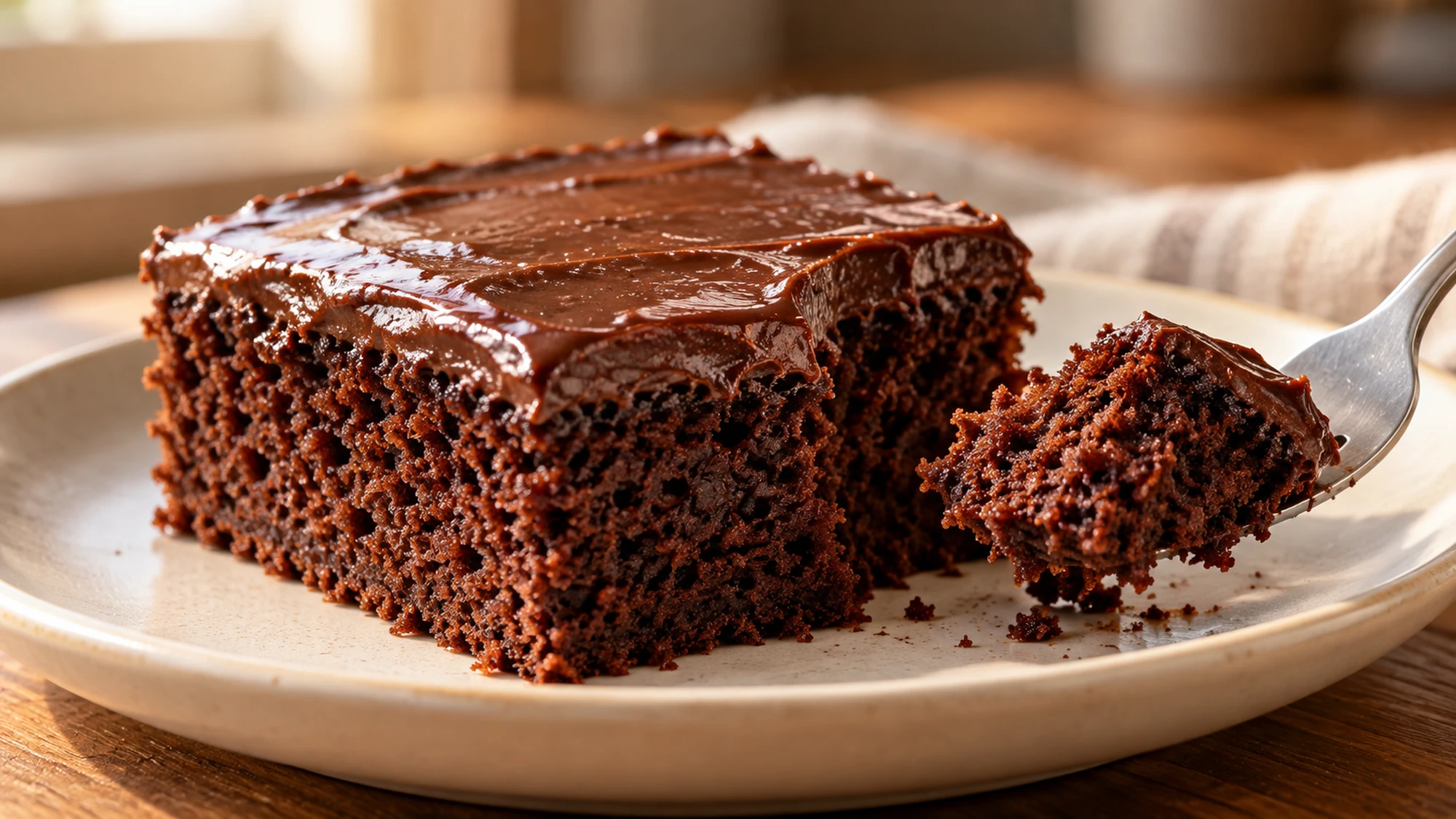
Let refrigerated cake stand briefly before serving so the topping softens and the crumb loses its chill. For tidy portions, wipe the knife between cuts. Sixteen squares are a useful starting point for this pan, although appetite and the rest of the meal will determine how much everyone wants.
- Keep it simple. Serve a square with coffee, tea, or a glass of milk. The chocolate topping already supplies a rich finish, so an extra sauce is optional.
- Add a fresh contrast. Put sliced strawberries or a few raspberries beside the cake at serving time. Their tartness is especially welcome with the sweet crumb; they are not included in the card’s nutrition.
- Plan the dessert table. For a second flavor, apple crumble offers warm fruit and a buttery topping. Serve small portions when offering both.
- Store it covered. Refrigerate the ganache-topped cake at 40°F (4°C) or below and enjoy within three days. Separate cut pieces with parchment if stacking them in a container.
Finish the cake before guests arrive, then keep it covered and chilled until shortly before serving. A clean cut and a simple plate do more for this dessert than a crowded garnish.
Variations that keep the crumb in balance
The cocoa, leaveners, liquid, and flour work together, so this is a good recipe for small flavor changes rather than sweeping substitutions. A guide to cocoa types helps explain why natural cocoa and Dutch-process cocoa are not always interchangeable.
- For a deeper roast note: Replace the boiling water with the same amount of hot brewed coffee. It changes the flavor and adds caffeine, so mention the swap when serving.
- For a different topping: Leave the cake unfrosted if you prefer a lighter finish. Its nutrition and cost will be lower than the ganache-topped estimates, but the baking instructions stay the same.
- For reliable measuring: Spoon flour into the cup and level it without packing. A kitchen scale and an ingredient weight chart are useful when cup measurements differ between ingredients.
- For another one-pan bake: Try carrot cake when you want warm spice. Grated vegetables are not a direct addition to this chocolate batter.
Change one flavor at a time and keep the base measurements intact. For gluten-free or egg-free baking, choose a recipe developed for that purpose rather than assuming a direct swap will behave the same.
Health benefits in everyday perspective
Chocolate cake is a dessert, and it does not need a wellness promise to earn its place at the table. Cocoa contributes some fiber and minerals, while flour, eggs, and milk supply smaller amounts of protein and other nutrients. Sugar, oil, chocolate, and cream also contribute substantial energy.
- Use the actual serving size. The card estimates one sixteenth of the finished cake, including all the ganache. Larger slices and extra toppings change those numbers.
- Check allergens. This version contains wheat, eggs, and milk. Chocolate may also contain soy or carry cross-contact warnings; check each package when baking for someone with an allergy.
- Keep the topping in proportion. A thin chocolate ganache gives an even finish without requiring a thick frosting layer.
Enjoy the portion that suits your meal and preferences. Clear ingredients and realistic estimates are more useful than calling a chocolate cake guilt-free, healthy, or a source of special health benefits.
Motivation conclusion: let a simple cake be enough
Set out the pan, check the cocoa label, and leave time for cooling before you begin. I’d choose a relaxed swirl of ganache over elaborate decoration here. The reward is a straightforward chocolate cake recipe with a tender center, sixteen shareable squares, and no layers to level or stack.
Chocolate Cake Recipe

Ingredients
- 2 cups granulated sugar 400 g
- 1 3/4 cups all-purpose flour 210 g; spooned and leveled
- 3/4 cup natural unsweetened cocoa powder 60 g; not Dutch-process or hot cocoa mix
- 1 1/2 teaspoons baking powder
- 1 1/2 teaspoons baking soda
- 1 teaspoon fine salt
- 2 large eggs
- 1 cup whole milk 240 ml
- 1/2 cup neutral vegetable oil 120 ml, plus the separate teaspoon below for the pan
- 2 teaspoons vanilla extract
- 1 cup boiling water 240 ml
- 1 teaspoon neutral vegetable oil for greasing the pan
- 6 oz semisweet chocolate 170 g, finely chopped; approximately 1 cup chips
- 1/2 cup heavy cream 114 g / 120 ml
Equipment
- 9-by-13-by-2-inch metal baking pan
- Parchment paper
- Large mixing bowl and heatproof medium bowl
- Hand mixer and whisk
- Measuring cups, spoons and kitchen scale
- Small saucepan For heating cream.
- Silicone spatula and wire cooling rack
- Toothpick or thin cake tester
Instructions
- Heat the oven to 350°F (175°C). Lightly grease a 9-by-13-by-2-inch metal baking pan with the 1 teaspoon oil and line it with parchment paper.
- Whisk the sugar, flour, natural cocoa, baking powder, baking soda and salt together in a large bowl. Break up visible cocoa lumps so the mixture looks evenly brown.
- Add the eggs, milk, 1/2 cup oil and vanilla. Beat with a hand mixer on medium speed for 2 minutes, scraping down the bowl once. Carefully stir in the boiling water by hand until smooth. The batter will be thin; do not add more flour.
- Pour the batter into the prepared pan. Bake on the middle rack for 35–40 minutes, until a toothpick inserted in the center comes out without wet batter and the top springs back gently. Ovens vary; continue in short intervals if needed.
- Set the pan on a wire rack and let the cake cool completely before frosting, about 60–90 minutes. Leave it in the pan for easy serving.
- Put the chopped chocolate in a heatproof bowl. Heat the cream in a small saucepan just until steaming with tiny bubbles at the edge; do not boil hard. Pour over the chocolate, leave for 5 minutes, then stir from the center outward until smooth. Let it thicken to a spreadable consistency, about 10–20 minutes. If small chocolate pieces remain, warm the bowl very briefly over barely simmering water and stir.
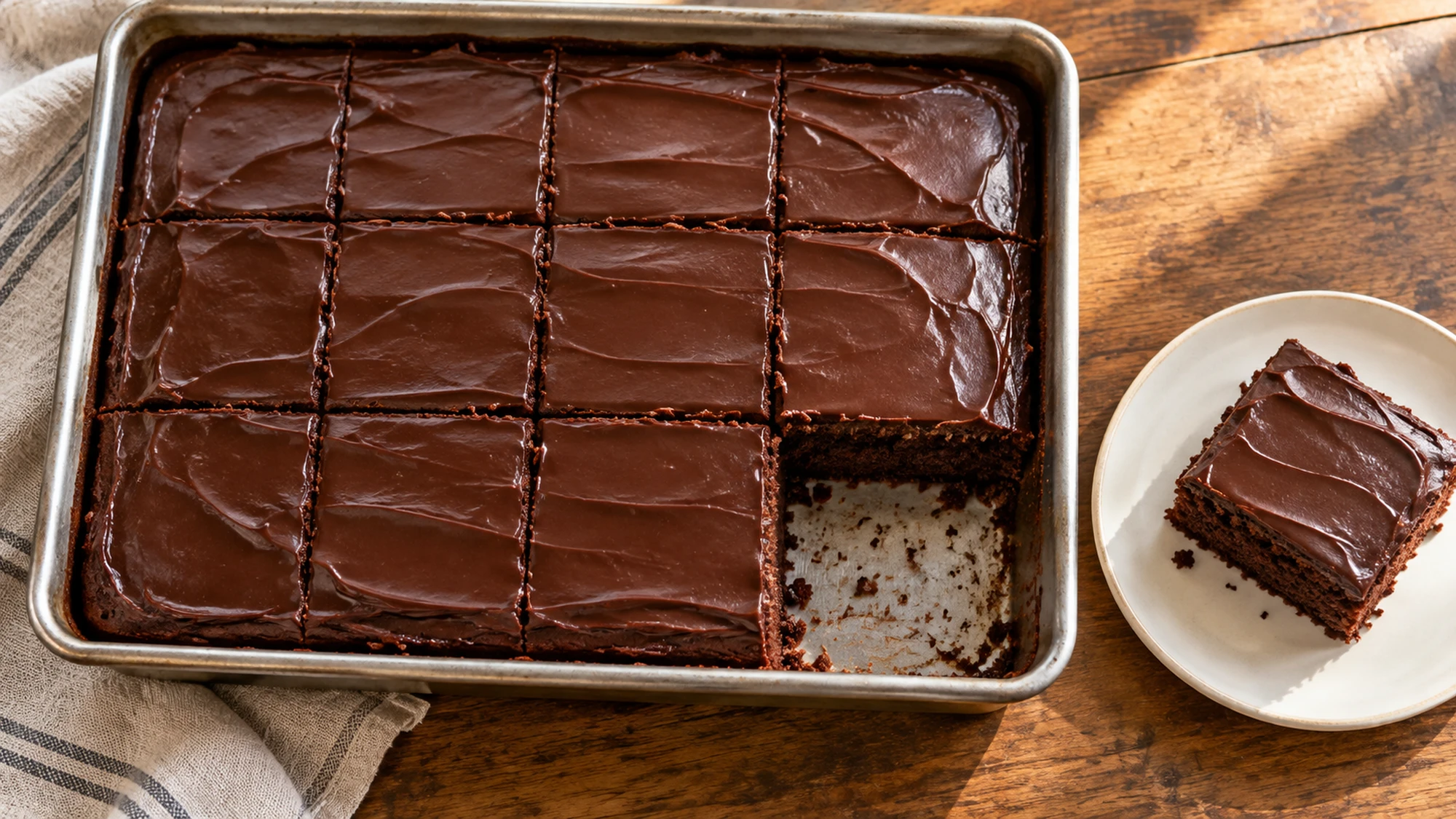
- Spread all the ganache in a thin, even layer over the cooled cake. Let it set for about 15 minutes, or chill briefly. Cut into sixteen squares. Refrigerate covered once finished; bring portions out briefly before serving.
Nutrition
Video
Notes
Tried this recipe?
Let us know how it turned out!Emily Parker is DISHORA’s recipe-writing persona, bringing a warm, practical voice to everyday cooking. Her focus is simple ingredients, comforting flavors and clear steps that make a dish feel approachable. From cozy dinners to something sweet, Emily’s recipes invite readers to try something delicious and make it their own.