
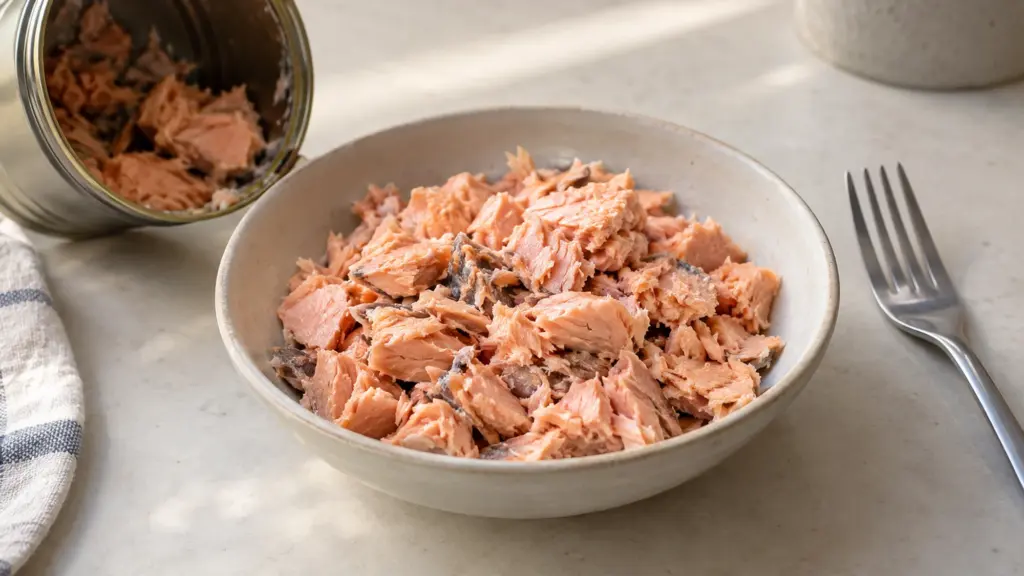
Open a can of salmon and the contents may look quite different from a neatly trimmed fillet: some cans hold skin and small pale bones, while others contain only flakes. Neither appearance tells the whole story. The useful questions are what the label promises and how you want to use the fish.
Canned salmon is already cooked and ready to use when commercially packaged and stored as directed. Traditional cans may include soft edible bones; boneless varieties offer a different texture and calcium content.
I’d choose the style for the meal rather than automatically reaching for the most expensive can. A smooth sandwich filling and a loosely flaked grain bowl ask for different things. A few label checks make that decision much easier.
Why some canned salmon has bones
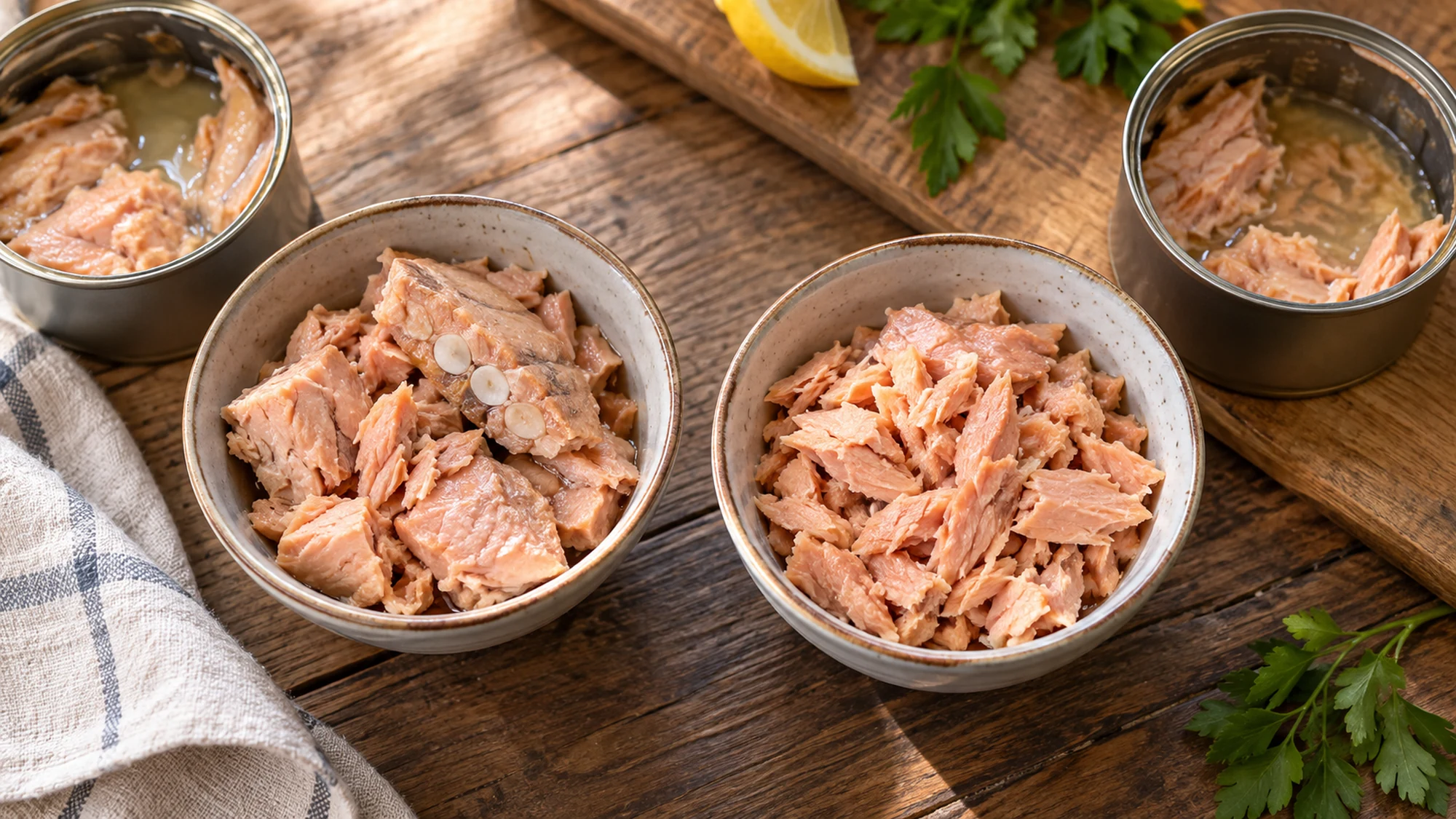
Traditional canned salmon can include softened bones and skin. The small bones can be mashed into the flakes, while a skinless, boneless product removes that extra sorting. Check the wording before opening if those textures bother you.
The bones matter nutritionally: the NIH calcium fact sheet lists pink canned salmon with bones at 181 milligrams of calcium per 3-ounce serving. That value describes a particular food form; do not transfer it to every boneless product. Your can’s Nutrition Facts panel is the better guide to the food you actually bought.
| Style | What to expect | Helpful check |
|---|---|---|
| With skin and bones | More sorting or mashing | Read calcium per serving |
| Skinless and boneless | Simple, loose flakes | Do not assume the same calcium |
| No salt added | A different sodium choice | Compare sodium and serving size |
| Seasoned or flavored | Added ingredients and flavor | Read ingredients and allergens |
Compare canned salmon labels fairly
Start with the serving size and servings per container. Two panels can look different because one describes a smaller portion, not because the fish is dramatically different. Compare the same weight, then look at protein, sodium and calcium according to your priorities.
Check whether the label describes drained fish, and notice added oil, sauces or seasonings. I prefer a plain product when I want to control the final seasoning. That is a cooking preference, not a claim that flavored salmon is automatically a poorer choice.
- Read the ingredient list, especially for a seasoned product.
- Compare sodium using equal-size servings.
- Check the can size against how much you will realistically use.
- Choose a texture you enjoy enough to eat, rather than buying a label you dislike.
“Boneless” describes the fish’s form. “No salt added” describes an ingredient choice. Neither phrase replaces the full nutrition panel.
Nutrition and the mercury question
Salmon supplies protein, and fish can contribute omega-3 fats and nutrients including vitamin B12 and vitamin D. Amounts vary by species and product. Canning is a convenient way to include fish; it is not a guarantee that every can has identical nutrient levels.
FDA and EPA list salmon among their lower-mercury “Best Choices”. Their advice for people who are pregnant or breastfeeding is two to three 4-ounce servings weekly from that list, with smaller age-based servings for children and an emphasis on variety. A nutrient-rich can does not make unlimited portions necessary or promise a specific health result.
Put the flakes to work
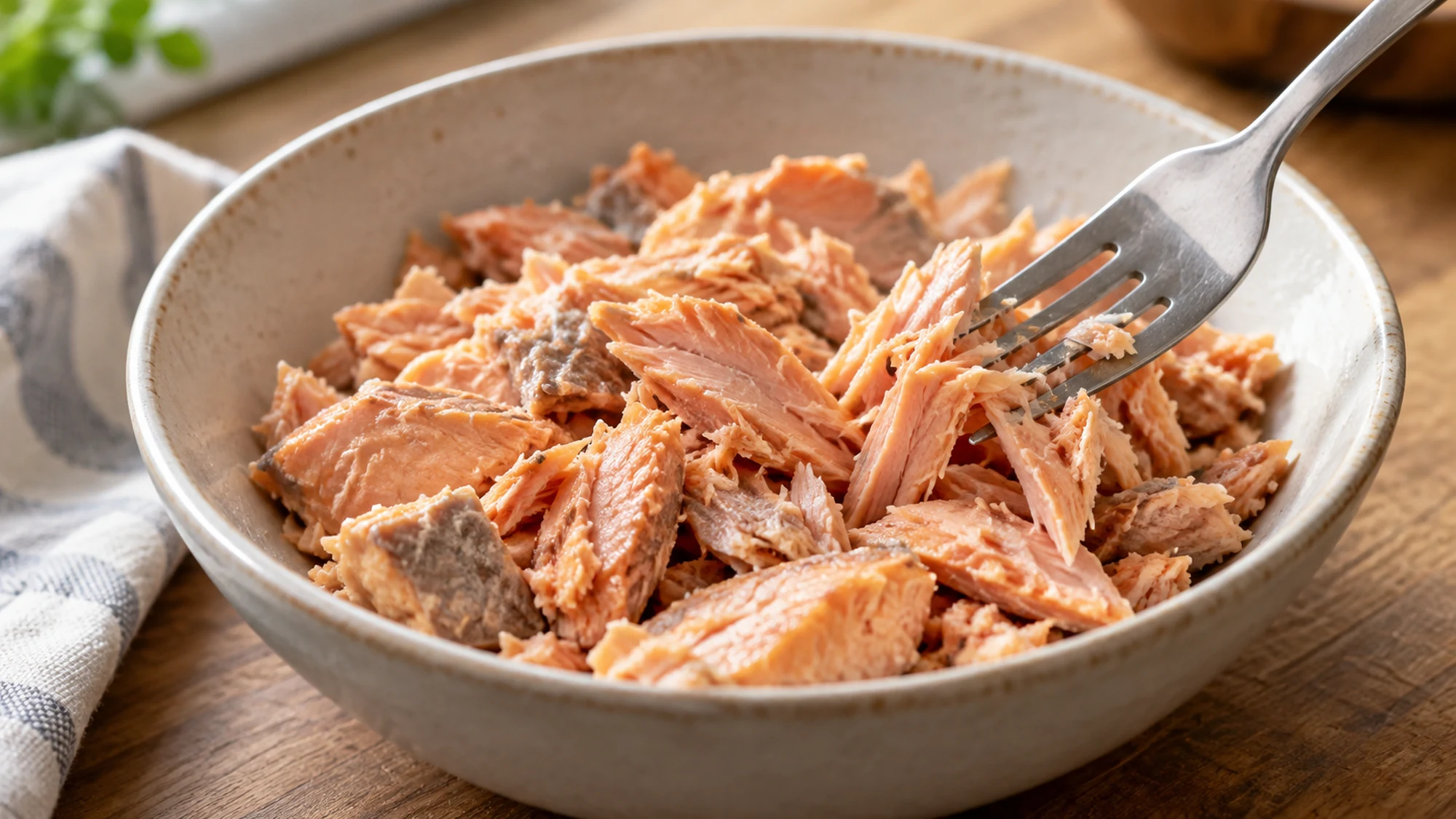
Commercially canned salmon does not need the same cooking process as a raw fillet. Drain it if your dish needs dry flakes, then break it apart gently. If there are softened bones, mash them to a texture you like or select a boneless product next time.
Build around contrast: something crisp, a starch or beans, and a bright dressing can turn soft flakes into a useful meal. The cool vegetables in this chickpea cucumber salad offer one way to think about a varied plate. Keep a separately seasoned salmon portion alongside it rather than assuming every combination needs a complicated recipe.
- Add flakes to a grain bowl just before serving.
- Use a sandwich filling with a crisp vegetable component.
- Warm gently in pasta at the end so the flakes stay distinct.
Store opened canned salmon safely
An unopened shelf-stable can belongs in a cool, dry place unless its label says otherwise. Discard leaking, bulging or badly dented cans, avoid heavy rust and never taste food from a compromised can. Once opened, the fish becomes perishable and needs refrigeration.
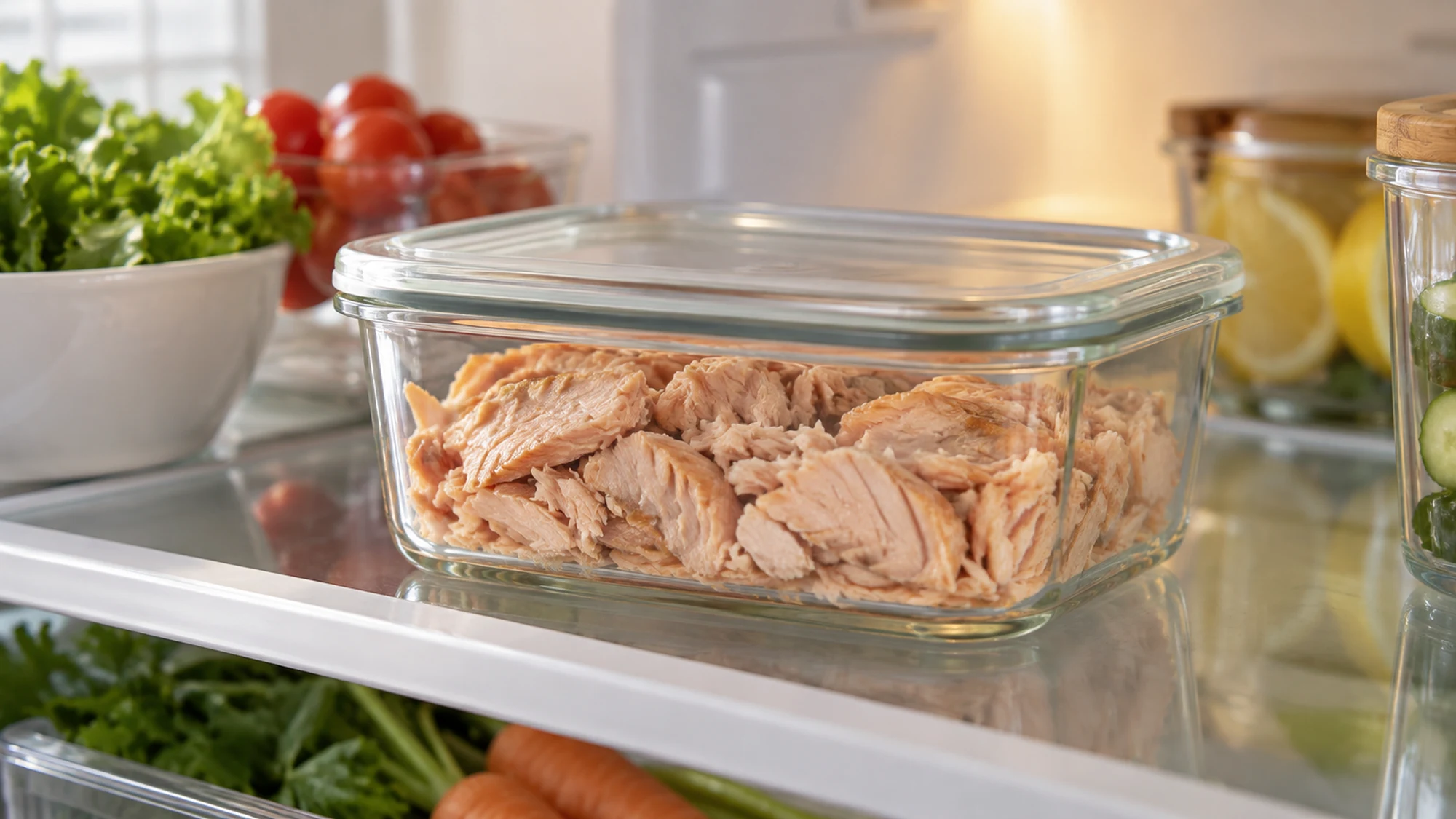
USDA recommends using opened canned fish within three to four days. Keep it refrigerated at 40°F or below in a covered food-grade container; transferring it out of the can helps preserve quality. Keep track of when you opened it and follow a stricter package direction when supplied.
Move the extra fish into a covered container, refrigerate promptly and plan the next use before the three-to-four-day window disappears.
Choose the can that suits the meal
Canned salmon is most useful when you know what you are choosing: bones or boneless, plain or seasoned, a portion for today or one that needs a leftover plan. I’d settle those details before worrying about elaborate serving ideas. The label and a fork already answer most of the important questions.

Emily Parker is DISHORA’s recipe-writing persona, bringing a warm, practical voice to everyday cooking. Her focus is simple ingredients, comforting flavors and clear steps that make a dish feel approachable. From cozy dinners to something sweet, Emily’s recipes invite readers to try something delicious and make it their own.