
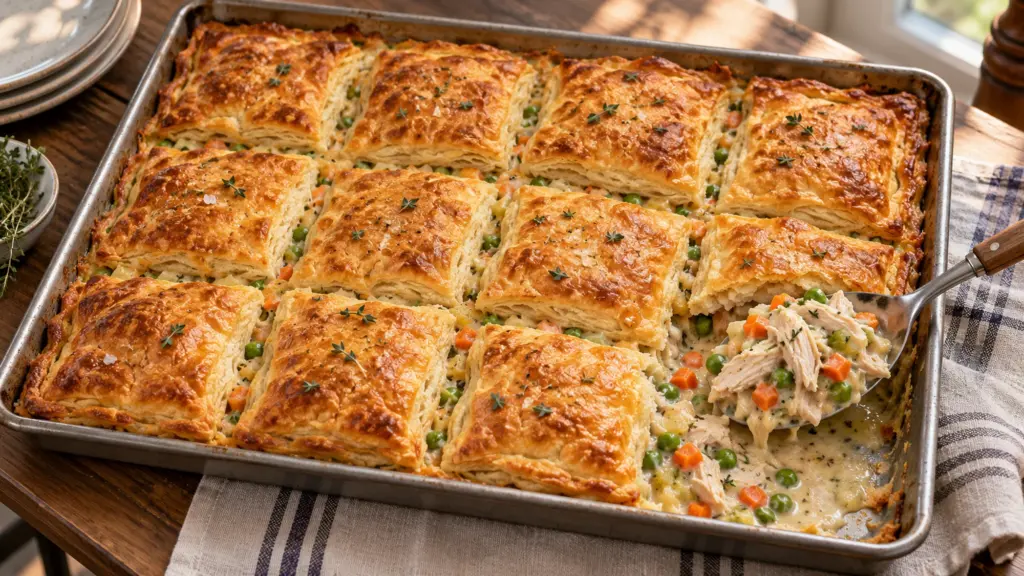
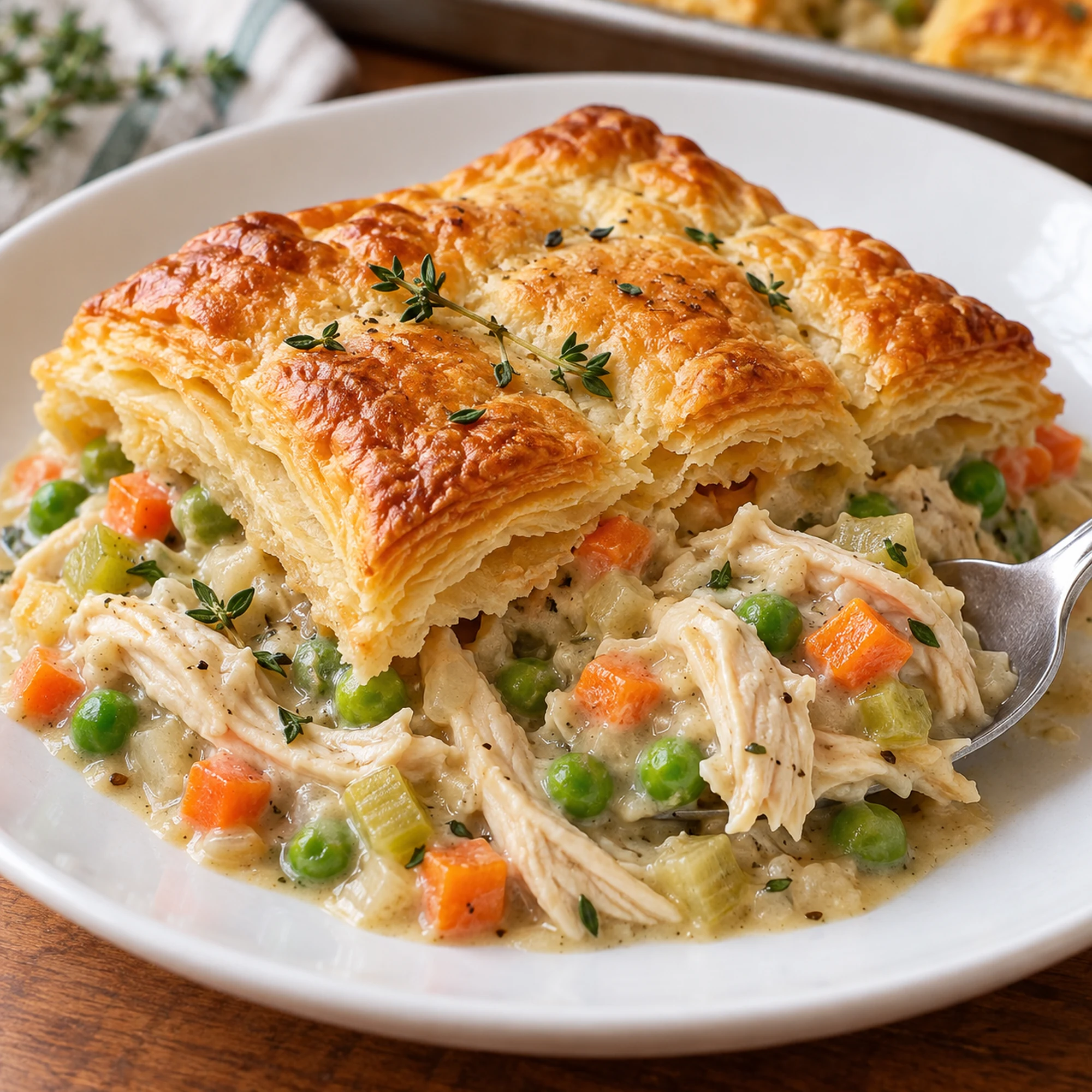
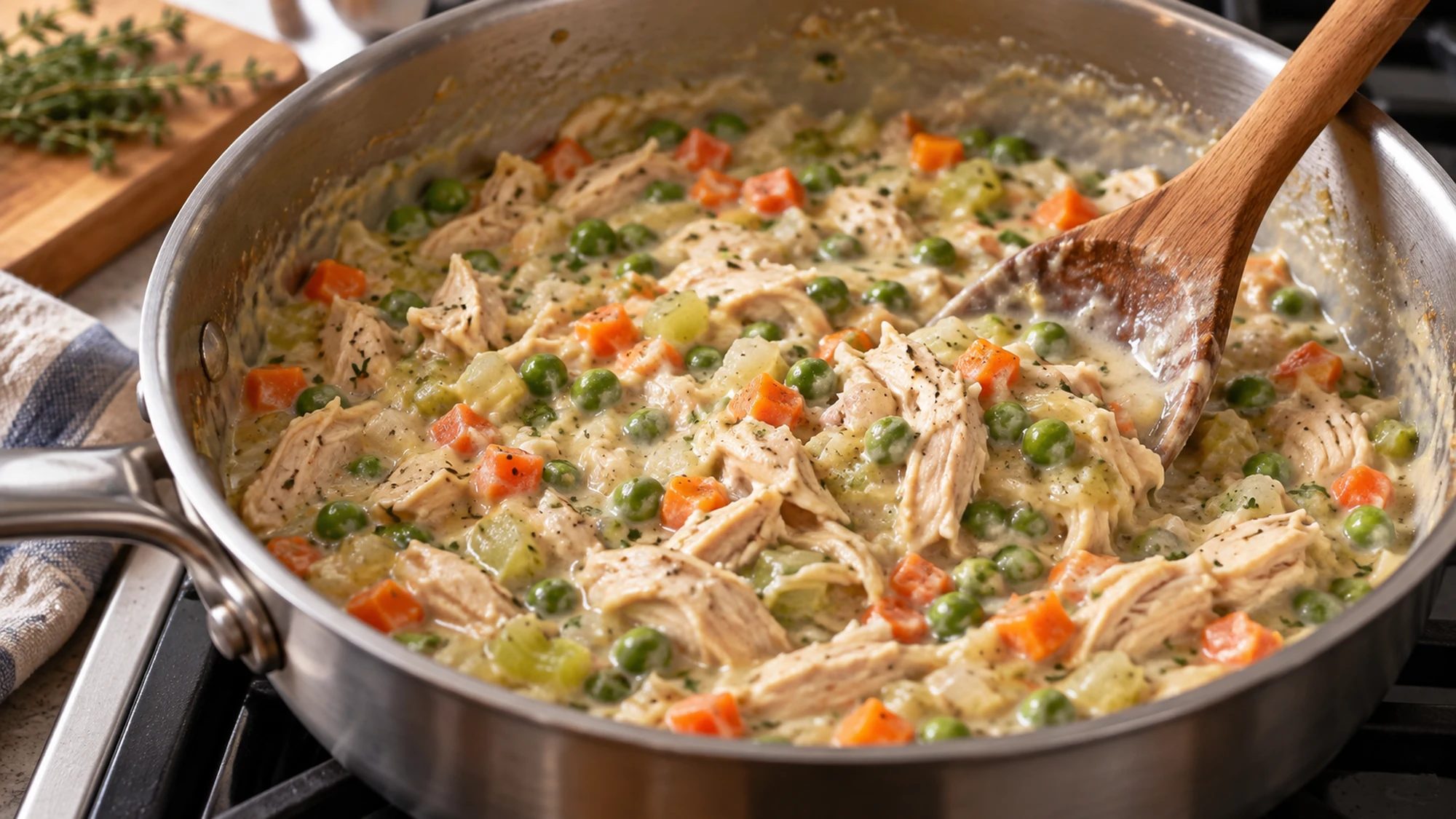
The best-looking part of a chicken pot pie is often the first thing everyone wants: its golden pastry. Sheet pan chicken pot pie spreads the creamy filling into a shallow pan and gives each serving a flaky piece on top. Cooked chicken, peas and tender vegetables sit beneath puff pastry, with enough gravy to keep the filling spoonable.
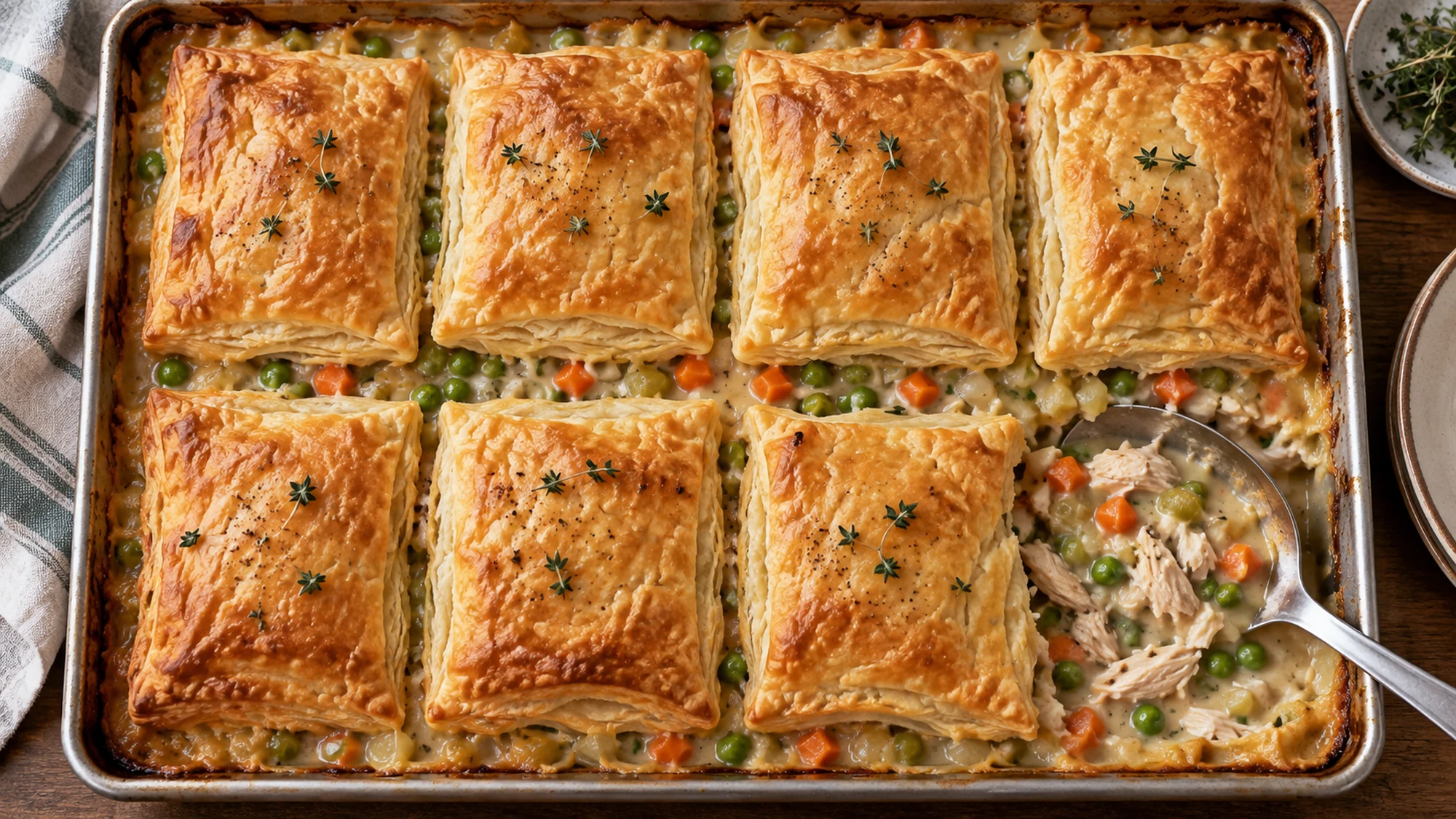
Use a properly rimmed sheet pan, thicken the filling before it reaches the oven and keep the puff pastry cold. Bake until the pastry is deeply golden and the filling reaches 165°F (74°C), then give the pan a brief rest.
This is a top-crust pot pie, without a bottom pastry layer to line or blind-bake. I prefer separate pastry rectangles here because the small gaps release steam and make portioning straightforward. The filling should coat the chicken rather than pour like broth; a shallow pan has very little patience for an overflowing dinner.
Serving suggestions for sheet pan chicken pot pie
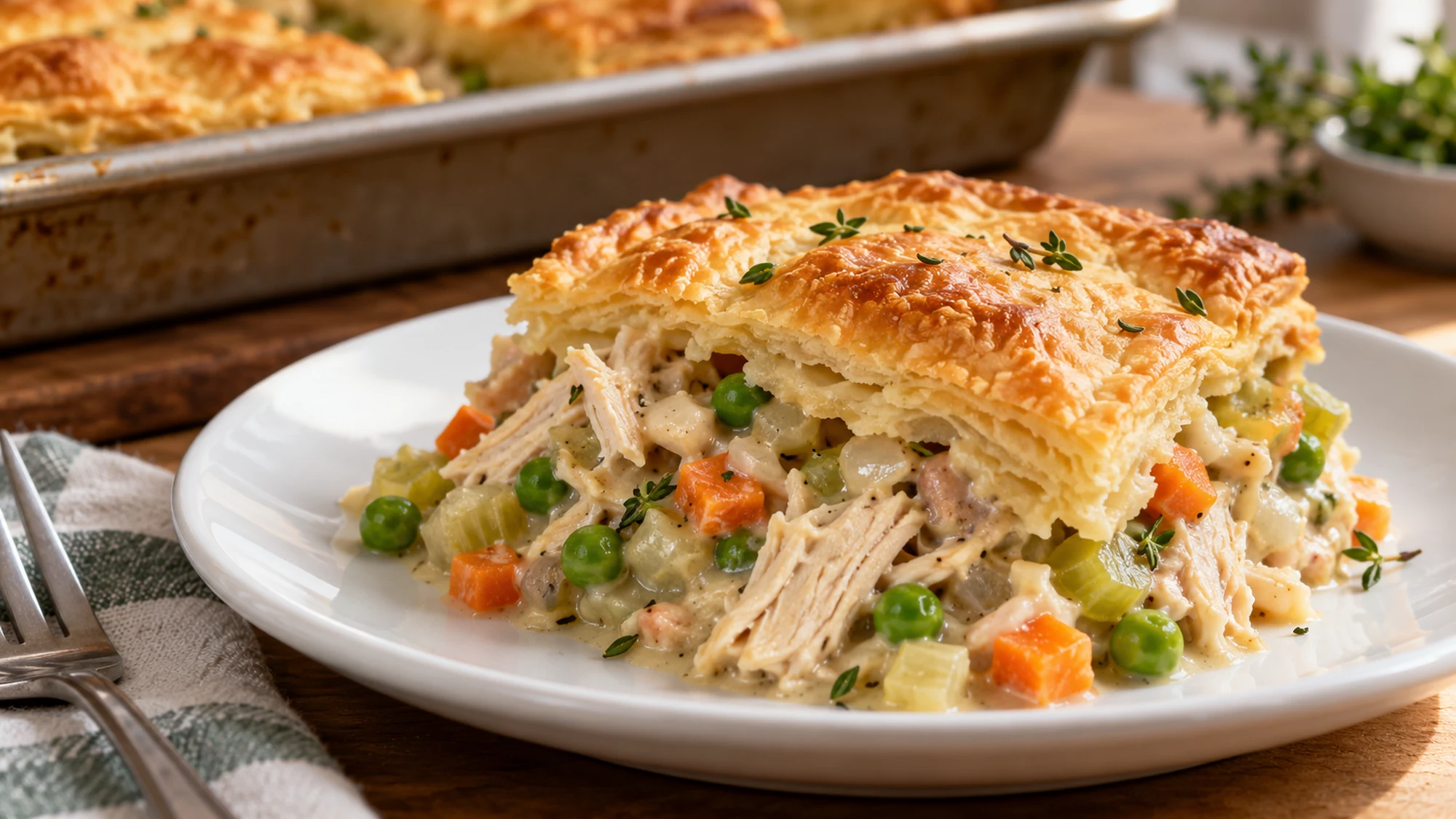
Divide the pan into six portions, pairing each mound of chicken filling with its pastry topping. A broad serving spoon gets underneath the vegetables more neatly than a thin spatula. After the short rest, the gravy should settle around the chicken while the pastry keeps its flaky layers.
- Add something crisp. A green salad with a light lemon dressing gives the warm, creamy filling a fresh contrast. Dress the leaves just before serving so they do not wilt while the pie rests.
- Choose a simple vegetable. Steamed broccoli or green beans fit comfortably beside a portion. Keep their seasoning light; the pie already brings buttery pastry and a savory sauce.
- Skip an extra starch if you prefer. The topping already supplies pastry in each serving. You can build a satisfying plate with the pie and a generous vegetable side instead of adding potatoes by habit.
- Reheat thoughtfully. Refrigerate leftovers promptly in shallow containers, keeping pastry separate when practical. Use within three to four days and reheat the filling to 165°F (74°C). An oven helps refresh the pastry better than a microwave.
Serve the pastry above the filling, with salad or vegetables alongside. Keeping the crisp and creamy components recognizable makes the shallow-pan approach worthwhile.
Variations that keep the gravy under control
The filling welcomes small vegetable changes, but its consistency still matters. Watery additions can loosen the gravy and leave the pastry damp. I would change the vegetables before changing the roux, the cooked butter-and-flour mixture that thickens the milk and broth.
- Use cooked turkey. Substitute the same weight for chicken, removing skin and bones first. This is a useful way to use properly stored leftovers without changing the basic filling.
- Try mushrooms. Replace half the celery with chopped mushrooms and cook them with the onion until their released liquid has evaporated. Stirring raw mushrooms into finished gravy adds water later.
- Adjust the herbs. Thyme suits the chicken, while a little chopped parsley offers a fresher finish. Keep the amount restrained so the sauce still tastes primarily of chicken and vegetables.
- Choose puff pastry deliberately. Puff pastry sheets and puff pastry baking tips can differ in size and baking behavior. Cover the filling with the weight specified in the card, and follow safe thawing directions on the package.
Keep the filling thick and the topping cold until assembly. Ingredient changes should support those two checkpoints instead of turning the oven into a rescue operation.
Health benefits with realistic comfort-food portions
Chicken provides protein, and peas, carrots, onion and celery add vegetable variety. Puff pastry and butter also contribute fat, including saturated fat. This can be an enjoyable meal without describing a flaky chicken pie as a treatment, a diet shortcut or a low-fat dish.
- Manage sodium at the ingredient stage. Lower-sodium broth gives you more room to season the sauce. Rotisserie chicken and prepared pastry may already contain substantial salt.
- Keep the serving size clear. The recipe makes six portions. A larger helping changes the nutrition along with the pastry and filling on the plate; sides and drinks count separately.
- Check the labels for allergies. This version contains wheat, milk and egg. Packaged pastry and broth can have other ingredients or cross-contact warnings.
Enjoy the contrast of flaky pastry and creamy chicken, and choose the rest of the plate for balance and appetite. The portion is more useful information than a broad health label.
Motivation conclusion: make room for the pastry
Thaw the pastry in the refrigerator, chop the vegetables and find a pan with a real rim before you begin. Once the gravy is ready, assembly is straightforward. For another chicken dinner with a different mood, try apricot chicken with a tangy glaze; for this meal, let the golden topping have its moment.
Sheet Pan Chicken Pot Pie Recipe

Ingredients
- 3 tbsp unsalted butter 42 g
- 1 medium yellow onion 110 g, finely diced
- 2 medium carrots about 144 g, finely diced
- 2 celery stalks about 80 g, finely diced
- 2 garlic cloves 8 g, minced
- 0.33 cup all-purpose flour 40 g
- 2 cups lower-sodium chicken broth 480 ml
- 1 cup whole milk 240 ml
- 1 tsp fresh thyme leaves
- 0.5 tsp fine salt reduce if the chicken or broth is salty
- 0.25 tsp ground black pepper
- 3 cups cooked shredded skinless chicken breast 450 g; bones removed
- 1 cup frozen peas 140 g
- 17.3 oz puff pastry sheets 490 g total, 2 sheets, thawed in the refrigerator
- 1 large egg beaten
- 1 tbsp water for the egg wash
Equipment
- 18-by-13-inch metal sheet pan with a rim at least 1 inch high
- Large saucepan
- Whisk and wooden spoon
- Pastry brush and knife
- Instant-read food thermometer
Instructions
- Heat the oven to 400°F (200°C), with a rack in the middle. Use a flat, sturdy rimmed sheet pan at least 1 inch deep; do not use a rimless tray. Keep the thawed pastry refrigerated while you make the filling.
- Melt the butter in the saucepan over medium heat. Add onion, carrots and celery; cook for 8–10 minutes, stirring, until softened. Stir in garlic for 30 seconds.
- Sprinkle in the flour and stir for 1 minute. Whisk in broth gradually, then milk. Add thyme, salt and pepper. Simmer for 4–5 minutes, stirring, until the gravy coats a spoon and no longer looks watery. Fold in cooked chicken and frozen peas; bring back to a gentle simmer.
- Spread the hot filling evenly in the sheet pan, leaving room below the rim. Unfold each pastry sheet and cut it into six rectangles, making twelve total. Lay the pieces over the filling with small gaps for steam; do not roll them into a bottom crust. Mix the egg with the water and lightly brush the pastry tops. Discard remaining raw egg wash.
- Bake for 25–30 minutes, until the pastry is puffed and deeply golden and the filling reaches 165°F (74°C) in the center. If the topping browns early, loosely shield it with foil and continue until the filling is hot. Rest for 5 minutes, then divide the filling into six portions with two pastry pieces each.
Nutrition
Video
Notes
Tried this recipe?
Let us know how it turned out!Emily Parker is DISHORA’s recipe-writing persona, bringing a warm, practical voice to everyday cooking. Her focus is simple ingredients, comforting flavors and clear steps that make a dish feel approachable. From cozy dinners to something sweet, Emily’s recipes invite readers to try something delicious and make it their own.