
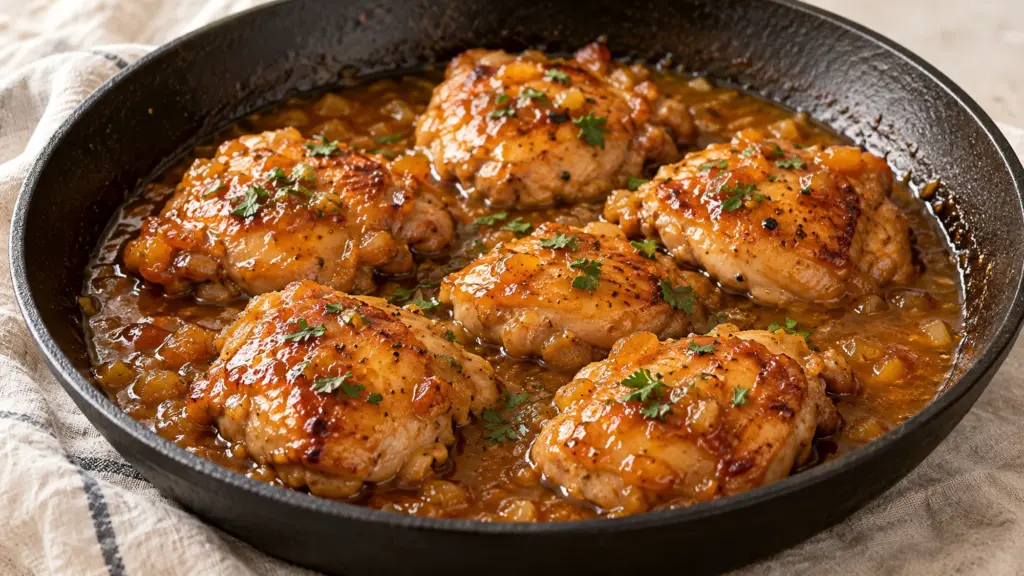
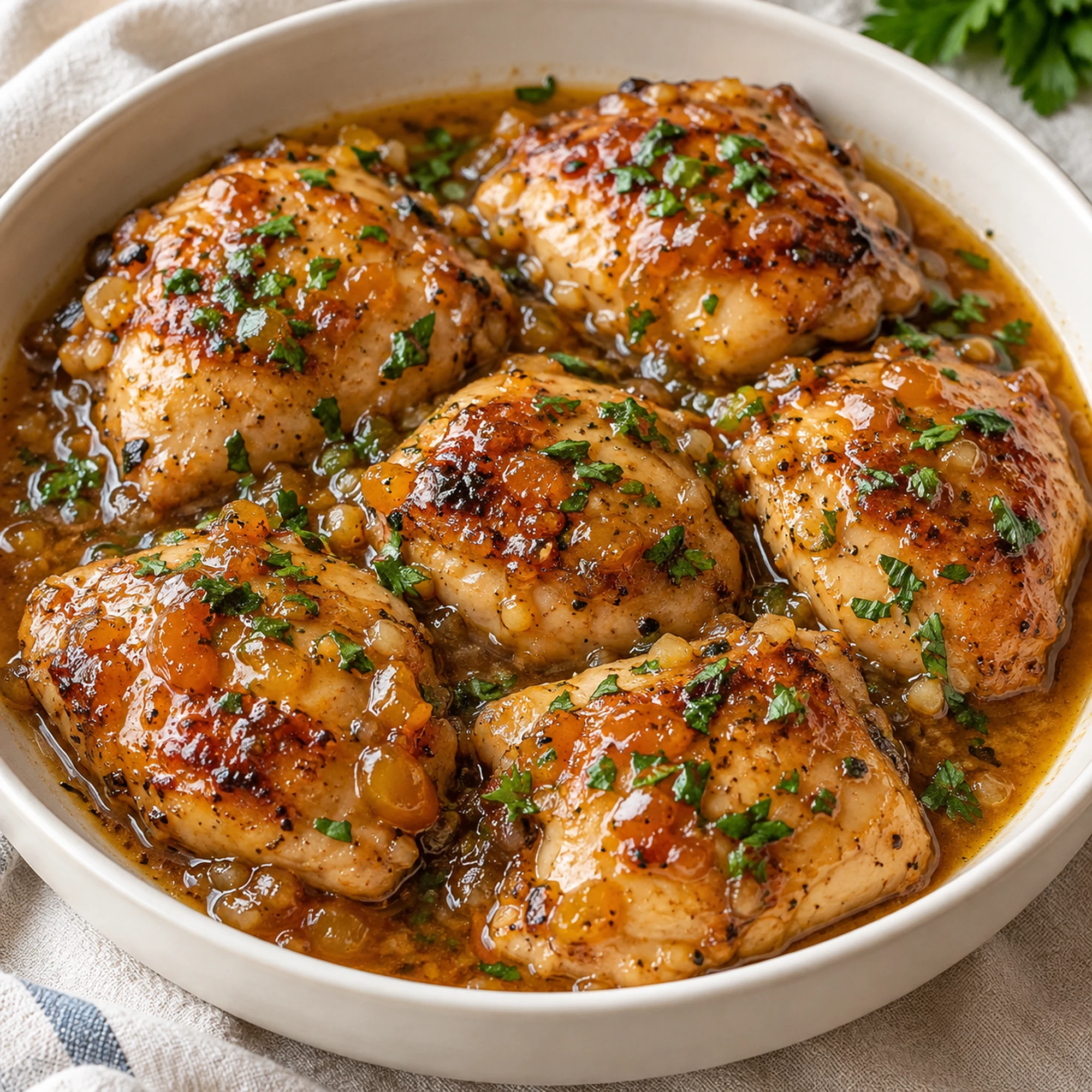
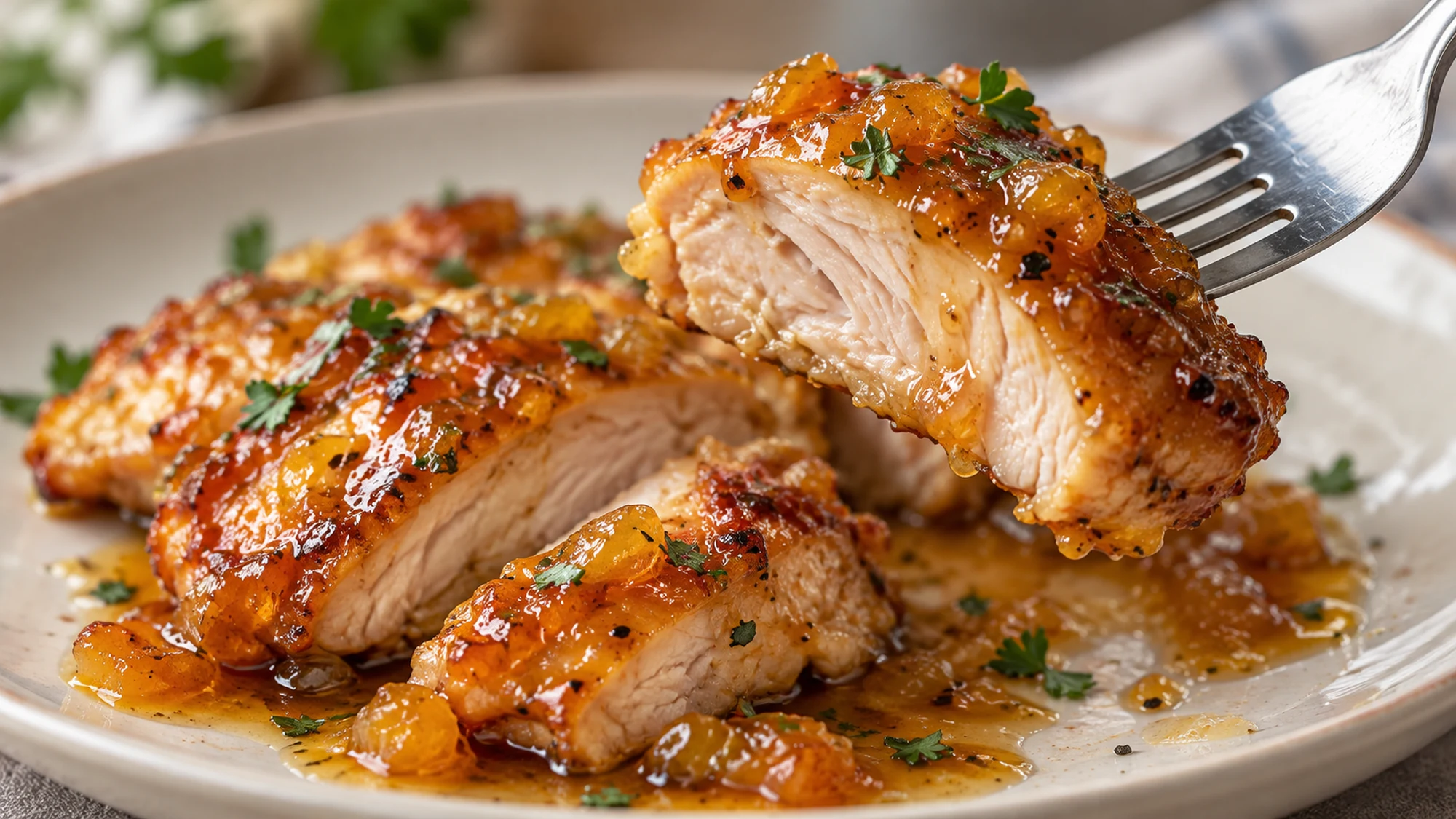
Dinner is nearly here, the chicken is thawed, and the jam jar is looking more useful than it did at breakfast. This apricot chicken recipe turns those two ingredients into a skillet dinner with browned thighs and a sweet, tangy glaze. Dijon, garlic and cider vinegar give the sauce enough bite to balance the fruit.
Brown the chicken before adding the apricot sauce, then finish over gentle heat. You get savory color without scorching the preserves, plus a spoonable glaze for rice or potatoes. Plan on about 35 minutes, checking that the chicken reaches 165°F.
I prefer boneless, skinless thighs here because their rich flavor suits the sharp-sweet sauce. Choose similarly sized pieces, and unfold any tucked-under edges so they cook more evenly. Apricot preserves supply both fruit and sweetness; this version needs no added honey.
Serving suggestions for the tangy glaze
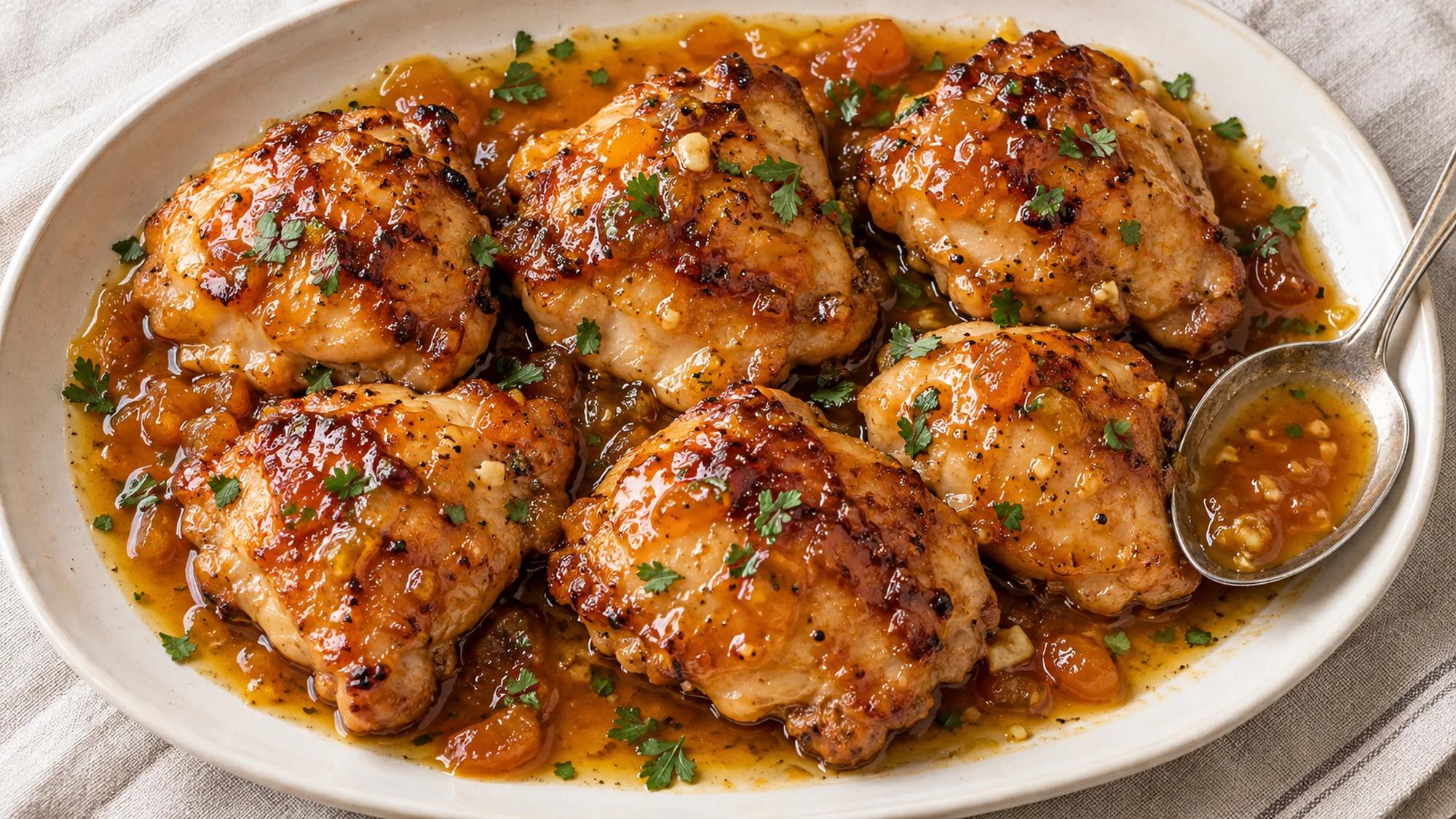
Something plain underneath makes the sauce more enjoyable. Brown rice catches the juices, while fluffy mashed potatoes give the whole plate a softer, comforting feel. Keep a green vegetable alongside for a different texture and a little freshness.
- For a simple dinner: serve a quarter of the chicken with steamed broccoli and brown rice. Spoon the sauce over the chicken first, then add a little to the rice.
- For a potato night: try a crisp-skinned air-fryer jacket potato. Start the potato before the skillet, since it takes longer to cook.
- For tomorrow’s lunch: slice chilled leftover chicken and pack it with cooked grains and vegetables. Store the sauce with the meat to help keep it moist.
If the glaze thickens while you plate the sides, loosen it with a small splash of water over low heat. It should coat a spoon and settle back into the pan, rather than pull into sticky strings.
Keep the side dishes simple and let the apricot glaze do the seasoning. A starch, a vegetable and a little sauce are enough to make this feel like a complete dinner.
Variations that keep the balance
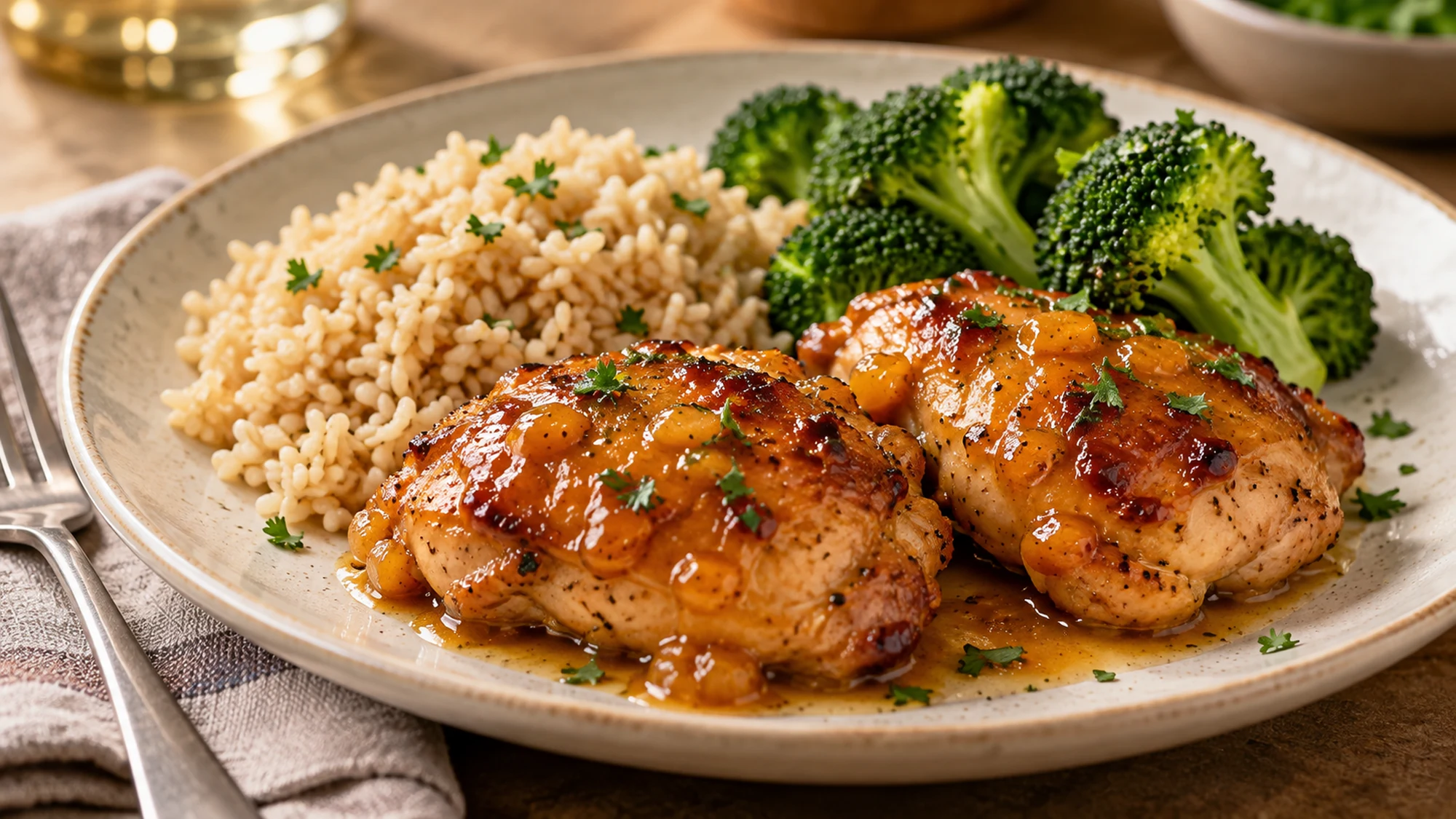
The sauce has three jobs: fruit brings sweetness, mustard and vinegar add sharpness, and soy sauce supplies savory depth. Change one element at a time so you can taste what it does. I’d start with the version below before reaching for extra sweetener.
- Prefer chicken breast? Use boneless cutlets of even thickness and check them sooner. They still need to reach 165°F; keeping the original thigh timing could dry them out.
- Want a little heat? Stir a small pinch of red pepper flakes into the glaze. Add more at the table rather than making the entire pan unexpectedly fiery.
- Like more mustard? Use another teaspoon of smooth Dijon mustard after tasting the cooked sauce. Whole-grain mustard works too, with a more textured finish.
- Need a gluten-free option? Choose a labeled gluten-free tamari and check the mustard and preserves labels. Ordinary soy sauce commonly contains wheat.
Taste only sauce that has finished cooking with the chicken. If it needs adjusting, add vinegar a few drops at a time or water by the spoonful; the goal is balance, not a thicker candy coating.
Health benefits and practical trade-offs
Chicken provides protein, and a quarter of this recipe supplies approximately 31 grams before sides. That makes it a substantial center for dinner. The apricot glaze also contributes sugar, so the fruit name alone does not make this a low-sugar meal.
- Use reduced-sodium soy sauce as specified, but remember that reduced sodium does not mean sodium-free. Different brands change the estimate.
- Add fiber with vegetables and a whole-grain side. The chicken and glaze themselves contain very little fiber.
- Refrigerate leftovers in shallow covered containers within two hours, or one hour above 90°F. Keep them at 40°F or below, use within three to four days and reheat to 165°F.
A useful dinner is more than its glaze. Pair a comfortable portion of chicken with vegetables and a satisfying side, and treat the nutrition numbers as estimates rather than promises.
Let the skillet make dinner easier
Set out the sauce ingredients before heating the pan, and give the chicken room to brown. Those small choices make the cooking feel calmer. Once the glaze goes in, lower the heat and watch for a gentle simmer instead of a hard boil.
The reward is a savory chicken dinner with a bright fruit finish and very little fuss at the stove. Spoon over the sauce, bring the pan to the table and leave the complicated side dishes for another night.
Apricot Chicken Recipe

Ingredients
- 1 1/2 lb boneless skinless chicken thighs 680 g; about 6 small thighs, excess fat trimmed
- 1/2 cup apricot preserves 160 g; regular preserves, not fresh apricots
- 1 tbsp Dijon mustard
- 1 tbsp reduced-sodium soy sauce
- 1 tbsp apple cider vinegar
- 1/4 cup water 60 mL, plus small splashes if needed
- 2 garlic cloves minced, about 6 g
- 1 tbsp olive oil
- 1/4 tsp ground black pepper
- 1 tbsp chopped fresh parsley optional garnish
Equipment
- 1 12-inch skillet with lid
- 1 Small mixing bowl and whisk
- 1 Tongs
- 1 Measuring cups and spoons
- 1 Knife and cutting board
- 1 Instant-read food thermometer
Instructions
- Whisk the apricot preserves, Dijon mustard, reduced-sodium soy sauce, cider vinegar and 1/4 cup water in a small bowl. Keep the minced garlic separate.
- Pat the chicken dry with paper towels; do not rinse it. Unfold the thighs and season both sides with the black pepper. Heat the olive oil in a 12-inch skillet over medium-high heat. Add the thighs in one uncrowded layer and cook for 4–5 minutes per side, until browned. Transfer to a clean plate; the chicken may not yet be cooked through.
- Reduce the heat to medium-low. Add the garlic to the skillet and stir for about 30 seconds, until fragrant but not browned. Pour in the glaze mixture and scrape up the browned bits. Bring to a gentle simmer.
- Return the chicken and its juices to the skillet. Spoon sauce over the thighs, cover and simmer gently for 6–10 minutes, turning once, until the thickest part of each thigh reaches at least 165°F (74°C) on a food thermometer. Add a tablespoon of water if the sauce becomes too thick. Thicker pieces may need longer.
- If the sauce is thin after the chicken is done, transfer the chicken to a clean serving plate and simmer the sauce uncovered for 1–3 minutes, stirring, until it lightly coats a spoon. If it is too thick, add water a tablespoon at a time. Return the chicken to coat, divide into four portions and garnish with the optional parsley. Serve with your chosen sides.
Nutrition
Video
Notes
Tried this recipe?
Let us know how it turned out!Emily Parker is DISHORA’s recipe-writing persona, bringing a warm, practical voice to everyday cooking. Her focus is simple ingredients, comforting flavors and clear steps that make a dish feel approachable. From cozy dinners to something sweet, Emily’s recipes invite readers to try something delicious and make it their own.