
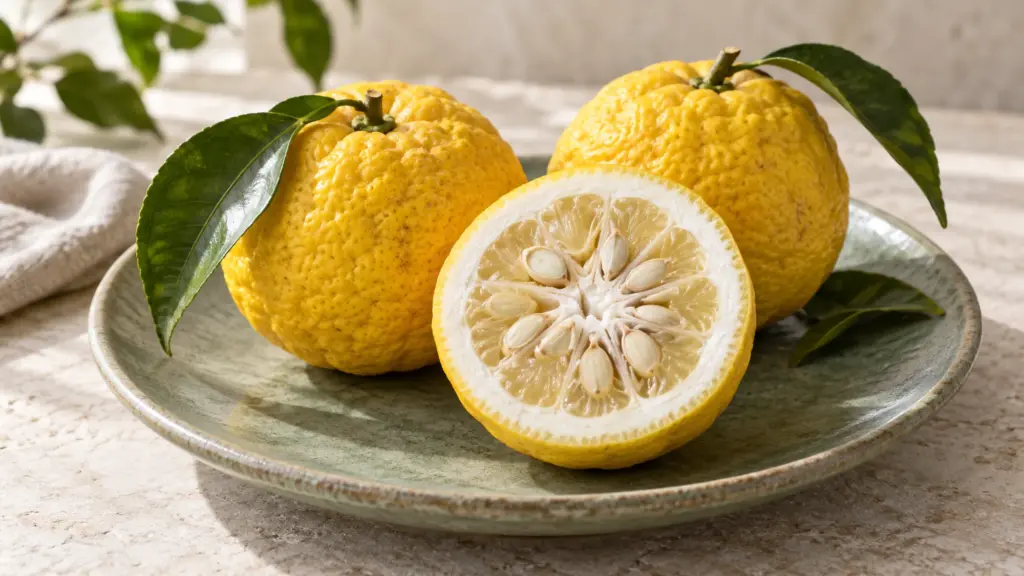
A small, bumpy yellow fruit can look like a lemon that took the scenic route. If a menu mentions yuzu fruit, though, expect a distinct citrus aroma rather than an ordinary lemon with a new name.
Yuzu fruit is an aromatic East Asian citrus used mainly for its fragrant peel and tart juice. Choose whole fruit for zest, plain juice for acidity, and read labels carefully: ponzu, spicy yuzu kosho and sweet preserves do different jobs.
I’d decide what I want to flavor before buying a bottle. That little choice makes an unfamiliar ingredient much easier to bring into an everyday kitchen.
What is yuzu fruit, and what does it taste like?
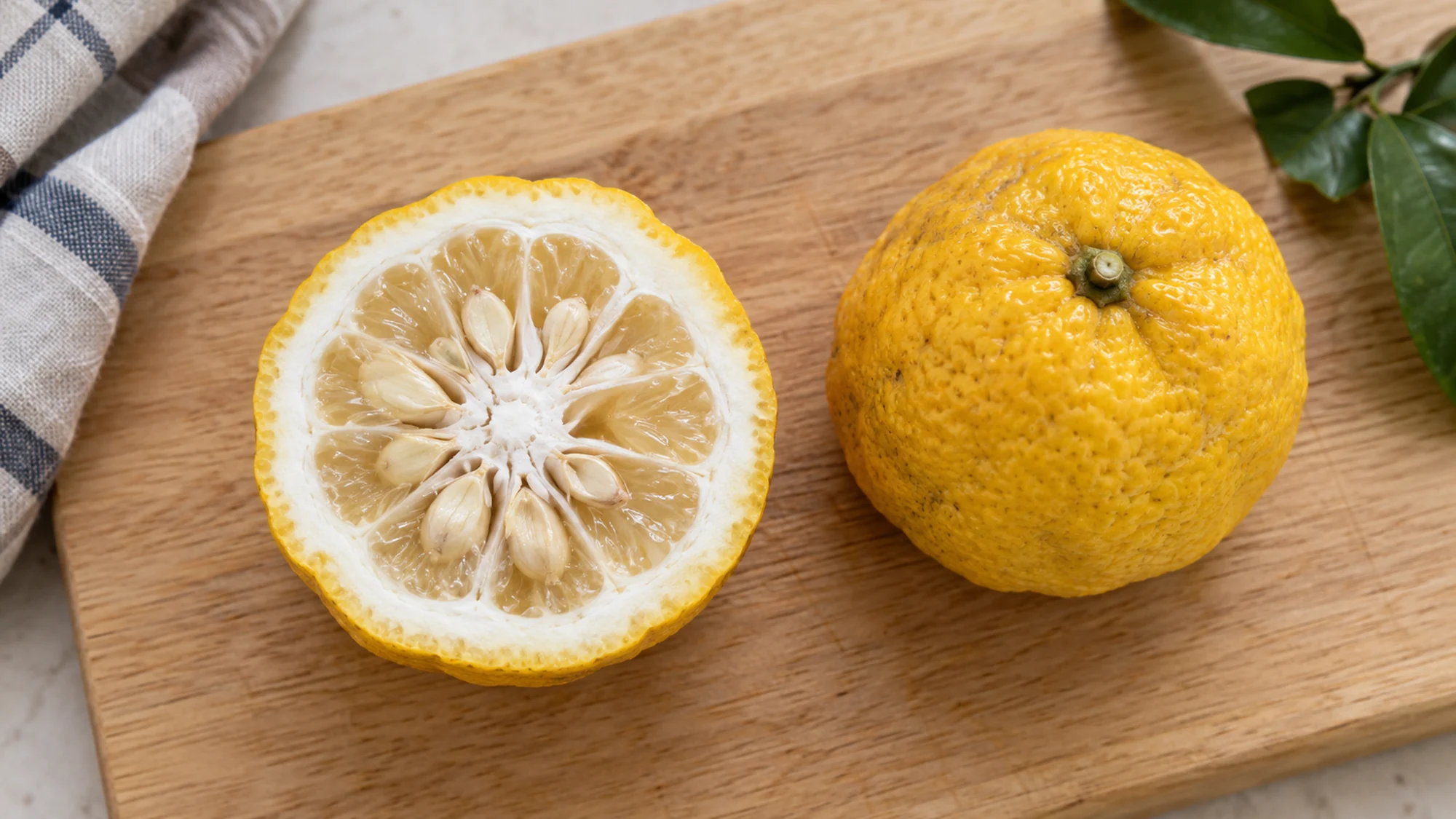
Yuzu, commonly called Citrus junos, has rough skin, thick rind and conspicuous seeds. UC Riverside’s citrus collection describes its fragrant peel and acidic juice, used more as seasoning than as a sweet fruit eaten in segments. Green and yellow fruit can both have culinary uses.
The aroma is the attraction: bright citrus with floral, herbal and grapefruit-like notes. Kikkoman’s yuzu description makes that flavor comparison, although its bottled ponzu also contains soy sauce and seasonings. A spoonful of that sauce cannot tell you exactly how plain yuzu juice tastes.
- Peel: Think fragrance and a finishing accent.
- Juice: Expect tartness, rather than orange-like sweetness.
- Seeds and pith: These take up space; a fruit’s size is a poor guide to how much juice it will give.
Choose the form that fits your food
The word yuzu can describe fresh produce or a very different prepared condiment. Use the product name and ingredient list together. S&B explains yuzu kosho as a preparation of yuzu, chili and salt; it is not simply concentrated juice.
| Form | Useful for | Check first |
|---|---|---|
| Whole fruit | Fresh zest and juice | Sound skin; expect seeds |
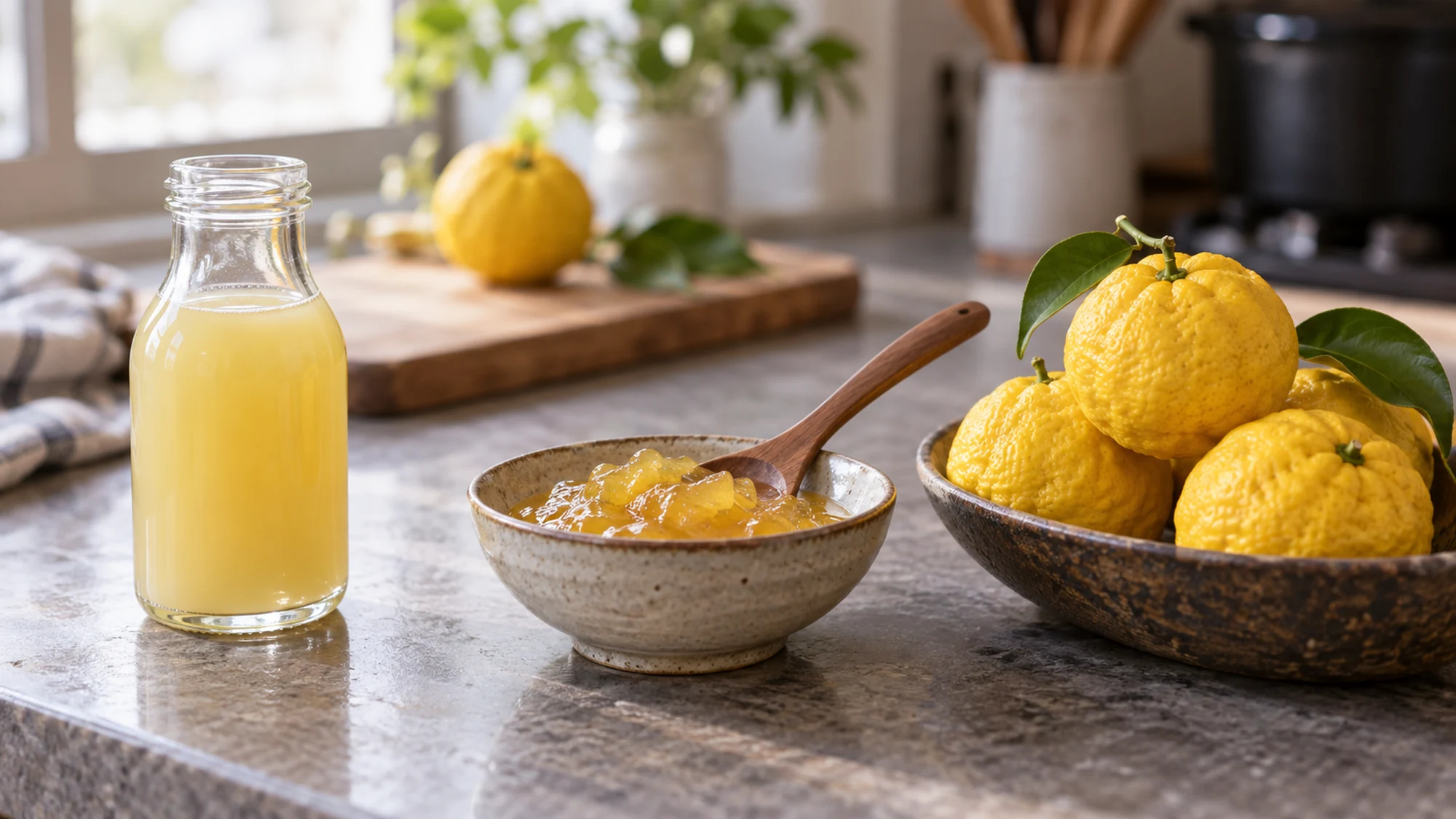
| Bottled juice | Acidity in dressings and drinks | Juice content, sweeteners and storage |
| Yuzu ponzu | A savory dipping sauce | Soy, wheat, salt and other ingredients |
| Yuzu kosho | A spicy, salty accent | Chili heat and salt; start sparingly |
| Sweet preserve | A sweet citrus topping | Added sugar and serving size |
If you want control over sweetness or salt, I’d start with a product labeled as plain juice and inspect its ingredients. A sauce can be delicious, but it brings its own seasoning decisions into the bowl.
Use the peel and juice for different jobs
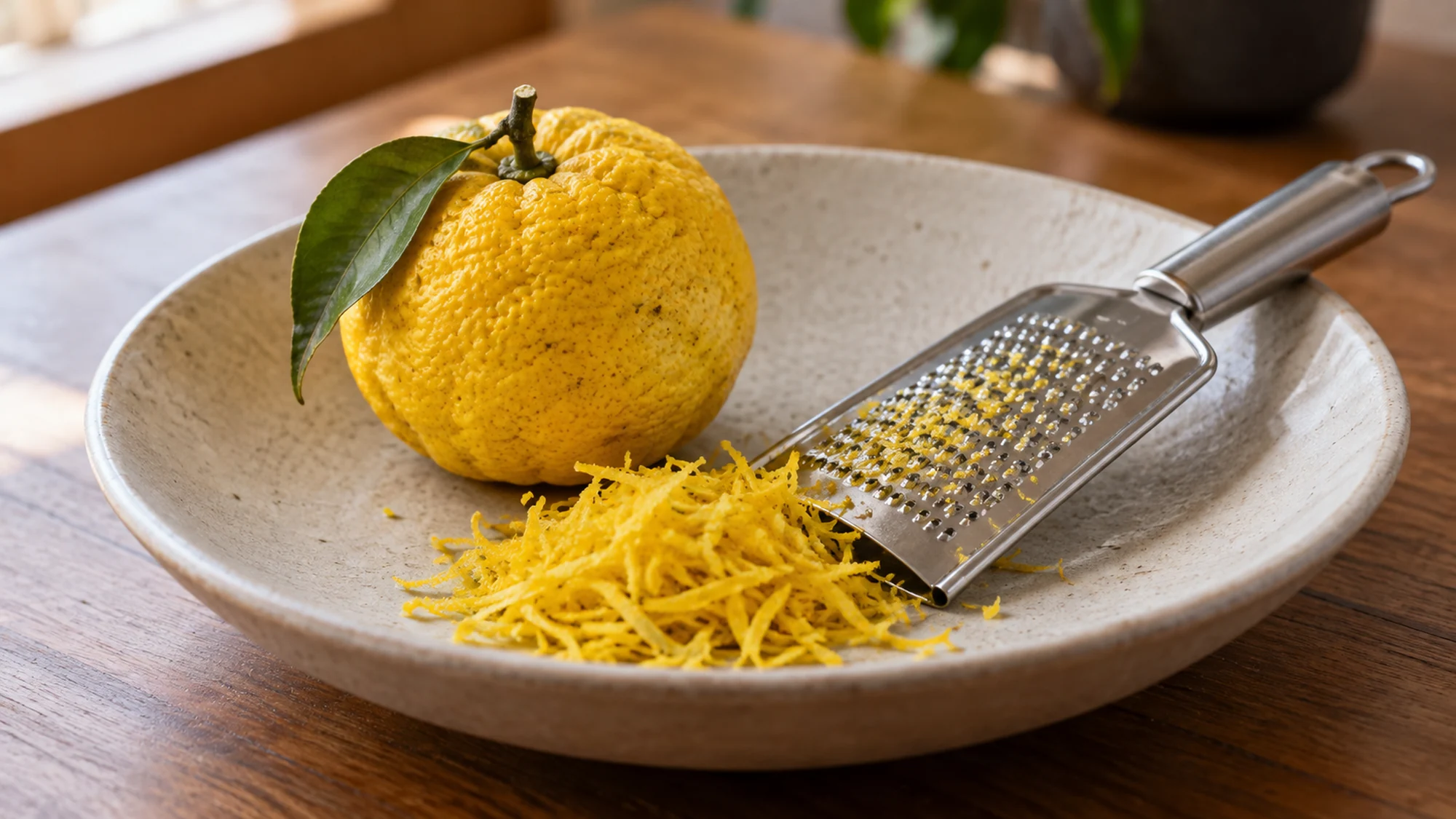
JETRO’s guide to yuzu in Japanese cooking emphasizes the fragrant rind, including grated peel over fish. For a first taste, keep the surrounding food simple enough that the citrus does not disappear.
- For a finishing aroma: Grate a little colored peel over a prepared dish; avoid digging deeply into the white pith.
- For a dressing: Add plain juice gradually and taste before adding more. Check acidity and salt separately.
- For a sweet bowl: Try a small amount of zest with plain yogurt and fruit, adjusting sweetness to your preference.
- For a condiment: Taste ponzu or kosho before seasoning the rest of the food. Both can change more than its citrus flavor.
Our plain homemade yogurt guide is a useful starting point for a bowl you flavor individually. Add citrus to a serving rather than committing the entire batch. This is a tasting suggestion, not a tested yuzu-yogurt formula.
Buying and handling yuzu fruit
Choose sound fruit without rot or damaged areas. Buy an amount that suits the use you have planned rather than assuming a large bag will be easier to finish. For bottled products, check the ingredient list and the maker’s instructions for refrigeration after opening.
- Before zesting or cutting: Follow the FDA’s produce advice: wash under running water, then dry with a clean towel. Do not use soap or detergent.
- Keep preparation clean: Separate ready-to-eat produce from raw meat and its utensils.
- After opening or cutting: Follow the product’s storage directions and refrigerate cut produce. A condiment label is a better guide than a storage claim borrowed from another brand.
Treat fresh fruit, plain juice and prepared sauces as separate products. Their flavor, ingredients and storage directions deserve separate checks.
Can lemon replace yuzu?
Lemon can supply acidity when that is the job you need done, but it will change the aroma. There is no universal blend or replacement ratio that makes it identical to yuzu. Start with the recipe’s own substitution guidance, especially in baking or a carefully balanced sauce.
- Need zest? Choose a citrus peel the recipe permits and expect a different fragrance.
- Need juice? Adjust gradually when the preparation allows tasting; do not assume every acid behaves identically.
- Replacing ponzu or kosho? Account for their other ingredients. Plain lemon juice does not provide soy seasoning, chili or salt.
For a first purchase, choose the form that solves one clear kitchen problem. A little zest over a simple dish or a small addition of juice to a dressing gives you room to notice what yuzu contributes, without expecting one fruit to transform everything.
Sources
- UC Riverside: yuzu identity and fruit characteristics.
- JETRO: yuzu’s culinary uses (Japanese).
- Kikkoman: yuzu ponzu ingredients and flavor.
- S&B: what yuzu kosho contains.
- FDA: selecting and preparing produce safely.

Emily Parker is DISHORA’s recipe-writing persona, bringing a warm, practical voice to everyday cooking. Her focus is simple ingredients, comforting flavors and clear steps that make a dish feel approachable. From cozy dinners to something sweet, Emily’s recipes invite readers to try something delicious and make it their own.