
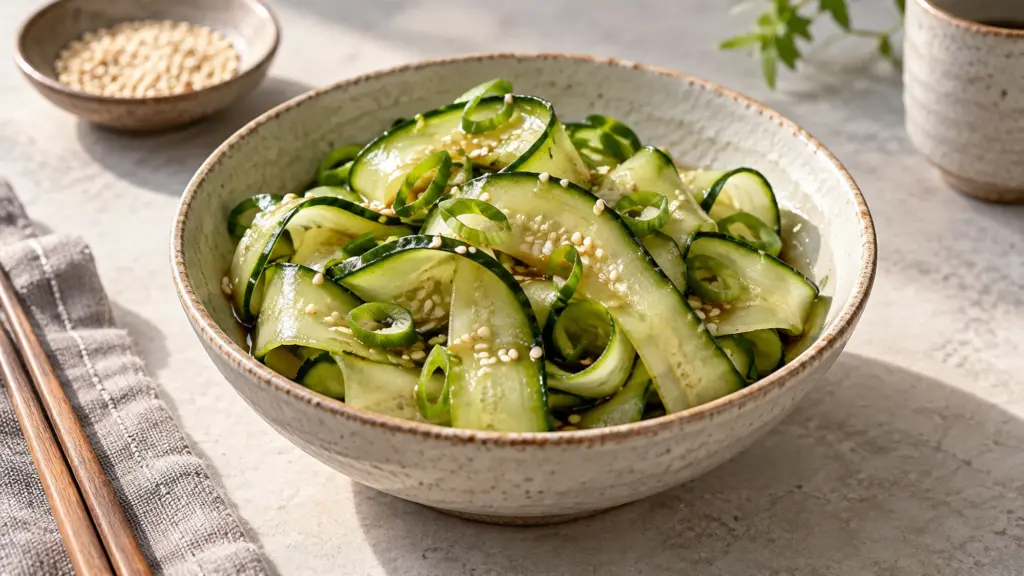
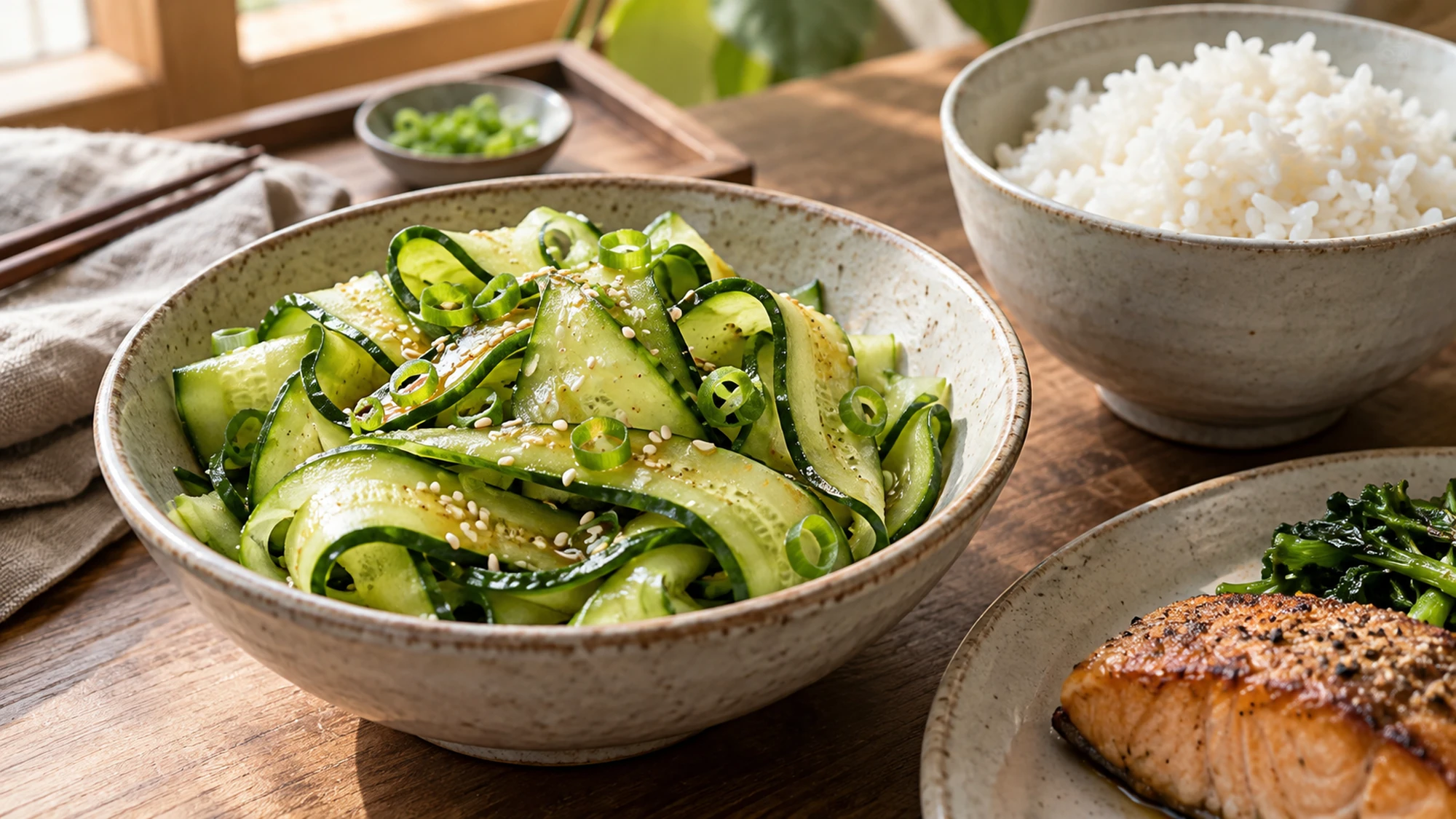
Whole cucumber salad means using one entire cucumber, then slicing it into ribbons that catch a light, tangy dressing. The ribbons stay crisp when you draw off some surface moisture before tossing. Soy sauce, rice vinegar, sesame oil and a small amount of sugar make a savory-sour coating that takes only a few minutes to whisk together.
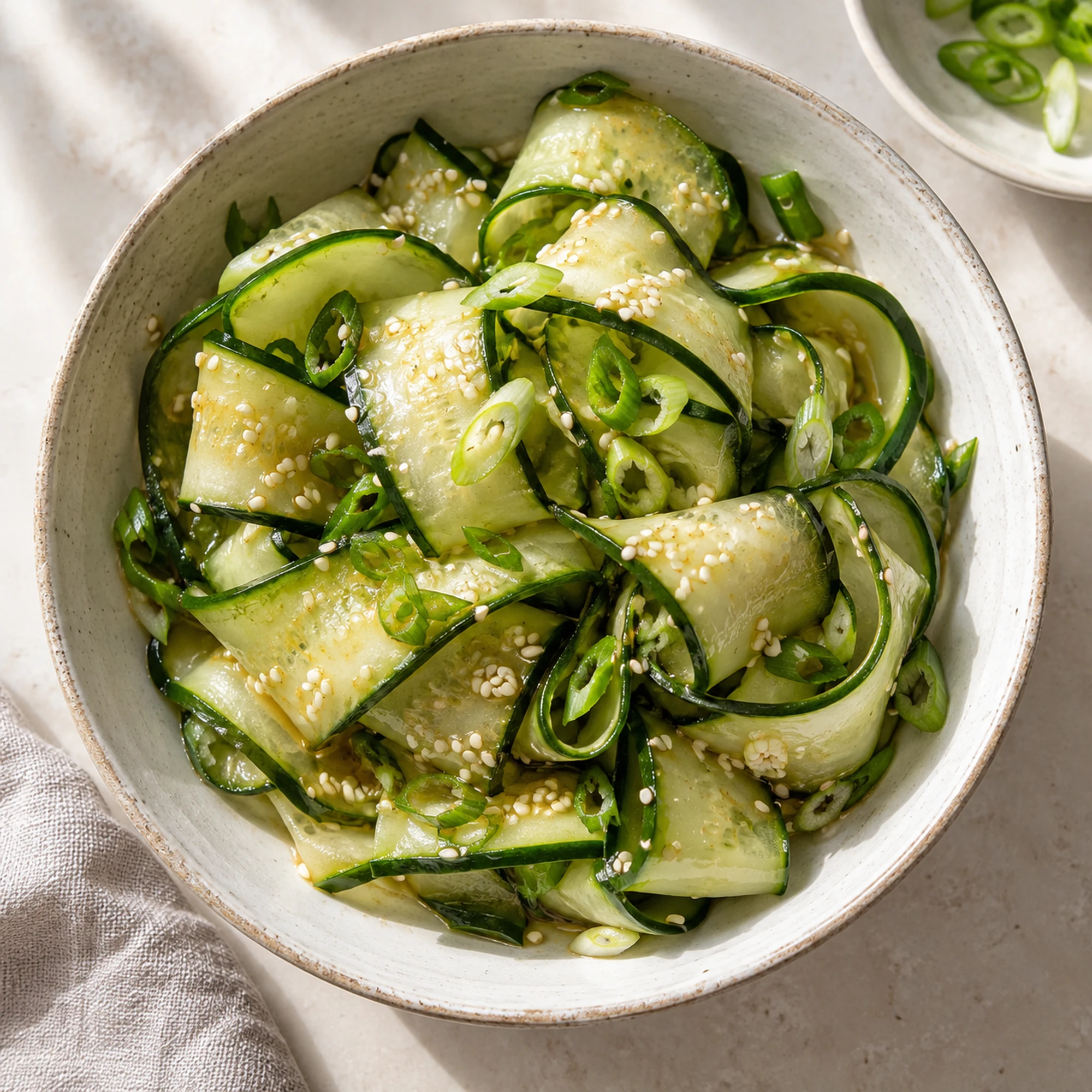
Use one full English cucumber, salt the ribbons briefly, pat them dry and dress just before serving for the best crunch.
A wide vegetable peeler makes long, delicate ribbons without special equipment. Wash and dry the cucumber first, then shave lengthwise, rotating as you go. If the seeded center gets too soft to peel neatly, slice that final section thinly and add it too. The point is to use the whole cucumber, not to leave half behind.
Cucumber releases water after it is cut. A short rest with salt helps draw some of that moisture out, so the dressing clings instead of pooling at the bottom. Pat the ribbons gently before tossing; pressing hard can bruise them. This works best with a firm English cucumber, whose skin is thin and whose seeds are less prominent.
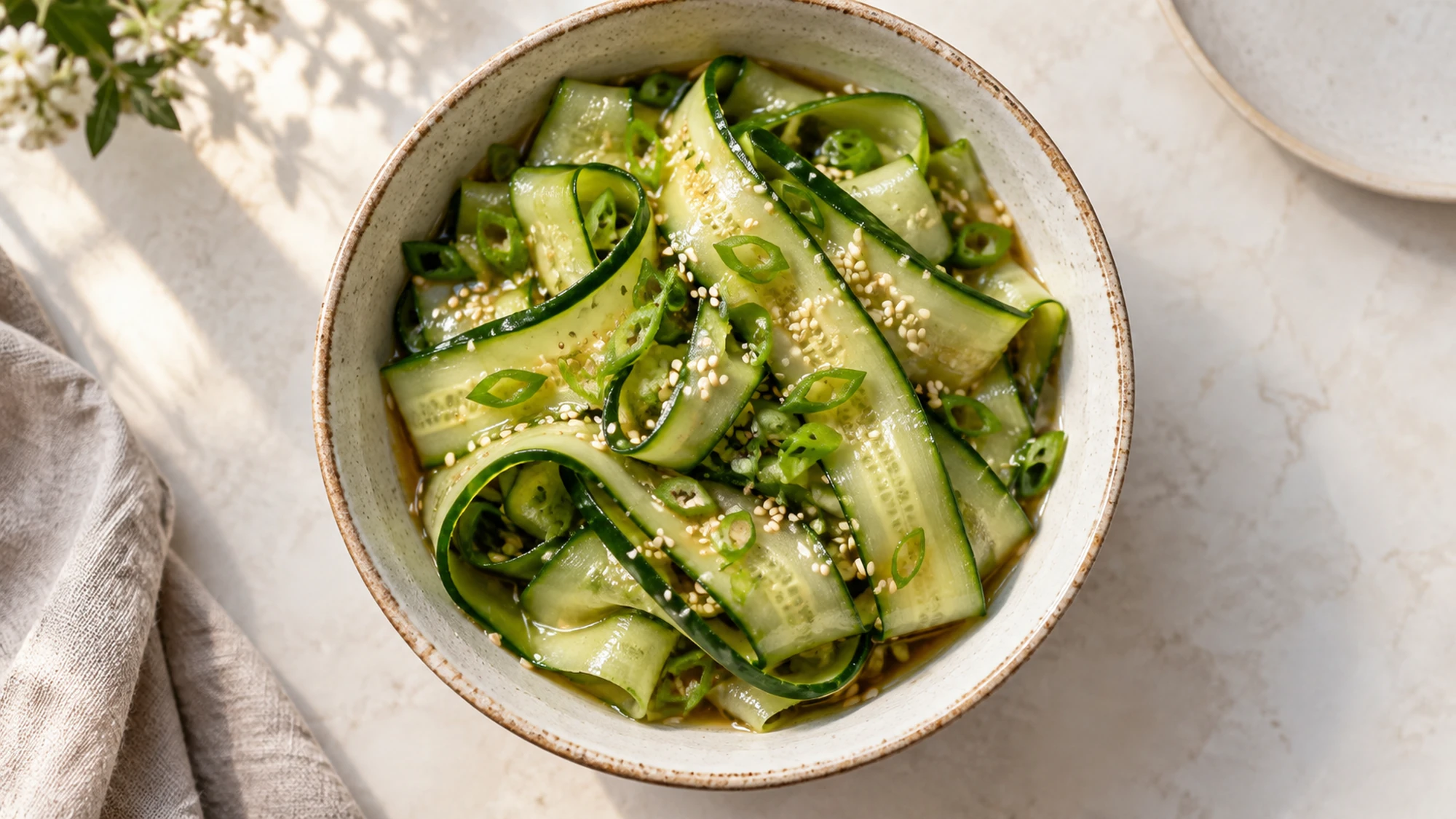
Serving suggestions for whole cucumber salad
Serve the salad right after tossing while the ribbons still have a little bite. It makes two small side portions and fits beside rice, grilled tofu or a simple noodle bowl. A pinch of sesame seeds and the remaining scallion make the ingredients clear on the surface without adding a garnish that is missing from the recipe card.
The soy and vinegar give it enough flavor to pair with plain mains. If you want a second cabbage side, Dishora’s cabbage and white bean skillet adds warm beans and lemon; the contrast makes a quick vegetable-forward meal. The cucumber itself is best kept chilled until serving.
Toss at the last moment, then take the bowl straight to the table while each ribbon is still cool and crisp.
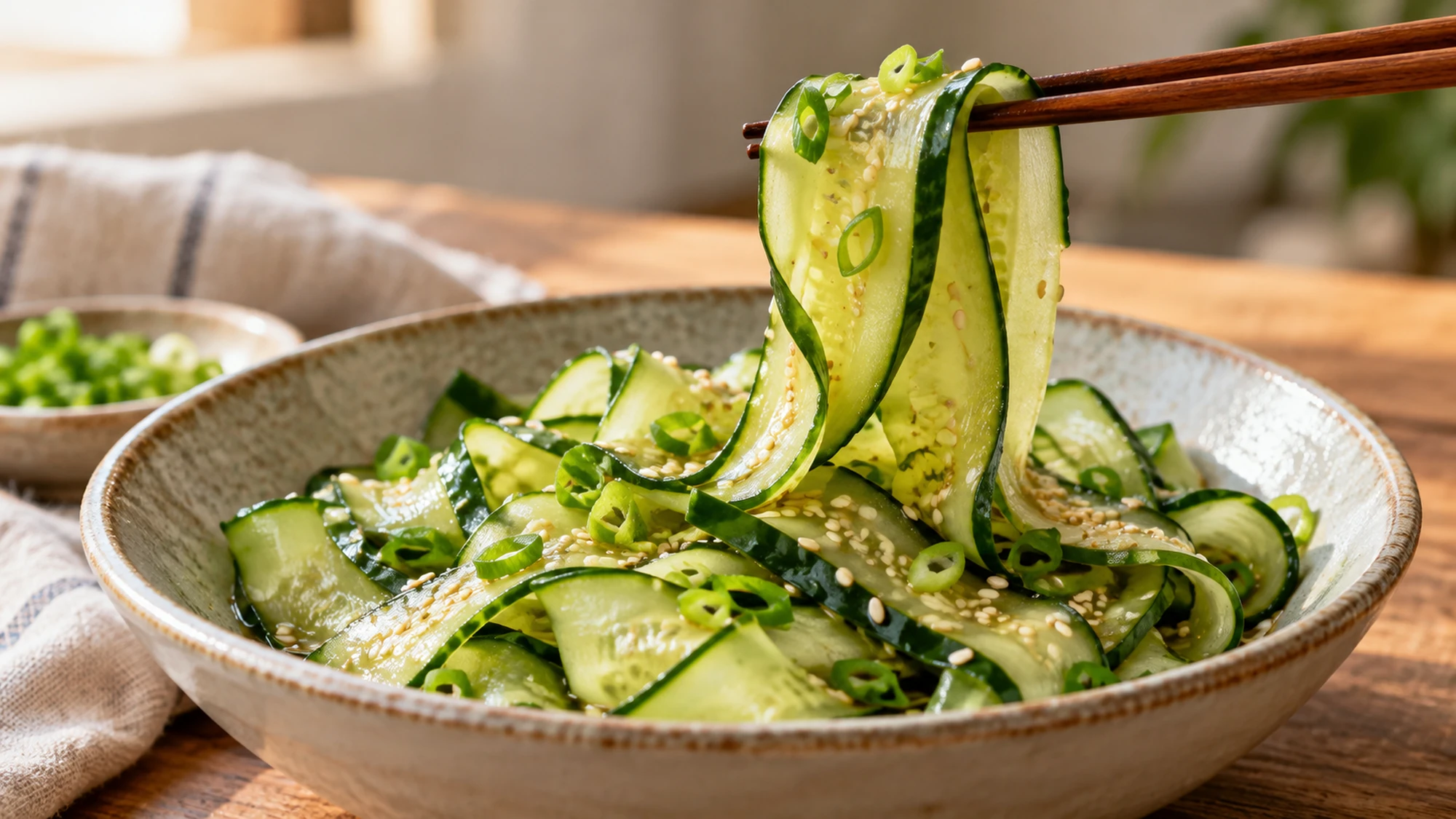
Variations and texture tips
This sesame-soy dressing is mild. For a spicier salad, add a small pinch of chili flakes, but that is an optional change rather than part of the base recipe. A little more rice vinegar sharpens the flavor; add it by the teaspoon so the thin cucumber ribbons do not become overwhelmed. A drop of water can soften the soy sauce if your brand tastes very salty.
The Just One Cookbook sesame-soy cucumber salad uses a spiralizer and a sesame, soy and rice-vinegar dressing, and it also recommends draining cucumber moisture. This version uses a peeler, toasted sesame oil and scallion for a slightly different texture and finish. MyHealthyDish’s spiral cucumber demonstration seasons a larger batch with gochugaru; the card below keeps the heat out.
Avoid making the dressed salad hours ahead. The cucumber keeps shedding liquid and the ribbons soften in the refrigerator. If you need to prep early, whisk the dressing in advance and keep it covered separately. Shave and salt the cucumber shortly before serving, pat it dry, then combine everything at the table.
If the dressing pools, drain a little liquid and toss again; for next time, give the salted cucumber a few extra minutes in the colander.
Health benefits and practical balance
Cucumber adds water and a fresh crunch, while sesame seeds and oil make the dressing more satisfying than plain vinegar. One of the two side servings is estimated at about 62 calories, with roughly 8 grams of carbohydrate and 3 grams of fat. The numbers use a 300-gram cucumber and low-sodium soy sauce, so brands can change them.
Soy sauce is the main source of sodium here. A low-sodium variety makes the measured tablespoon easier to balance with the brief salting step. If gluten matters to you, check the label or choose a gluten-free tamari. The recipe also contains sesame, which is a major food allergen; mention it clearly when serving guests.
Keep cut cucumber refrigerated until it is dressed, and put leftovers away within two hours of serving, or within one hour if the room is above 90°F. The salad stays crispest when freshly tossed, so make a small batch and serve it promptly instead of storing a large dressed bowl for days.
The measured dressing seasons the cucumber without hiding its fresh taste; adjust soy sauce carefully because its saltiness varies by brand.
Use the cucumber while it is crisp
This is a fast salad with one small pause for the ribbons to release moisture. While they rest, mix the dressing and slice the scallion. Pat the cucumber, toss it lightly and scatter the sesame seeds. It is a simple way to turn one whole cucumber into a cool side that feels dressed and deliberate.
Whole Cucumber Salad Recipe

Ingredients
- 1 large English cucumber about 300 g; scrubbed, then cut into ribbons with a vegetable peeler
- 1/4 teaspoon fine salt about 1.5 g, for drawing out surface moisture
- 1 tablespoon low-sodium soy sauce 15 ml; regular soy sauce works but increases sodium
- 1 tablespoon unseasoned rice vinegar 15 ml
- 1 teaspoon toasted sesame oil 5 ml
- 1 teaspoon granulated sugar 4 g
- 1 teaspoon toasted sesame seeds about 3 g
- 1 scallion about 10 g, thinly sliced
Equipment
- Vegetable peeler or wide Y-peeler
- Colander
- Small mixing bowl
- Whisk or fork
- Kitchen shears, optional
Instructions
- Scrub and dry the entire cucumber. Use a vegetable peeler to shave it lengthwise into long ribbons, turning the cucumber as you work. Stop when you reach the seedy core if the last strip becomes too soft; use the remaining cucumber by slicing it thinly. This still uses the whole cucumber.
- Put the ribbons in a colander and toss with the measured salt. Let stand for 8–10 minutes while making the dressing. Gently squeeze or pat the ribbons dry; do not rinse away all their seasoning.
- Whisk soy sauce, unseasoned rice vinegar, sesame oil and sugar until the sugar dissolves. Taste a drop. It should be tangy and savory rather than oily or very sweet.
- Add the cucumber ribbons and half the scallion to the dressing. Toss gently so the ribbons stay intact. Finish with sesame seeds and the remaining scallion. Serve promptly while crisp.
Nutrition
Video
Notes
Tried this recipe?
Let us know how it turned out!Emily Parker is DISHORA’s recipe-writing persona, bringing a warm, practical voice to everyday cooking. Her focus is simple ingredients, comforting flavors and clear steps that make a dish feel approachable. From cozy dinners to something sweet, Emily’s recipes invite readers to try something delicious and make it their own.