
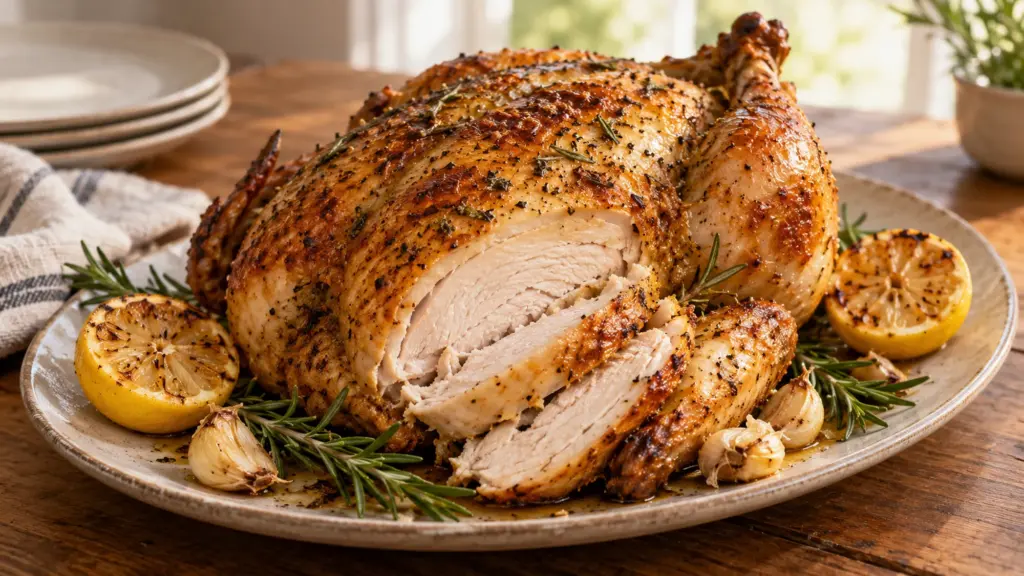
A whole chicken in the roasting pan can make dinner feel more settled: the skin browns, rosemary warms in the oven and the rest of the meal can stay simple. This version uses lemon, garlic and olive oil, with a hot oven to encourage golden skin. The key decision is when to take it out, and a thermometer answers that much more reliably than the color of the juices.
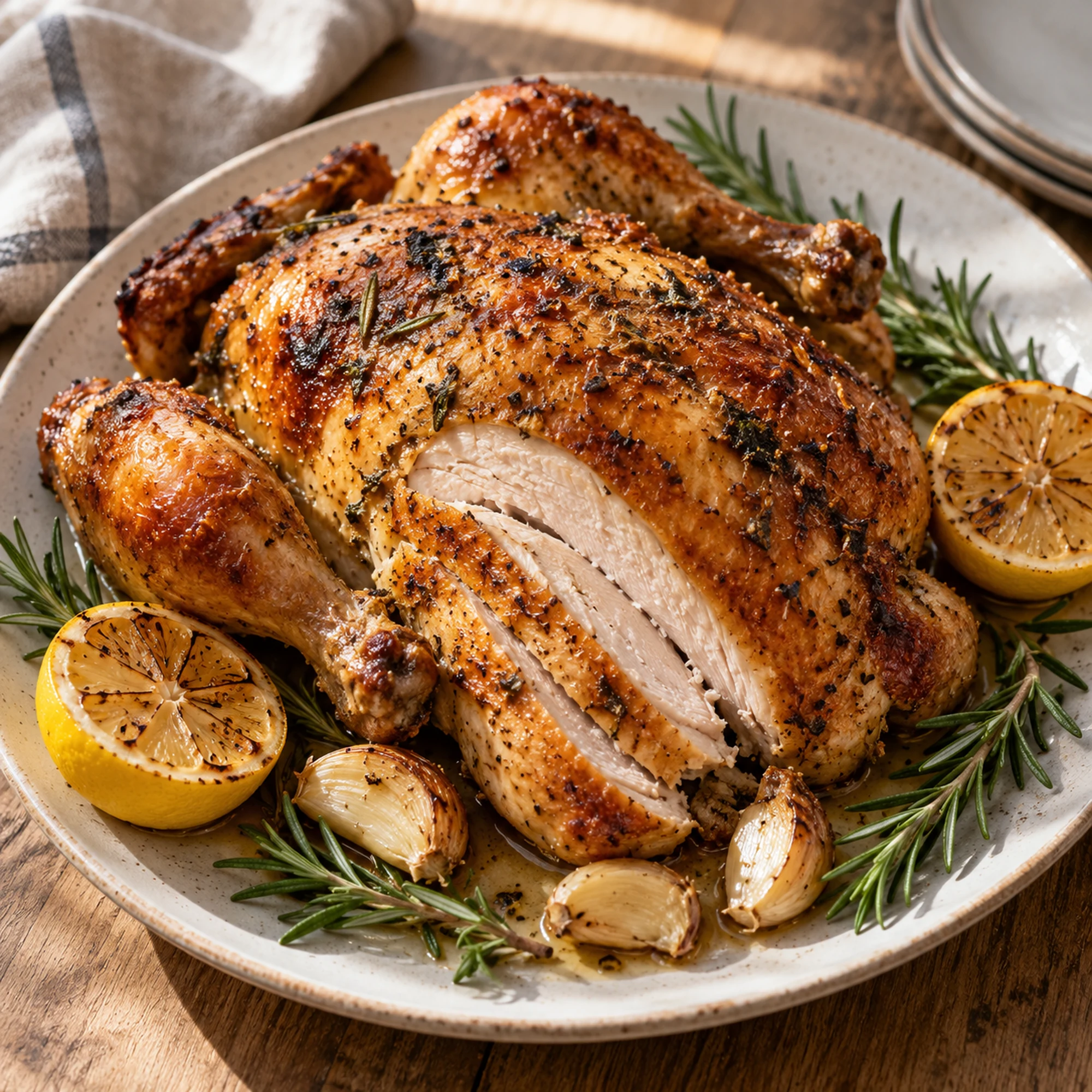
Dry the skin, leave the chicken uncovered and check several thick spots with a thermometer before resting and carving.
Choose a thawed chicken around four pounds so the timing is useful for planning. I prefer a straightforward seasoning here because roast chicken should leave room for the sides, rather than compete with every flavor on the table. You get about six servings, although the amount of meat varies with the bird and how you portion it.
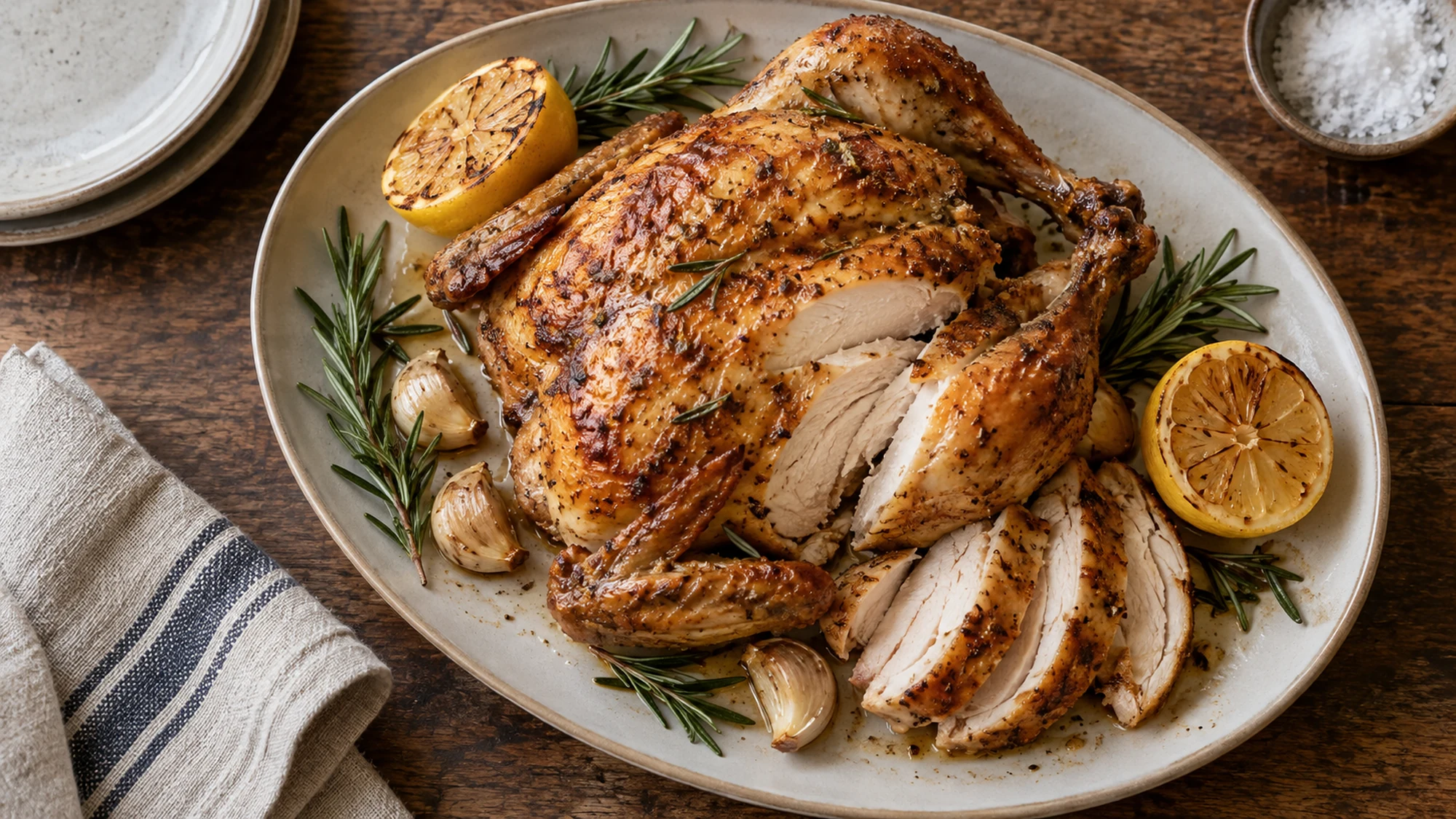
Serving suggestions for a roast dinner
A roasted bird is rich enough to anchor dinner without an elaborate sauce. Spoon a little of the cooked pan juice over carved meat if you like, and put the vegetables on a separate platter so the skin does not sit in a puddle.
- Keep a crisp contrast: A green salad offers freshness beside the savory skin. For another side, try cabbage and white beans.
- Choose a comforting side: Mashed potatoes or rice make room for the juices. Treat them as part of the plate when deciding portion sizes.
- Add roasted vegetables: Brussels sprouts fit the lemon-and-rosemary direction. Roast them with enough pan space for their own browning.
- Plan the next meal: Chill carved leftovers promptly in shallow containers. They can become a sandwich, a rice bowl or an addition to soup.
Build a generous plate around the chicken with one vegetable side and a starch, then chill any remaining meat promptly.
Variations without losing the roast
The cavity aromatics perfume the bird gently; they are not a bread stuffing. Keep the cavity loosely filled so heat can circulate. I’d choose a rack over a bed of watery vegetables when crisp skin is the priority, because it lifts the chicken away from accumulating liquid. A few seasoning changes are welcome, but the cooking check stays the same.
- Switch the herb: Fresh thyme can replace the rosemary for a softer herbal note. Remove woody stems before serving and keep the seasoning modest.
- Use another cooking fat: Melted butter can replace olive oil, with a richer flavor. It changes the nutrition and can brown more quickly.
- Watch a larger bird: Increase the cooking time as needed, rather than scaling from skin color. Begin checking early and use the thermometer.
- Protect excessive browning: Loosely tent darkening areas with foil near the end. Avoid covering the whole bird from the start, which softens the skin.
Adjust aromatics to suit the meal, while preserving an uncovered roast and a thermometer-based check for doneness.
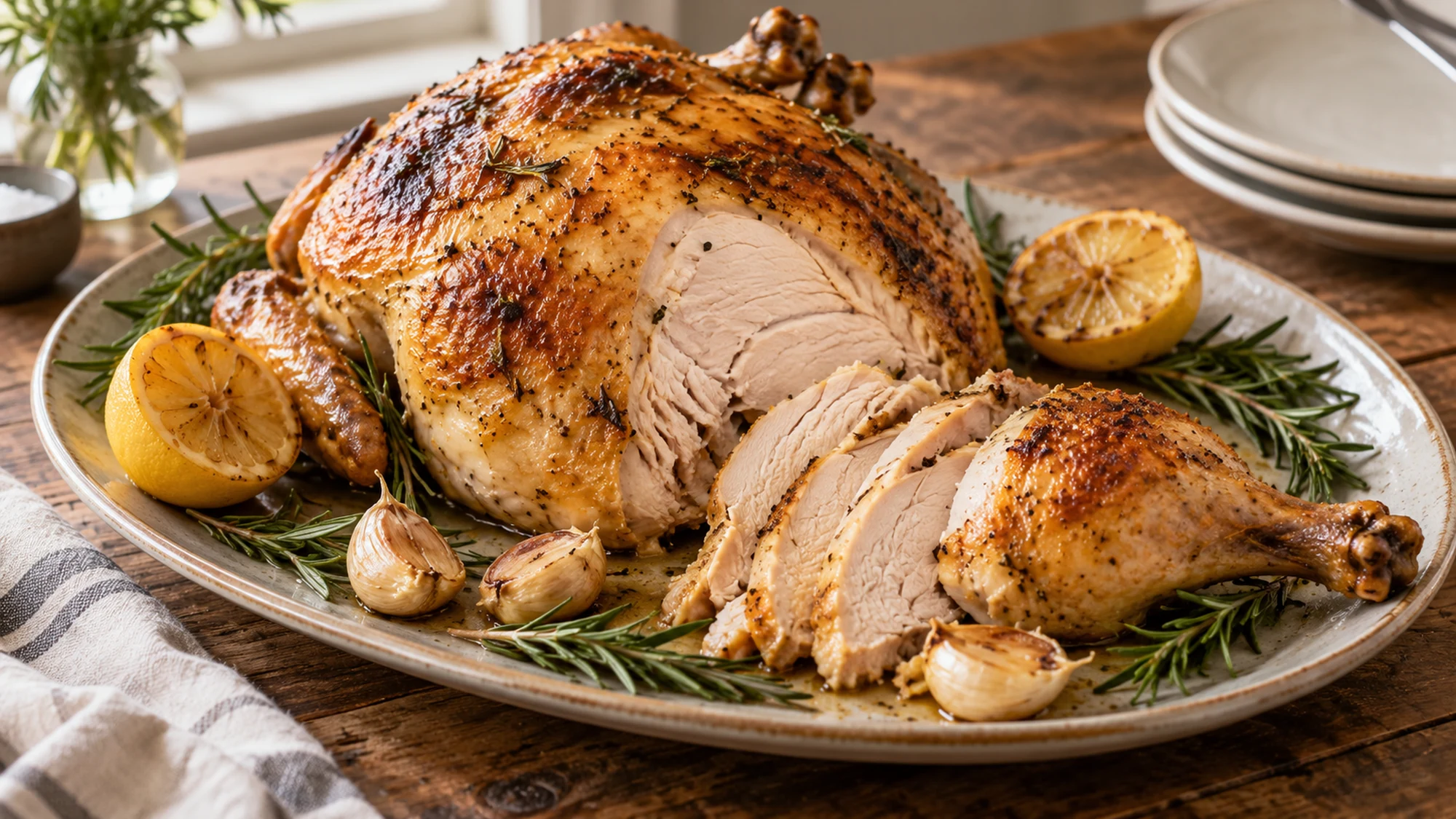
Health benefits and sensible portions
Chicken supplies protein, while the skin, added oil and portion size affect the meal’s fat and energy content. The card estimates a mixed serving of cooked meat and skin; a breast-only portion will differ. Bones, the carcass and cavity aromatics are not counted as edible chicken servings. Pairing the roast with varied vegetables makes the plate more useful than attaching a sweeping health label to it.
- Protein on the plate: Poultry is one option within the protein-food group. Varying your protein choices across meals adds nutritional variety.
- Skin is a choice: You can serve it with the meat or remove it. Doing so changes the fat content, so use the estimate accordingly.
- Temperature matters: The thickest breast and innermost thigh and wing must reach at least 165°F (74°C), with the probe clear of bone.
- Leftover care: Refrigerate within two hours, or one hour above 90°F (32°C). Keep at 40°F (4°C) or colder, use within three to four days and reheat to 165°F.
Enjoy the roast for its flavor and protein, with vegetable sides, a portion that suits you and careful handling of leftovers.
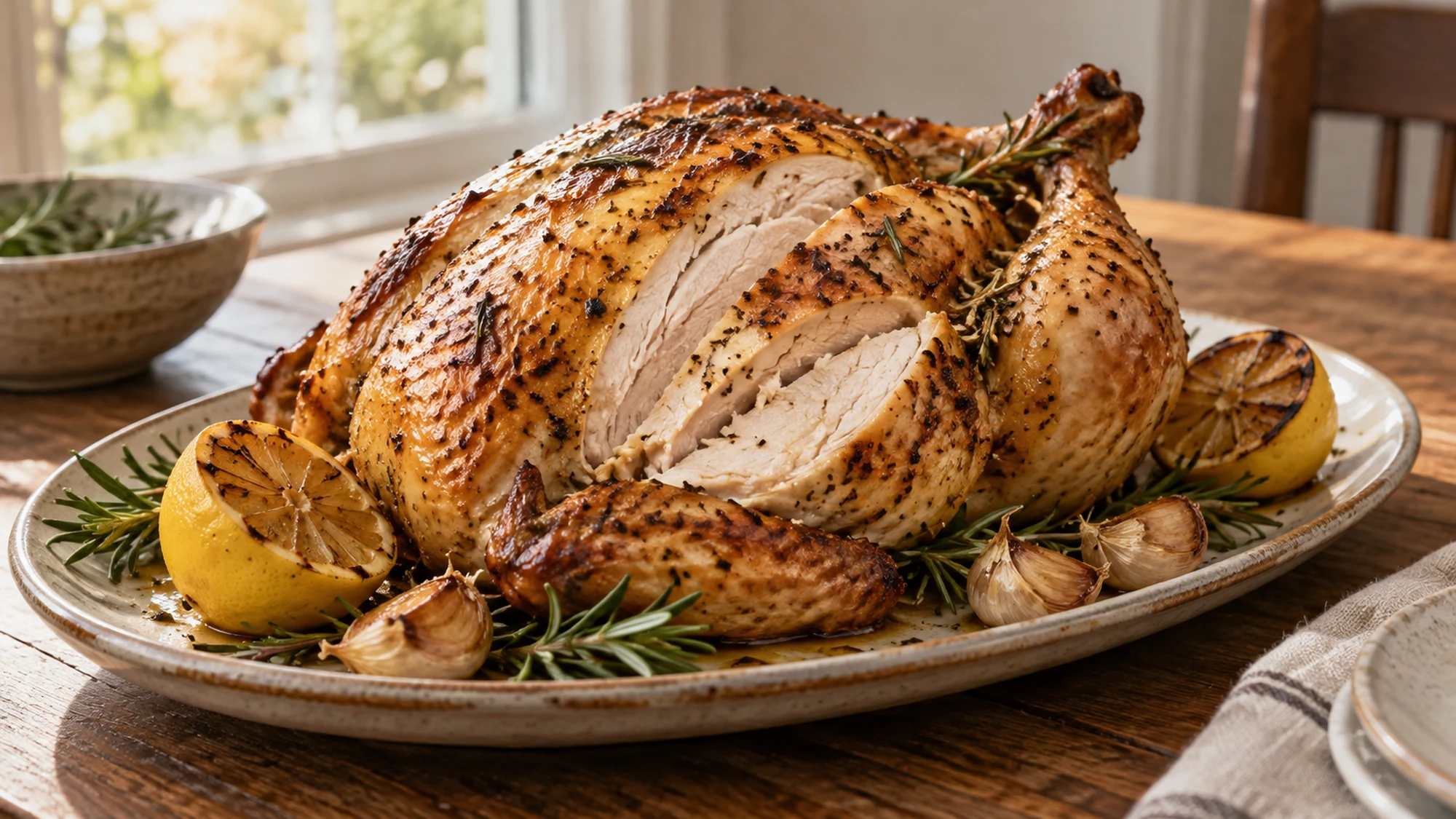
Let the oven do the satisfying part
Start by checking that the bird is fully thawed and the giblets have been removed. Clear a separate place for the cooked chicken before handling the raw one, and wash the utensils and surfaces afterward. There is no need to rinse raw poultry; careful handling keeps splashes away from the rest of the kitchen.
When the temperature checks are complete, give the chicken its resting time before carving. The browned skin and lemon-rosemary aroma make a clear centerpiece, while the simple preparation leaves plenty of freedom for the rest of dinner. A measured finish is more useful than chasing an exact minute on the clock.
Whole Chicken Recipe

Ingredients
- 1 whole chicken 4 lb / 1.8 kg; thawed, giblets removed
- 2 tablespoons olive oil 27 g
- 1 1/2 teaspoons kosher salt 4.5 g; adjust by salt brand
- 1/2 teaspoon ground black pepper
- 1 lemon halved
- 4 cloves garlic lightly crushed
- 3 sprigs fresh rosemary
Equipment
- Roasting pan with rack
- Paper towels
- Instant-read food thermometer
- Tongs
- Carving knife and board
Instructions
- Heat the oven to 425°F (220°C) with a rack in the lower third. Remove the chicken’s giblets if present, then pat the thawed chicken dry with paper towels; do not rinse raw poultry.
- Set the chicken breast-side up on the rack. Rub the skin with olive oil, then season inside and outside with the kosher salt and pepper. Put the lemon, garlic and rosemary loosely in the cavity; do not add bread stuffing.
- Roast uncovered for approximately 70–90 minutes, beginning temperature checks around 65–70 minutes. The thickest breast and innermost thigh and wing must all reach at least 165°F (74°C); avoid touching bone with the probe. If the skin darkens too much, loosely tent the dark areas with foil.
- Rest for 15 minutes, then carve into approximately 6 servings. Transfer leftovers to shallow containers and refrigerate promptly.
Nutrition
Video
Notes
Tried this recipe?
Let us know how it turned out!Emily Parker is DISHORA’s recipe-writing persona, bringing a warm, practical voice to everyday cooking. Her focus is simple ingredients, comforting flavors and clear steps that make a dish feel approachable. From cozy dinners to something sweet, Emily’s recipes invite readers to try something delicious and make it their own.