
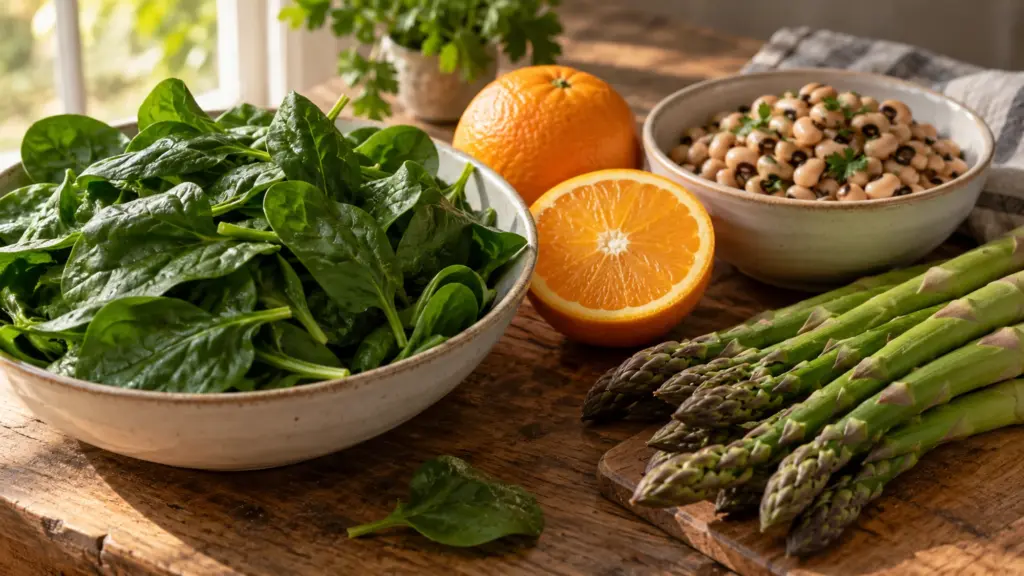
What is folate, and why does the cereal box also mention folic acid? Both names belong to vitamin B9, but the distinction helps when you are choosing foods, comparing labels or reading pregnancy guidance. There is no need to memorize a chemistry lesson before lunch.
Folate is vitamin B9, which your body needs to make DNA and divide cells. Folic acid is a form used in fortified foods and many supplements. Labels use dietary folate equivalents, or DFE, to account for differences in absorption.
I find this easier to approach as two practical questions: where does the vitamin come from, and what exactly does the label measure? Those questions keep the terminology useful.
What is folate, and how is folic acid different?
The NIH Office of Dietary Supplements describes folate as a B vitamin needed for genetic material and cell division. Folate is the broader name; naturally occurring food folates and added folic acid should not be treated as identical quantities just because both support folate intake.
| Term | What it means | Where you will see it |
|---|---|---|
| Folate | The vitamin B9 family | Food discussions and the total folate line |
| Folic acid | A form of folate added to foods or supplements | Ingredient lists and a parenthetical label amount |
| mcg DFE | Micrograms of dietary folate equivalents | The unit for comparing total folate |
Folic acid is a form of folate, rather than a separate vitamin. The unit matters when comparing it with folate naturally present in food.
Put food sources on an ordinary plate
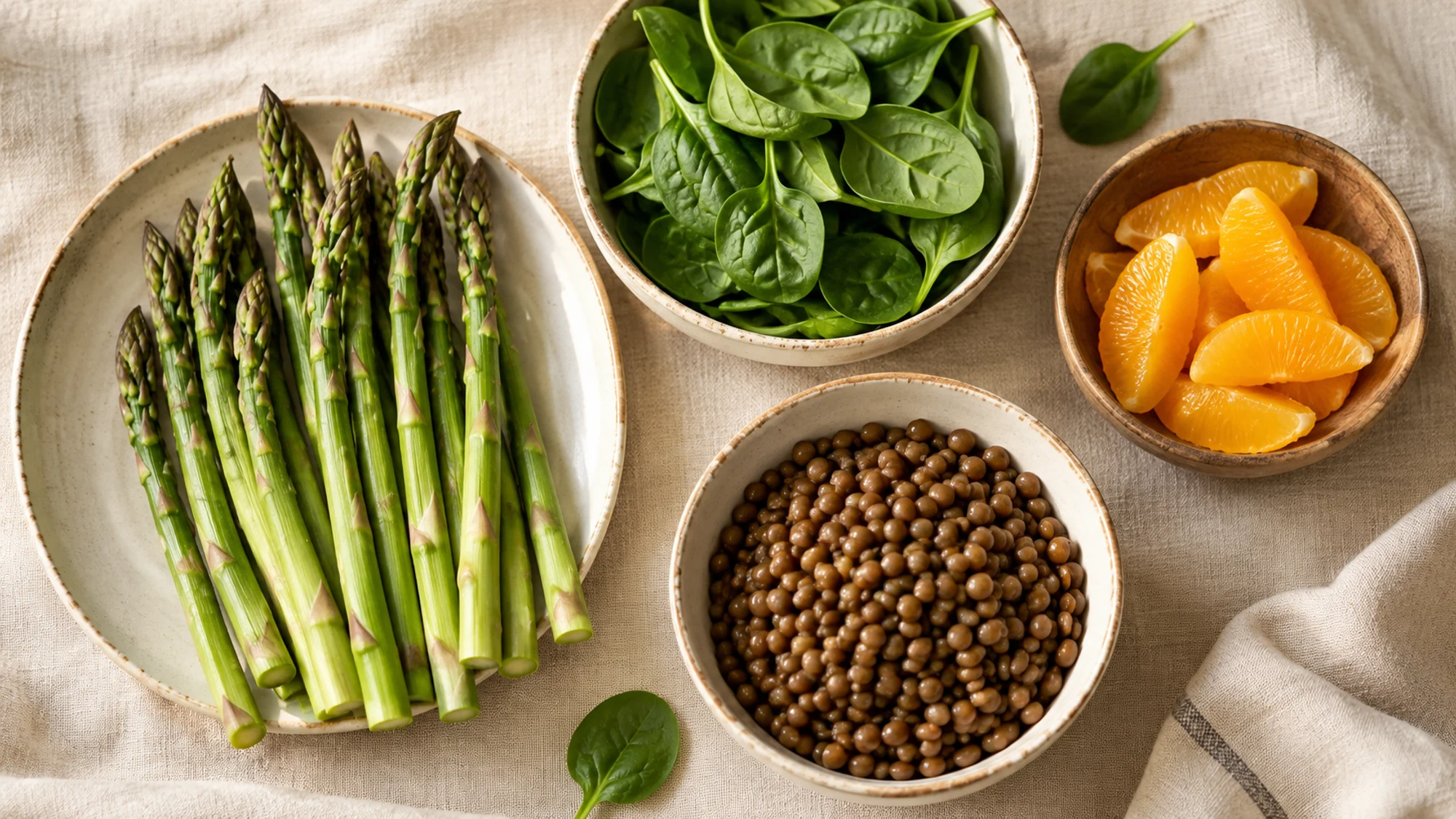
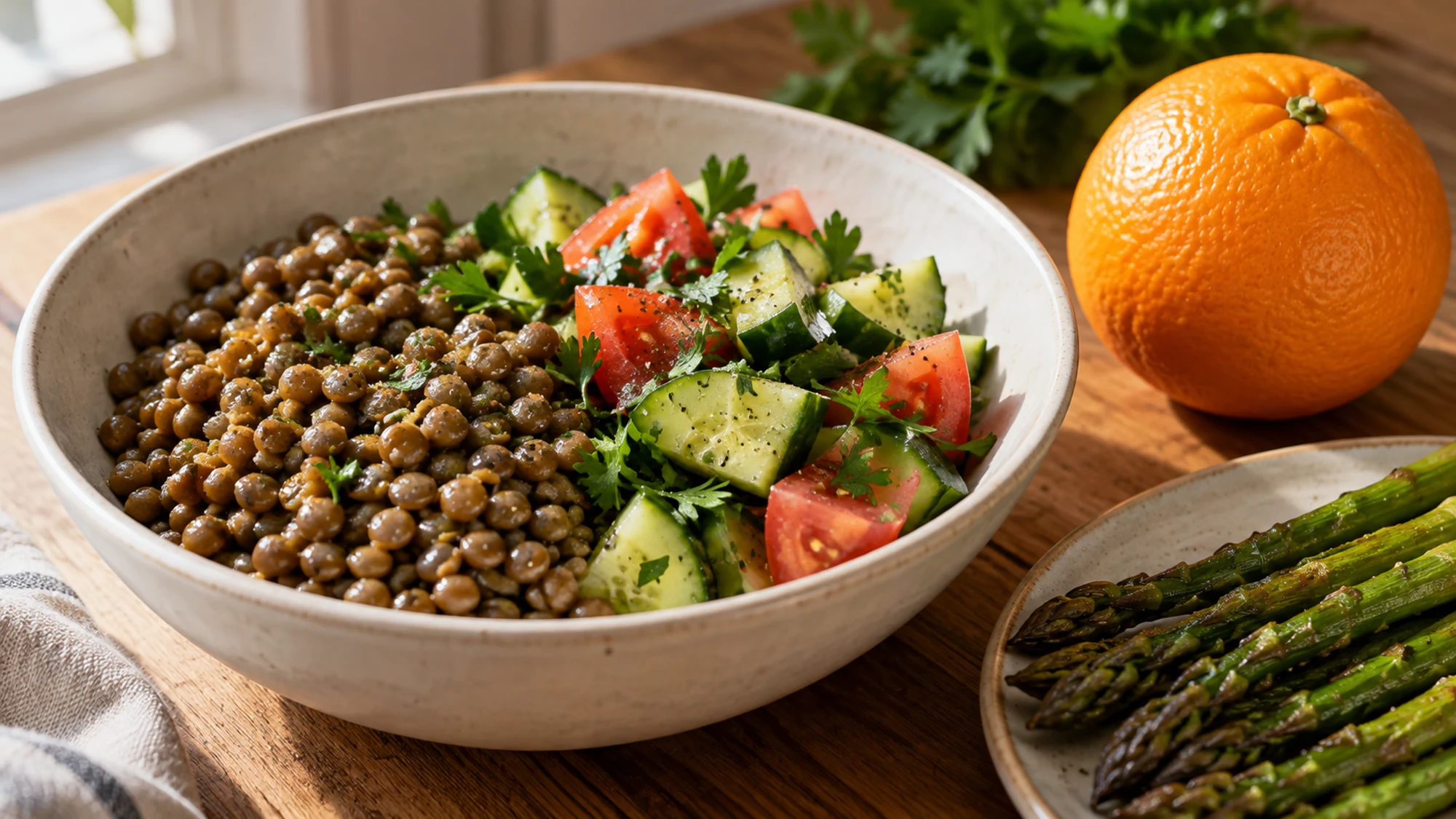
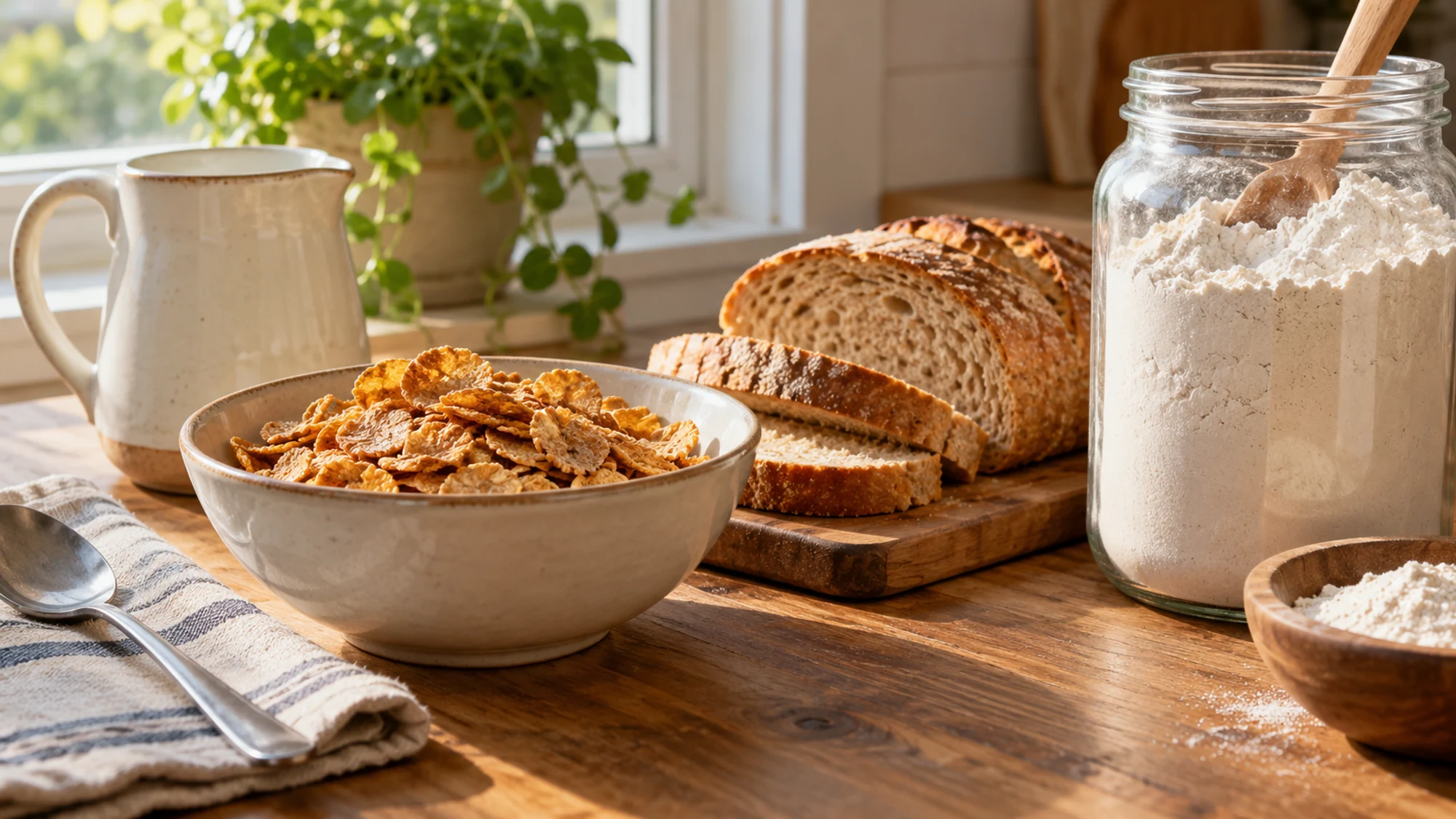
FDA’s food examples include leafy greens, asparagus, oranges, beans and peas. Enriched grain products and some breakfast cereals supply added folic acid. Check the actual package instead of assuming that every bread, flour or cereal is fortified.
- For lunch: Pair beans or lentils with vegetables you enjoy. Our make-ahead lentil salad is one practical way to serve legumes; it is not a measured folate prescription.
- Alongside dinner: Choose spinach, asparagus or another vegetable that fits the meal, rather than building everything around one nutrient.
- At breakfast: Compare fortified cereals by their labels. A familiar name or whole-grain claim does not tell you the folic acid amount.
- For variety: Include fruit such as an orange when you want it. No single food has to carry your entire day’s folate.
I’d rather keep several useful options in view than call one vegetable essential. Food preferences, availability and the rest of the plate still deserve a say.
Read DFE and folic acid as separate label details
The NIH folate reference explains that total folate appears in mcg DFE, with added folic acid listed separately in parentheses. DFE accounts for the body absorbing folic acid more readily than naturally occurring food folate.
- Find the serving size first. A stated amount belongs to that portion, which may differ from what you actually eat.
- Use the total folate line for comparison. Check that the units match before comparing two products.
- Read the parentheses too. The folic acid amount is especially useful when following guidance that specifically names folic acid.
- Do not add the two lines together. The parenthetical folic acid amount contributes to the total; it is not an extra serving of vitamin B9.
NIH lists 400 mcg DFE daily for adults, 600 mcg DFE during pregnancy and 500 mcg DFE while breastfeeding. These total-folate recommendations are different from the folic-acid-specific guidance below.
Why pregnancy guidance specifically names folic acid
The CDC recommends 400 mcg of folic acid daily for women who could become pregnant, including before a pregnancy is recognized. Neural tube defects affect the developing brain or spine and occur very early, which is why waiting for a positive test can miss an important window.
CDC identifies folic acid as the form shown in studies to help prevent neural tube defects. That established finding does not mean a particular salad or an alternative supplement form has demonstrated the same effect. FDA advises obtaining that folic acid from fortified foods, supplements or both, alongside a healthy eating pattern.
Keep “400 mcg folic acid” and “400 mcg DFE” distinct. If you could become pregnant, discuss your specific needs with your healthcare provider, particularly after a previous pregnancy affected by a neural tube defect.
Choose supplements with a clear reason
A vitamin’s essential role does not establish that taking more will improve energy, memory or general wellness. NIH notes that folate supplements can interact with medicines and that high intakes need caution. Do not use tiredness alone to diagnose a folate deficiency.
- Review fortified foods and existing vitamins together before adding another product.
- Ask a clinician or pharmacist about interactions if you take regular medicines.
- Use tailored guidance for a diagnosed deficiency or pregnancy-related needs rather than choosing a high dose yourself.
I would keep the everyday takeaway simple: eat a variety of folate-containing foods, read both label amounts and follow the specific folic acid guidance when pregnancy is possible.
Sources
- NIH: folate functions, needs and supplement considerations
- FDA: food sources and folate labeling
- CDC: folic acid and pregnancy recommendations
- NIH: DFE units, labels and recommended intakes

Emily Parker is DISHORA’s recipe-writing persona, bringing a warm, practical voice to everyday cooking. Her focus is simple ingredients, comforting flavors and clear steps that make a dish feel approachable. From cozy dinners to something sweet, Emily’s recipes invite readers to try something delicious and make it their own.