
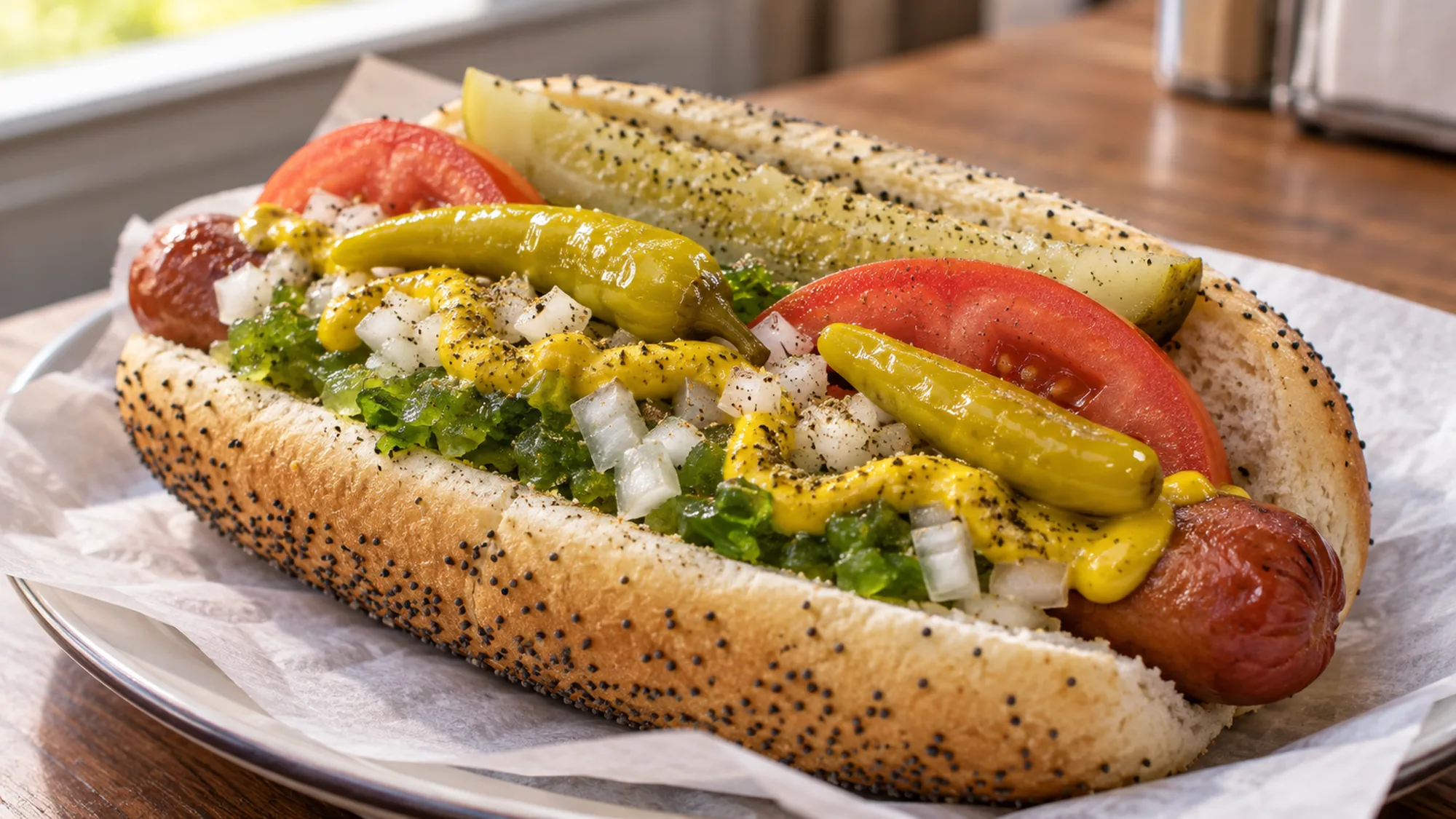
A Chicago-style hot dog has plenty happening in one bun, but the little whole peppers deliver a particularly lively bite. Sport peppers bring vinegar tang, pepper heat and a crisp-skinned snap. They are a condiment worth recognizing even if hot dogs are only an occasional part of your menu.
Sport peppers are small hot peppers commonly sold pickled and served whole on Chicago-style hot dogs. They are different from mild pepperoncini and banana peppers; choose a substitute for the heat, acidity and texture you want.
I like to think of them as a sharp accent rather than another vegetable serving. A little goes a long way, and chopping one pepper gives you more control than dropping several into a dish and hoping everyone agrees about the heat.
What are sport peppers?
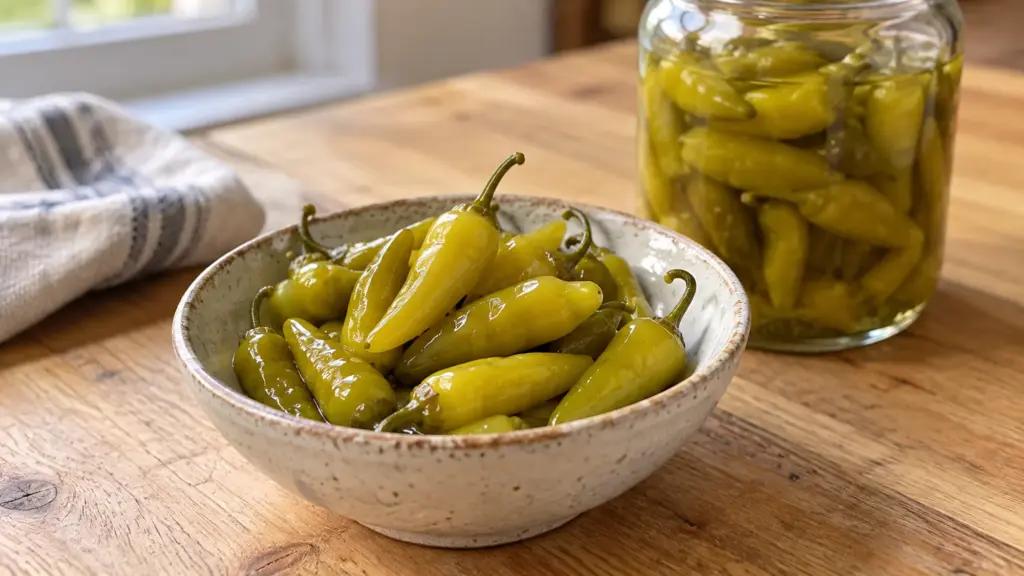
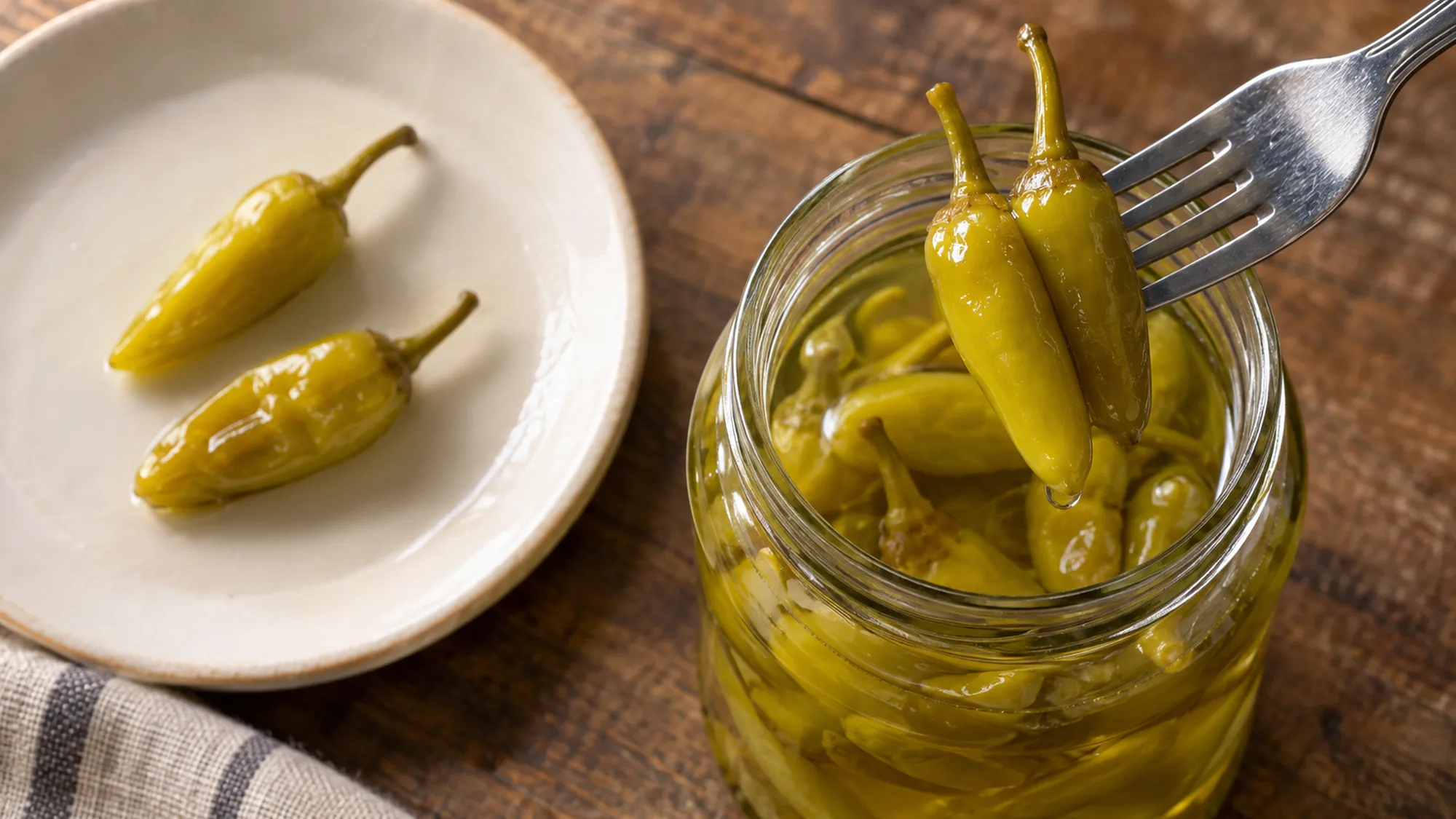
In everyday shopping, the name usually points to the small pickled peppers sold for Chicago-style sandwiches and hot dogs. They are slender, tapered and green to yellow-green in the jar, with a tangy brine that changes how they taste compared with a fresh chile. The point is the combination of pepper and pickle.
Vienna Beef identifies sport peppers as a Chicago-style hot-dog topping and suggests them with sausage for added heat. That is a useful culinary reference, not a reason to assign every jar the same exact heat level. Pepper lots and products can differ, so avoid treating an unsourced Scoville number as a serving guarantee.
Sport peppers, pepperoncini and banana peppers compared
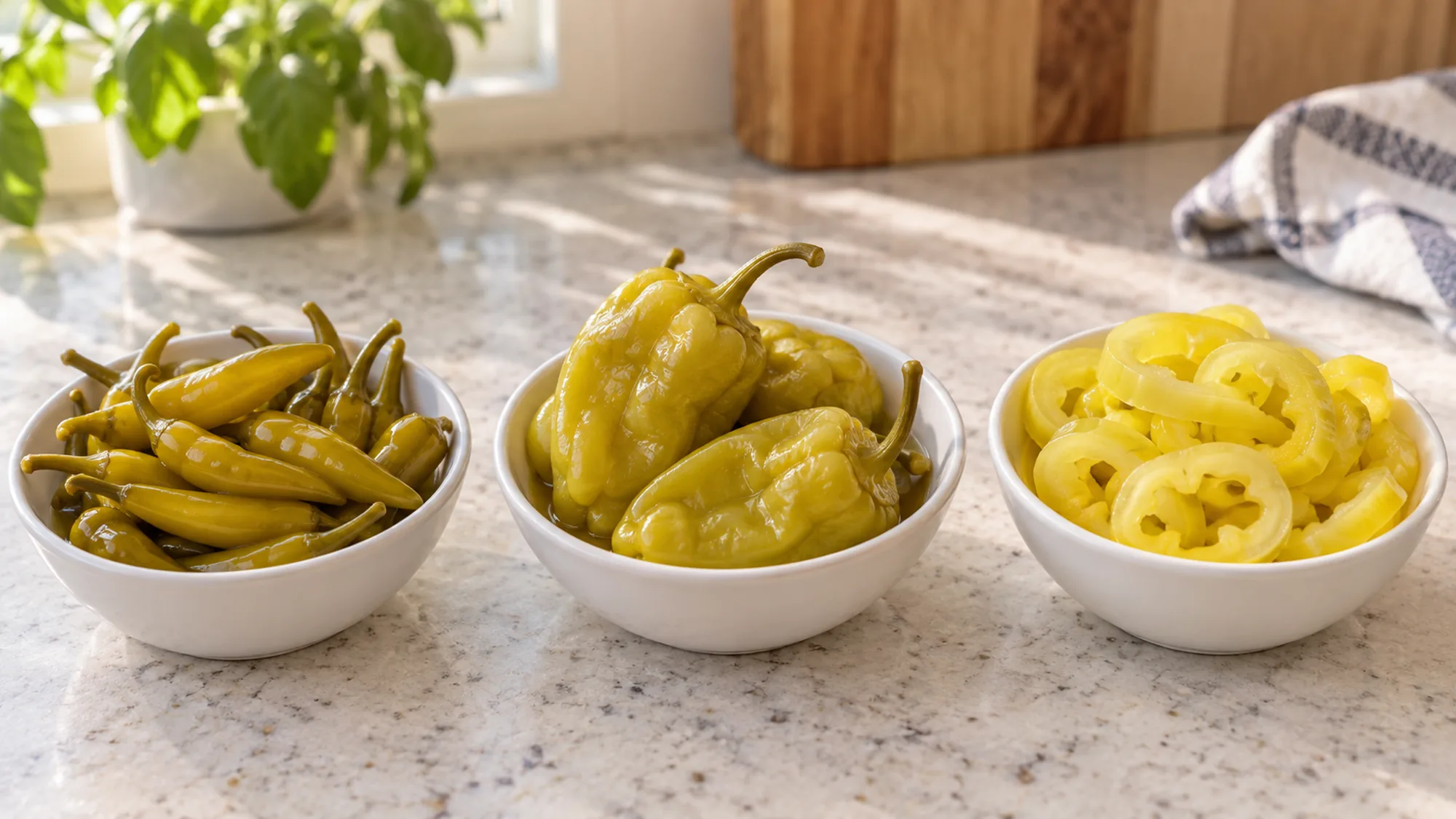
The jars can look related, especially when the contents are all yellow-green. Their jobs overlap, but they are not interchangeable in every bite. Mt. Olive describes its pepperoncini as tangy with mild heat and distinguishes them from generally sweeter, less-hot banana peppers.
| Pepper | Typical role | Useful substitution note |
|---|---|---|
| Sport peppers | Hot, tangy whole-pepper accent | Use when you want the characteristic Chicago-style topping |
| Pepperoncini | Gentler tang and mild heat | A milder option; shape and bite differ |
| Mild banana-pepper rings | Mild pickled crunch | Convenient slices with less heat |
| Pickled jalapeño slices | A different hot-pepper flavor | Taste first; slices distribute differently |
This is a cooking comparison, not a measured heat ranking. Products labeled hot, mild or sweet can change the comparison further. I would use the product name and ingredient label together, then taste a small piece before committing the entire bowl of salad.
How to use sport peppers beyond the hot-dog bun
Their acidity makes them useful alongside rich or savory foods. Drain a pepper and serve it beside a sandwich, or chop a small amount into a topping so that the heat is spread more evenly. Removing the stem before chopping is practical; people should not have to negotiate a woody surprise in a spoonful.
- Sandwiches: Chop a drained pepper and add it where you would otherwise use a sharp pickle.
- Salads: Scatter a little chopped pepper over beans or sturdy chopped vegetables.
- Sausage plates: Offer peppers separately so everyone can choose their own amount.
- Pizza or flatbread: Add a small amount as a finishing accent, keeping the rest of the seasoning in mind.
For a simple serving idea, pair a little pepper with our air-fryer sausages. Those are fresh pork links with their own cooking instructions, not a Chicago hot-dog recipe. The peppers are an optional condiment and do not replace the sausage’s safe cooking-temperature check.
Buying, draining and storing the jar
Look among pickles, relishes and hot-dog condiments rather than assuming the fresh-produce aisle will have the same product. Read the jar’s actual ingredients and storage directions. A manufacturer’s label is the right place to check a particular product for salt, preservatives or ingredients you need to avoid.
- Drain only what you plan to serve, using a clean utensil.
- Keep the remaining peppers in their original jar and follow the package directions.
- Check sodium per stated serving, then consider how many peppers you actually use.
- Refrigerate after opening when directed; Vienna Beef specifically requires this for its sport peppers.
The brine is tangy seasoning, so spooning it freely into a dish changes both acidity and salt. Start with a small amount if you choose to use it. Do not assume leftover commercial brine is a validated method for safely canning a fresh batch of vegetables.
A small condiment with a clear job
Sport peppers are most useful when you want a little hot, pickled contrast. If mildness matters more, pepperoncini or mild banana-pepper rings may suit the meal better. A substitution can taste good without duplicating the original topping; the useful question is what your particular plate needs.
Taste first, drain what you need and let the peppers provide an accent. The best amount is the one that adds tang and heat while leaving the rest of the food easy to enjoy.
Sources
- Vienna Beef: sport-pepper serving and storage information.
- Mt. Olive: pepperoncini characteristics and banana-pepper comparison.

Emily Parker is DISHORA’s recipe-writing persona, bringing a warm, practical voice to everyday cooking. Her focus is simple ingredients, comforting flavors and clear steps that make a dish feel approachable. From cozy dinners to something sweet, Emily’s recipes invite readers to try something delicious and make it their own.