
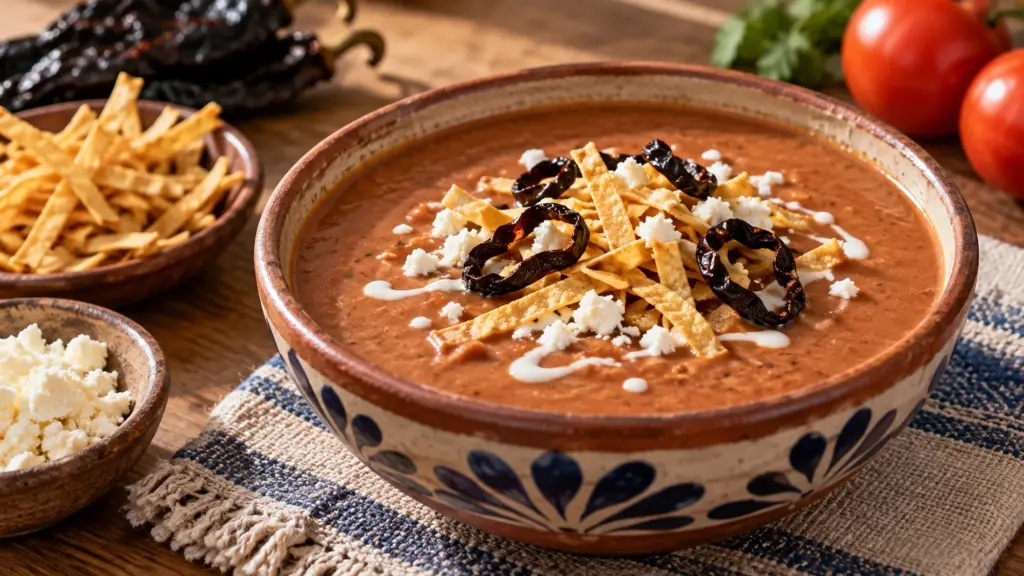
A creamy bean soup does not need its beans to remain whole. Sopa tarasca blends cooked pinto beans with tomato and chile, then finishes with crisp tortilla strips and a few contrasting toppings. The result is a smooth, savory bowl with an earthy bean flavor and a gentle dried-chile warmth.
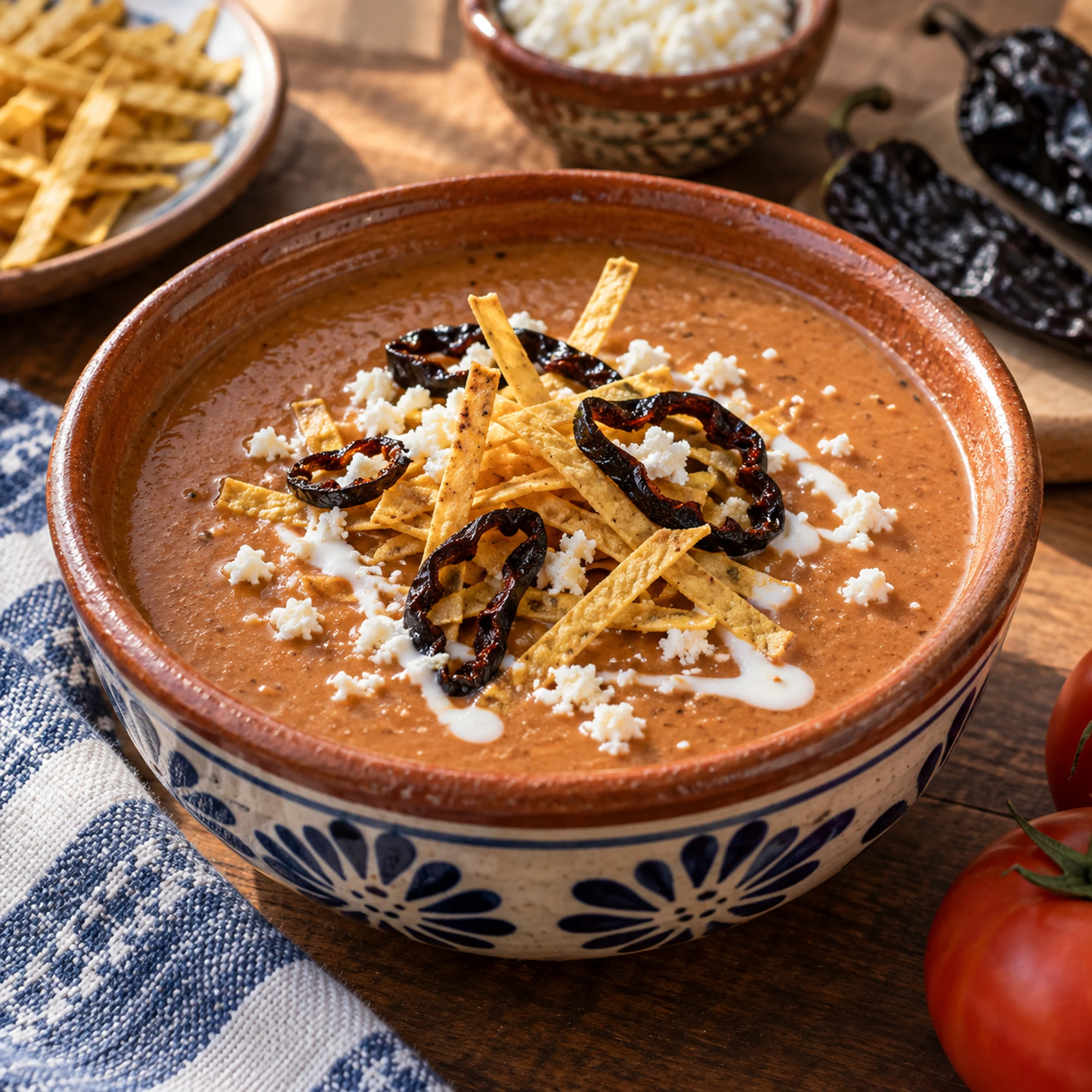
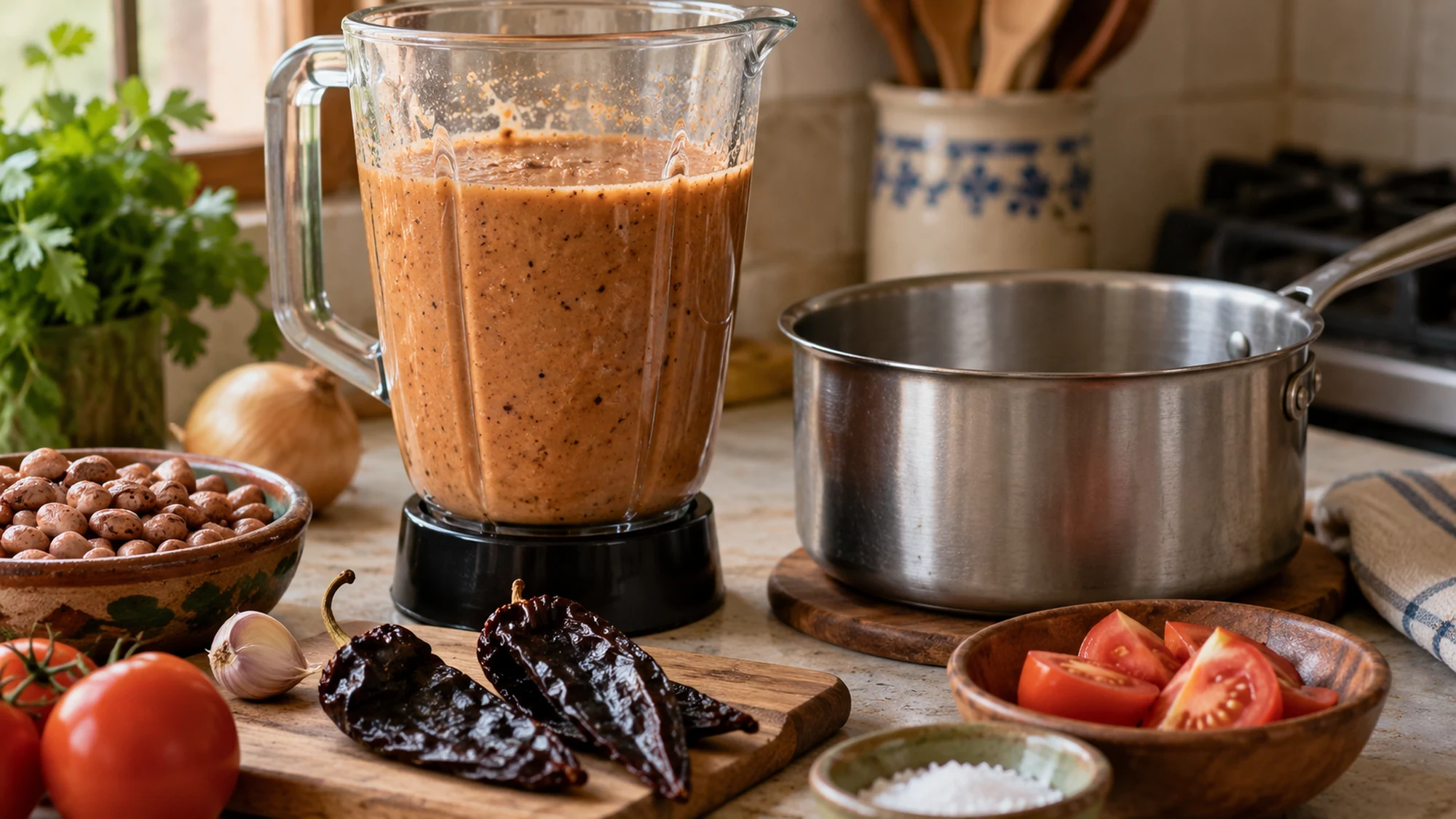
Blend the bean and tomato base until smooth, loosen it with broth as needed and toast the pasilla briefly rather than burning it. Add the crisp strips, crema and queso fresco only when you serve the soup.
This Michoacán-inspired version uses canned pinto beans to keep the preparation manageable. I prefer a spoonable soup that still flows off the ladle, rather than a bean puree standing stiffly in the bowl. The card makes six servings and treats the dairy toppings as optional, with their amounts stated clearly.
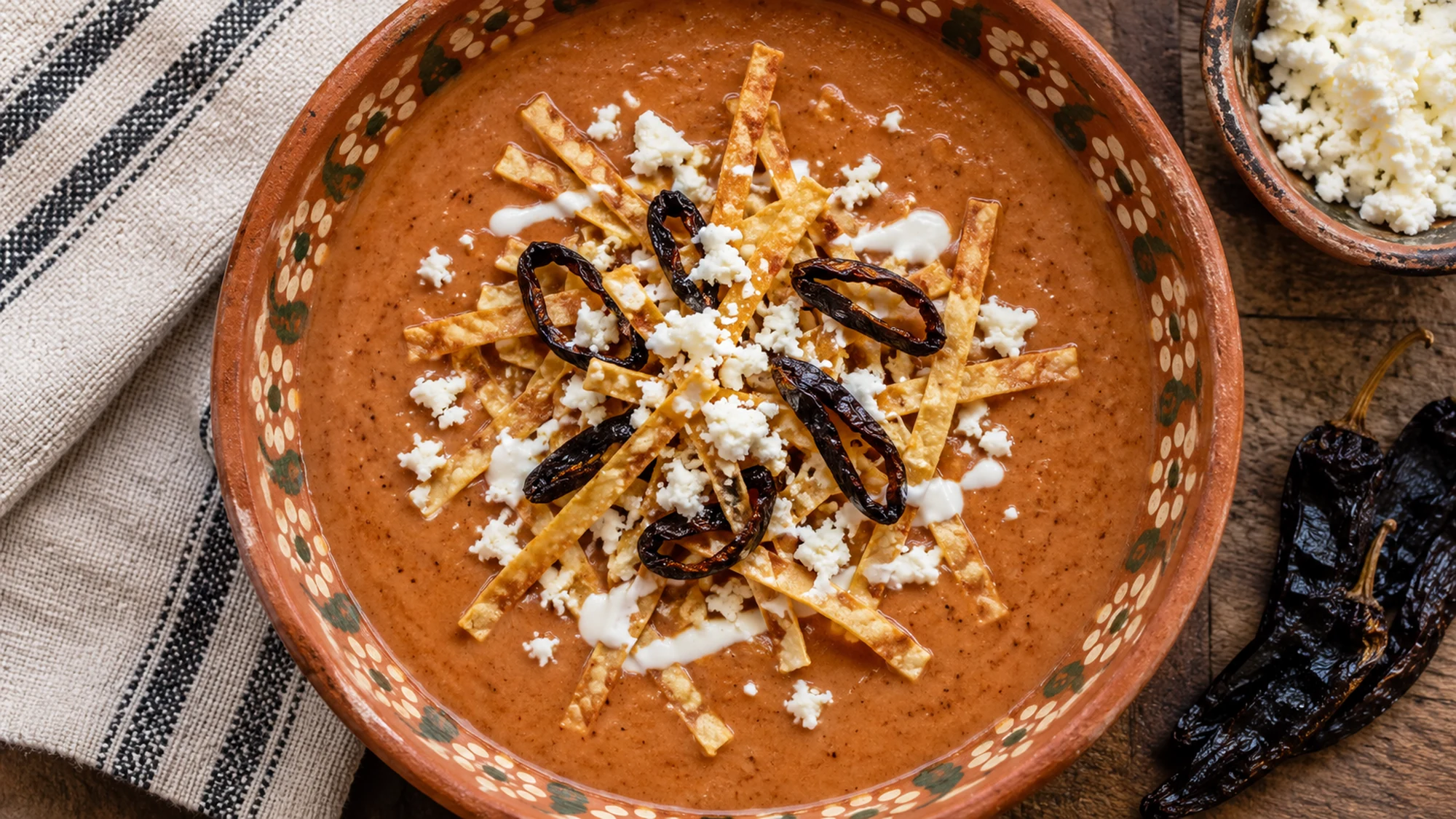
Serving suggestions for sopa tarasca
Pour the hot soup into six bowls before adding any toppings. A little crema and queso fresco can contrast with the earthy base, while the tortilla strips supply crunch. Keep the toppings modest so the beans and tomato remain recognizable underneath.
- Add crunch at the last moment. The tortilla strips are best when they meet the soup in the bowl. Stirring them into the saucepan turns them soft and changes the soup’s texture.
- Offer toppings separately. Let people choose crema, cheese and extra toasted chile. This also makes it easier to keep a serving without dairy toppings distinct from one that includes them.
- Choose a light accompaniment. A simple chopped vegetable salad or warm corn tortillas can round out the meal. Another rich sauce is unnecessary beside the smooth bean base.
- Save the soup without garnish. Refrigerate promptly in shallow covered containers and use within three to four days. Reheat to 165°F (74°C), loosening with water or broth if the beans have thickened.
Build each bowl after the soup is ready. A small amount of crisp, cool or tangy topping gives more contrast than covering the entire surface in everything at once.
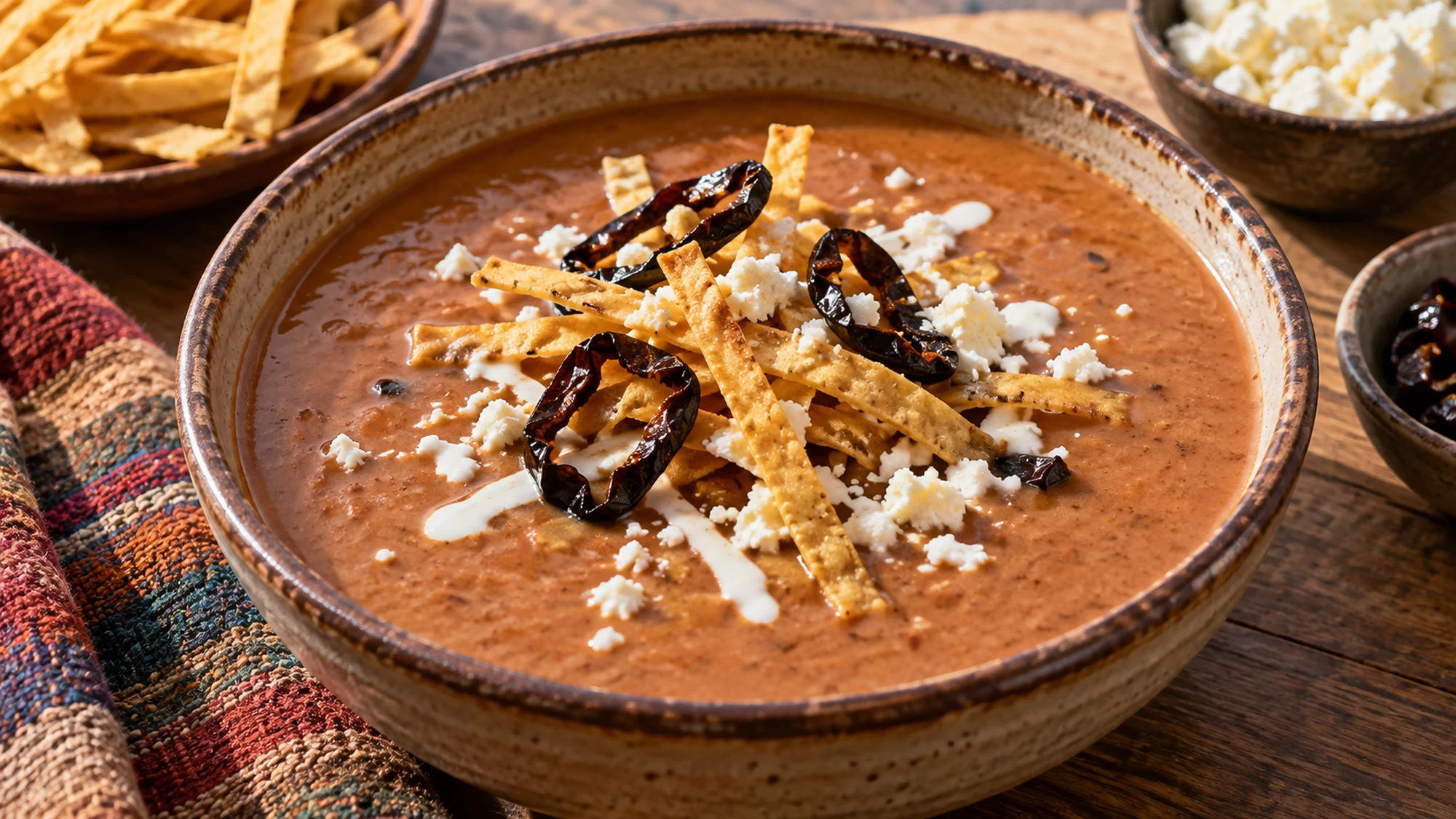
Variations that respect the bean and chile base
Pinto beans keep the soup’s color and flavor close to the version described here. Dried chiles are not interchangeable simply because they all look dark in a package. I would identify the chile first and make small adjustments after tasting its effect in the broth.
- Use home-cooked pinto beans. Replace the canned beans with the same drained amount of fully cooked beans. Their cooking liquid can replace some broth if it tastes good and is not overly salty.
- Identify pasilla correctly. True pasilla, also called chile negro, is a dried chilaca. Some stores label ancho as pasilla; the broad, wrinkled ancho has a different shape and flavor.
- Keep the toast brief. A fragrant, pliable chile is the goal. If it turns black and smells scorched, replace it instead of trying to hide that bitterness with dairy.
- Make the toppings dairy-free. Omit crema and queso fresco, and choose a suitable vegetable broth. The soup will taste less tangy and rich, but the blended bean-and-tomato base still provides its texture.
Adjust the broth to the consistency you want, then finish the seasoning. Thick beans can hide salt and chile at first; the final spoonable texture is the right moment for a taste check.
Health benefits with toppings counted
Pinto beans contribute plant protein and fiber, and tomatoes add a vegetable component. Crema, cheese, oil and tortilla strips also contribute to the finished bowl. The word bean does not describe the whole bowl’s nutrition.
- Control sodium deliberately. Rinse canned beans and choose a lower-sodium broth when appropriate. Cheese and added seasoning still contribute salt, so taste the finished soup before increasing it.
- Keep topping portions clear. The optional quantities in the card describe a modest garnish for six bowls. Extra crema, cheese or strips should be counted separately.
- Choose fully cooked beans. Prepared pinto beans are a convenience ingredient here. Dried beans require their own complete cooking stage before the blending method begins.
- Check the dairy choice. Crema and queso fresco contain milk. Omitting them does not by itself verify every packaged ingredient for another allergy.
Use the bean base and garnish together to understand the serving. The soup can contribute fiber and protein without a promise that any individual bowl will produce a particular health result.
Motivation conclusion: keep the topping crisp
Set out the blender, open and rinse the beans, and prepare the tortilla strips before the final simmer. The smooth base and crisp finish are doing different jobs, so bring them together only in the bowl. For another bean-centered dinner, cabbage and white bean skillet offers a contrasting texture. Tonight, let the ladle tell you when this soup is flowing just right.
Sopa Tarasca Recipe

Ingredients
- 2 15-oz cans pinto beans drained and rinsed; about 510 g drained total, or use 3 cups cooked beans
- 4 Roma tomatoes 500 g total, chopped
- 1 medium onion 110 g, chopped
- 2 garlic cloves 8 g, chopped
- 1 dried pasilla chile (chile negro) about 8 g; stem and seeds removed, not a fresh poblano
- 4 cups lower-sodium vegetable broth 960 ml, plus a little more if needed
- 1 tbsp neutral cooking oil
- 0.5 tsp dried oregano
- 0.5 tsp fine salt adjust for salted beans and broth
- 0.25 tsp ground black pepper
- 6 6-inch corn tortillas 156 g, cut into thin strips
- 1 tbsp neutral cooking oil
- 1 additional dried pasilla chile optional, cut into thin rings with seeds discarded
- 6 tbsp Mexican crema optional, 90 g total
- 3 oz queso fresco optional, 85 g, crumbled; choose pasteurized cheese
Equipment
- Large saucepan
- Blender suitable for warm mixtures
- Small skillet
- Baking tray, knife and cutting board
Instructions
- Heat a dry skillet over medium-low heat. Press the deseeded base chile onto the skillet for about 10 seconds per side, just until fragrant; do not blacken it. Cover with hot water in a bowl and soak for 10 minutes, then drain.
- Heat the oven to 350°F (175°C). Toss tortilla strips with their tablespoon of oil, spread in one layer and bake for 12–15 minutes, turning halfway, until crisp and golden. If using extra chile rings, briefly toast them in the dry skillet until fragrant and crisp, without burning.
- Heat the soup tablespoon of oil in the saucepan. Cook onion for 5 minutes, add garlic for 30 seconds, then tomatoes and oregano. Cook for another 5–6 minutes until tomatoes soften.
- Let the tomato mixture cool slightly, then blend with drained beans, soaked chile and 2 cups broth until smooth. Work in batches and follow your blender’s instructions for warm liquids, allowing steam to escape; never use a sealed blender cup with hot soup.
- Return the puree to the saucepan, add the remaining 2 cups broth and simmer gently for 12–15 minutes, stirring regularly so the base does not catch. Add a little extra broth if it becomes too thick. Season with salt and black pepper.
- Divide into six bowls. Top each with one-sixth of the tortilla strips and, if using, 1 tablespoon crema, one-sixth of the queso fresco and a few toasted chile rings. Add toppings at serving so the strips stay crisp.
Nutrition
Video
Notes
Tried this recipe?
Let us know how it turned out!Emily Parker is DISHORA’s recipe-writing persona, bringing a warm, practical voice to everyday cooking. Her focus is simple ingredients, comforting flavors and clear steps that make a dish feel approachable. From cozy dinners to something sweet, Emily’s recipes invite readers to try something delicious and make it their own.