
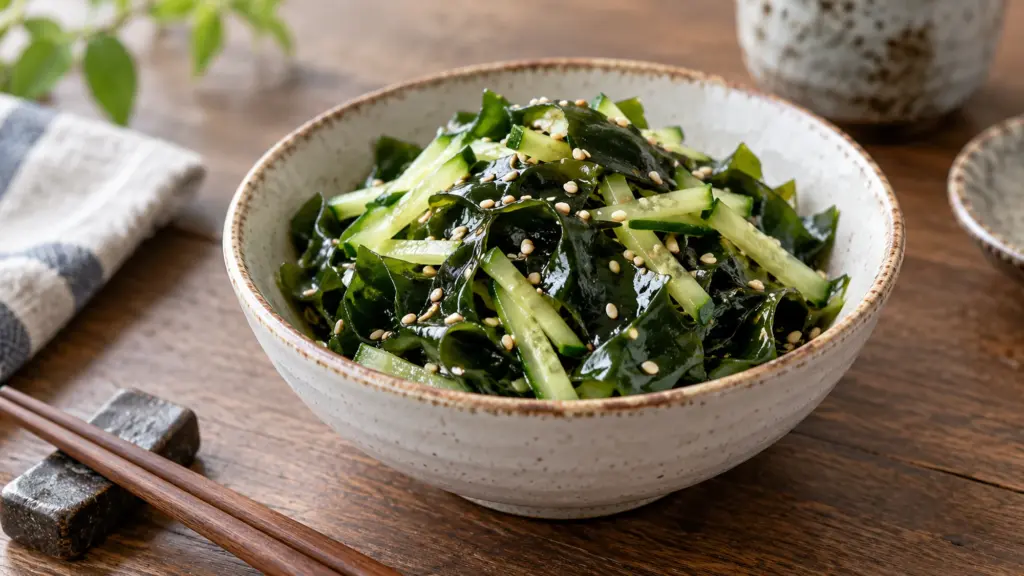
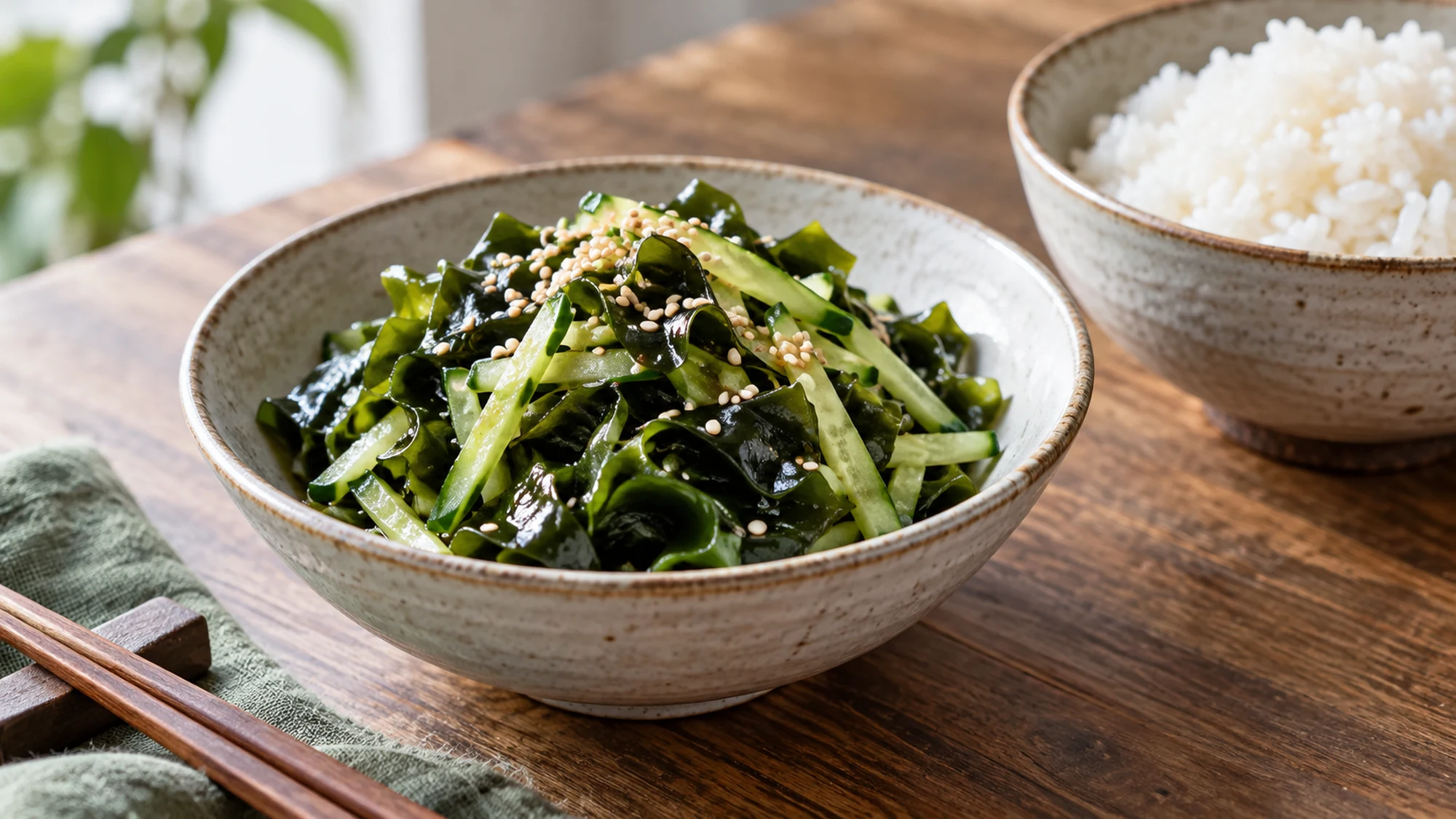
When dinner needs a cool, crunchy side, seaweed salad is a useful change from another bowl of lettuce. Dried wakame softens in water, then gets tossed with cucumber and a tangy sesame-miso dressing. The seaweed stays pleasantly slippery and tender, while the cucumber gives each forkful some snap. The dressing brings savory depth without needing a long ingredient list.
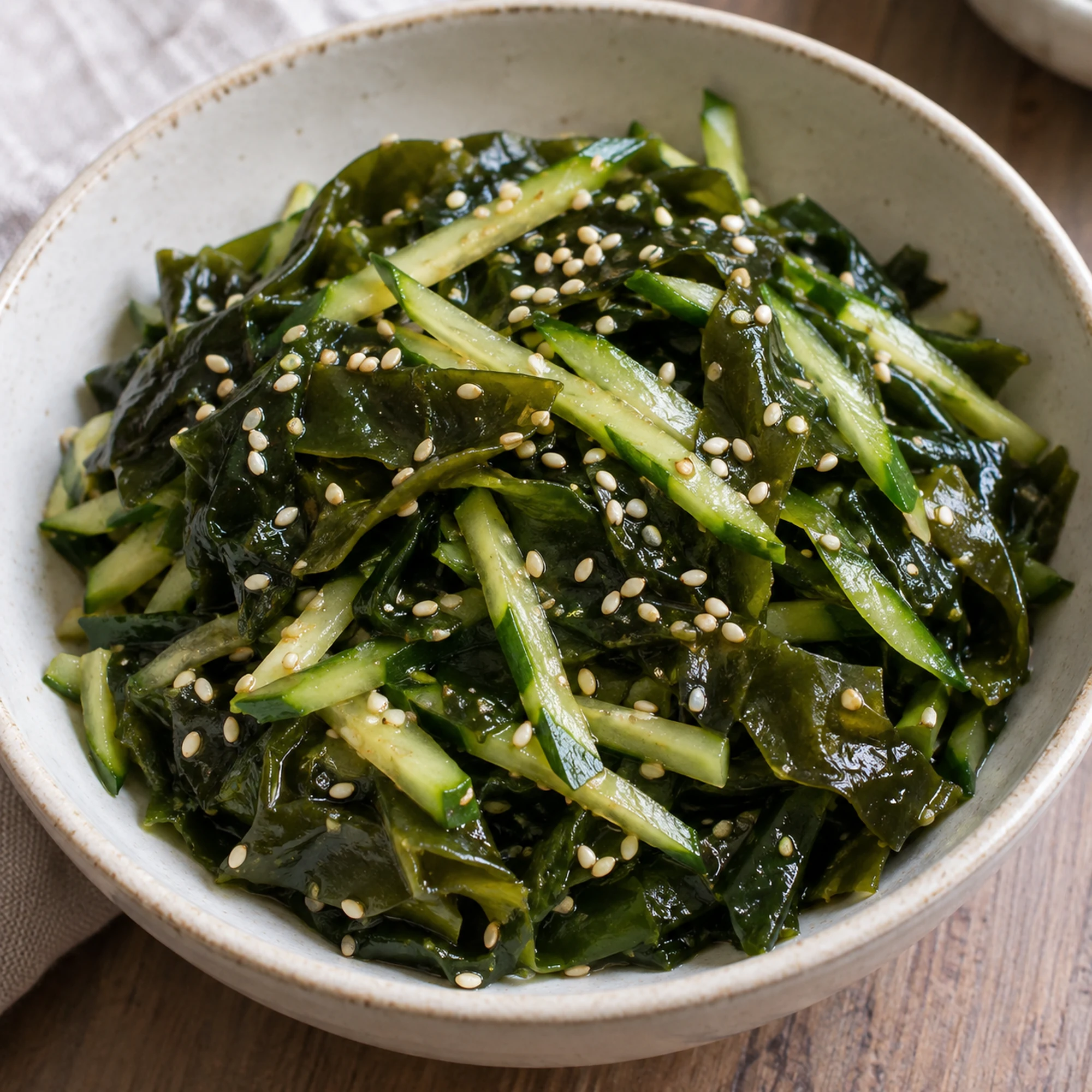
Drain the seaweed thoroughly, dress it lightly and serve it cold so the cucumber keeps its crisp bite.
I prefer a modest amount of dressing here. Miso and soy sauce already carry plenty of flavor, and the seaweed should still taste like itself. Start with a light coating and add more only after tasting. This homemade version has the natural dark-green color of rehydrated wakame; it will look different from brightly colored packaged restaurant salads.
The small soaking step is the main piece of preparation. Give the dried seaweed plenty of cool water and follow its package directions, because products vary in how quickly they expand. Once it feels supple, drain it and squeeze gently. Water left in the leaves makes the dressing thin, so thorough draining matters more than another spoonful of miso.
Serving suggestions for seaweed salad
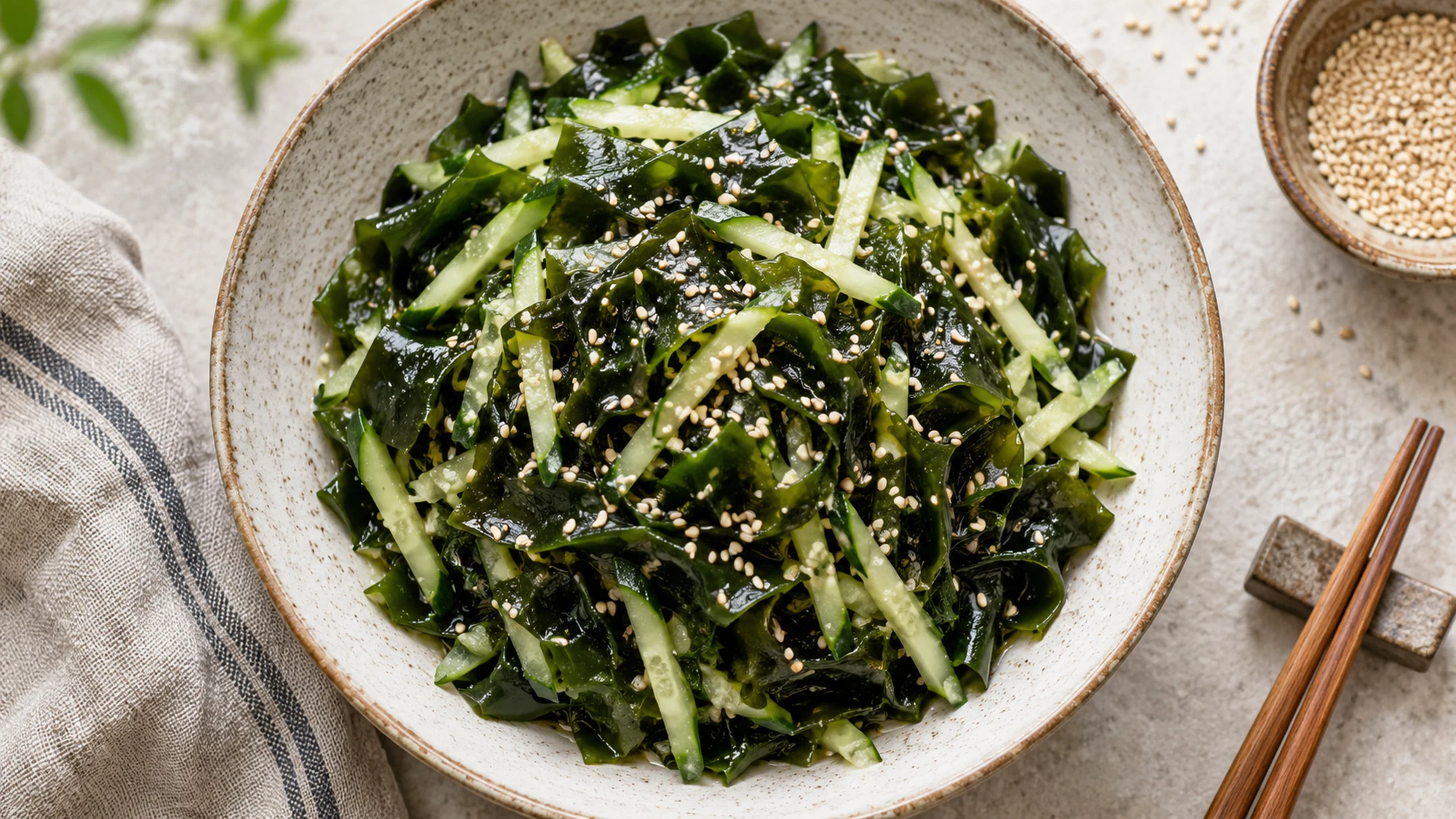
Serve the salad cold in small bowls beside rice, grilled tofu, cooked fish or a noodle dish. It works especially well with warm food because the textures and temperatures contrast. A scattering of sesame seeds finishes the bowl. I would keep the portions small: seaweed and miso have a concentrated savory flavor that is satisfying alongside a simple main.
For a light lunch, pair it with a toasted sandwich or a bean dish rather than expecting a small side salad to carry the meal alone. Dishora’s cabbage and white bean skillet offers a warm counterpart. Keep extra dressing separate if the salad will sit on the table for a while, and toss again just before serving.
Let the cool seaweed salad sit beside a warm, simple main so each dish brings a different texture.
Variations
Dried wakame is the straightforward choice, but a dried seaweed salad mix gives several textures in one bowl. Check the label and soaking directions before substituting. These products are prepared differently, and some contain added salt. You can read more about wakame as a cooking ingredient when choosing a packet, then use the measured amount in the card.
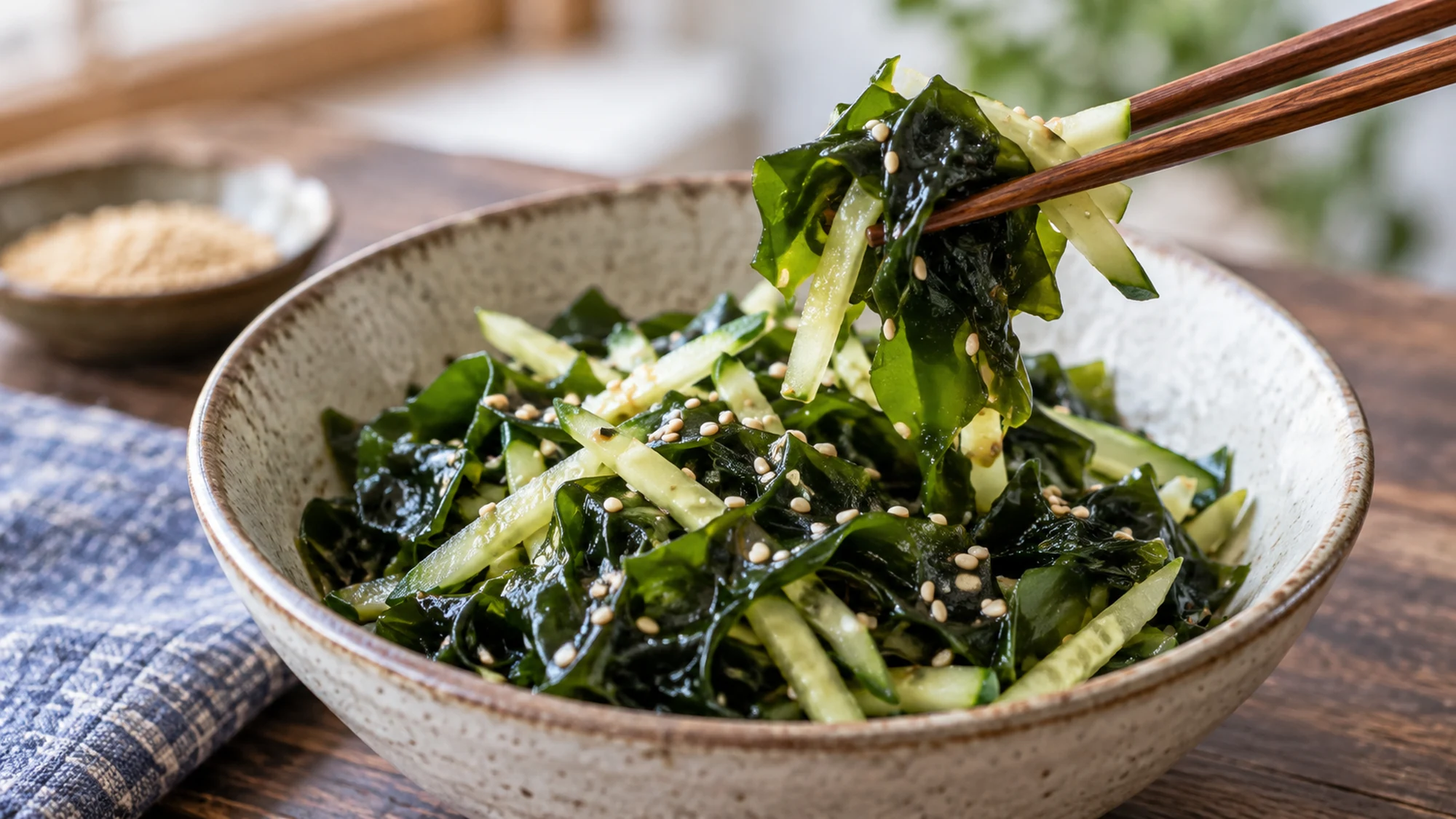
Cucumber matchsticks keep the salad crisp without dominating the seaweed. Thin carrot ribbons are an optional addition if you want a little sweetness and color. Keep any extra vegetables modest so the dressing still coats the bowl evenly. If using a very watery cucumber, blot the slices before mixing rather than adding more salty seasoning to compensate.
- White or yellow miso makes a gentle dressing, while darker miso can taste stronger and saltier.
- Whisk until the paste is fully dispersed; nobody wants a concentrated lump in one bite.
- For a gluten-free version, check both miso and soy sauce, and choose labeled gluten-free products.
- A splash of water can soften an unusually intense dressing.
Taste before adding salt; miso, soy sauce and some dried seaweed products already contribute plenty.
Health benefits
Seaweed and cucumber add variety to a vegetable-based plate, with some fiber and a fresh texture. The small amount of sesame oil gives aroma and a little fat. The card’s nutrition values are estimates, and the type of seaweed makes a difference. I would treat this as a flavorful side, rather than using a tiny portion to promise a particular health result.
Soy sauce and miso contribute most of the sodium in the dressing. A reduced-sodium soy sauce can help, but it does not make the finished salad sodium-free. Taste before adding salt. Seaweed mineral content also varies widely, so a modest serving is a practical choice. The sodium label guide can help compare packaged ingredients.
- The recipe contains soy and sesame, and some miso or mirin products contain additional allergens.
- Read the labels if serving guests.
- Keep the finished salad refrigerated and make only what you expect to use soon.
- The cucumber gradually releases moisture, so the best texture comes from a freshly tossed bowl rather than a large batch dressed days ahead.
Small portions and measured dressing keep the salad flavorful while making packaged-ingredient labels easier to account for.
Make room for a cool, savory side
Once the wakame is drained, the rest is a quick whisk and toss. Cut the cucumber while the seaweed soaks, mix the dressing in a small bowl and coat everything lightly. Chill briefly if you have time, then bring it to the table while the cucumber is crisp. It is a simple way to add a different vegetable texture to dinner.
Seaweed Salad Recipe

Ingredients
- 14 grams dried wakame seaweed or dried mixed seaweed salad mix; about 1/2 ounce
- 1/2 medium English cucumber about 150 g, cut into thin matchsticks
- 1 teaspoon toasted white sesame seeds plus a pinch for garnish
- 1 tablespoon white or yellow miso
- 1 tablespoon low-sodium soy sauce
- 1 tablespoon unseasoned rice vinegar
- 1 teaspoon toasted sesame oil
- 1 teaspoon mirin
- 1 teaspoon toasted sesame seeds lightly crushed
Equipment
- Medium bowl for soaking seaweed
- Fine-mesh strainer
- Small bowl and whisk
Instructions
- Place wakame in a large bowl and cover generously with cool water. Soak according to package, usually 5 to 8 minutes, until supple. Drain in a fine-mesh strainer, rinse briefly if salty, then gently squeeze out excess water.
- Cut cucumber into thin matchsticks. If it is especially watery, blot it with a paper towel so it does not thin the dressing.
- Whisk miso, soy sauce, rice vinegar, sesame oil and mirin until smooth. Stir in the lightly crushed sesame seeds. Taste before adding salt; miso and soy sauce already bring saltiness.
- Combine drained seaweed and cucumber. Add enough dressing to coat lightly and toss. Chill for 10 minutes if time allows, then finish with sesame seeds and serve cold.
Nutrition
Video
Notes
Tried this recipe?
Let us know how it turned out!Emily Parker is DISHORA’s recipe-writing persona, bringing a warm, practical voice to everyday cooking. Her focus is simple ingredients, comforting flavors and clear steps that make a dish feel approachable. From cozy dinners to something sweet, Emily’s recipes invite readers to try something delicious and make it their own.