
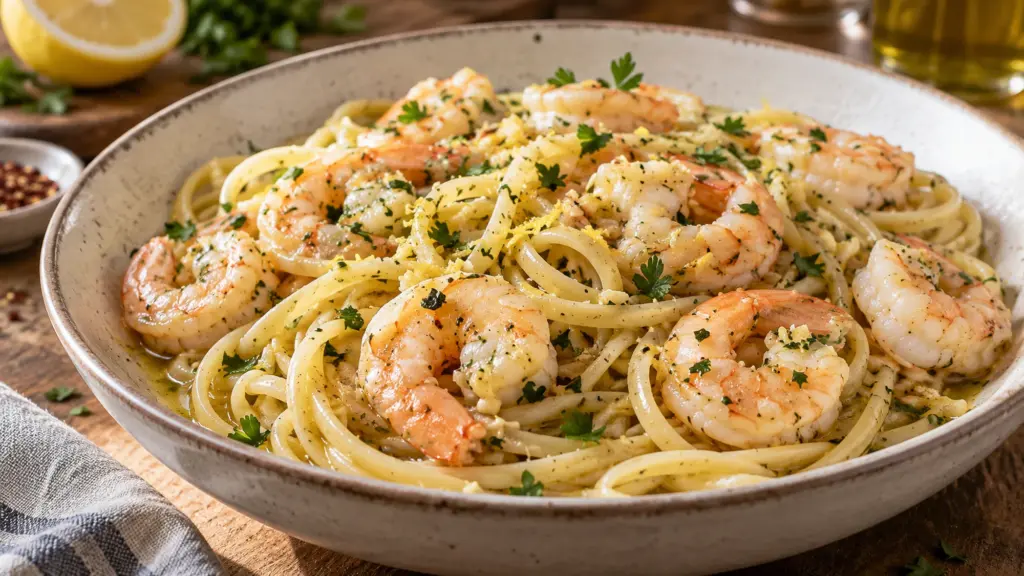
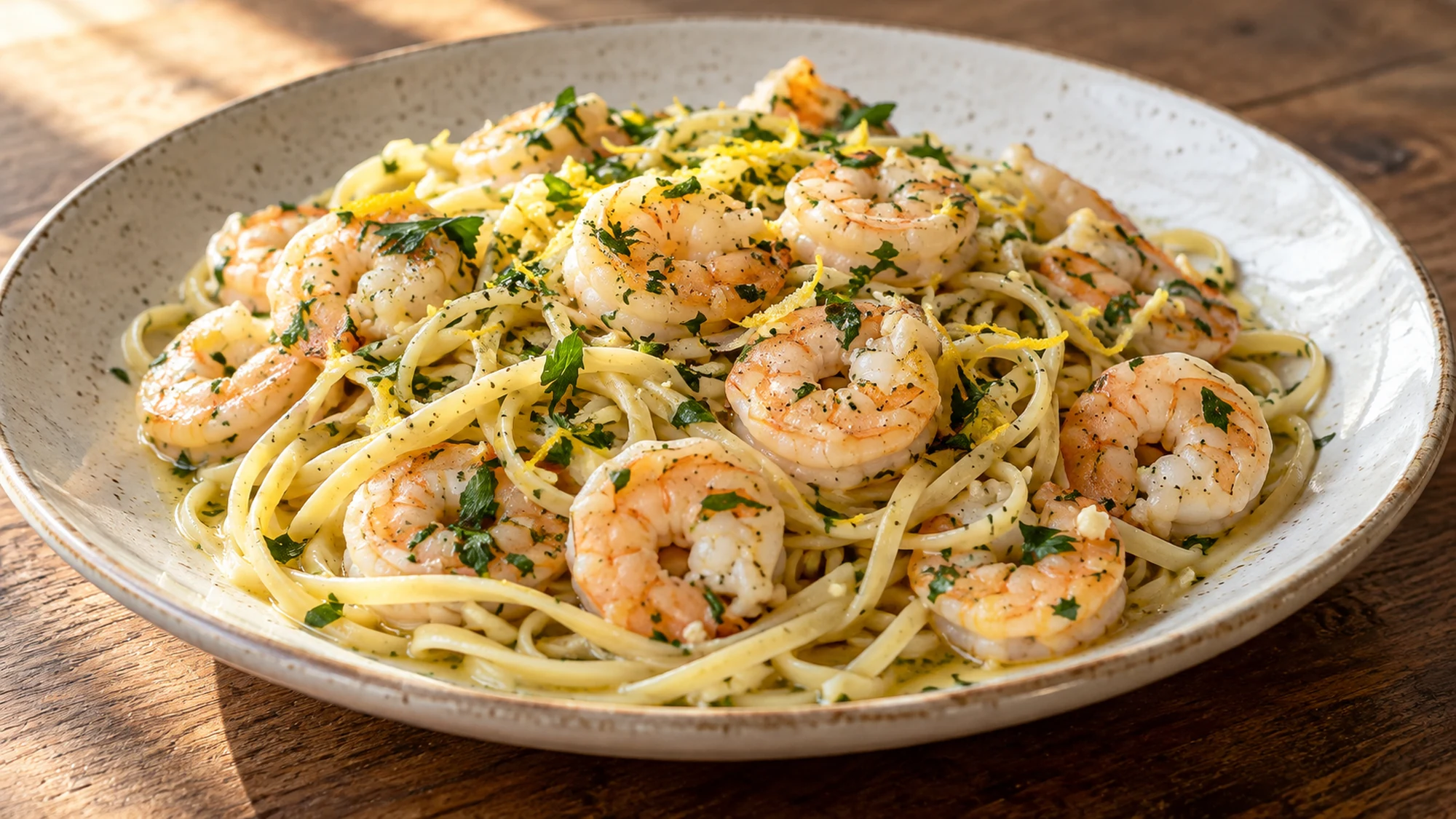
A skillet of scampi is useful when you want dinner to feel special without spending the evening at the stove. Here, the dish means shrimp scampi: peeled shrimp, garlic, butter, white wine and lemon, tossed with linguine. The shrimp cook quickly, and a splash of pasta water helps the pan sauce cling to the noodles instead of pooling underneath them.
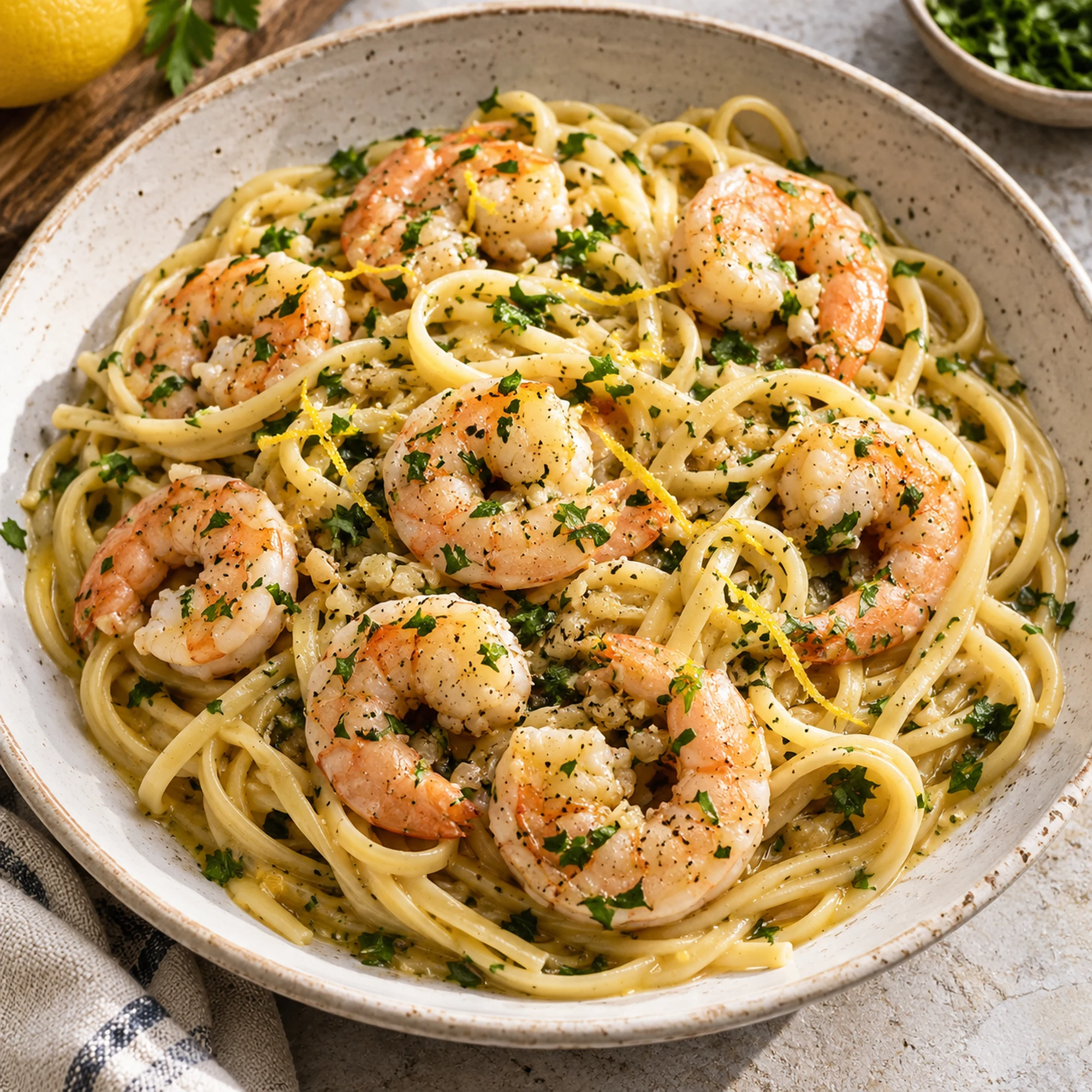
Prepare the garlic and lemon first, then cook the shrimp quickly and finish the pasta with a little reserved water.
Have the garlic minced and the lemon ready before the shrimp enter the pan. Once cooking starts, there is little time for chopping. I prefer peeled, deveined shrimp for a pasta supper because the meal is easier to eat. Patting them dry is worthwhile too; wet shrimp release water and make it harder to get light browning in a wide skillet.
The sauce should be glossy and loose enough to coat the pasta, rather than thick or creamy. Butter brings richness, lemon gives brightness, and parsley finishes the dish with a fresh herbal note. Cook the linguine just until al dente, then save a little cooking water before draining. That starchy water is useful insurance when the sauce needs loosening.
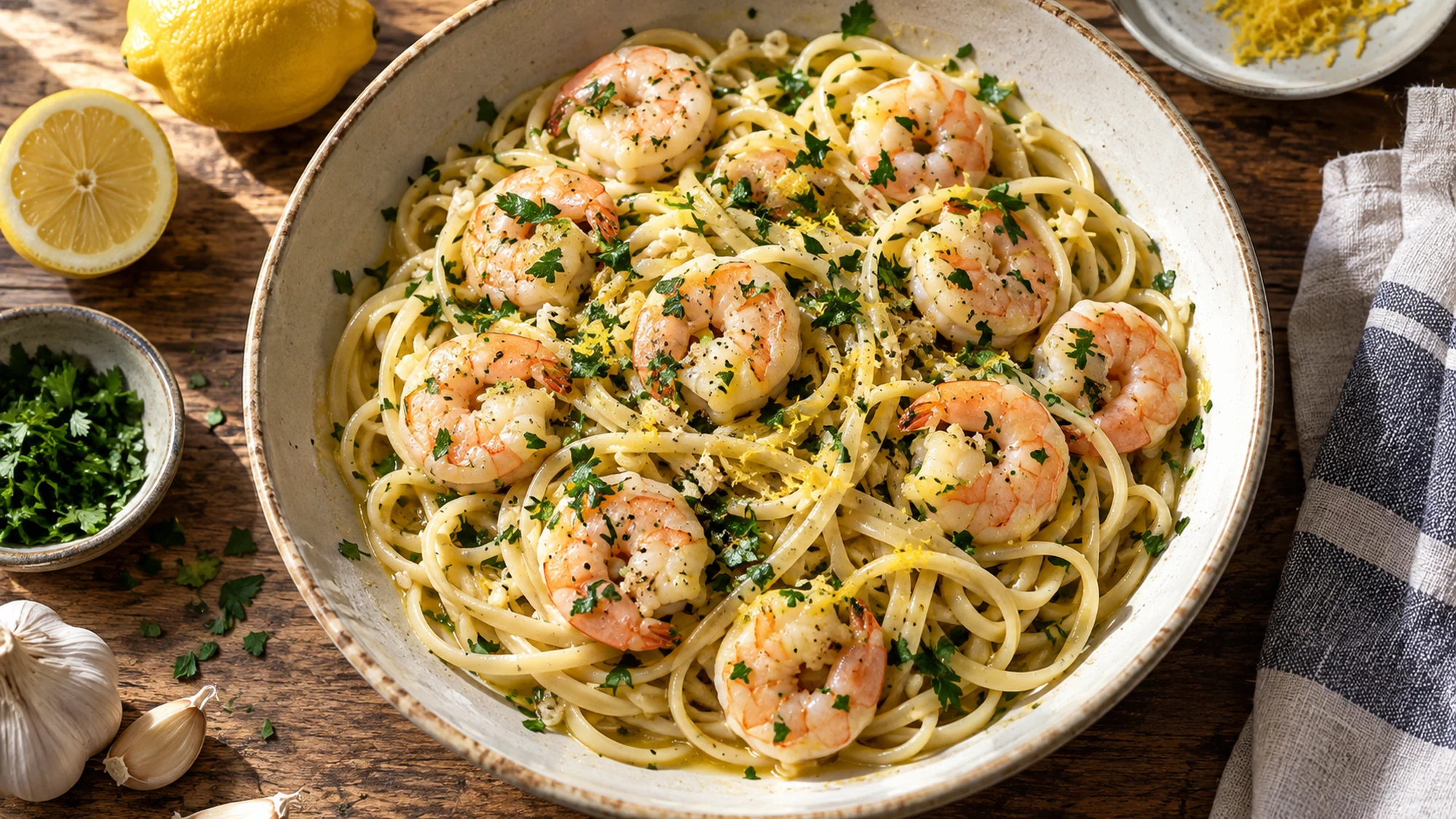
Serving suggestions for scampi
Serve the pasta straight from the skillet while the shrimp are tender and the sauce is warm. Divide the noodles first, then distribute the shrimp across the bowls so every serving gets an even share. A lemon wedge lets people sharpen the flavor at the table. I would add a simple green salad or steamed vegetable instead of another rich side.
Crusty bread is helpful for catching any lemon-butter sauce left in the bowl. For a gentler first course, Dishora’s vichyssoise offers a cool contrast, though the pasta makes a complete main on its own. Keep the extra parsley light; it should support the shrimp’s flavor rather than cover the entire dish in chopped herbs.
Bring the skillet to the table promptly, with lemon wedges and a simple vegetable side.
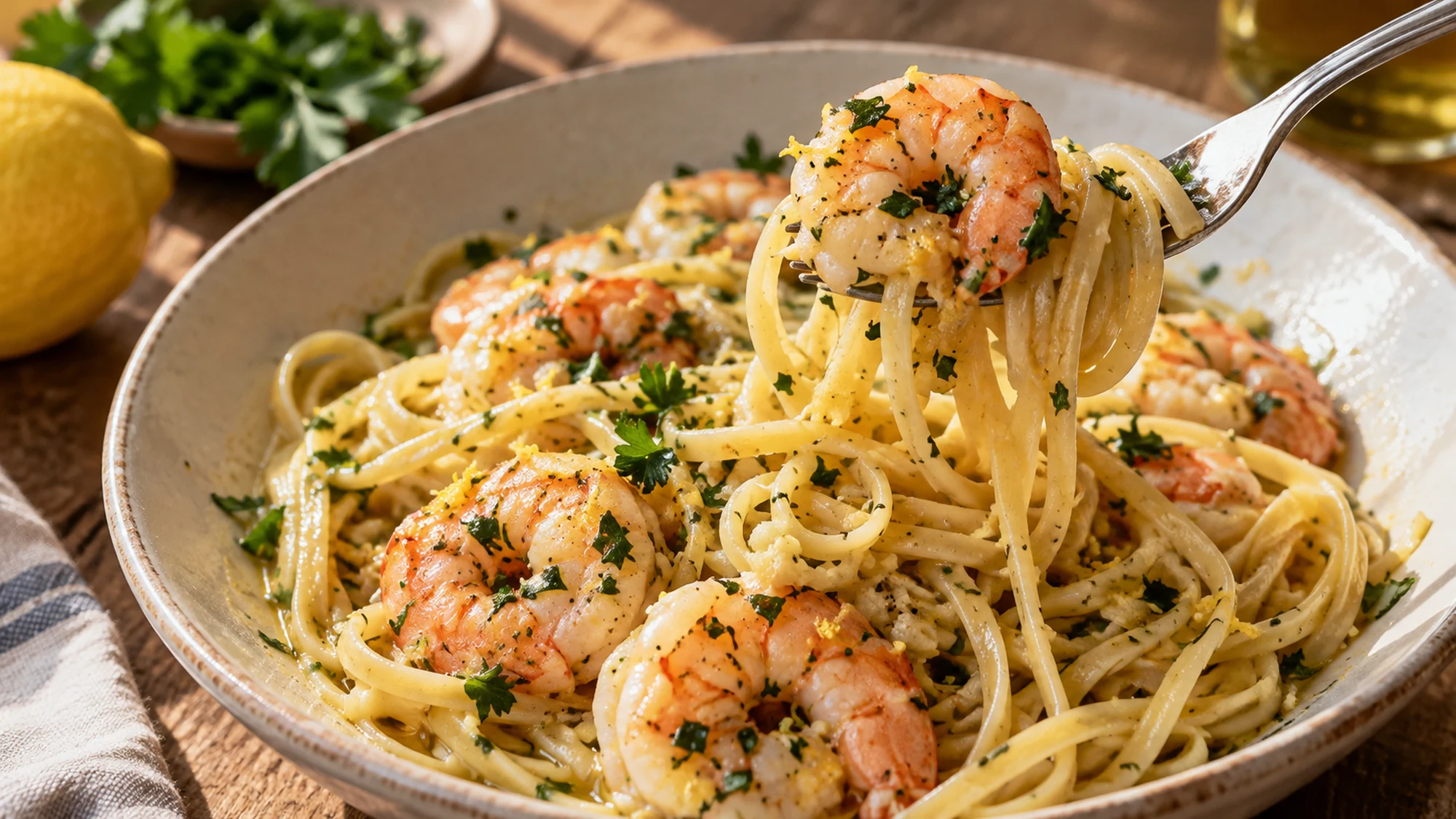
Variations
Dry white wine makes the sauce bright and aromatic. If you prefer to cook without it, use a measured amount of low-sodium broth and adjust the lemon juice after simmering. Broth changes the flavor, so taste rather than automatically adding more salt. Wine reduction does not guarantee that all alcohol disappears, which is another reason to use broth when needed.
Linguine is an easy partner, but spaghetti also catches the sauce well. A shorter pasta shape can work if that is what you have; drain it carefully and toss gently so the shrimp stay intact. For a wheat-free meal, choose labeled gluten-free pasta and watch its timing, since some varieties soften more quickly than wheat pasta.
- A small pinch of red pepper flakes adds warmth, but the base dish can stay mild.
- If the garlic starts turning dark, lower the heat immediately and add the liquid before it burns.
- I would use fresh lemon here: its zest adds aroma that bottled juice cannot supply.
- Add zest near the end so the fragrance stays noticeable when the pasta reaches the table.
Keep the garlic fragrant rather than dark, and loosen the sauce a splash at a time.
Health benefits
Shrimp provide protein, while pasta supplies energy and the butter-oil sauce contributes fat. The estimated serving is a substantial main dish, not a light snack. Portion size and butter quantity matter more than describing the meal with a broad diet label. A vegetable side can add fiber and crunch without changing the skillet recipe or its familiar lemon-garlic character.
Seafood needs a clear doneness check. Shrimp should be opaque throughout; a food thermometer should read 145°F where it can be inserted into the thickest portion. Size and starting temperature affect timing. The safe cooking temperature chart gives the seafood target, so use the recipe’s minutes as guidance and confirm the actual result.
- This recipe contains shellfish, wheat and dairy.
- Check labels when using a broth substitute or gluten-free pasta.
- Refrigerate leftovers promptly in a shallow covered container and reheat them thoroughly.
- Shrimp can become firm after repeated heating, so I prefer making an amount that will be eaten fresh.
- The leftover handling guide explains cooling and reheating.
Use the shrimp’s opaque center and safe temperature as the final check, rather than relying on the clock alone.
Get the skillet ready, then cook
The preparation is simple once everything is within reach: dry shrimp, hot skillet, fragrant garlic and a quick toss with the pasta. Save the cooking water and stop heating as soon as the shrimp are done. Finish with lemon and parsley, then serve while the sauce is glossy. Those small timing choices are what make a straightforward scampi supper feel well put together.
Scampi Recipe

Ingredients
- 12 ounces linguine or spaghetti
- 1 tablespoon kosher salt for pasta water
- 1 pound large shrimp peeled and deveined, thawed if frozen
- 4 tablespoons unsalted butter divided
- 1 tablespoon olive oil
- 4 cloves garlic finely minced
- 1/3 cup dry white wine
- 1/4 teaspoon red pepper flakes optional
- 1 teaspoon lemon zest
- 2 tablespoons fresh lemon juice
- 2 tablespoons chopped parsley
- 1/4 teaspoon black pepper
Equipment
- Large pot
- Large skillet
- Tongs
- Instant-read thermometer, optional
Instructions
- Bring a large pot of water to a boil, salt it and cook linguine until just al dente. Reserve 1/2 cup pasta water, then drain.
- Pat shrimp dry and season lightly with pepper. Thaw frozen shrimp in the refrigerator or under cold running water, then drain well.
- Heat olive oil and 2 tablespoons butter in a wide skillet over medium-high. Add shrimp in a single layer and cook about 1 to 2 minutes per side, until opaque and curled. Transfer to a plate; avoid crowding.
- Lower heat to medium. Add remaining butter, garlic and optional red pepper flakes; stir about 30 seconds until fragrant. Pour in wine and lemon juice, scrape up browned bits and simmer briefly.
- Return shrimp to the pan with linguine, lemon zest and parsley. Toss, adding pasta water if needed to gloss the noodles. Serve immediately with extra lemon.
Nutrition
Video
Notes
Tried this recipe?
Let us know how it turned out!Emily Parker is DISHORA’s recipe-writing persona, bringing a warm, practical voice to everyday cooking. Her focus is simple ingredients, comforting flavors and clear steps that make a dish feel approachable. From cozy dinners to something sweet, Emily’s recipes invite readers to try something delicious and make it their own.