
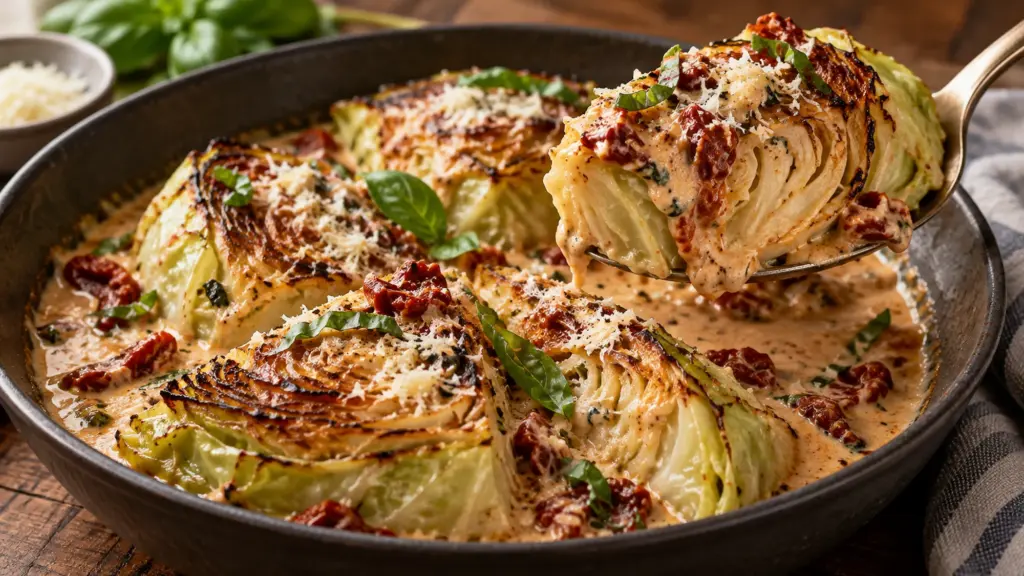
Marry me melting cabbage turns an inexpensive head of cabbage into something that feels special enough for company. The wedges start in a hot skillet, where their cut sides become deeply golden. Then they finish slowly in a creamy sun-dried tomato sauce until the leaves are silky and the core is tender enough to cut with a fork. Garlic, Parmesan, and basil bring the familiar savory flavor behind the “marry me” name.
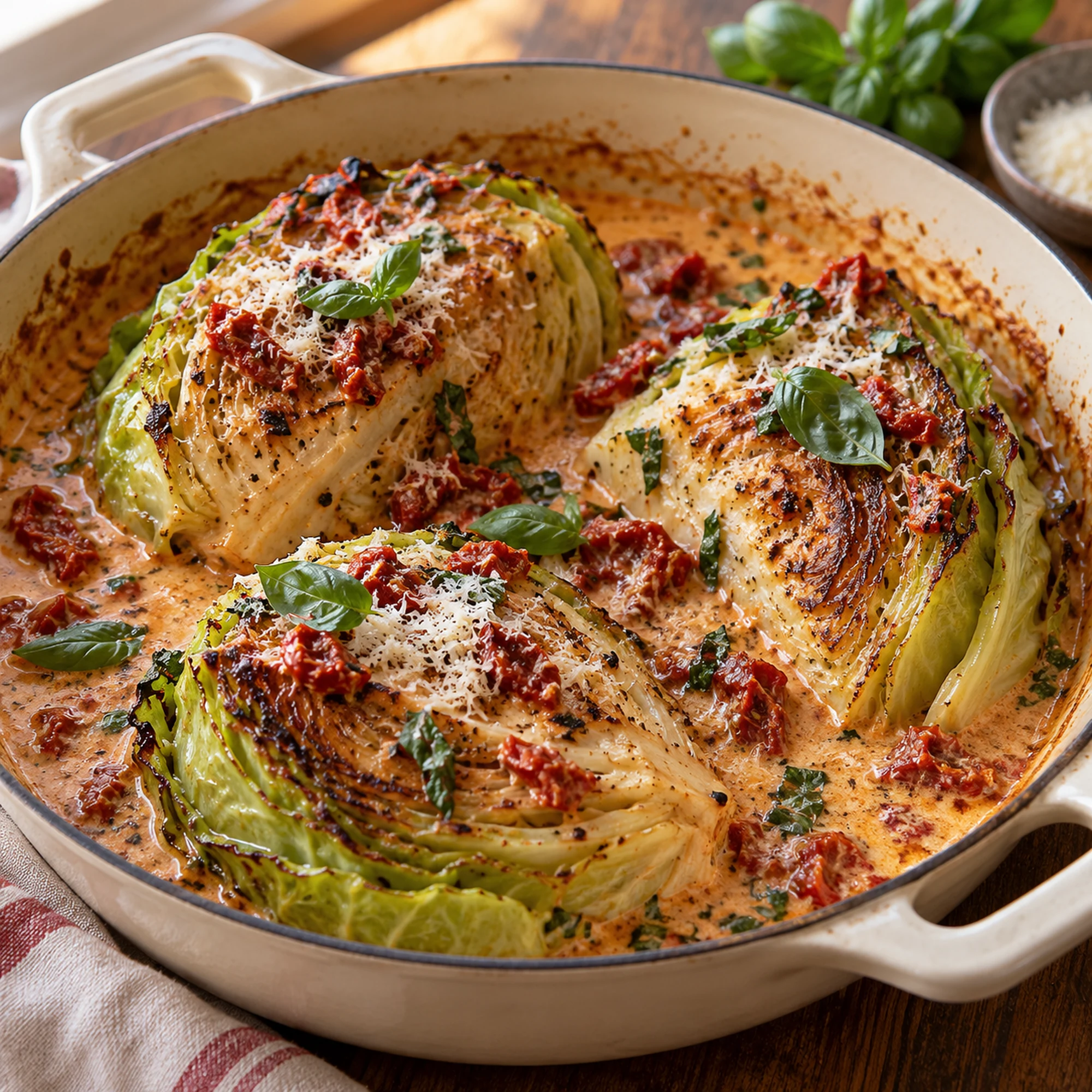
Use a small, firm green cabbage and cut straight through its core so each wedge holds together. A wide oven-safe skillet lets you brown the cabbage and bake it in the same pan. If yours is not oven-safe, move the browned wedges and sauce to a shallow baking dish. The full ingredient amounts and timing are in the recipe card below, but the key cue is simple: a knife should pass through the thickest wedge with little resistance.
Keep the core attached to each wedge so the cabbage stays neatly together while it softens.
Serving Suggestions
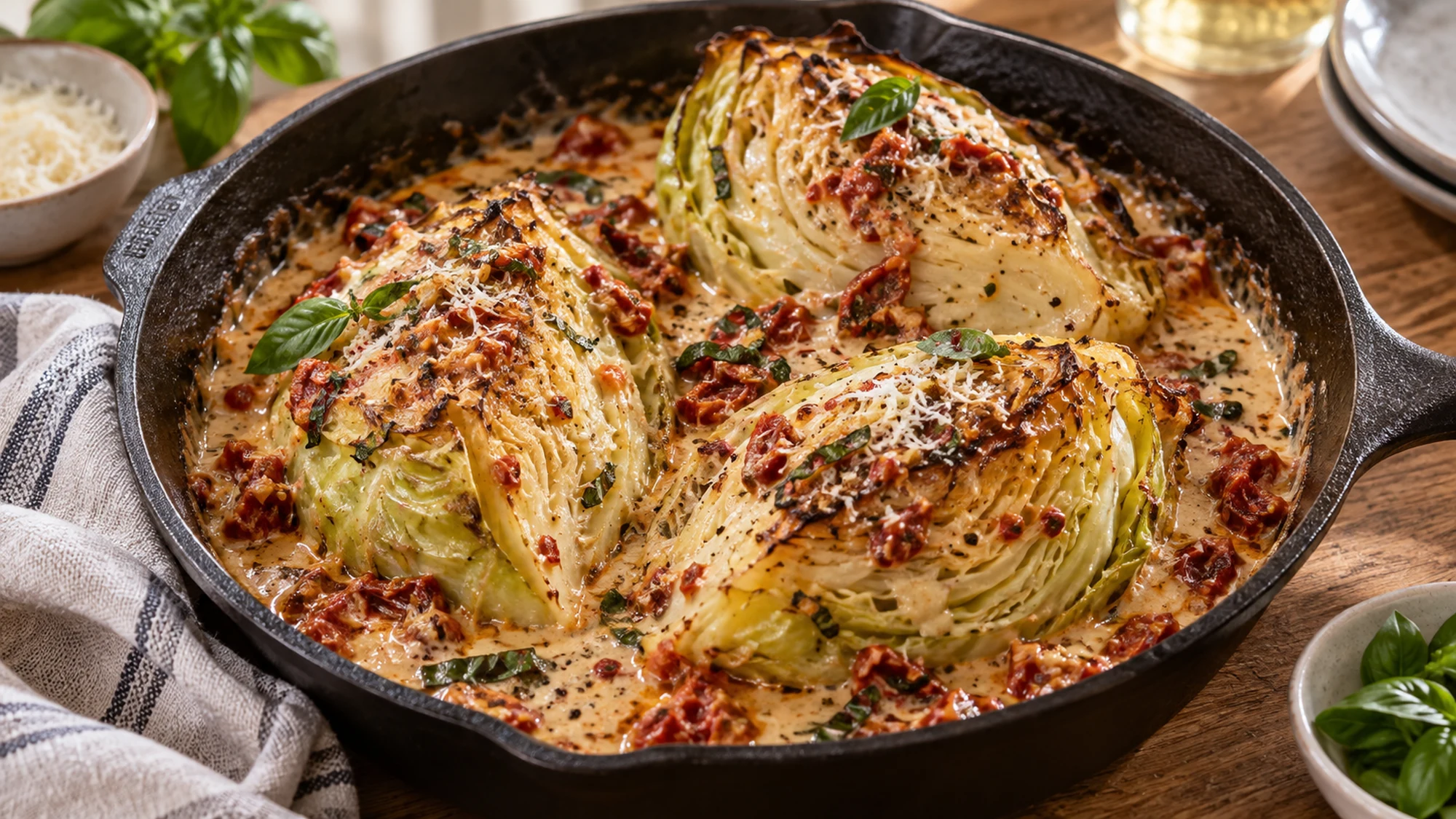
Spoon the warm sun-dried tomato cream over every wedge just before serving. The sauce settles between the leaves, so a little extra on the plate makes each bite richer. Fresh basil adds color and a welcome lift. You can serve two wedges per person as a generous side dish, or add a scoop of white beans to turn it into a light supper.
The creamy sauce is especially good next to roast chicken, grilled fish, or a simple grain such as farro. For another cabbage-centered meal, try Dishora’s cabbage and white bean skillet. A crisp salad also helps balance the richness. Put bread on the table if you want to catch the last of the sauce.
Let the pan rest for five minutes before serving. That short pause gives the wedges time to settle and the sauce a chance to thicken slightly. If the sauce looks too thick after resting, loosen it with a spoonful of warm broth. Taste before adding more salt because Parmesan and sun-dried tomatoes already bring a savory edge.
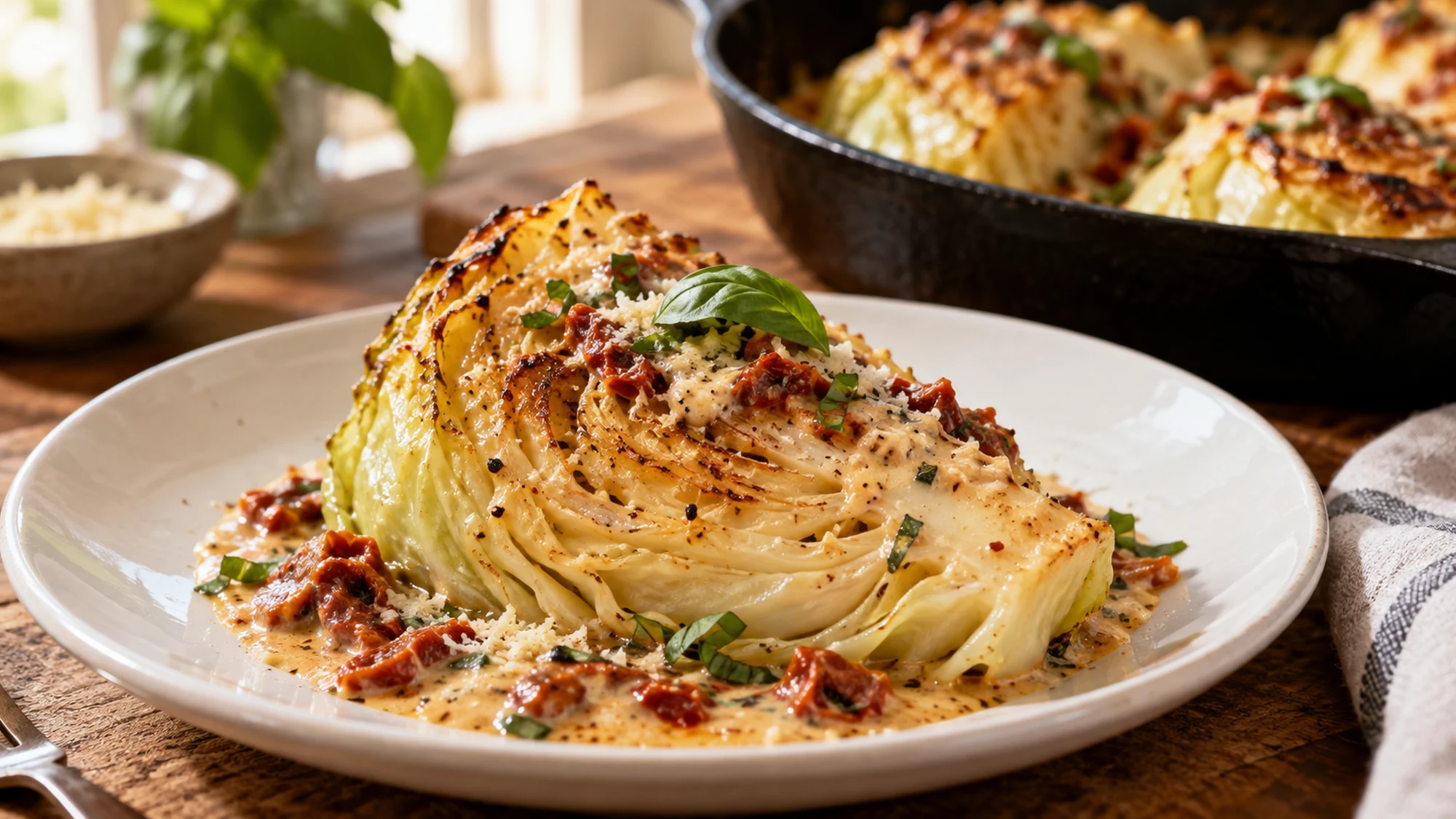
Serve the cabbage with a generous spoonful of sauce, not just what clings to the wedge.
Variations
For a lighter sauce, replace part of the cream with additional broth, then simmer it a little longer before baking. For a tangier finish, add a small squeeze of lemon at the table. If you like heat, stir in red pepper flakes while the sauce simmers. Each change should be modest so the cabbage and tomatoes remain the main flavors.
You can use a vegetarian Parmesan-style cheese if cooking for someone who avoids animal rennet. Check the label, because traditional Parmigiano-Reggiano is made with animal rennet. For a dairy-free version, use an unsweetened plant cream and omit the cream cheese and Parmesan; expect a thinner sauce and season it to taste. The dish will still benefit from the seared edges and sweet, slow-cooked cabbage.
Napa cabbage cooks more quickly and is less sturdy, so green cabbage is the better choice for wedges that keep their shape. If your cabbage is unusually large, increase the pan size or bake the wedges in two dishes; crowding makes it harder to brown them properly. Use a knife test rather than the clock to decide when they are done.
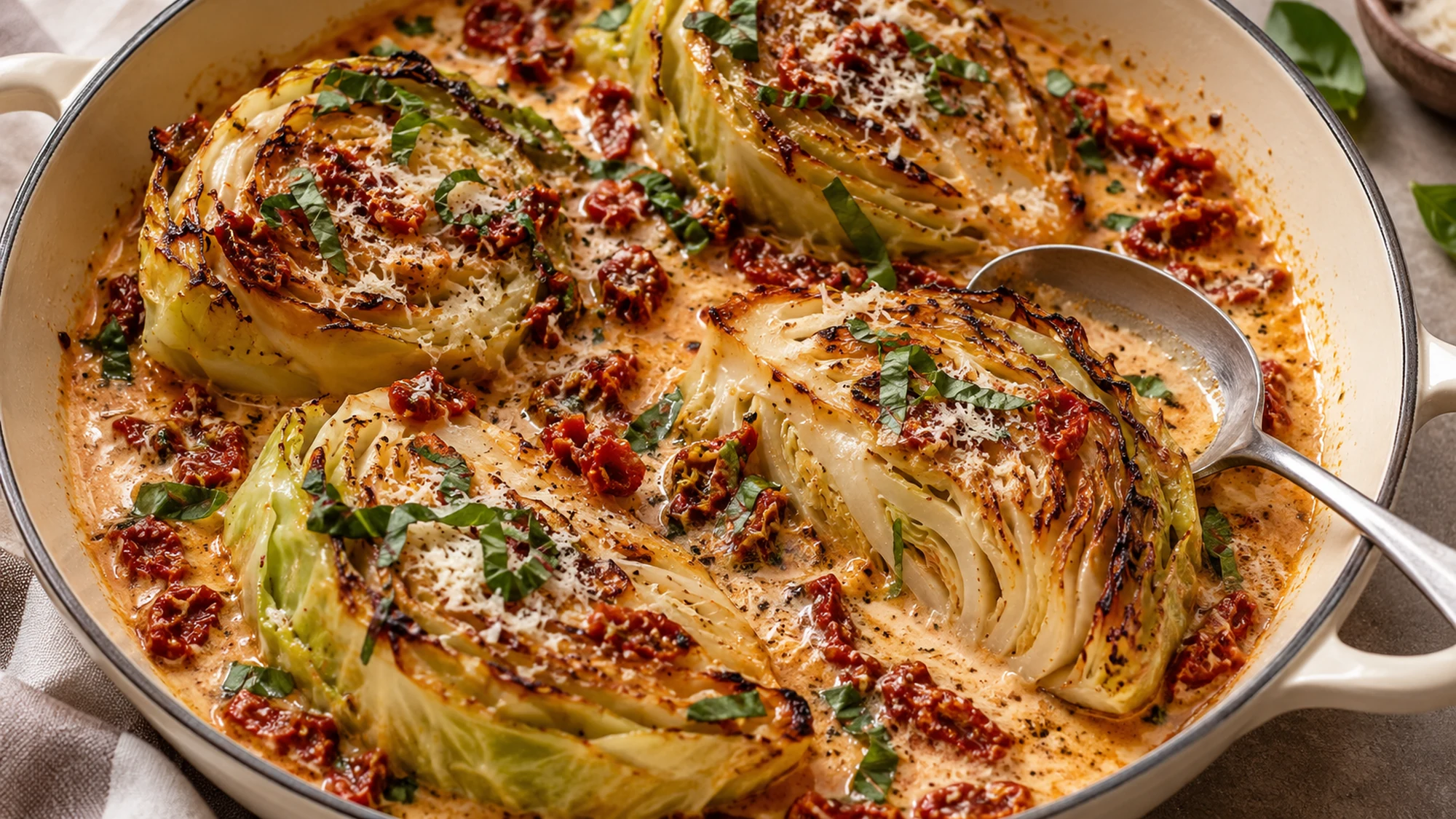
Let the cabbage size guide the cooking time; tender core matters more than a fixed minute mark.
Health Benefits and Practical Notes
Cabbage is a vegetable worth using beyond slaw. The USDA MyPlate vegetable guide includes green cabbage among the vegetables that can contribute to a varied eating pattern. This dish adds cream and cheese, so it is a richer way to enjoy it. The recipe card’s nutrition numbers are estimates and will vary with the brands and amounts you use.
Refrigerate leftovers promptly in a shallow covered container and enjoy them within three to four days, following FoodSafety.gov’s storage guidance. Reheat gently in a covered skillet with a splash of broth until hot throughout. The sauce may look thick after chilling, but it loosens as it warms. Avoid boiling it hard, which can make a cream sauce separate.
A good leftover portion should reheat tender and saucy; add broth before reaching for more cream.
Why This Cabbage Deserves a Place at the Table
This is a useful recipe when you want a vegetable dish with the comfort of a casserole and the ease of one pan. Browning first builds flavor, then the oven does the slow work. Put it beside an everyday dinner or make it the centerpiece with beans and bread. Either way, the cabbage gets the attention it deserves.
Marry Me Melting Cabbage Recipe

Ingredients
- 1 small head green cabbage 2–2½ lb; cut through core into 8 wedges
- 2 tbsp oil from a sun-dried tomato jar or olive oil
- 1/2 tsp kosher salt plus more to taste
- 1/4 tsp black pepper
- 3 garlic cloves minced
- 1 tbsp tomato paste
- 1/3 cup oil-packed sun-dried tomatoes chopped
- 1 1/2 cups low-sodium vegetable broth
- 1/2 cup heavy cream
- 2 oz cream cheese softened
- 1 tsp Italian seasoning
- 1 pinch red pepper flakes optional
- 1/2 cup finely grated Parmesan choose vegetarian Parmesan if needed
- 2 tbsp fresh basil chopped, for serving
Equipment
- Large oven-safe skillet A shallow baking dish also works after searing.
- Tongs
- Whisk
Instructions
- Heat oven to 350°F. Trim any ragged outer leaves and cut the cabbage through the core into 8 wedges, leaving enough core on each wedge to hold it together.
- Heat the tomato oil in a large oven-safe skillet over medium-high heat. Season cabbage with salt and pepper. Sear the wedges in batches, about 3–4 minutes on each cut side, until browned. Transfer to a plate.
- Reduce heat to medium. Cook garlic and tomato paste for about 1 minute, then stir in sun-dried tomatoes, broth, cream, cream cheese, Italian seasoning, and optional pepper flakes. Whisk until smooth and gently simmering. Stir in Parmesan off the heat.
- Nestle cabbage wedges back into the sauce in a single layer. Cover and bake for 50–60 minutes, basting halfway through, until a knife passes through the thickest core area with little resistance.
- Let stand 5 minutes. Spoon sauce over the wedges and scatter basil on top. Taste and adjust salt before serving.
Nutrition
Video
Notes
Tried this recipe?
Let us know how it turned out!Emily Parker is DISHORA’s recipe-writing persona, bringing a warm, practical voice to everyday cooking. Her focus is simple ingredients, comforting flavors and clear steps that make a dish feel approachable. From cozy dinners to something sweet, Emily’s recipes invite readers to try something delicious and make it their own.