
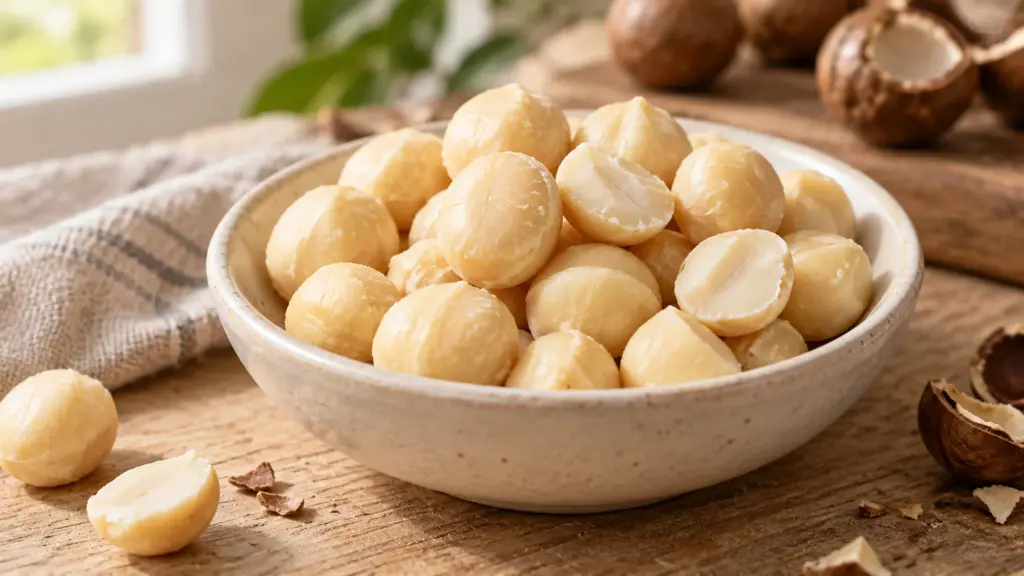
A bag of macadamia nuts can look like a special-occasion purchase until you notice how little chopping it takes to turn a few kernels into a useful topping. Their pale color, rounded shape and rich, gently sweet flavor make them easy to recognize. The more useful shopping question is whether you want them plain, roasted or coated.
Macadamia nuts are rich, creamy tree nuts that provide mostly unsaturated fat. Choose the form for your meal, compare the actual package label and store the opened bag carefully. Their nutrition can fit a varied diet; it does not make them a treatment or a weight-loss shortcut.
I’d buy a small plain bag first. It gives you more flexibility than a strongly flavored coating, and you can decide whether you prefer the softer bite of plain kernels or a roasted crunch.
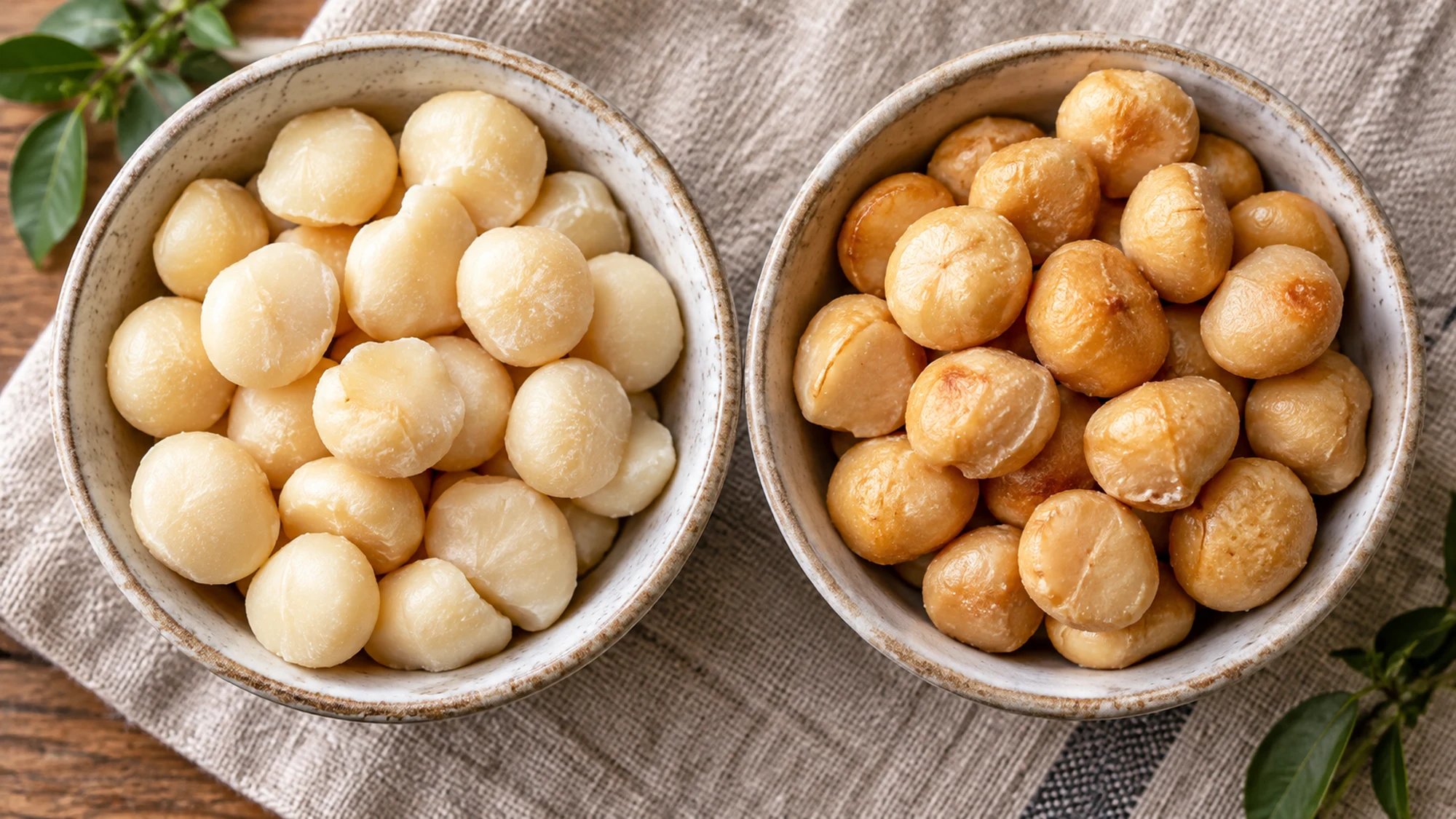
Choose macadamia nuts for the way you will use them
Whole kernels make a tidy snack or a visible garnish. Pieces are often more practical when you plan to chop them anyway, so compare price by weight rather than assuming the neatest-looking bag is the best value. There is no prize for buying whole nuts only to immediately turn them into crumbs.
| Form | Useful for | Check first |
|---|---|---|
| Plain kernels | Snacking, chopping or blending | Freshness and portion size |
| Roasted, salted | A savory finishing crunch | Sodium and added oil |
| Chopped pieces | Salads, oatmeal and baking | Price per ounce and freshness |
| Sweet-coated | A candy-like snack or topping | Added sugar and other allergens |
Read the ingredient list alongside the Nutrition Facts panel. Salt, sweet coatings and added oils change what is in the bag. Compare the same serving weight across packages; a smaller listed portion can make a product look lighter without changing the food itself.
What their nutrition and health research can tell you
Macadamias contain substantial fat, much of it monounsaturated. That is useful nutritional context, but a food’s nutrient profile and its demonstrated effects on disease are different questions. They are also energy-dense, so serving them in a small bowl makes the amount easier to judge than eating directly from a large bag.
The FDA’s qualified heart-health claim is based on limited evidence, rather than conclusive proof. It concerns 1.5 ounces daily within an overall diet low in saturated fat and cholesterol, without increasing calories or saturated fat. That context matters more than turning the stated amount into a universal daily prescription.
- A 2023 randomized crossover trial followed 35 adults with abdominal obesity during eight-week periods with and without macadamias.
- Average changes in weight, blood sugar measures and cholesterol were not statistically significant in that trial.
- A short trial in one selected group cannot establish long-term disease prevention or promise the same response for every reader.
I’d give macadamias a food job first: flavor, richness and crunch. Enjoying those qualities does not require a claim that the nuts will fix a health problem.
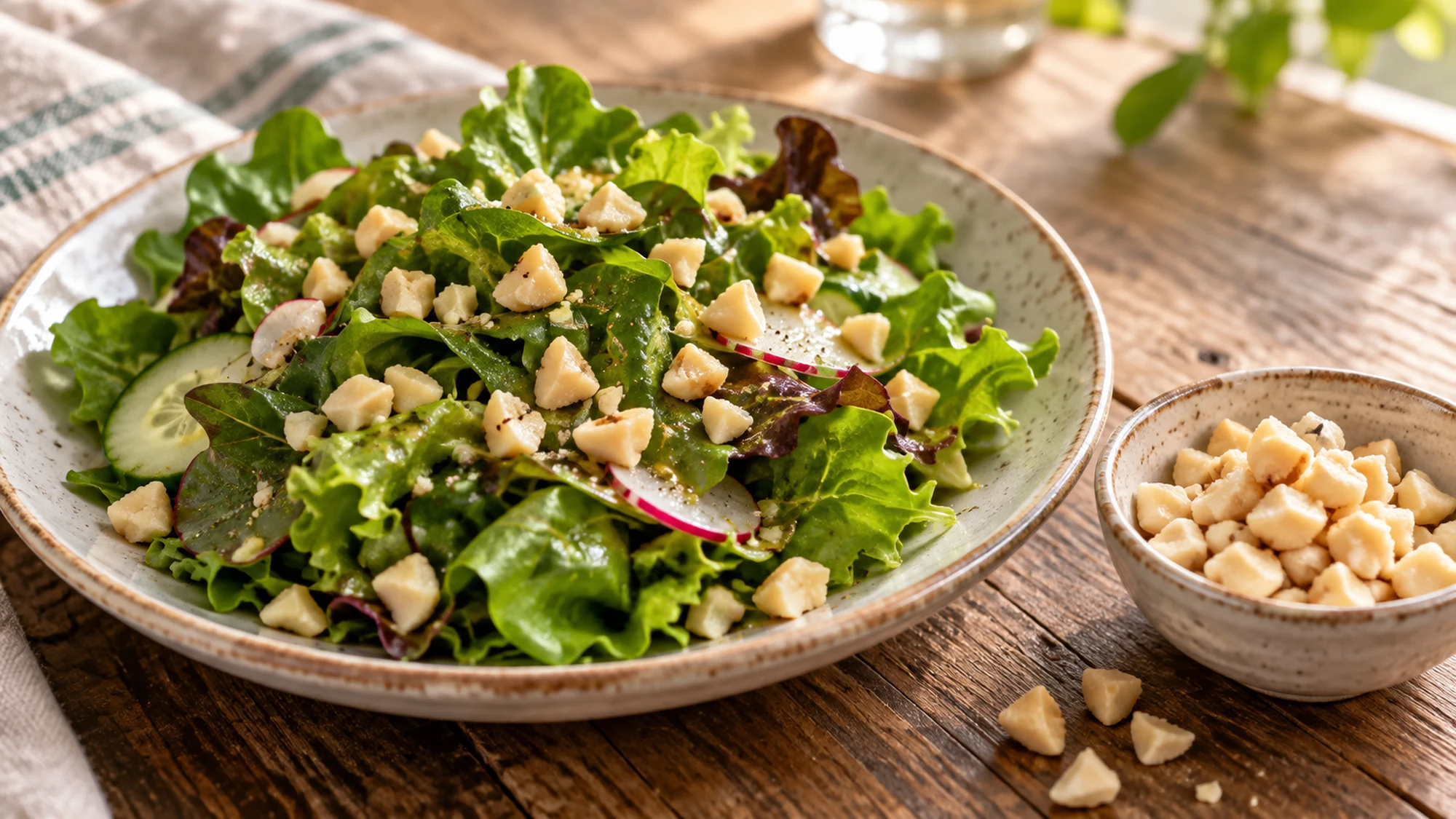
Use a little richness where it makes a difference
A rough chop spreads the kernels through more bites, which is useful when they are a topping rather than the main ingredient. Keep some pieces larger so the texture remains noticeable. A fine powder disappears more readily into a thick mixture; that may suit a sauce, but it changes the effect on a salad.
- Scatter chopped pieces over oatmeal or plain yogurt with fruit for contrasting textures.
- Add a small amount to leafy greens or roasted vegetables just before serving to keep the crunch distinct.
- Use a recipe written for macadamias when baking; replacing another nut may change flavor, texture and how the dough behaves.
For breakfast inspiration, our pumpkin cottage cheese baked oatmeal shows how a nut topping contrasts with soft oats. That recipe uses pecans; macadamias would be a variation, rather than the tested or specified version.
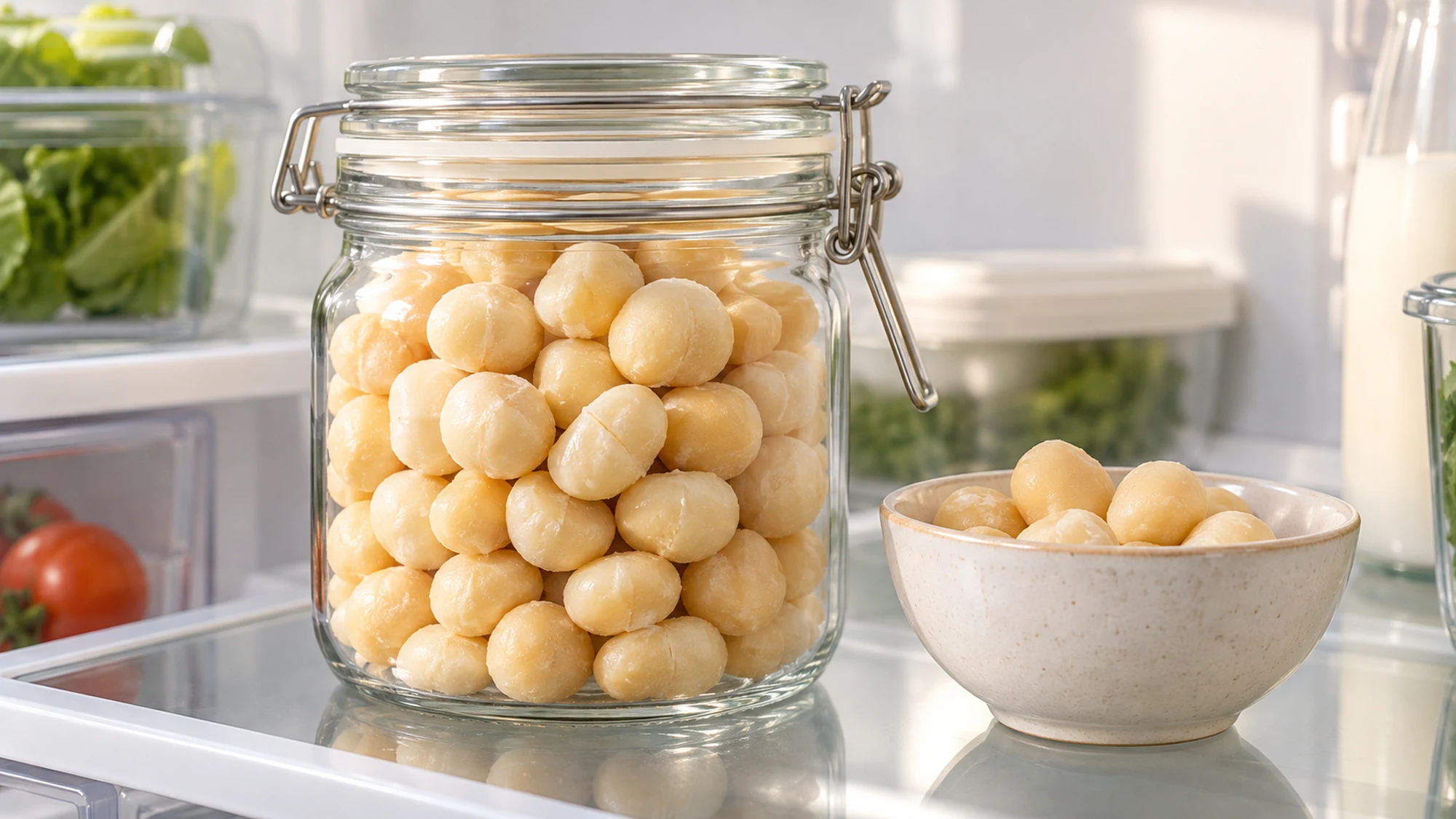
Protect the opened nuts from heat and air
UC Master Food Preserver storage guidance explains that oxygen and warmth encourage the fats in nuts to become rancid. Use a tightly closed container and keep it away from a hot stove or sunny counter. Refrigerating or freezing shelled nuts can help retain quality during longer storage.
- Keep the package instructions and date with the nuts if you transfer them to a jar.
- Buy an amount that suits how often you use them; a bargain bag is less helpful if much of it deteriorates.
- Discard nuts with mold or a clearly rancid, stale-oil smell. Toasting is not a way to rescue spoiled food.
Check allergies before sharing the bowl
Macadamias are tree nuts, so they are unsuitable for someone allergic to them. The FDA explains food-allergen labeling and cross-contact; read both the ingredients and any advisory statements. A missing “may contain” warning does not itself establish that a product is free from cross-contact.
I’d ask about allergies before adding a nut garnish to a shared dish, and keep the nuts separate when guests need that choice. For everyday use, choose a form you enjoy, portion it deliberately and close the bag well. Those small decisions are more useful than expecting one ingredient to transform the whole meal.
Sources
- FDA: qualified claim for macadamias and heart health.
- Macadamia nut cardiometabolic trial, 2023.
- UC Master Food Preserver: storing nuts.
- FDA: food allergies and labels.

Emily Parker is DISHORA’s recipe-writing persona, bringing a warm, practical voice to everyday cooking. Her focus is simple ingredients, comforting flavors and clear steps that make a dish feel approachable. From cozy dinners to something sweet, Emily’s recipes invite readers to try something delicious and make it their own.