
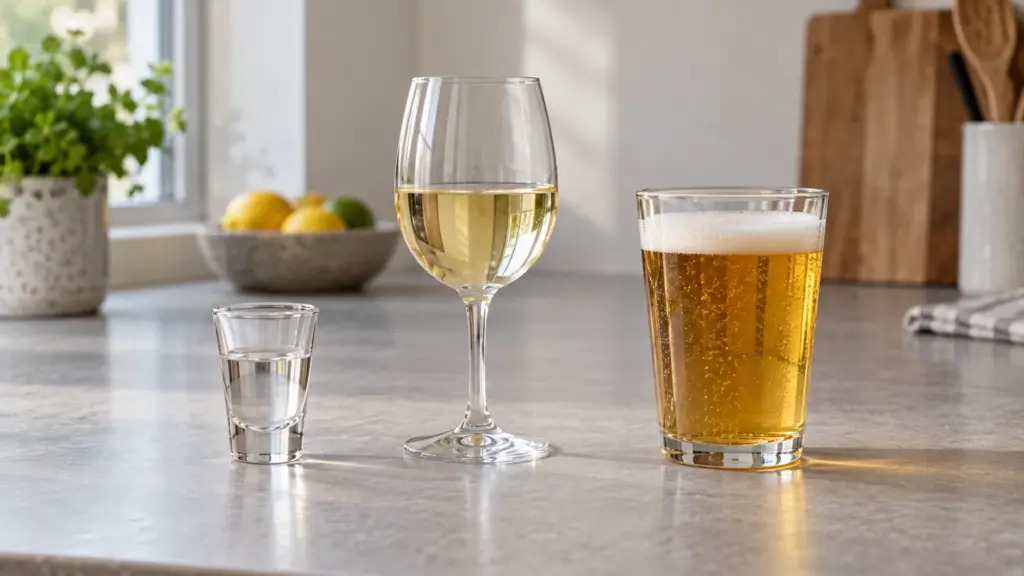
A short glass can hold more alcohol than a tall one, and a “light” label can leave plenty of questions unanswered. If you are comparing the lowest calorie alcohol, begin with the amount poured and its alcohol by volume, or ABV. The bottle’s color is a distraction.
There is no universal lowest-calorie alcoholic drink without specifying the serving, strength and other ingredients. A small measured spirit can contain fewer total calories than a larger beer; a genuinely lower-alcohol product can contain less still. Fewer calories do not make alcohol safer.
Why the lowest calorie alcohol depends on the serving
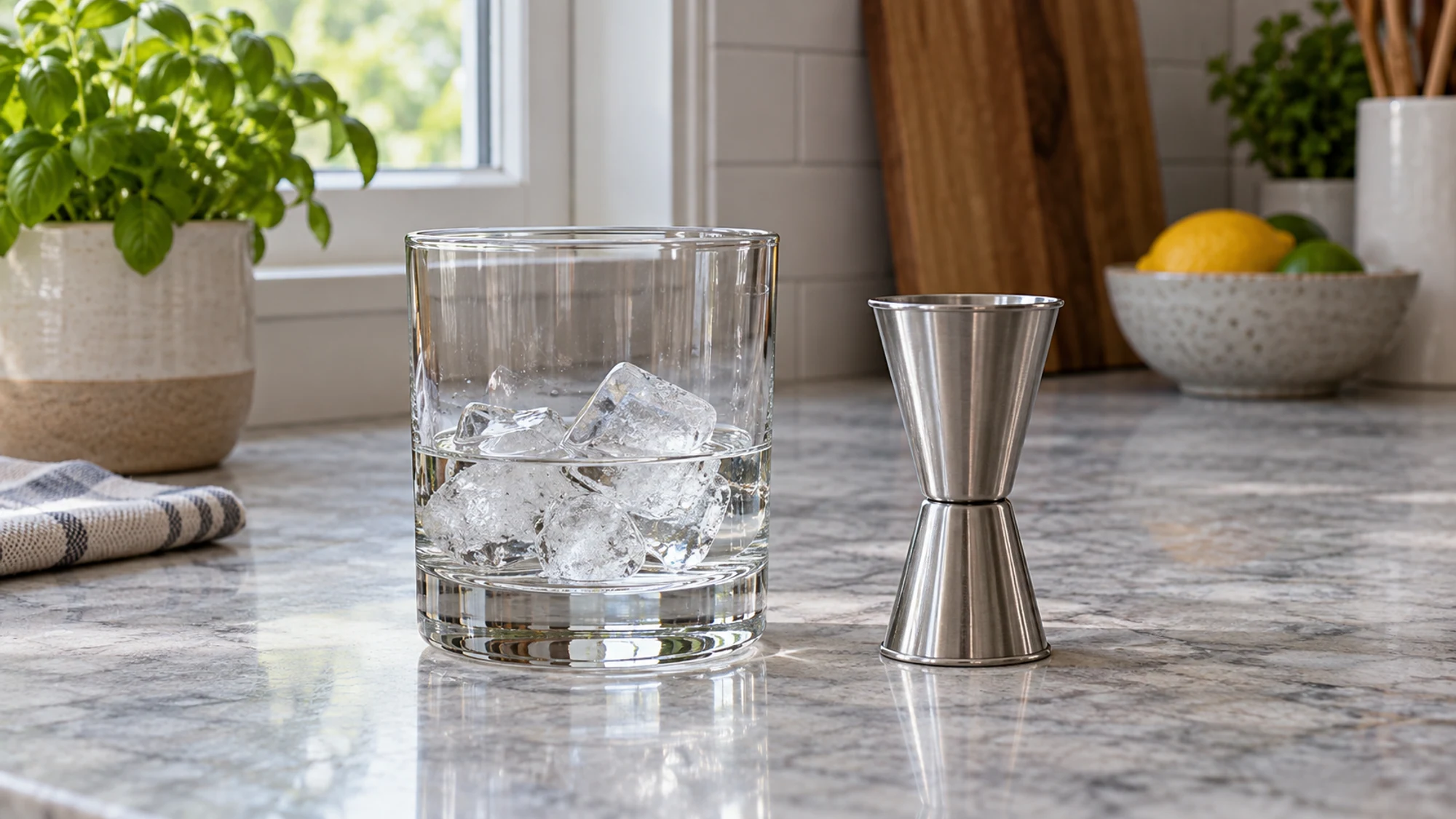
Alcohol itself supplies energy, even when a drink contains no sugar. MedlinePlus gives about 7 calories per gram of alcohol. That means a sugar-free drink can still have substantial calories; carbohydrate is only part of the calculation.
For this comparison, I would separate two questions: how much energy is in the whole serving, and how much alcohol is in it? A lower number can simply reflect less alcohol, a smaller portion, or both. It does not establish a special advantage for vodka, tequila or any other spirit.
A like-for-like look at alcohol content
NIAAA defines a U.S. standard drink as about 14 grams of pure alcohol. Its examples are 12 fluid ounces of 5% beer, 5 fluid ounces of 12% wine, or 1.5 fluid ounces of 40% spirits. These very different-looking servings contain roughly the same alcohol.
| Drink and serving | ABV | Alcohol-only calories |
|---|---|---|
| Beer, 12 U.S. fl oz | 5% | About 98 |
| Wine, 5 U.S. fl oz | 12% | About 98 |
| Unflavored spirit, 1.5 U.S. fl oz | 40% | About 98 |
| Beer, 12 U.S. fl oz | 4.2% | About 82 |
| Unflavored spirit, 1 U.S. fl oz | 40% | About 65 |
These are calculations, not total drink calories or product tests. They use NIAAA’s approximate standard-drink amounts, scaled by serving and ABV, multiplied by 7 calories per gram. Carbohydrate, sugar and other ingredients add energy; rounding and product differences also matter. Use the actual label or manufacturer’s information for a specific drink.
What changes the comparison in the glass
Two plain spirits served at the same volume and ABV have similar energy from alcohol. Clear does not automatically mean lower calorie, and a dark spirit does not automatically contain added sugar. Flavored spirits, cream liqueurs and ready-to-drink cocktails need their own label check.
Dishora’s mezcal versus tequila guide explores a different distinction: production and flavor. Those differences do not replace measuring the pour. I would choose a flavor for its taste, while using the strength and serving information for the numerical comparison.
- A double changes the alcohol quantity, even if the same glass is used.
- A bigger wine glass is not a reliable serving measure.
- Ice and plain soda water dilute a drink; they do not remove alcohol already poured.
- A low-sugar mixer does not make a large spirit serving low in alcohol.
Mixers and labels deserve a separate check
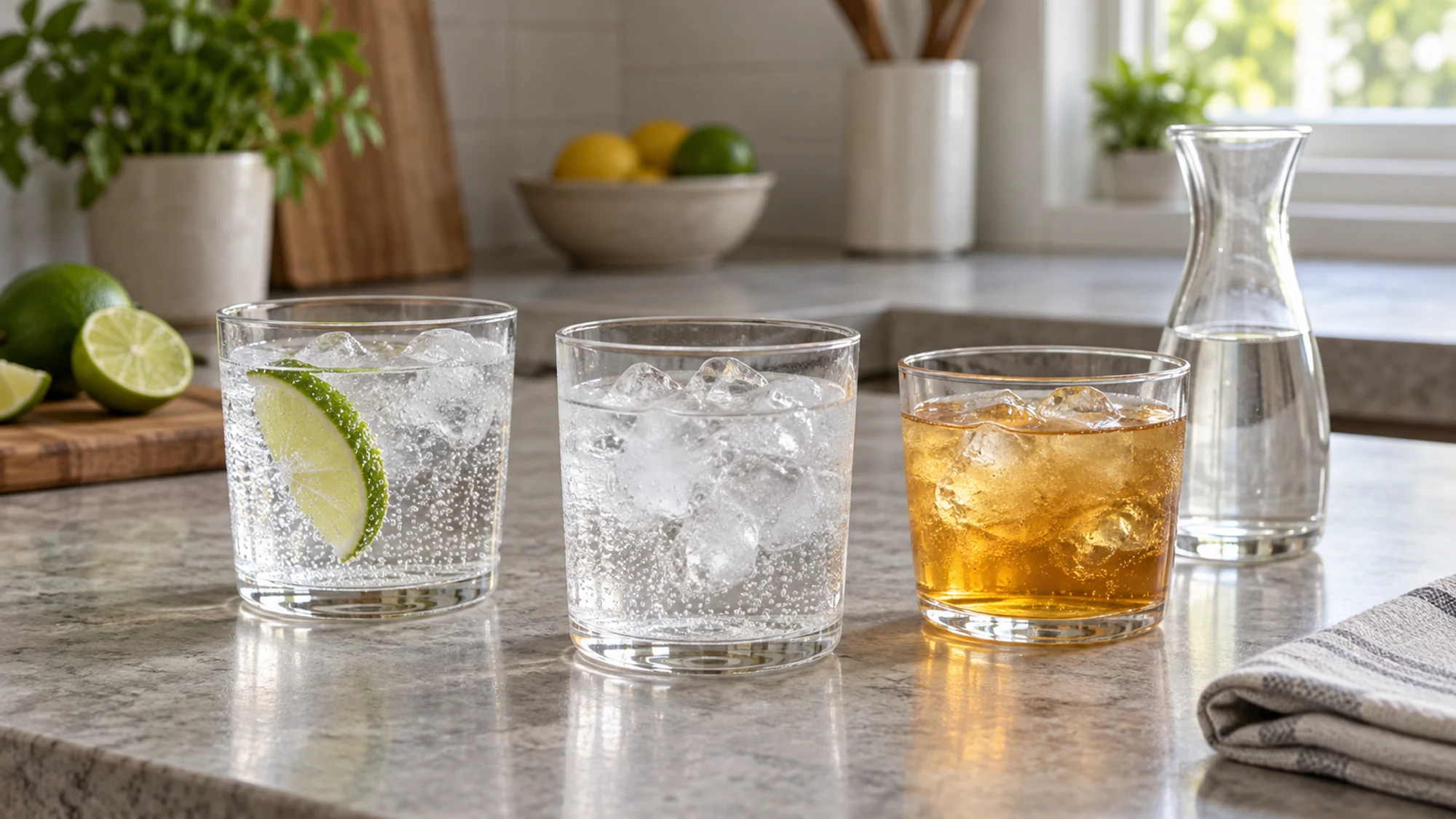
Syrups, juice, regular soda and liqueurs can add calories to the base drink. Plain sparkling water contributes no sugar, but tonic water and soda water are different products: check the label rather than treating the names as interchangeable.
For canned drinks, read both the can volume and ABV. NIAAA notes that some light beers are around 4.2% ABV compared with 5% for a regular beer, so “light” need not mean a large reduction in alcohol. A small can with a strong percentage can also contain more than one standard drink.
- Record the full container size rather than the amount pictured on a menu.
- Check whether nutrition information is for one serving or the entire container.
- Include every mixer and measure added at home.
- Use NIAAA’s alcohol calorie calculator as an estimate, not a guarantee for a custom cocktail.
Compare the complete drink you will actually have: serving size, ABV and additions. A front-label claim cannot do that work on its own.
Keep the calorie question in perspective
This is an explanation of drink composition, not a reason to begin drinking or a weight-loss recommendation. The CDC says drinking less lowers alcohol-related health risks; a low-calorie alcoholic drink still carries alcohol-related risks.
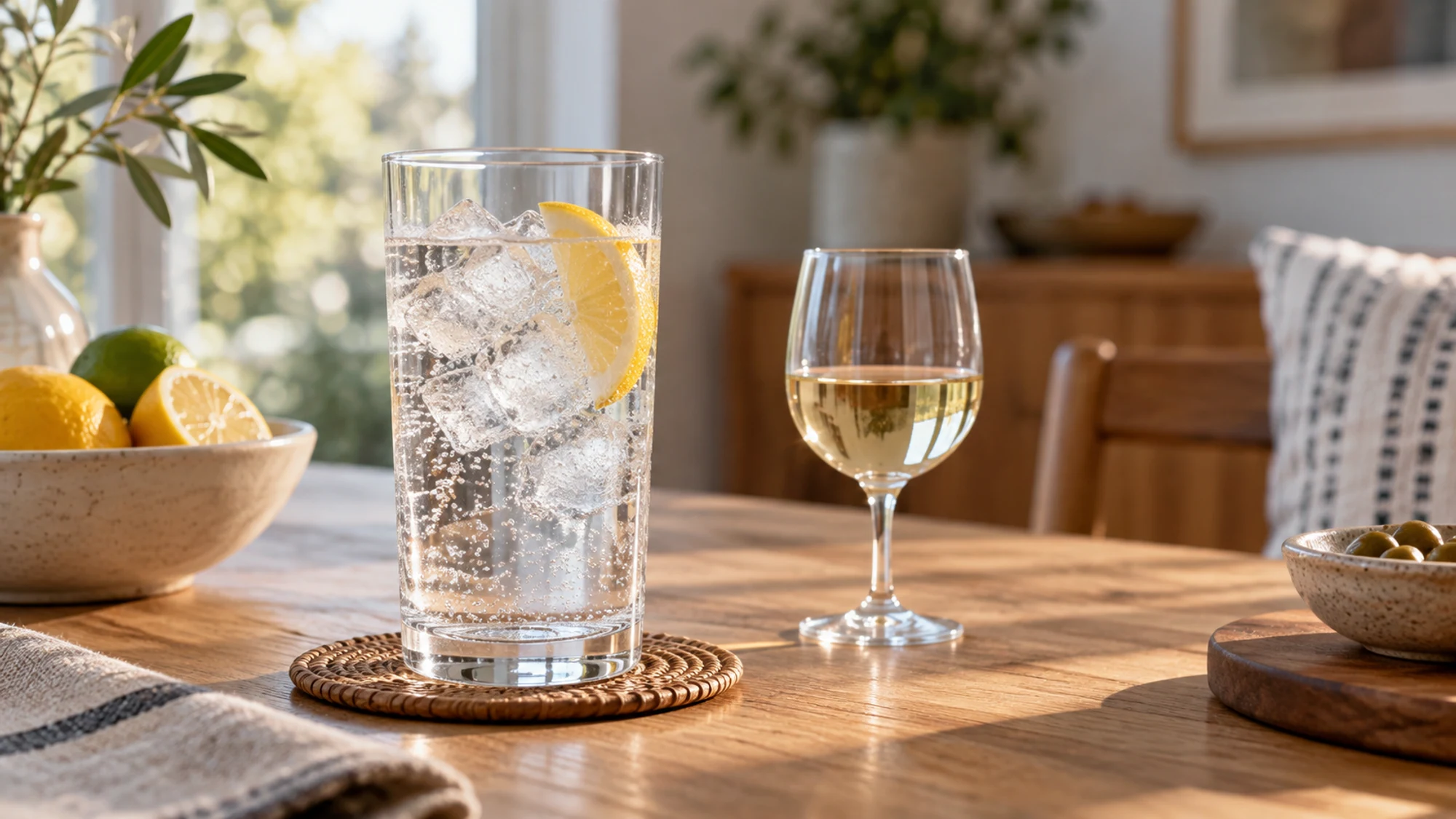
An alcohol-free choice can be the straightforward option. Sparkling water with citrus offers a crisp drink without alcohol, while packaged alcohol-free beverages vary in calories and may contain a small amount of alcohol. Check their labels too, especially when you need to avoid alcohol completely. Avoid alcohol during pregnancy and before driving, and follow medical advice about conditions or medicines that make drinking unsuitable.
The useful takeaway is a better comparison, not a winning bottle: measure the amount, read the strength and count the additions. Choosing not to drink is always a valid option.
Sources
- MedlinePlus: alcohol calories and portions
- NIAAA: what counts as a standard drink
- NIAAA: alcohol calorie calculator
- CDC: alcohol use and health

Emily Parker is DISHORA’s recipe-writing persona, bringing a warm, practical voice to everyday cooking. Her focus is simple ingredients, comforting flavors and clear steps that make a dish feel approachable. From cozy dinners to something sweet, Emily’s recipes invite readers to try something delicious and make it their own.