
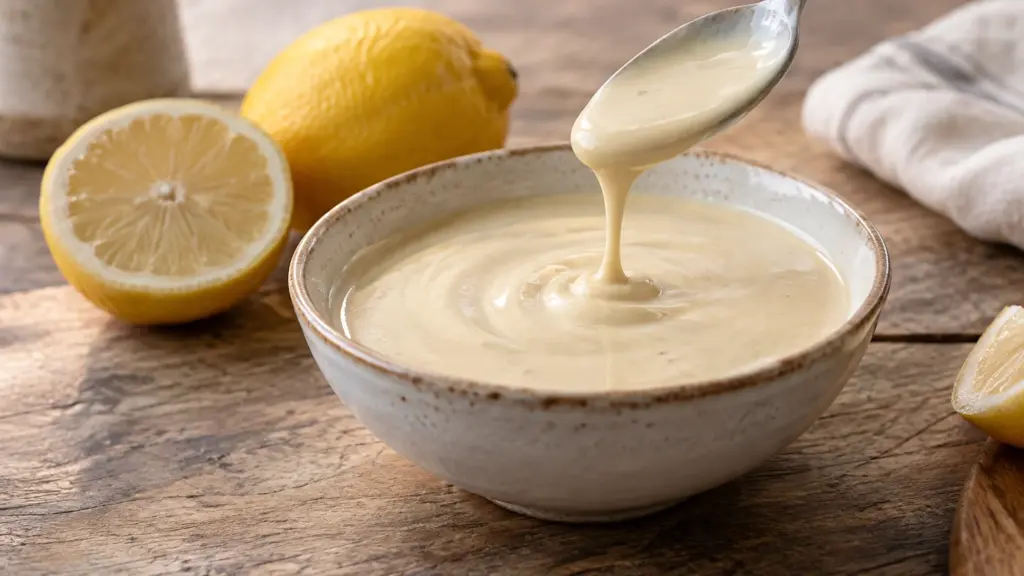
A bowl of roasted vegetables can be lovely and still need something to bring the plate together. Lemon tahini sauce offers that finishing touch: nutty sesame flavor, a clean citrus edge and a texture that moves easily from spoon to vegetables. It needs no stove and no blender, just a bowl and a whisk.
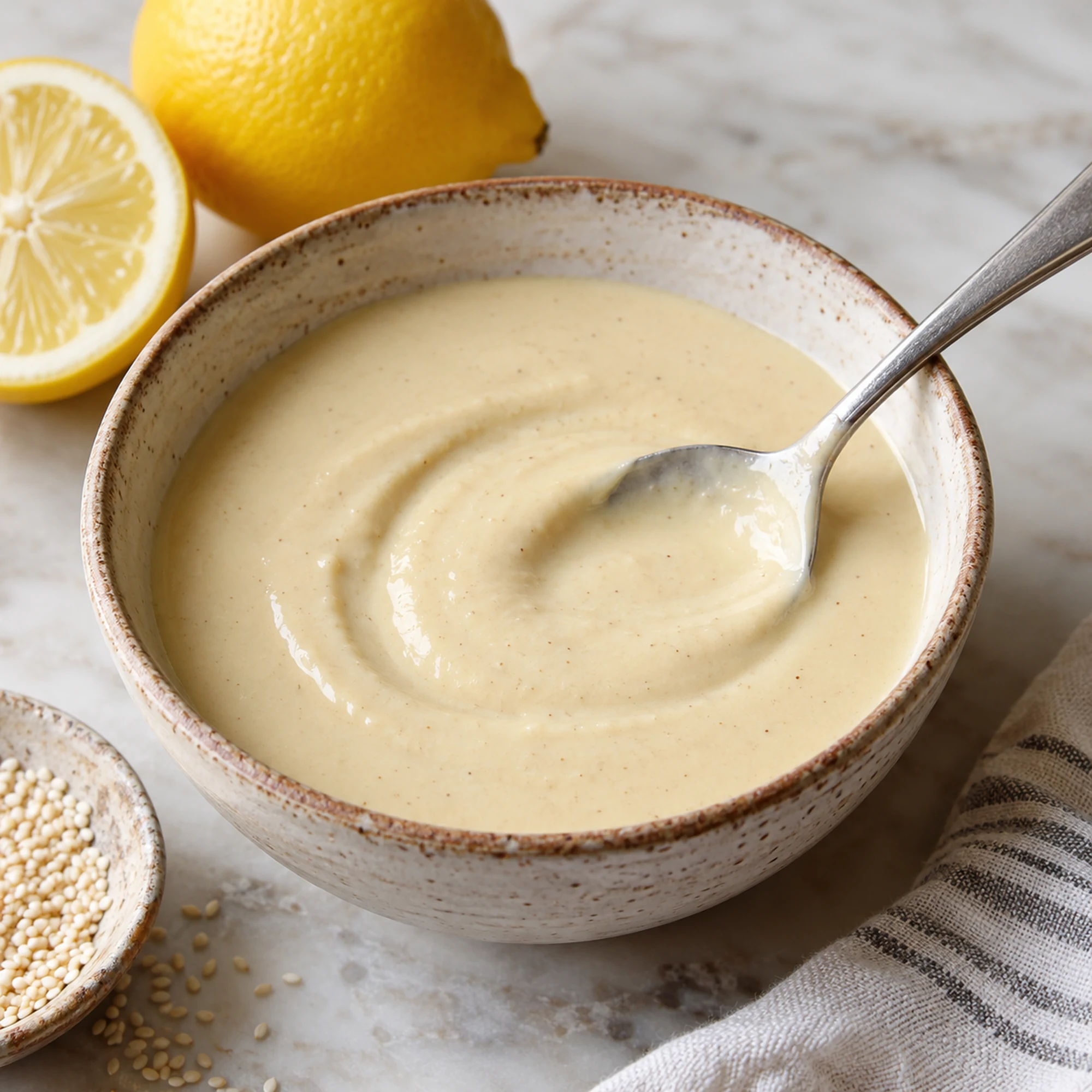
Tahini may thicken when lemon hits it; cold water and steady whisking bring back a silky texture.
That temporary thickening can look alarming if you have not seen it before. Keep whisking and add water gradually instead of reaching for more oil. Start with tahini that has been thoroughly stirred in its jar, including the thick paste at the bottom. I prefer a smooth, pourable tahini made from hulled sesame seeds because it gives this sauce a mild, rounded flavor. A grainy or unusually bitter jar will bring those qualities into the finished bowl.
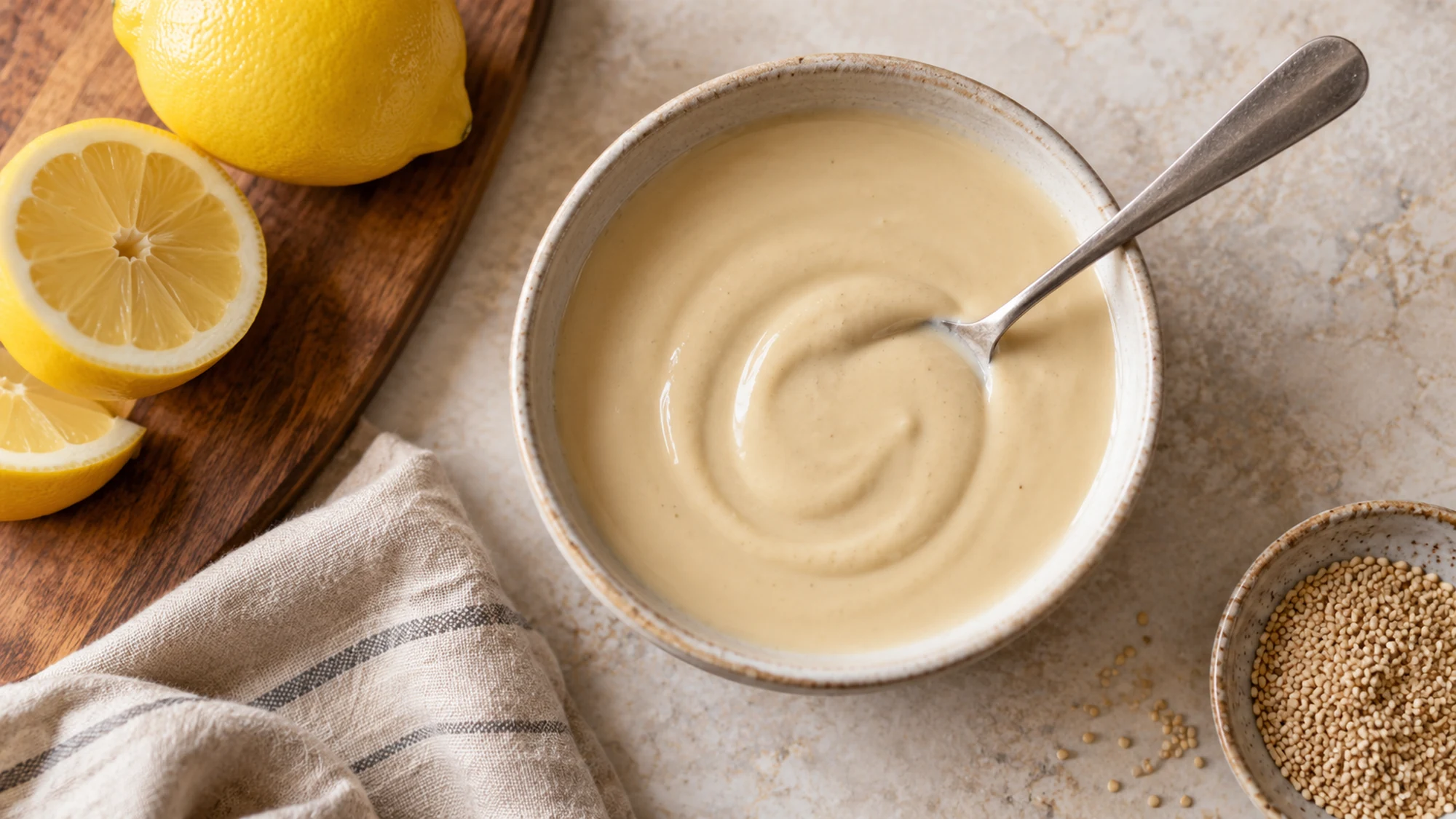
Where Lemon Tahini Sauce Earns Its Place
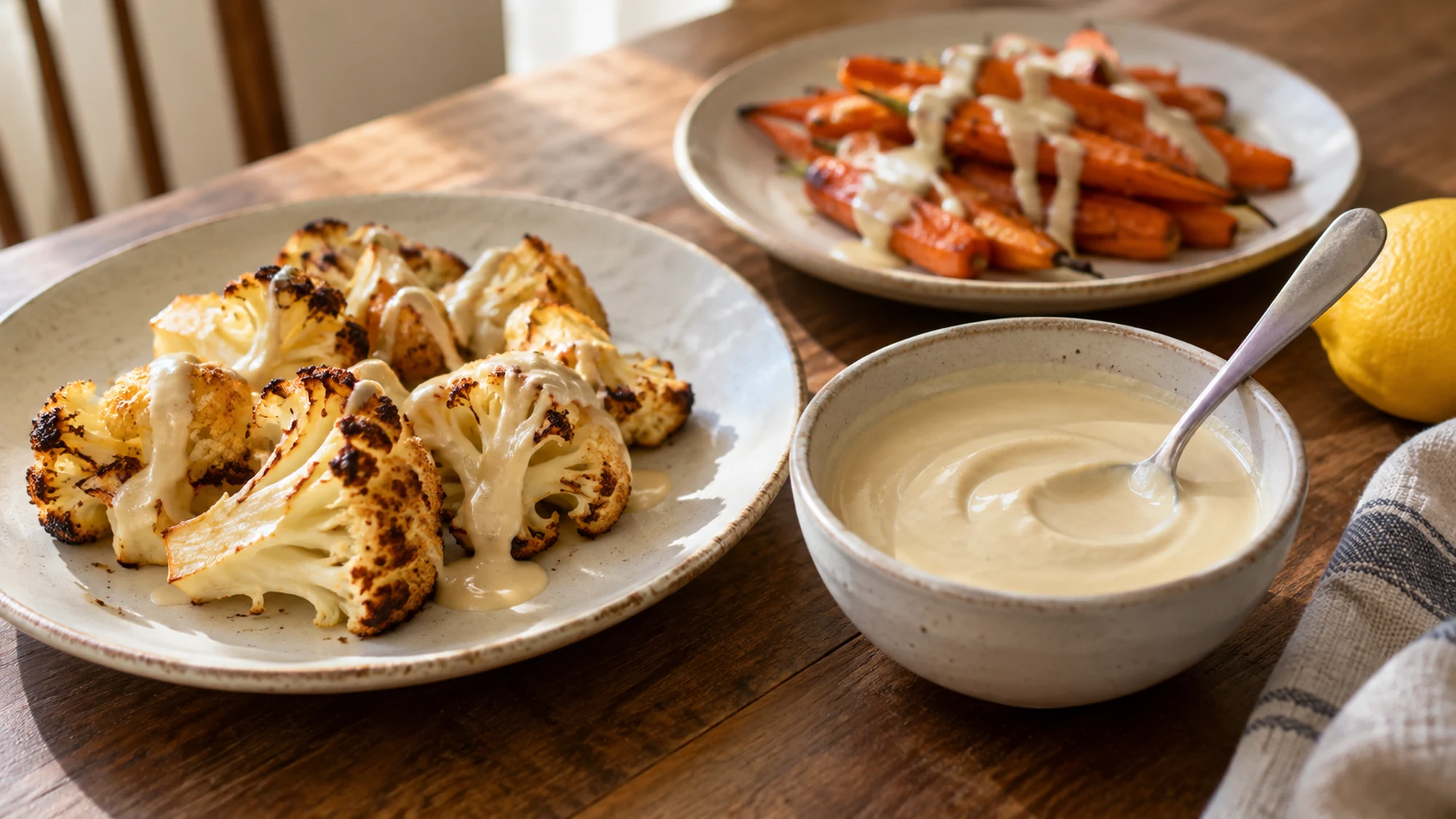
The finished sauce should fall from a spoon in a slow ribbon. Spoon it over roasted carrots, cauliflower or a warm grain bowl, or spread a little inside a wrap before adding the filling. Its lemony character also works beside falafel and cooked beans. A little sauce can also finish the cabbage and white bean skillet.
- Use a thicker consistency as a dip for crisp vegetables.
- Add a little cold water for a drizzle over grain bowls.
- Serve a small bowl alongside roasted vegetables for individual portions.
- Stir refrigerated sauce before using, then loosen it with a teaspoon of water if needed.
This recipe yields about one cup, depending on how much water you add, divided into eight approximately two-tablespoon servings. Water changes the volume and thickness rather than the batch calories. Refrigerate leftovers promptly in a covered container and use within four days. Keep the sauce cold when carrying it to a picnic or work lunch, following refrigerated food-storage guidance.
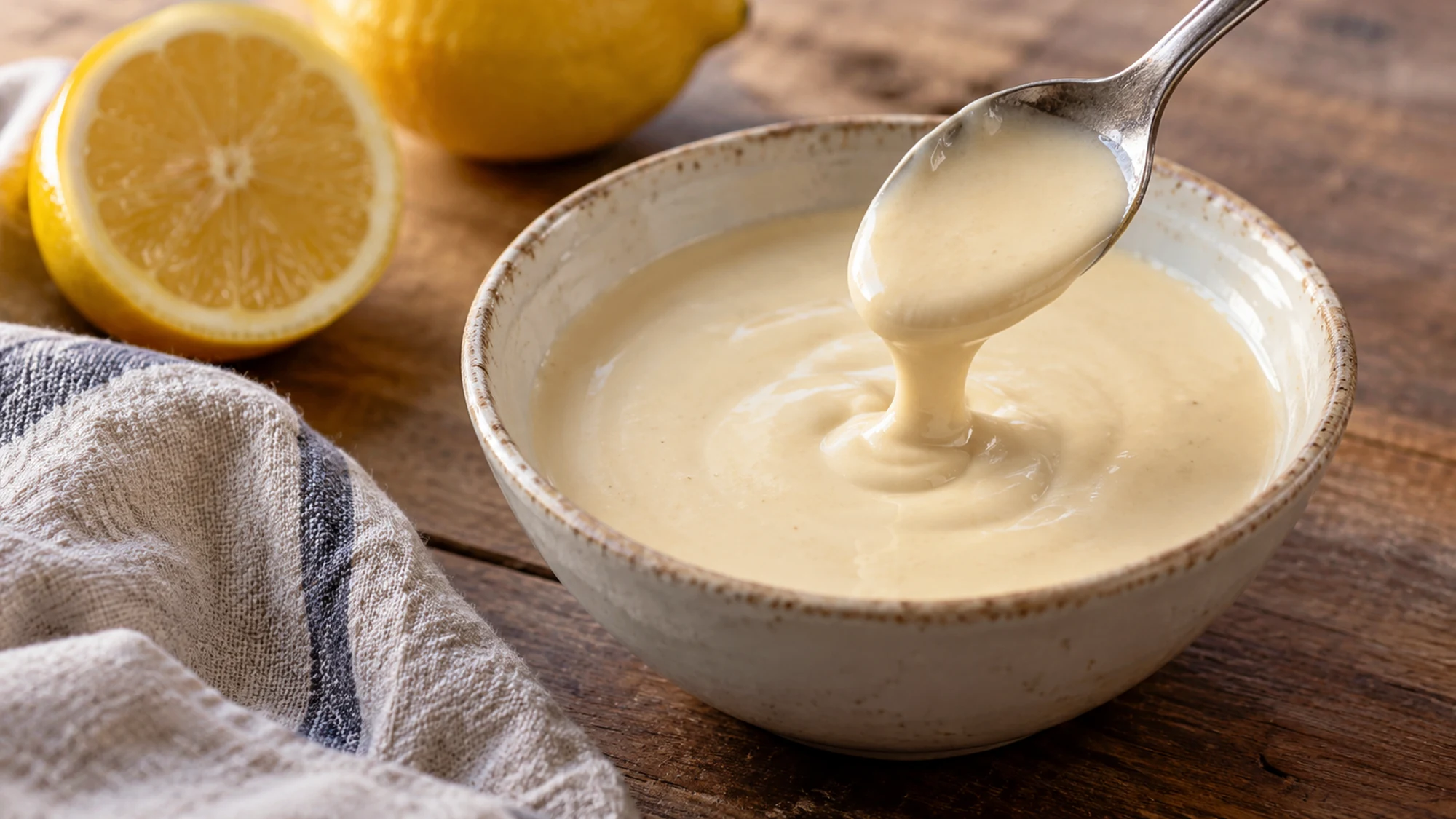
Adjust the thickness to the meal: spoonable for dipping, fluid enough for a light drizzle.
Adjust the Flavor Before Adding More Ingredients
Tahini brands vary in flavor and thickness, so taste the mixed sauce before making any big change. If the sesame flavor seems bitter, another squeeze of lemon will not always fix it; it may simply make the sauce sharper. A small pinch of salt can help bring the existing flavors into focus. I would choose restraint with raw garlic because its bite becomes more noticeable as the sauce sits.
- Use half the garlic for a gentler sauce beside delicate vegetables.
- Add chopped parsley only when you want a fresh herbal version.
- Try a small pinch of ground cumin for a warmer savory note.
- Use extra cold water a teaspoon at a time when the sauce feels too thick.
For a garlic-free version, omit the clove and keep the lemon, tahini, salt and water. It will taste simpler but still work well as a dressing. Do not replace tahini with sesame oil: the paste provides body, while the oil alone cannot make the same creamy sauce. Optional additions are separate from the card’s ingredient list and may change the nutrition or storage quality.
Taste first, then change one thing so the sesame and lemon remain in balance.
A Sesame-Based Sauce With Clear Portions
Tahini contributes fat, some protein and small amounts of fiber; lemon juice contributes acidity and bright flavor. The card estimates about 91 calories per eighth of the recipe. A two-tablespoon serving is approximate because the final water adjustment changes the volume. When precision matters, divide the finished batch into eight equal portions instead of relying only on a spoon measure.
- Most of the sauce’s calories come from the sesame paste.
- Adding water changes thickness without adding calories.
- A small serving can flavor a generous amount of vegetables.
- Tahini contains sesame and is unsuitable for someone with a sesame allergy.
Sesame is one of the major food allergens identified on U.S. food labels. Check the jar and keep shared utensils in mind when preparing food for someone with an allergy. The sauce contains no dairy ingredients, but that does not make it appropriate for every diet or every person. Its most useful quality is practical: a little adds flavor and moisture to an otherwise plain plate.
Let a modest portion add flavor, and check sesame allergy needs before serving.
One Bowl, Plenty of Ways to Use It
Stir the tahini, whisk through the lemon and allow the water to do its work. Once the texture is right, taste a little alongside the food you plan to serve rather than judging it alone. Keep the finished sauce covered and chilled, ready to loosen with a little water for your next bowl of vegetables or beans.
Lemon Tahini Sauce Recipe

Ingredients
- 1/2 cup tahini 120 g; well stirred
- 3 tablespoons fresh lemon juice
- 1 small clove garlic finely grated
- 1/4 teaspoon fine salt
- 1/4 cup cold water 60 ml; plus up to 2 tablespoons as needed
Equipment
- Medium mixing bowl
- Spoon for stirring tahini
- Whisk
- Fine grater
- Measuring cups and spoons
Instructions
- Stir the tahini in its jar until the oil and sesame paste are completely combined, then measure 1/2 cup (120 g) into a mixing bowl.
- Whisk in the lemon juice, finely grated garlic and salt. The mixture may turn thick and stiff; this is normal.
- Add the cold water a tablespoon at a time, whisking after each addition, until the sauce becomes smooth. Start with ¼ cup and use up to 2 additional tablespoons if necessary for a pourable ribbon.
- Taste with the food you plan to serve. Divide into 8 equal portions, about 2 tablespoons each depending on the water used. Refrigerate covered leftovers promptly and use within 4 days.
Nutrition
Video
Notes
Tried this recipe?
Let us know how it turned out!Emily Parker is DISHORA’s recipe-writing persona, bringing a warm, practical voice to everyday cooking. Her focus is simple ingredients, comforting flavors and clear steps that make a dish feel approachable. From cozy dinners to something sweet, Emily’s recipes invite readers to try something delicious and make it their own.