
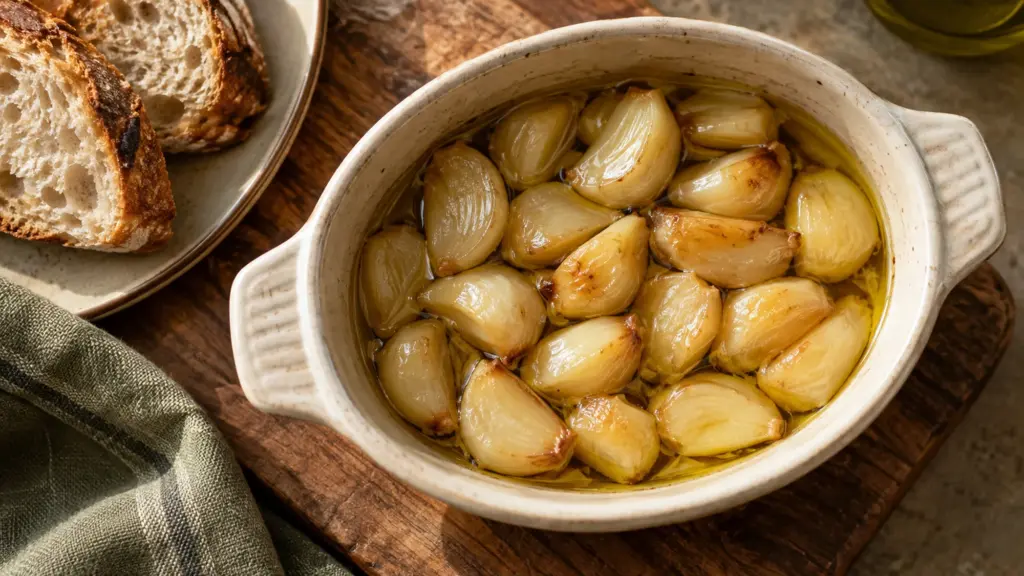
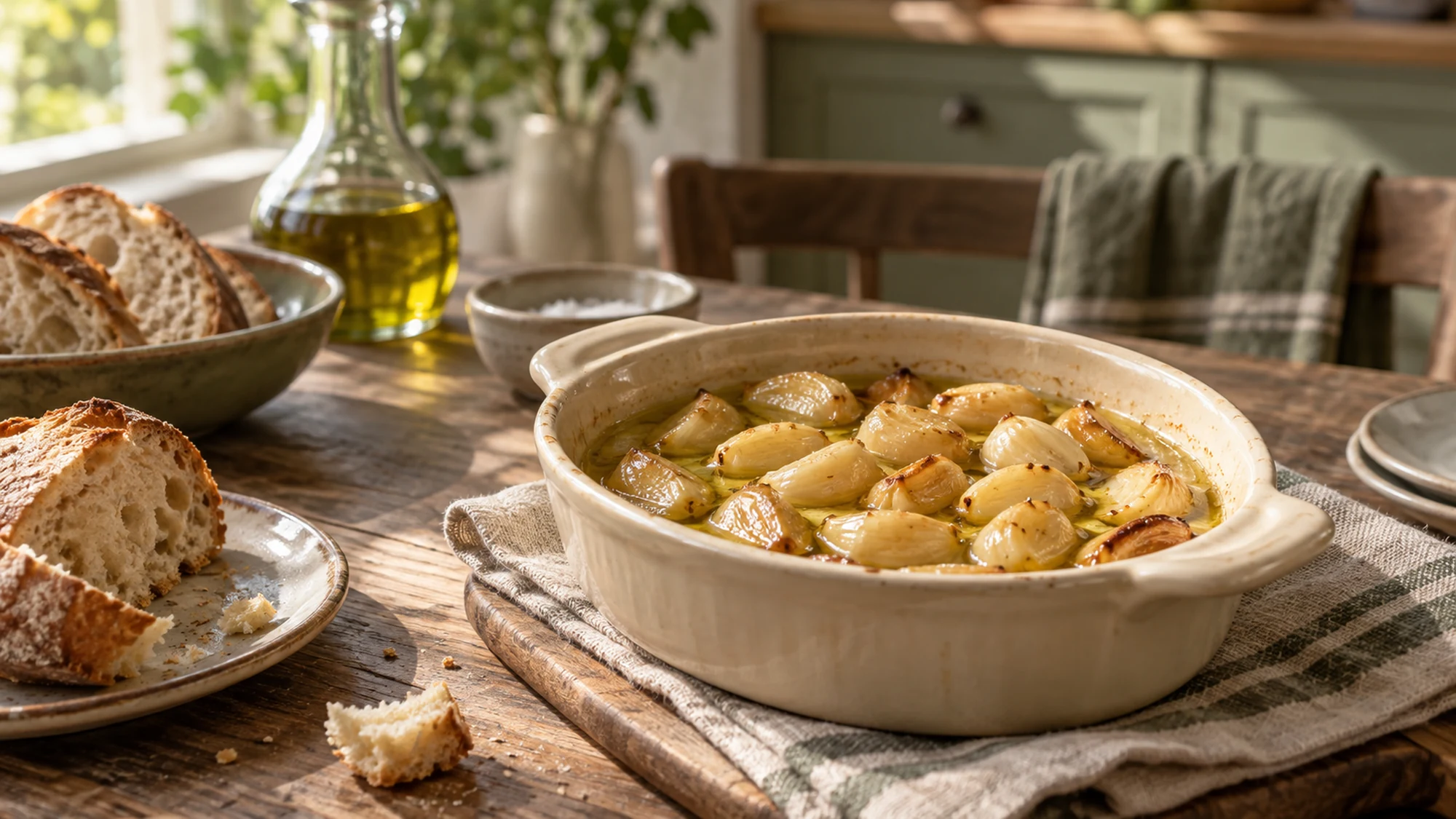
A pile of peeled garlic can become something much gentler than its sharp smell suggests. If you are wondering how to make garlic confit, the answer is slow cooking in oil until the cloves are tender enough to spread. This small oven batch uses a low temperature and a compact dish, keeping the garlic submerged while it softens without a dark, toasted crust.
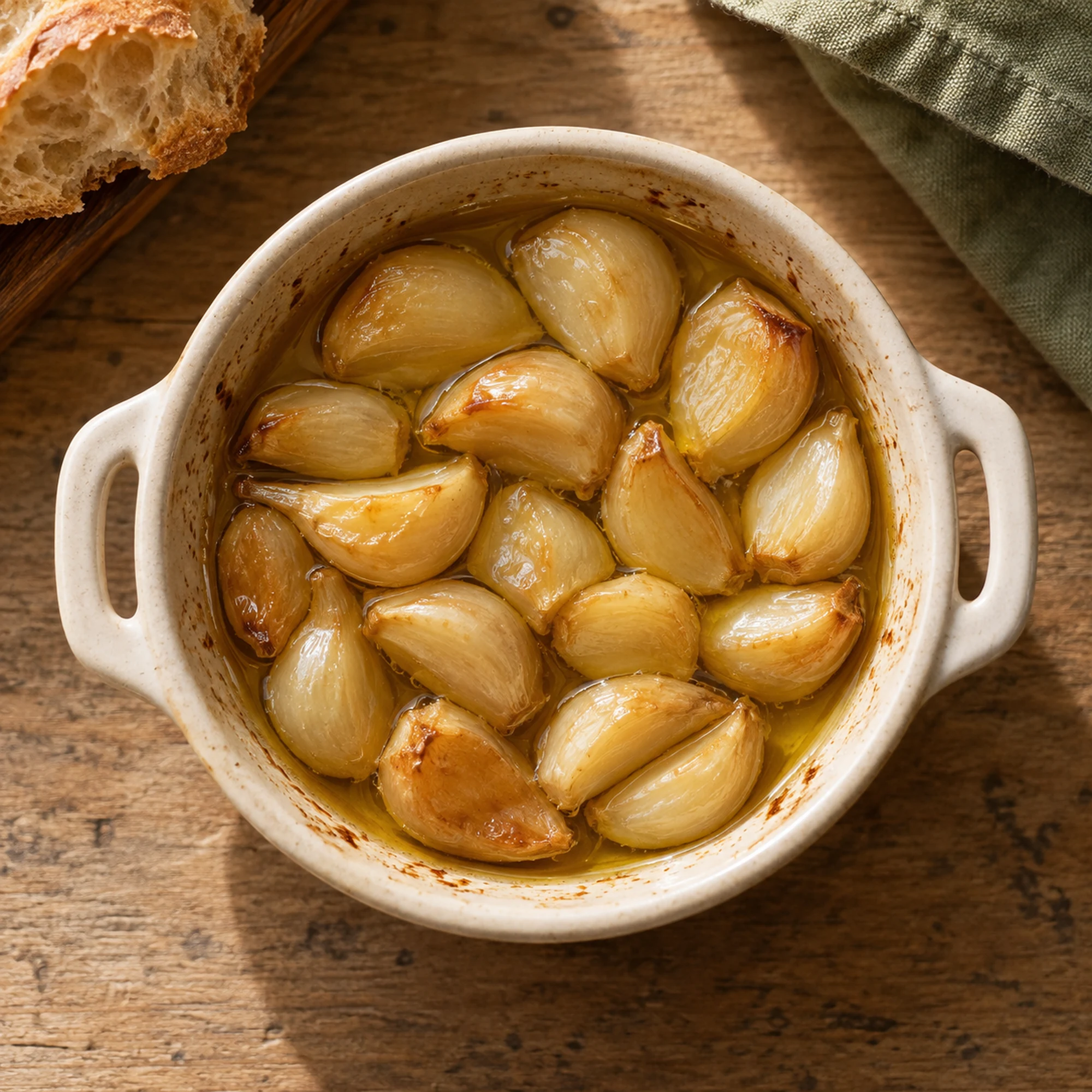
Cook the cloves gently until soft, then refrigerate the garlic and its oil promptly; use within four days or freeze.
Confit describes cooking slowly in fat. Here the fat is olive oil, and the goal is pale-golden garlic that yields easily to a spoon. I prefer a plain batch with no herbs because it can slip into several different meals. A mild olive oil lets the garlic lead.
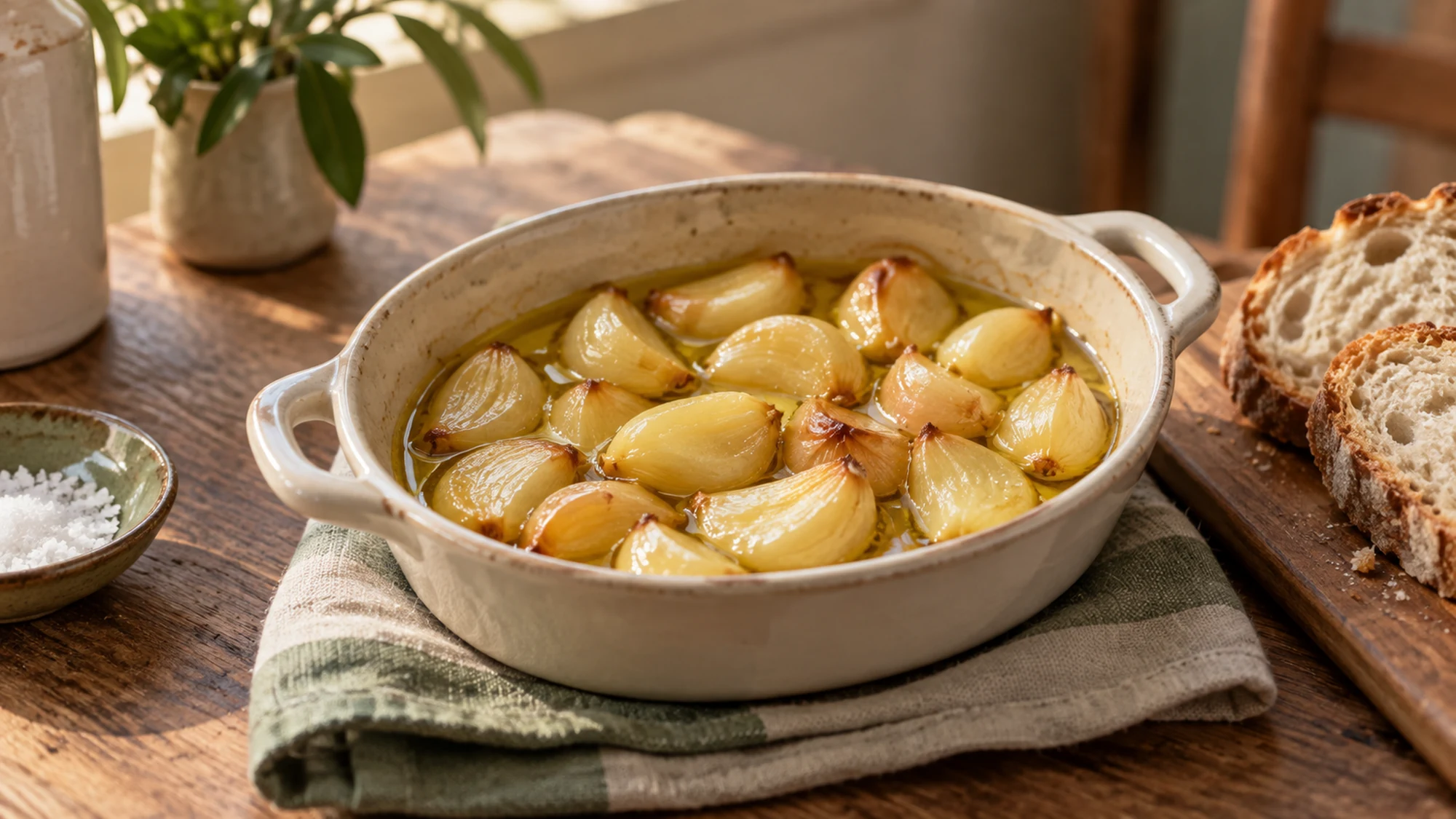
Serving soft garlic without overpowering dinner
Mash a few warm cloves onto toast, stir them into drained beans or fold them into potatoes. The texture should be creamy rather than chewy. Add a little cooking oil only when the dish needs it; there is no obligation to pour in everything. A fork is enough to break the cloves down, so a blender usually creates extra washing without much benefit.
- Spread the garlic thinly over crisp bread, then taste before adding another clove.
- Stir a small spoonful into tomato sauce near the end of cooking.
- Mash it into a portion of Dishora’s white bean dip for a mellow garlic variation.
- Use a measured spoonful of the flavored oil to dress freshly cooked vegetables.
Bring only the portion you plan to eat to the table and keep the rest chilled. I would choose a small bowl for serving, particularly when a meal will linger. Label the storage container with the preparation date before it goes into the refrigerator. A beautiful jar is still a refrigerated ingredient, with a short storage window.
Start with a small amount of garlic and oil, then add more only if the finished dish needs it.
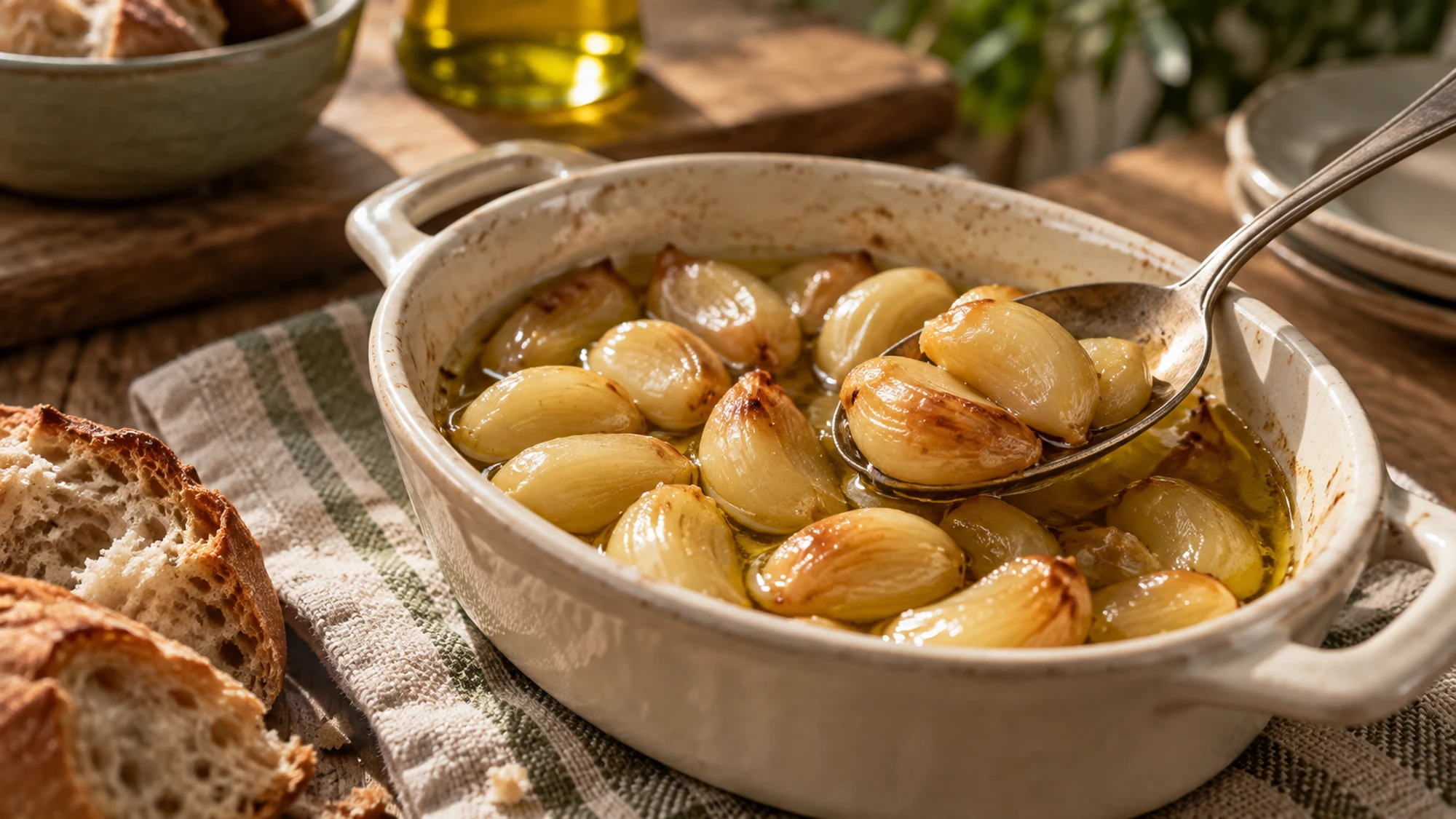
Variations that keep the gentle cooking method
A neutral oil makes a milder batch, while olive oil contributes its own flavor. Keep the same quantity and ensure every clove is covered. Adding oil to fill a larger dish changes the cost and nutrition; choosing a smaller dish is the practical adjustment.
- For a softer garlic spread, mash the drained cloves with a little of their cooking oil.
- For pasta, loosen a small amount with warm pasta water rather than making the sauce entirely from oil.
- If cloves begin browning before they soften, check the oven temperature and keep the dish covered.
- Scale down into a smaller oven-safe dish rather than leaving cloves exposed above the oil.
Fresh herbs or chili can change the flavor, but they do not extend storage. This version deliberately keeps the ingredient list short. The guide to ingredients stored in oil explains why fresh garlic and herbs need careful handling. Cooking does not turn this preparation into a shelf-stable preserve, and a splash of lemon is not a validated preservation method.
Keep the garlic covered with oil during cooking, and keep every variation within the same short refrigerated storage window.
Health benefits in a realistic serving
Garlic adds a distinctive flavor, which can make a simple vegetable or bean dish more interesting. Olive oil supplies most of this recipe’s calories and fat. I prefer to think of confit as a concentrated condiment: a little changes the meal, while a generous pour of oil changes the portion substantially. Soft texture does not make its energy content disappear.
- The card’s nutrition estimate divides all the garlic and oil across sixteen portions.
- Eating drained cloves with less oil gives a different serving from the estimate.
- Salt can be adjusted at the table; measure it rather than seasoning every component heavily.
- There is no reason to expect a small garlic condiment to deliver a specific medical benefit.
The important practical issue is safe storage. Garlic-in-oil can support botulism toxin formation when handled incorrectly, even when it looks and smells normal. Follow garlic-in-oil storage guidance: refrigerate promptly at 40°F (4°C) or below and use within four days, or freeze portions. Do not leave the batch at room temperature, can it at home or rely on tasting to judge safety.
Treat garlic confit as a refrigerated condiment, and freeze any portions you will not use within four days.
Make a small batch with a clear plan
Plan one or two meals that will use the garlic before you start. That makes a modest batch more useful than a large jar waiting in the refrigerator. Give the cloves enough gentle cooking time to become spreadable, use a clean spoon for serving and chill the remainder promptly. The reward is mellow garlic flavor ready for toast, beans or a bowl of vegetables.
How to Make Garlic Confit Recipe

Ingredients
- 200 g peeled garlic cloves Firm, undamaged cloves; tough root ends trimmed
- 1 cup olive oil 240 ml; about 216 g; use a compact dish so cloves are submerged
- 1/4 teaspoon fine salt
Equipment
- Small oven-safe baking dish About 2-cup capacity; garlic and oil must fit with the cloves submerged
- Aluminum foil
- Knife and cutting board
- Spoon and oven mitts
- Shallow refrigerator-safe container with lid
Instructions
- Heat the oven to 250°F (120°C). Check the peeled garlic, discard damaged cloves and trim tough root ends. Place the cloves in a small oven-safe baking dish.
- Pour over the olive oil so the garlic is fully submerged. If it does not cover the cloves, choose a smaller suitable dish rather than leaving garlic exposed. Add salt and cover the dish with foil.
- Bake for about 90 minutes, checking after 60 minutes. The cloves should remain pale to lightly golden and mash easily with a fork. Larger cloves may need up to 120 minutes; tenderness is the endpoint. Avoid dark browning.
- Use a clean spoon to remove the portion needed. Divide remaining garlic and oil into shallow clean containers, cool promptly and refrigerate within two hours of cooking at 40°F (4°C) or below. Use within four days of preparation or freeze in small portions. Never store at room temperature or home-can this preparation.
Nutrition
Video
Notes
Tried this recipe?
Let us know how it turned out!Emily Parker is DISHORA’s recipe-writing persona, bringing a warm, practical voice to everyday cooking. Her focus is simple ingredients, comforting flavors and clear steps that make a dish feel approachable. From cozy dinners to something sweet, Emily’s recipes invite readers to try something delicious and make it their own.