
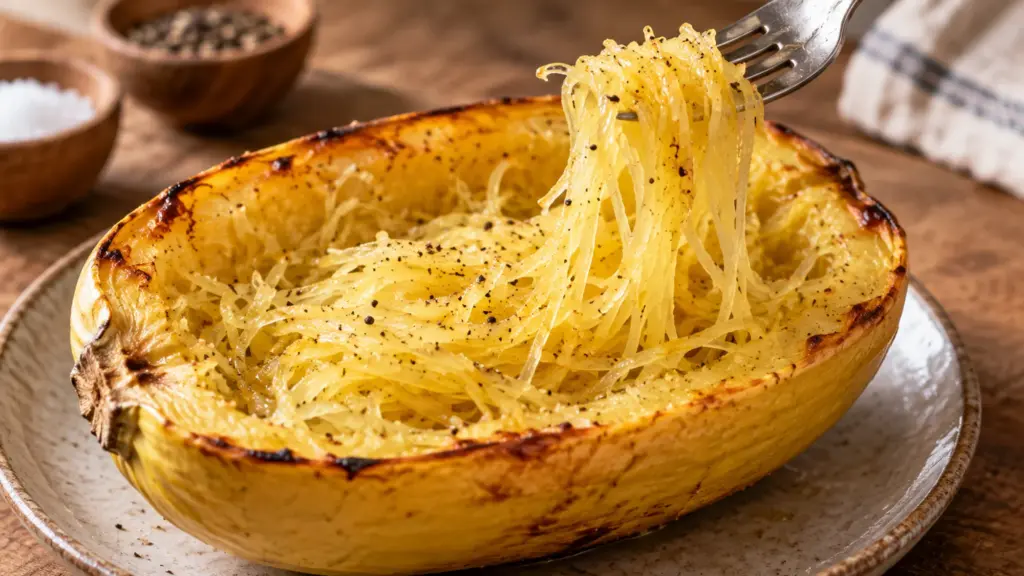
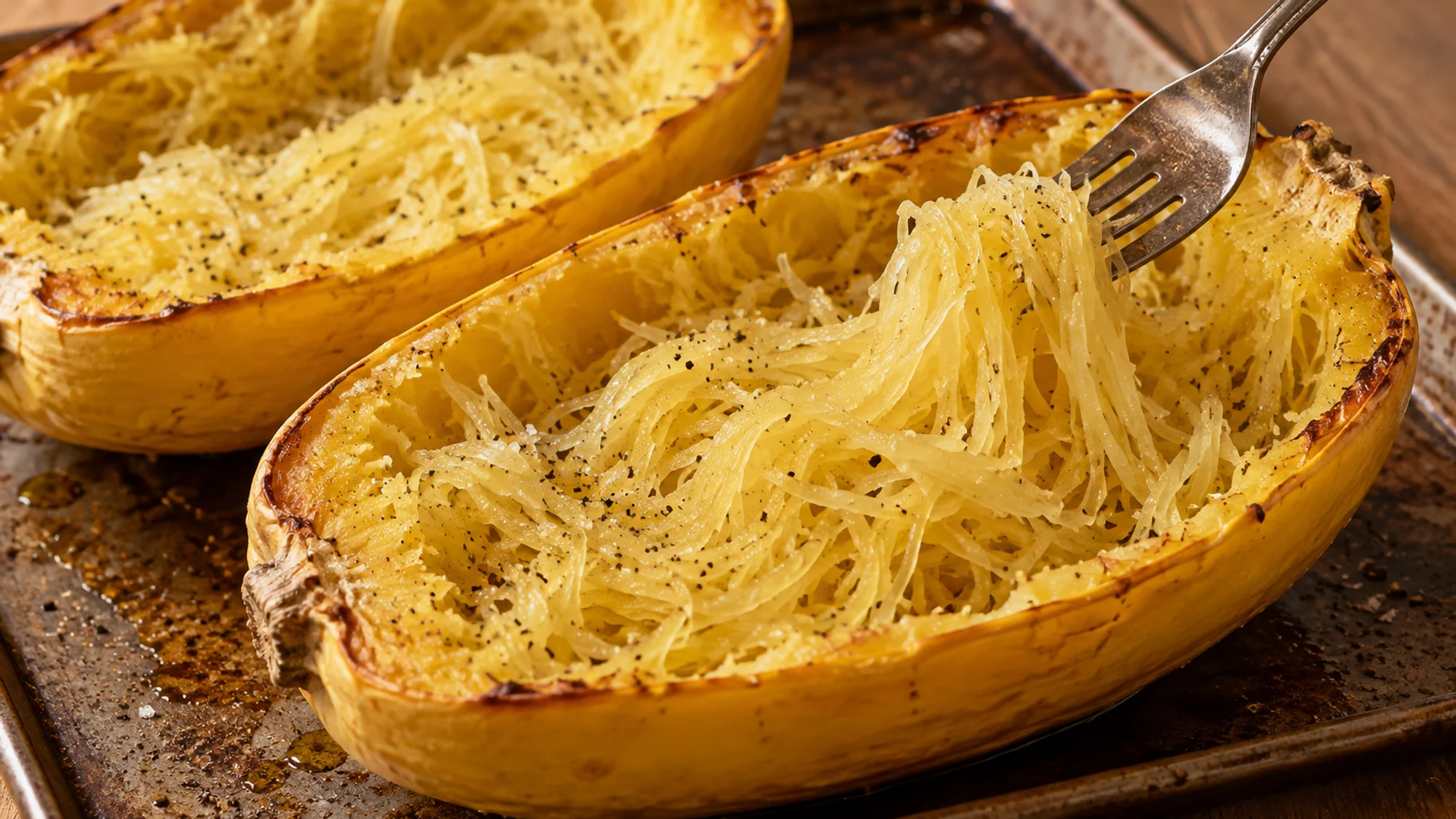
A spaghetti squash looks like one solid vegetable until heat loosens its flesh into fine golden strands. This recipe explains how to cook spaghetti squash in the oven with a little olive oil, salt, and pepper. Roast the seeded halves cut-side down, check for tenderness, then use a fork to lift the flesh gently from the shell.
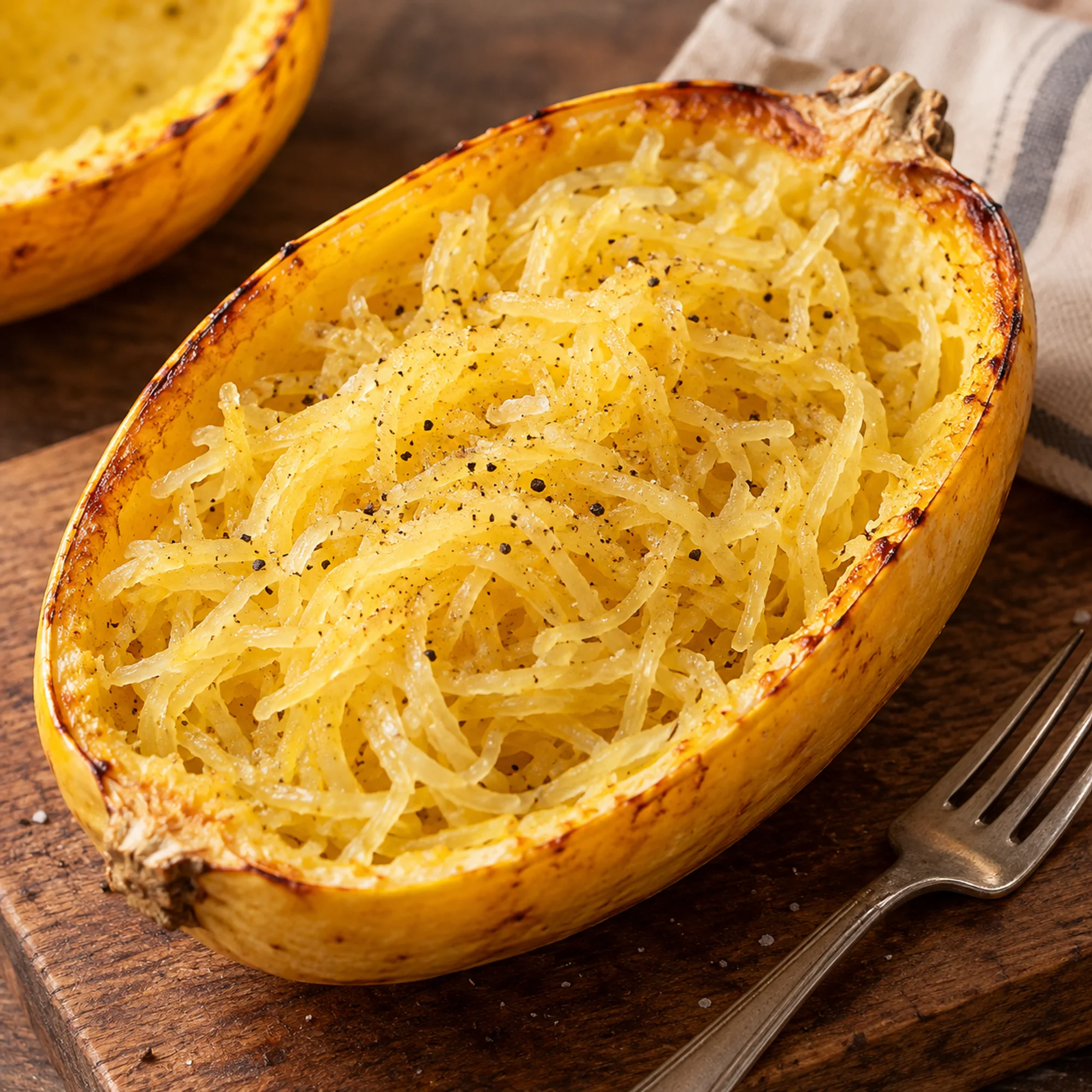
Stop roasting when the flesh is just tender and separates with a fork. A squash cooked until it collapses loses the distinct strands that make it interesting.
I prefer keeping the first batch plain so its mild, slightly sweet flavor is easy to notice. Once you know the texture, it is simple to choose a sauce or side dish that suits it. The timing is a range because a small, thin-walled squash finishes before a large, dense one.
Serving suggestions for spaghetti squash
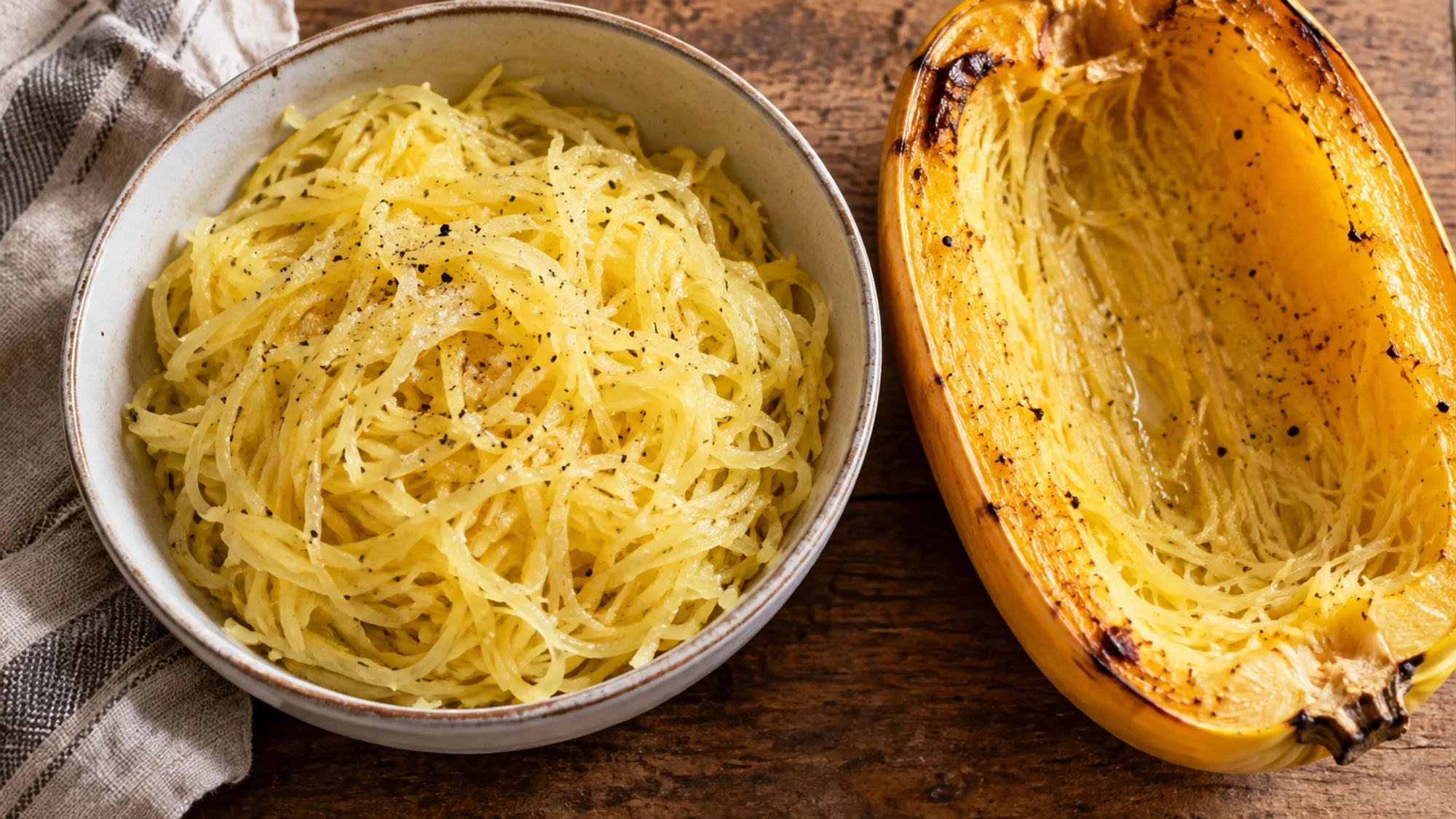
Spoon the strands into a warm bowl or leave them in the roasted shells for serving. Rake gently rather than mashing, and let any excess liquid stay behind on the tray. A little black pepper is enough for the plain measured version.
The squash makes a useful vegetable side beside cooked chicken, beans, or Dishora’s crisp-skin salmon. I like pairing its soft strands with something that has a browned surface or a crisp salad, so the plate has more than one texture.
For a larger meal, add a protein food and whatever other sides suit your appetite. A spoonful of warm tomato sauce can work, but begin with a little. Too much thin sauce collects at the bottom and makes the strands feel watery.
Serve close to the time you scrape the flesh. If the halves need to wait briefly, leave them on the tray until they are comfortable to handle, then fluff just before serving. Avoid holding the scraped squash over heat for a long time.
Lift the strands gently and use a light hand with sauce so their texture stays clear.
Spaghetti squash variations
The base is deliberately simple. A small amount of grated Parmesan, chopped parsley, or lemon zest can be added to a serving as a variation, but those are separate additions. I would choose one finishing flavor first, since the squash itself is mild.
If you prefer a richer side, toss a warm portion with a little butter after scraping. For a brighter version, add a few drops of lemon juice. Taste before adding more salt, particularly if a salty sauce or cheese will go on top.
Different shapes of squash can need different roasting times even at the same weight. Check the flesh rather than judging only by the outside skin. A fork should enter with gentle pressure, and the strands should release without turning into a soft mash.
Whole, microwaved, or ring-cut squash uses a different method and timing. This card is for lengthwise halves in the oven. Keeping one method consistent makes it easier to learn the tenderness cue before trying another preparation.
Learn the texture of a plain roasted half, then add one finishing flavor that fits the rest of dinner.
Health benefits and balance
Spaghetti squash adds a vegetable to the plate and contributes fiber. It is mostly valued here for its mild flavor and unusual texture. The vegetable guide offers practical ideas for varying vegetables through the week.
The measured recipe uses a small amount of olive oil for the whole squash. Pairing the strands with a protein food and other foods you enjoy makes the meal more complete. There is no need to make a weight-loss promise to appreciate a roasted vegetable.
Wash the outside before cutting, since a knife passes from skin to flesh. This produce handling guide explains the basic washing steps. Use a stable board, keep hands away from the blade, and handle the hot shells with oven mitts.
Enjoy the squash as a flavorful vegetable, with careful cutting and a balanced plate around it.
Motivation conclusion
Set out the lined baking sheet before opening the squash, and scoop the seeds into a bowl so the work area stays clear. The cut sides need only a light rub of oil and seasoning before they go face down onto the tray.
Start checking before you expect the squash to be finished. I would rather give a firm half a few more minutes than discover the strands have turned mushy. Once it is tender, a short cooling pause and a gentle fork are all that stand between the roasted vegetable and dinner.
A simple roast and an early tenderness check give spaghetti squash the separate strands you want.
How to Cook Spaghetti Squash

Ingredients
- 1 medium spaghetti squash about 3 lb
- 1 tbsp olive oil
- 1/2 tsp kosher salt
- 1/4 tsp ground black pepper
Equipment
- Sturdy cutting board
- chef’s knife
- Large spoon
- Rimmed baking sheet
- Parchment paper
- Measuring spoons
- Fork
- Oven mitts
- Oven
Instructions
- Wash the whole spaghetti squash under running water and dry it with a clean towel.
- Heat the oven to 400°F (205°C). Line a rimmed baking sheet with parchment.
- Set the squash securely on a sturdy board. Carefully halve it lengthwise with a chef’s knife, cutting around the hard stem rather than forcing through it. Scoop out seeds and loose seed fibers with a spoon.
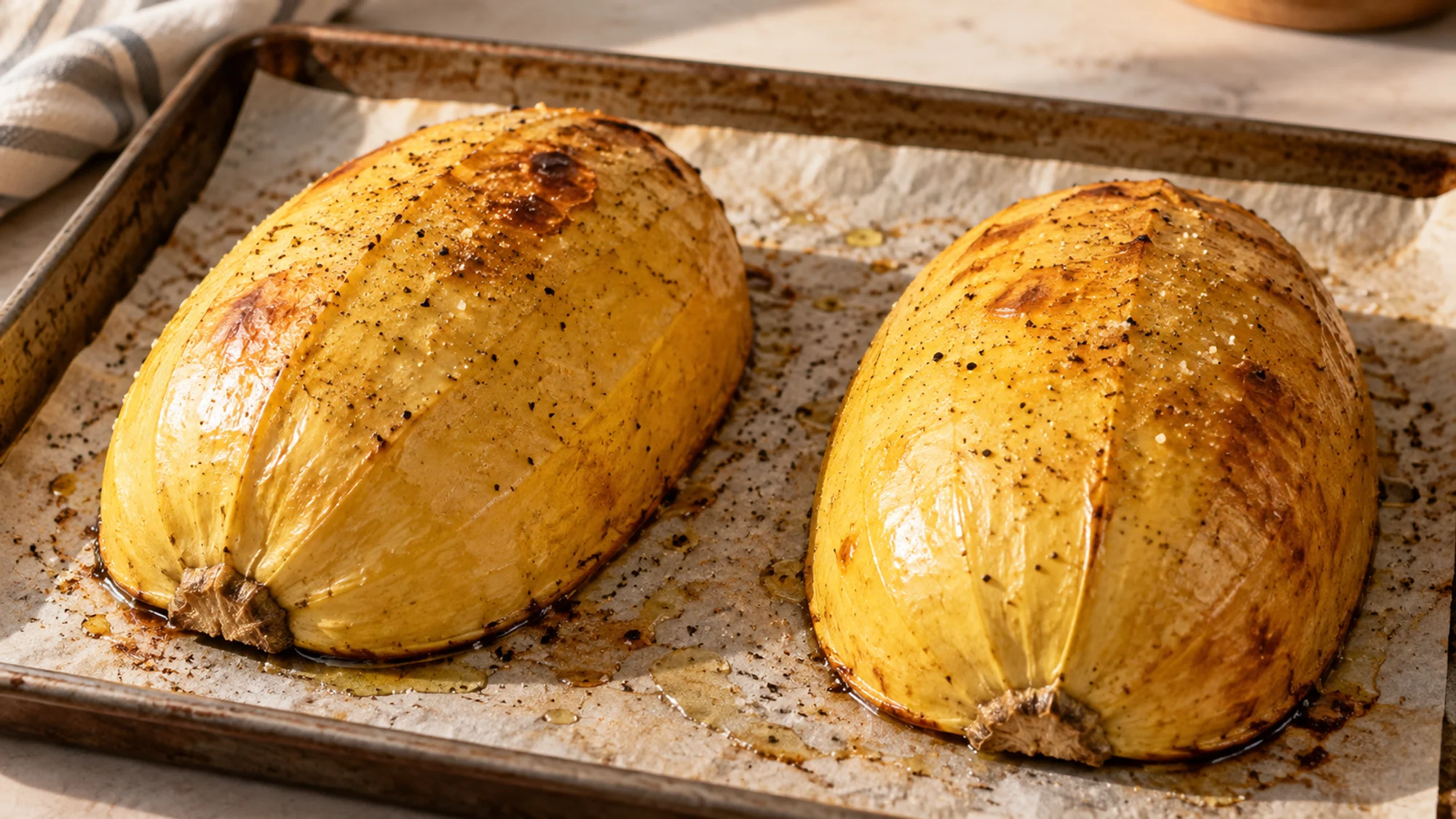
- Rub the cut flesh with olive oil, salt, and pepper. Place cut-side down on the sheet. Roast about 35 to 50 minutes, until the flesh is just tender when pierced with a fork. Start checking at 35 minutes; avoid cooking until collapsed.
- Let cool 5 minutes, until safe to handle with oven mitts. Turn the halves over and rake the flesh gently with a fork to release strands. Serve warm.
Video
Notes
Tried this recipe?
Let us know how it turned out!Emily Parker is DISHORA’s recipe-writing persona, bringing a warm, practical voice to everyday cooking. Her focus is simple ingredients, comforting flavors and clear steps that make a dish feel approachable. From cozy dinners to something sweet, Emily’s recipes invite readers to try something delicious and make it their own.