
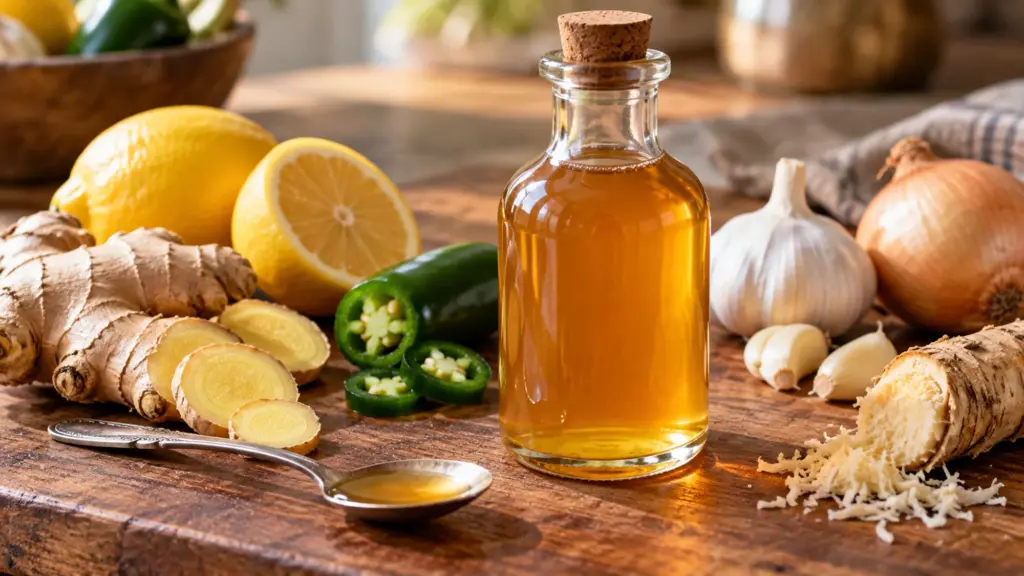
A spoonful of sharp vinegar can wake up a dressing or a bowl of beans, and fire cider takes that idea in a peppery direction. This small batch infuses apple cider vinegar with ginger, onion, garlic, horseradish, lemon peel, and jalapeno, then gets a little honey after straining. It is a culinary condiment with a strong flavor.
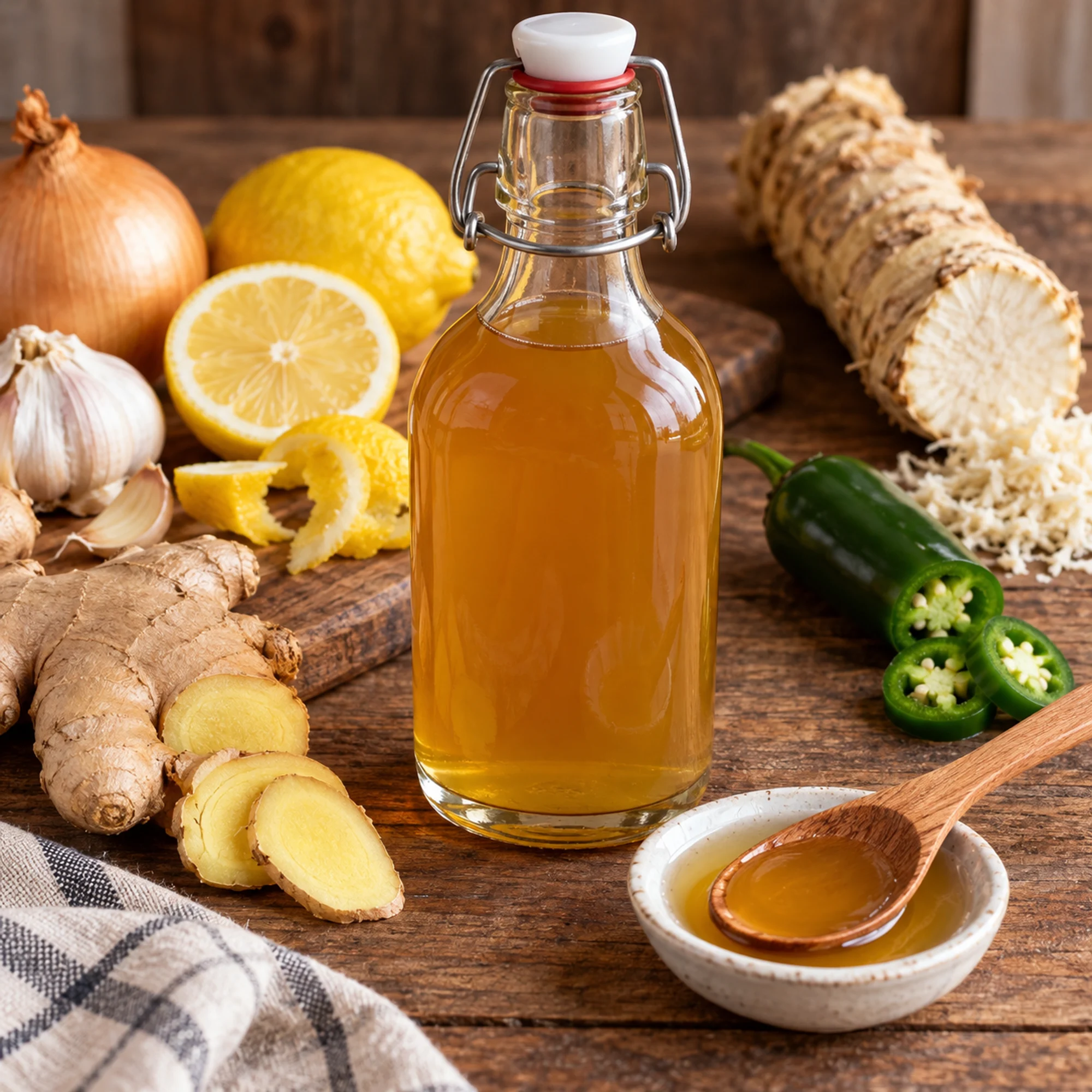
Measure the produce and vinegar, keep the heating step intact, and refrigerate the infusion. A small, clearly dated batch is easier to handle than a crowded jar.
I prefer using fire cider a few drops at a time in food. Ginger and horseradish bring heat, lemon peel adds aroma, and honey softens the sharp edge. The finished vinegar should still taste lively and acidic, so a little goes a long way.
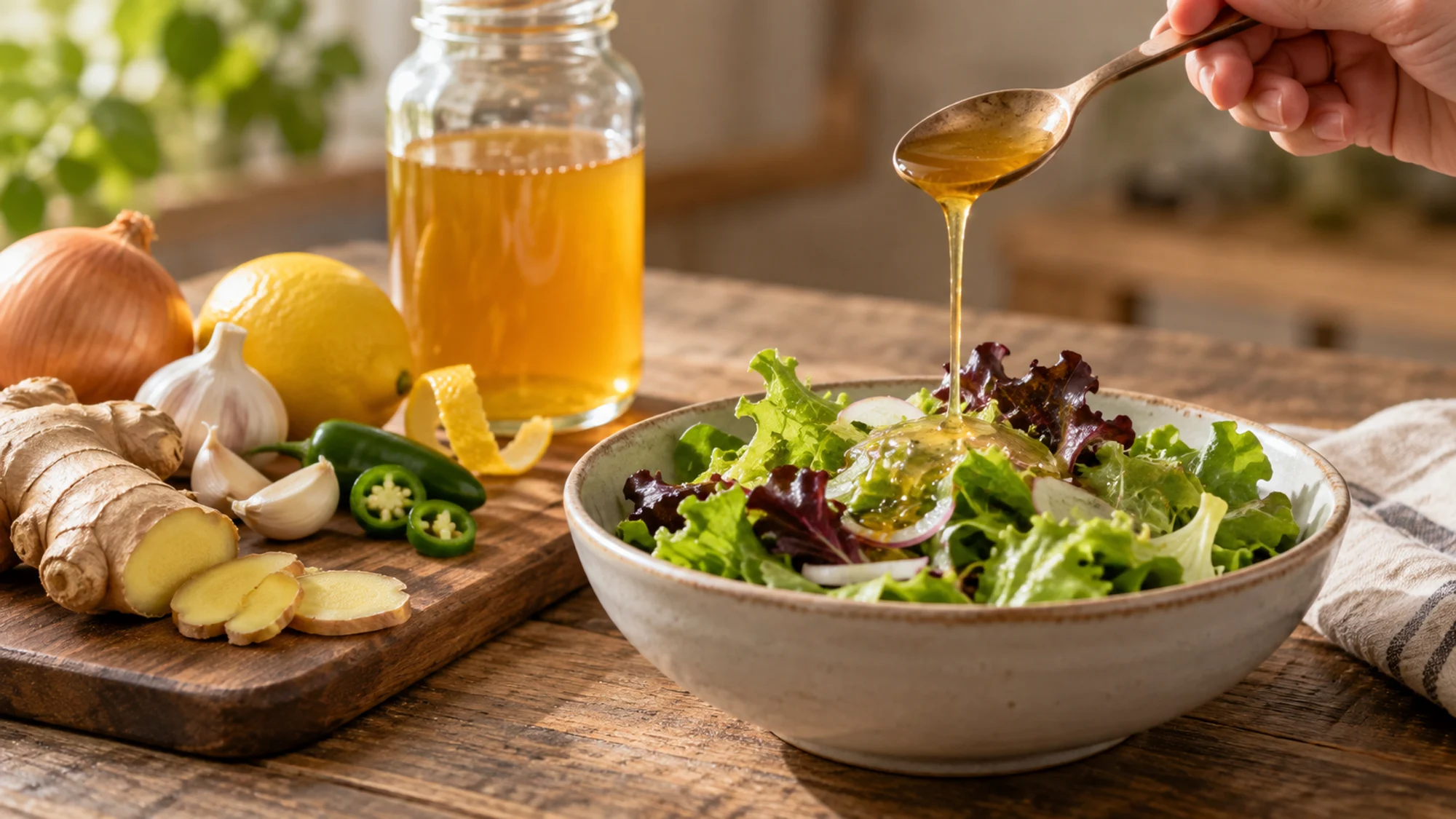
Serving suggestions for fire cider
Use fire cider as the acidic part of a quick dressing, starting with a small amount and tasting as you add oil. It also works as a sharp finish for cooked beans, greens, or a spoonful of soup. Add it to your serving rather than the whole pot until you know how much heat you enjoy.
A few drops over Dishora’s white bean dip can add a peppery contrast to the creamy beans. I would serve the vinegar in a small cruet with a spoon so it is easy to measure. Pouring straight from a wide jar makes it too easy to overdo.
If you prefer it in a drink, dilute a small amount thoroughly and taste for comfort. Avoid drinking concentrated vinegar straight. The sweet-and-sharp flavor is a seasoning choice; it does not need a daily dose or a health routine attached to it.
Start with drops or a small spoonful in food, then adjust to the flavor you want.
Fire cider variations
The measured base uses one cup total of thinly sliced produce for two cups of vinegar. Keep that ratio and the heating step when making this version. Do not pack in extra roots or add water to make room. This flavored-vinegar handling guide explains why the balance and heat matter.
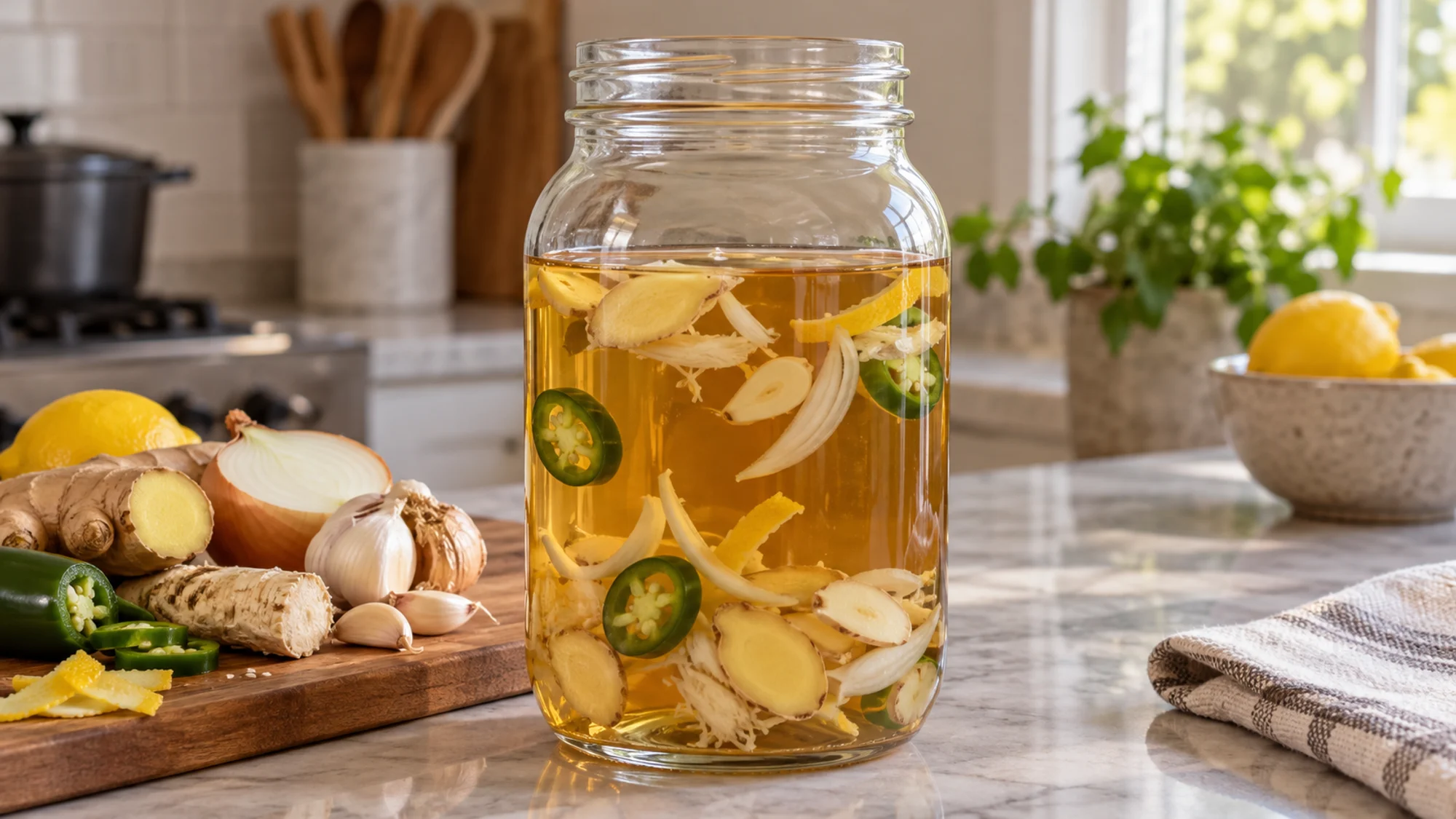
For a gentler pepper note, replace part of the measured jalapeno with the same amount of onion. For more citrus aroma, swap some onion for thin lemon peel while keeping the total produce at one cup. I like changing one flavor at a time so the result stays easy to judge.
Leave the honey out for an unsweetened variation, or add it only to the portion you are using. Keep any altered batch refrigerated. This is a kitchen infusion for prompt use, and changing its ingredients does not create a tested canning or room-temperature storage recipe.
Keep the measured ratio, thin slices, heat treatment, and refrigeration steady while adjusting one flavor.
Health benefits and balance
The value of this recipe is its flavor. Fire cider has no demonstrated ability to prevent colds, detox the body, or replace treatment. Small amounts of vegetables steeped in vinegar do not make a concentrated serving of all their nutrients. A varied meal remains the useful focus.
Vinegar is acidic and can irritate the mouth or stomach, especially when taken undiluted. This overview of vinegar’s culinary and nutrition role puts its common claims in context. Use it in food and stop if the flavor or acidity bothers you.
Clean equipment, thin produce slices, temperature checks, and refrigeration all matter here. Label the jar with the preparation date and keep the finished vinegar cold. Discard a batch with mold, unexpected bubbling, or a spoiled odor instead of tasting it to decide whether it is safe.
Treat fire cider as a strong flavored vinegar, with modest expectations and careful food handling.
Motivation conclusion
Prepare the jar and tools before slicing the ingredients. Measure each portion into a cup so the solids stay within the recipe’s ratio, then heat the vinegar and mixture with a thermometer nearby. The active work is brief, but the temperature check deserves attention.
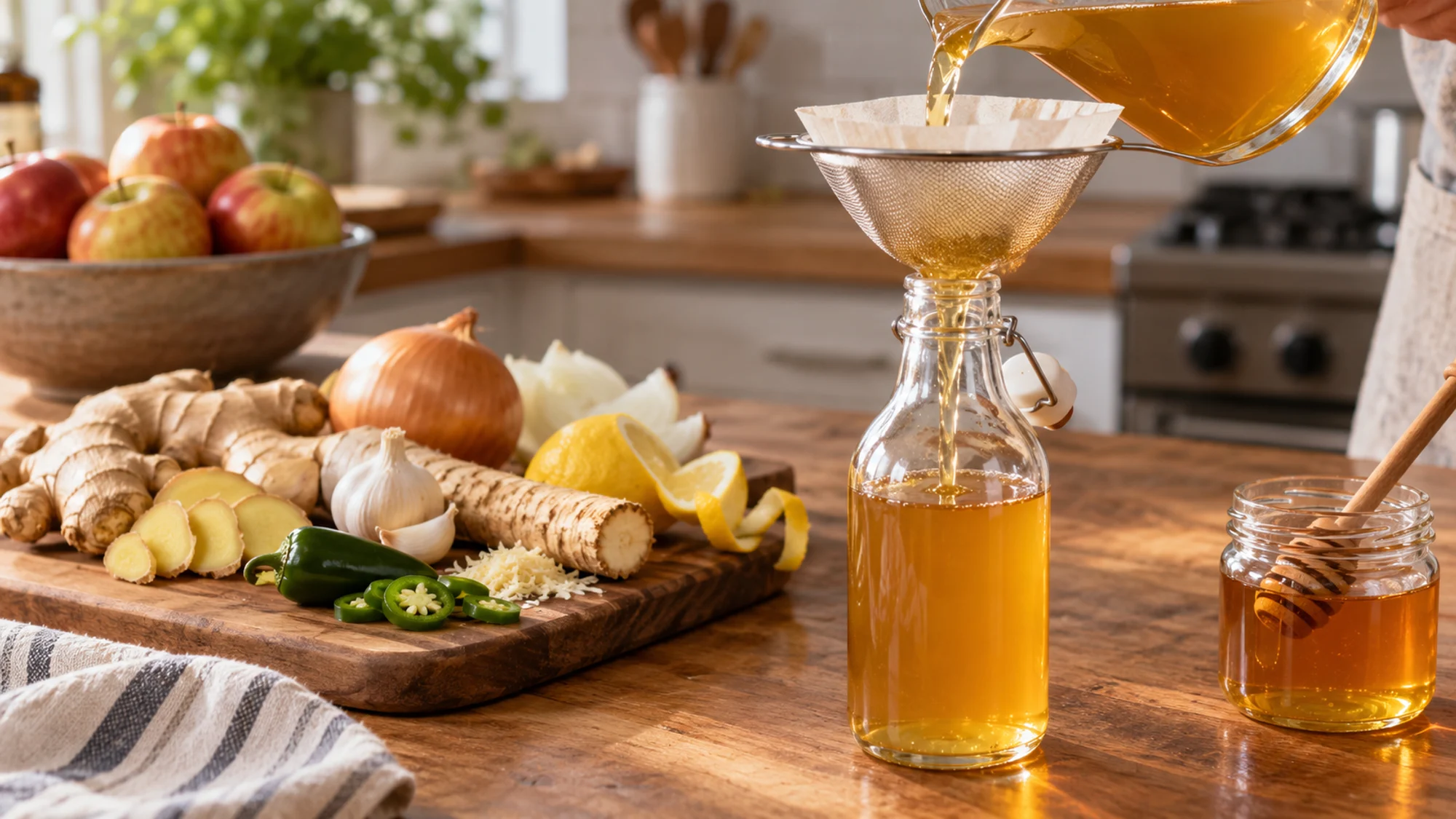
After the refrigerated infusion, let the coffee filter catch the fine particles rather than squeezing them into the bottle. Stir in honey, label the bottle, and keep it chilled. I like having a small condiment that can add sharpness to an ordinary plate, with a clear method and a definite storage date.
A little patience produces a vivid, peppery vinegar to use thoughtfully in everyday cooking.
Fire Cider

Ingredients
- 2 cups pasteurized apple cider vinegar labeled 5% acidity
- 1/4 cup fresh ginger very thinly sliced
- 1/4 cup onion very thinly sliced
- 2 tbsp garlic thinly sliced
- 2 tbsp fresh horseradish thinly sliced
- 2 tbsp lemon peel thin strips, little white pith
- 2 tbsp jalapeno thinly sliced
- 2 tbsp honey added after straining
Equipment
- Heat-safe quart jar with acid-resistant lid
- Small stainless-steel saucepan
- Food thermometer
- Cutting board
- knife
- Measuring cups and spoons
- Fine-mesh strainer
- Coffee filter
- Clean glass bottle
Instructions
- Wash a heat-safe quart jar and its acid-resistant lid, then sanitize them according to the manufacturer’s instructions.
- Wash the produce under running water. Slice the measured ginger, onion, garlic, horseradish, lemon peel, and jalapeno very thinly. Keep the total produce to 1 cup for 2 cups vinegar.
- Heat the vinegar in a stainless-steel saucepan to 190–195°F (88–91°C). Add the thinly sliced produce. Use gentle heat as needed so the entire mixture, including the centers of the largest solids, remains above 165°F (74°C) for at least 1 minute 12 seconds. Check with a food thermometer.
- Cover and cool the mixture promptly, then transfer to the clean jar, close with the acid-resistant lid, and refrigerate within 2 hours of heating. Infuse in the refrigerator for 10 days, gently turning the closed jar daily.
- Strain through a fine-mesh strainer lined with a coffee filter into a clean bottle. Discard all solids. Stir in the honey. Keep refrigerated and label with the original preparation date. Use within 30 days of that date. Use small amounts in dressings or sauces; do not drink undiluted.
Notes
Tried this recipe?
Let us know how it turned out!Emily Parker is DISHORA’s recipe-writing persona, bringing a warm, practical voice to everyday cooking. Her focus is simple ingredients, comforting flavors and clear steps that make a dish feel approachable. From cozy dinners to something sweet, Emily’s recipes invite readers to try something delicious and make it their own.