
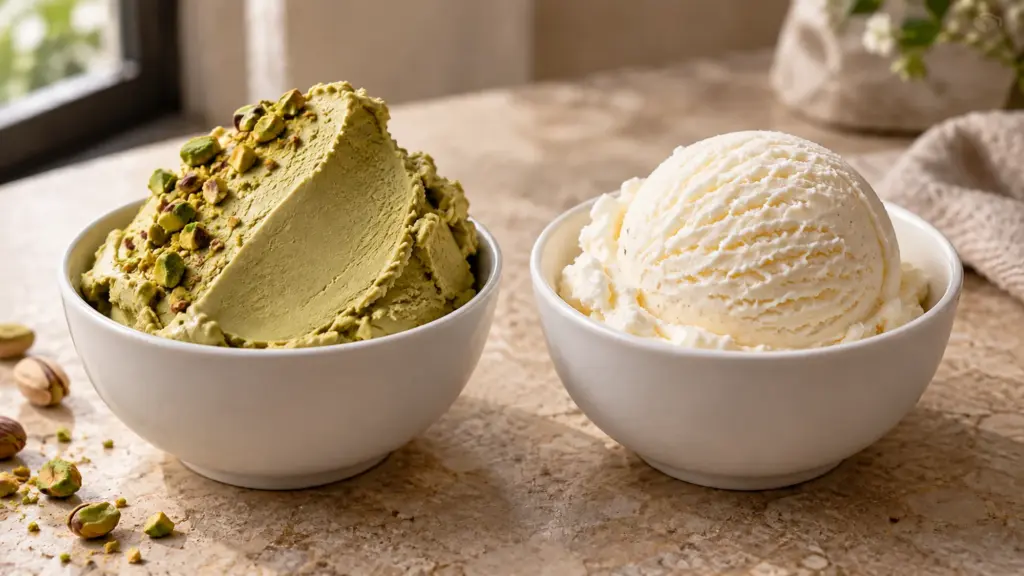
One dessert is spread into soft folds with a flat spatula; another arrives as a round scoop with neat ridges. Both can be creamy, cold and wonderful with a spoon, so what explains the different feel?
The difference between gelato and ice cream usually involves the milk-to-cream balance, incorporated air and serving temperature. Gelato tends to be denser and served softer, but individual recipes overlap. The name alone does not tell you its sugar, calories or allergens.
I’d choose by the texture and flavor you want first. The more useful comparison is between two actual products, rather than a romantic idea of one style and the least flattering example of the other.
What the names tell you
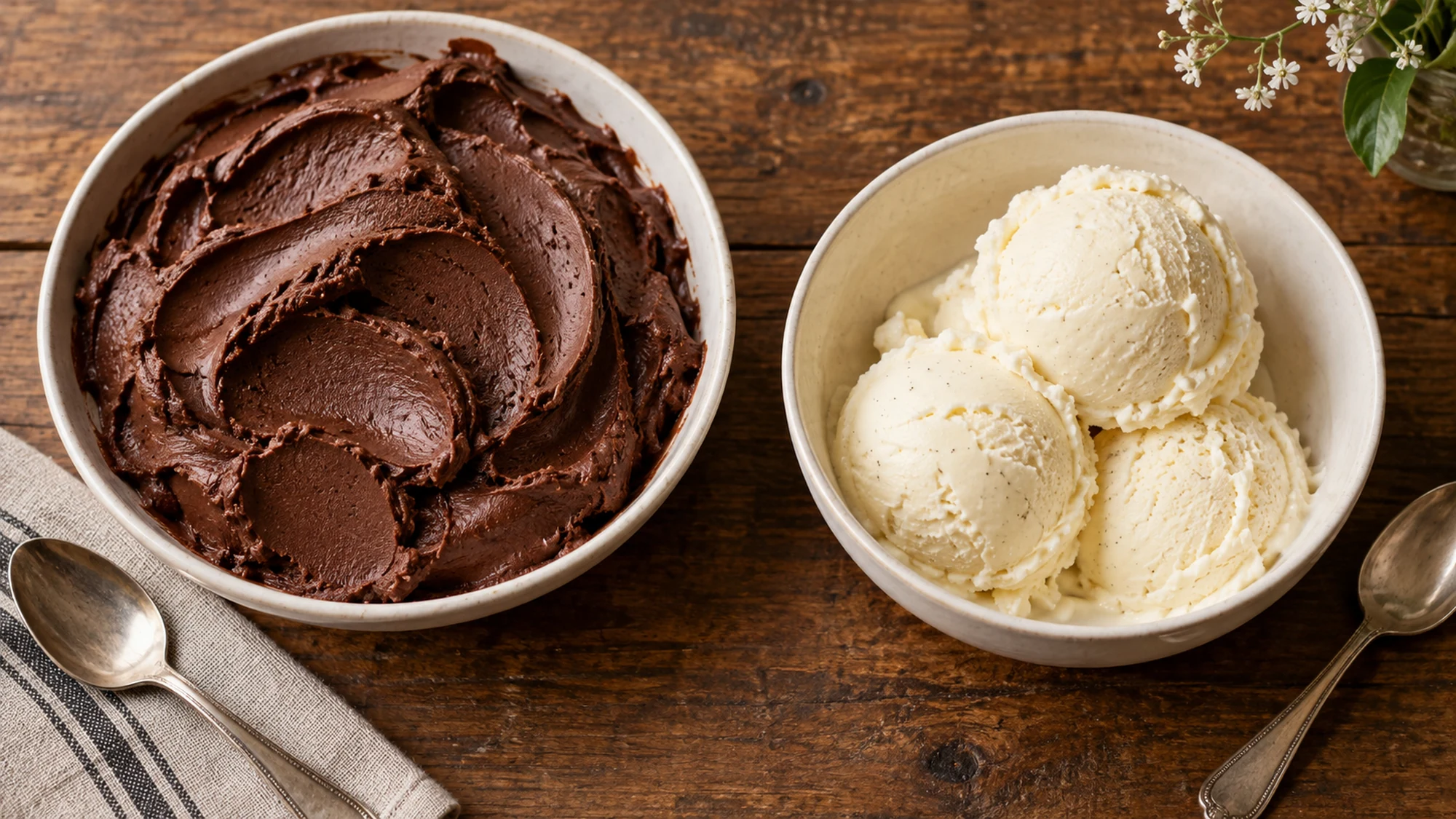
Gelato is the Italian word for ice cream, although English-language menus commonly use it to describe a particular Italian-style frozen dessert. Penn State’s explanation from dairy scientist Robert Roberts describes a typically milk-forward mixture with less fat and air than conventional American ice cream.
In the United States, standard ice cream generally contains at least 10% milkfat under 21 CFR 135.110; the rule includes qualifications for bulky flavor ingredients. Do not turn that legal definition into a universal percentage for gelato. A shop’s formulation and a supermarket carton’s label are more useful than a blanket claim.
Use the names as a style guide, then look at the actual product when the details matter.
Compare the difference between gelato and ice cream
These are typical tendencies rather than promises. A dense premium ice cream can resemble gelato more closely than a very airy ice cream does. Flavor additions also change what is in the spoon. Talenti’s explanation of gelato also notes a slightly warmer serving temperature.
| Feature | Gelato style | Conventional ice cream |
|---|---|---|
| Dairy balance | Often more milk-forward | Often more cream-forward |
| Incorporated air | Typically less | Often more; varies widely |
| Texture when served | Dense, soft folds | Often firmer, rounded scoops |
| Serving approach | Usually somewhat warmer | Usually colder |
| Egg yolks | May be present | May be present |
| Nutrition | Check the specific portion | Check the specific portion |
The amount of incorporated air is called overrun. More air changes how much dessert occupies a given container, so two equal-looking scoops need not weigh the same. A dense serving is not automatically a smaller amount of food.
Texture depends on a combination of ingredients, air and temperature, not a single magic ingredient.
Why both styles can feel creamy
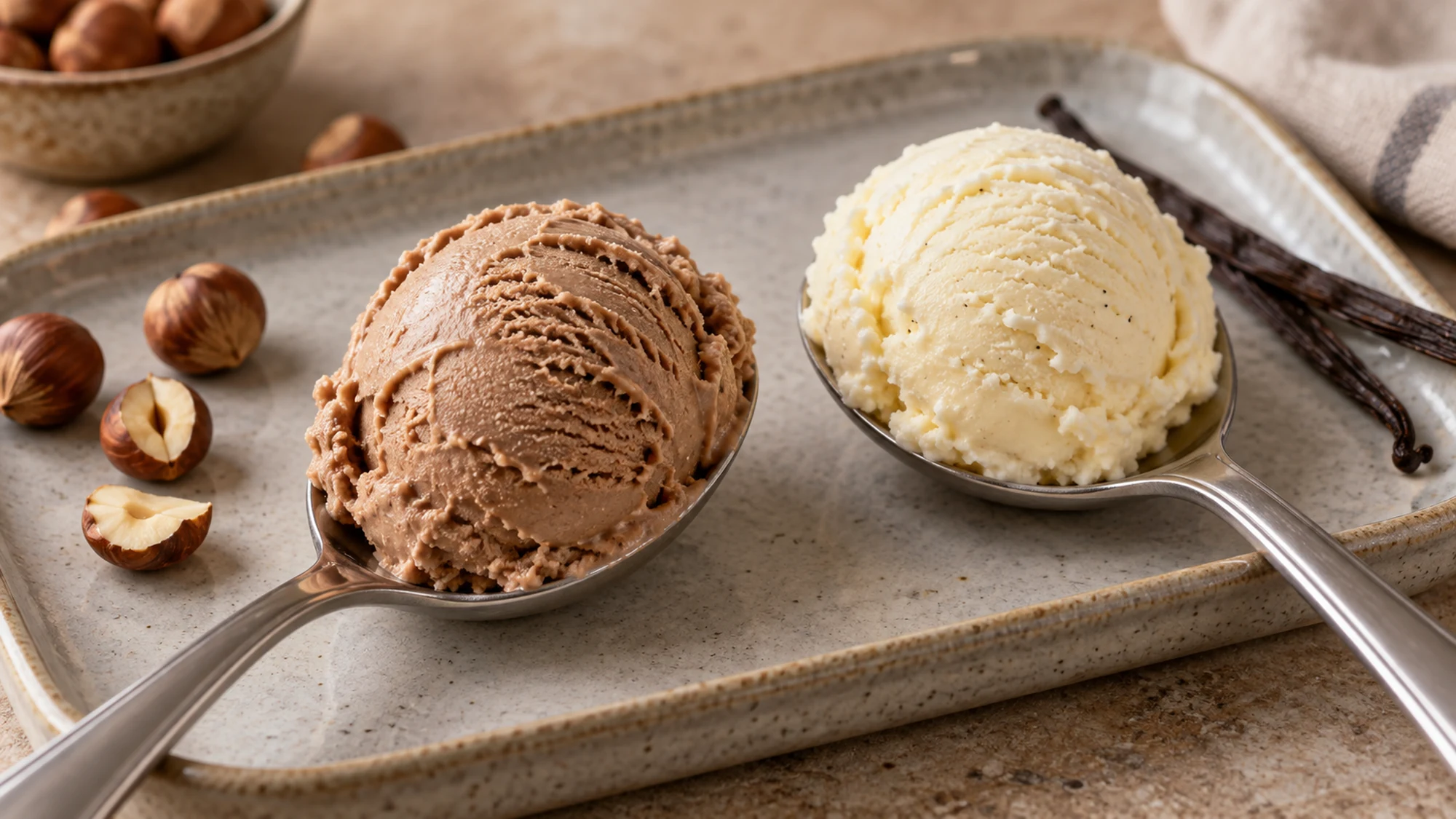
Fat is one part of the structure, but it is not the whole explanation. The Institute of Culinary Education’s ice cream science guide explains how fat, milk proteins, air, sweeteners and ice crystals work together. Small crystals and a balanced mixture matter alongside the cream content.
- Air changes density: a lower-air dessert can feel substantial even when it uses less cream.
- Sugar has a structural role: it affects freezing behavior as well as sweetness; removing it changes more than the flavor.
- Temperature changes firmness: a very cold sample is harder to judge against a softer one.
- Handling matters: large ice crystals can make either style feel coarse rather than smooth.
Creaminess is a texture outcome. It does not prove that a dessert contains more cream, less sugar or fewer calories.
Is gelato a healthier choice?
Sometimes a particular gelato has less fat than the ice cream beside it. That does not establish a consistent calorie or sugar advantage across brands and flavors. Compare the nutrition information for equivalent amounts and account for sauces, cones and other additions separately.
The FDA explains that labeled serving sizes describe customary consumption, rather than a recommended amount. If one carton lists a different portion, adjust the figures before deciding. For a fruit-and-yogurt alternative, Dishora’s strawberry Greek-yogurt frozen dessert is a separate category with its own ingredients and texture.
- Compare the same volume when judging what fits your usual bowl; note gram weights because density can differ.
- Read saturated fat and added sugars rather than relying on the dessert’s Italian name.
- Check ingredients for milk, eggs, nuts and other allergens; neither style name establishes their absence.
Choose and serve the scoop you want
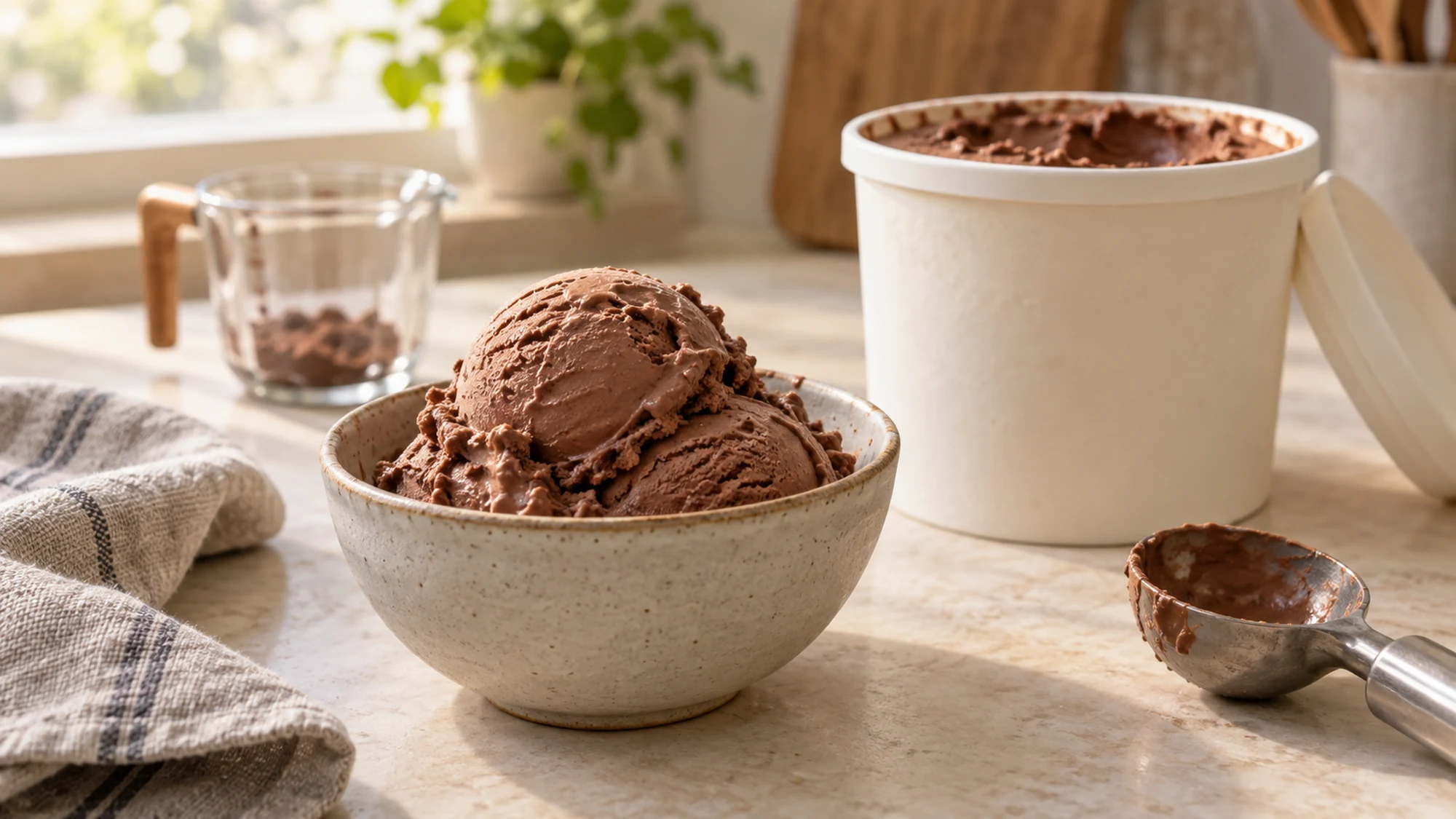
I prefer a modest first serving when comparing styles because it lets the texture be the point. A few slow spoonfuls tell you more about your preference than an argument over which category is superior. Ask about the shop’s actual ingredients if the formulation interests you.
At home, follow the carton’s serving and storage guidance, soften only the portion needed and return the rest to the freezer. Letting a dessert become a puddle to make it scoopable misses the pleasant middle ground. Choose gelato for its usual density or ice cream for the particular richness and texture you enjoy.
The best explanation is also the most useful buying tip: compare the actual scoop, portion and ingredients, then choose the one you want to eat.
Sources
- Penn State: gelato and ice cream differences.
- eCFR: ice cream standard of identity.
- Institute of Culinary Education: ice cream science.
- FDA: understanding serving sizes.
- Talenti: gelato formulation and serving style.

Emily Parker is DISHORA’s recipe-writing persona, bringing a warm, practical voice to everyday cooking. Her focus is simple ingredients, comforting flavors and clear steps that make a dish feel approachable. From cozy dinners to something sweet, Emily’s recipes invite readers to try something delicious and make it their own.