
A small number on a beer can is easy to compare until the next can is larger, stronger, or a different version of the same brand. The useful starting point is a consistent pour, followed by a look at alcohol by volume.
Beers that are low in calories include Corona Premier and Heineken Light at 90 calories, Heineken Silver at 95, and Coors Light at 102 per 12-fluid-ounce serving on their U.S. manufacturer pages. These products still contain alcohol. Fewer calories do not make drinking risk-free.
Beers that are low in calories, compared
Every row below uses the same 12 U.S. fluid ounces, approximately 355 milliliters. ABV means alcohol by volume, and carbohydrate values are in grams. The linked manufacturer pages provide the figures; check your specific package because formulations and market labels can change.
| Beer | Calories (kcal) | ABV | Carbohydrate (g) |
|---|---|---|---|
| Corona Premier | 90 | 4.0% | 2.6 |
| Heineken Light | 90 | 3.3% | 6 |
| Heineken Silver | 95 | 4.0% | 2.9 |
| Coors Light | 102 | 4.2% | 5 |
This is a comparison of four current labels, rather than an exhaustive ranking. Notice that the two 90-calorie options have different alcohol strengths and carbohydrate amounts. I prefer a table that keeps those differences visible; a calorie number alone hides useful context.
Compare the exact product name and serving volume first. “Light,” “Silver,” “Premier,” and the original version are separate products, so do not transfer one label’s numbers to another.
Why low sugar does not mean zero calories
Alcohol itself supplies about 7 calories per gram, according to MedlinePlus’s explanation of alcohol and calories. Carbohydrates can contribute additional energy. That is why a beer with little or no listed sugar can still contain a meaningful number of calories.
ABV is useful context, but it cannot tell you the exact calorie count by itself. Different products can have different carbohydrate amounts alongside their alcohol. If a label supplies calories, use that figure rather than trying to reconstruct the whole product from a front-of-can carbohydrate claim.
- Zero listed sugar does not mean zero calories.
- Fewer carbohydrates do not automatically mean fewer calories than every competing beer.
- A lower calorie count does not establish that a drink contains no alcohol.
Check the pour, not just the package
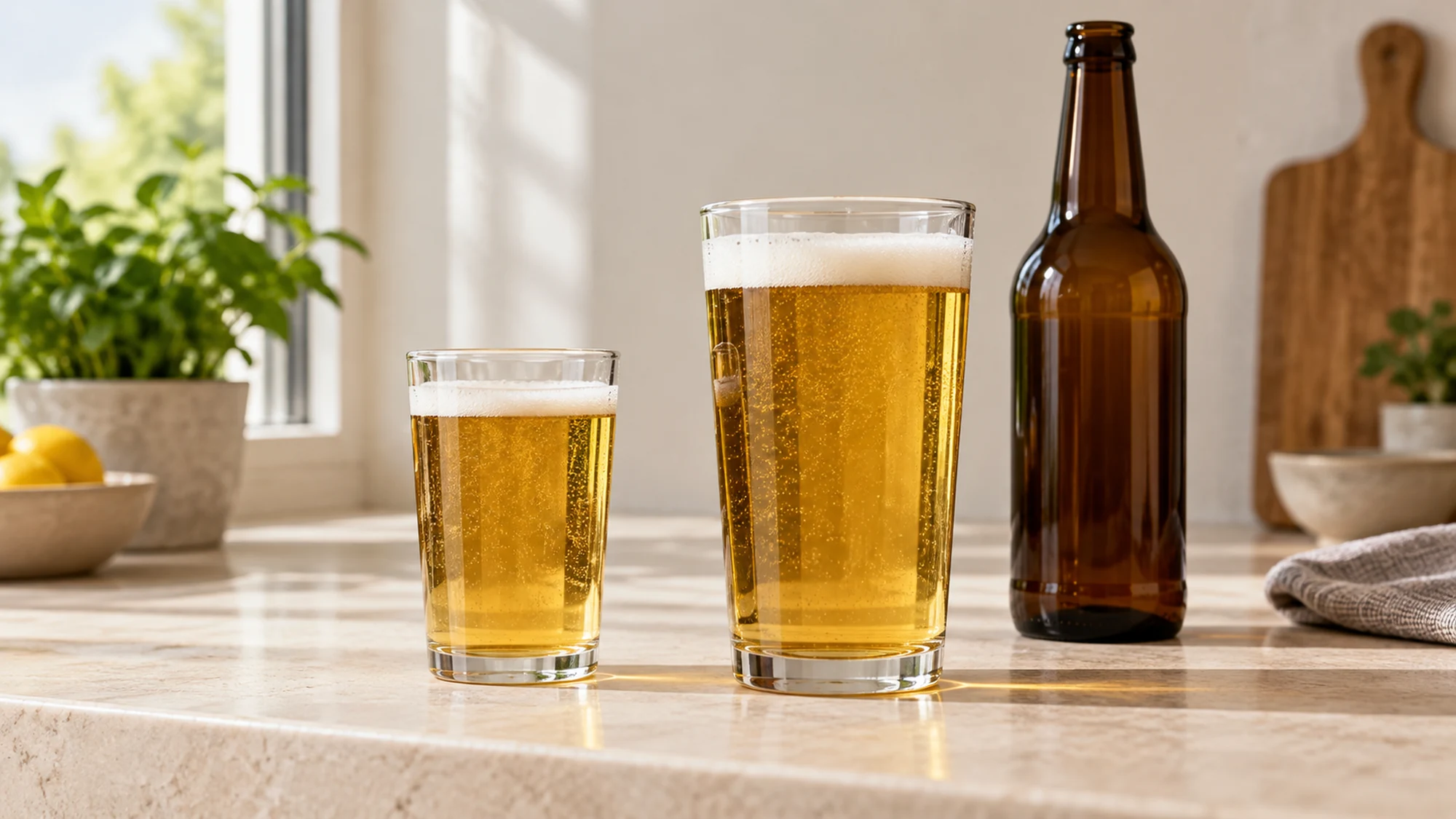
A 16-fluid-ounce pour is one-third larger than 12 fluid ounces. Using the published per-serving figures, 16 fluid ounces of a 90-calorie beer would contain about 120 calories; a 16-ounce pour of the 95-calorie option would contain about 127. These are proportional calculations, not additional manufacturer serving claims.
I would check the can size before comparing two packages on a shelf. At a bar, ask about the actual pour: the size of the glass and the name on the tap are more useful than guessing from the color of the beer.
- Find the serving volume attached to the calorie figure.
- Check the amount in the entire container.
- For a different pour, multiply listed calories by your ounces, then divide by the listed serving ounces.
Low calorie and alcohol free answer different questions
A 12-ounce beer at 5% ABV represents about one U.S. standard drink. The NIAAA drink-size calculator explains how both volume and alcohol strength affect that count. A larger pour of a lighter beer can still supply more alcohol than you expect.
If your aim is to avoid alcohol, a low-calorie light beer is the wrong category to rely on. Read the actual alcohol statement on a separately labeled alcohol-free or non-alcoholic product, and check its calories too. The calorie figure and alcohol statement answer different questions.
The CDC’s alcohol guidance states that drinking less or not drinking lowers alcohol-related risks. If you do not currently drink, do not start for health reasons. Choosing a lighter beer does not remove alcohol-related risks.
Use the label to make a practical choice
For adults who already choose to drink, a useful comparison starts with the exact version, equal servings, and the current label. Then consider flavor, cost, and the amount you intend to pour. There is little practical value in chasing a small calorie difference while overlooking a much larger container.
For another example of alcohol terms that need careful reading, our mezcal versus tequila guide separates the product differences. With beer, I would keep the decision similarly straightforward: check the details that describe the actual drink in front of you.
Use the table as a starting reference, then verify your package. Serving size and ABV belong beside calories in the decision, and choosing an alcohol-free alternative or water remains an option.
Sources
- Corona Premier: U.S. nutrition
- Heineken Light: U.S. nutrition
- Heineken Silver: U.S. nutrition
- Coors Light: U.S. nutrition
- MedlinePlus: alcohol and calories
- NIAAA: drink size
- CDC: alcohol-related risks

Emily Parker is DISHORA’s recipe-writing persona, bringing a warm, practical voice to everyday cooking. Her focus is simple ingredients, comforting flavors and clear steps that make a dish feel approachable. From cozy dinners to something sweet, Emily’s recipes invite readers to try something delicious and make it their own.