
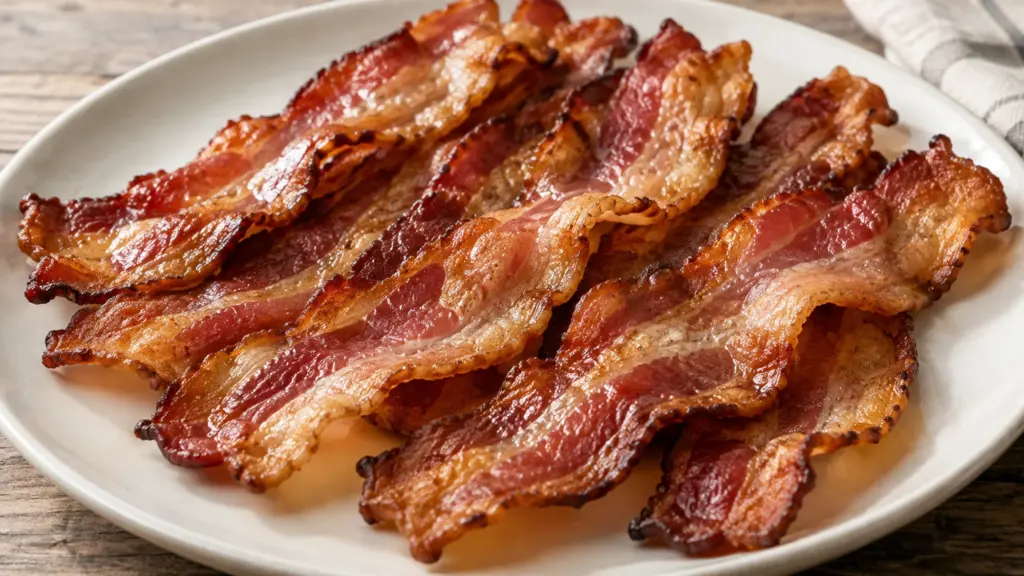
Breakfast can get surprisingly crowded on the stove when eggs, toast and bacon all want the same little patch of heat. This bacon thick cut recipe moves the strips to a rimmed baking sheet, where the oven renders their fat and browns the edges. The result is substantial bacon with a crisp bite, without standing over a popping skillet.
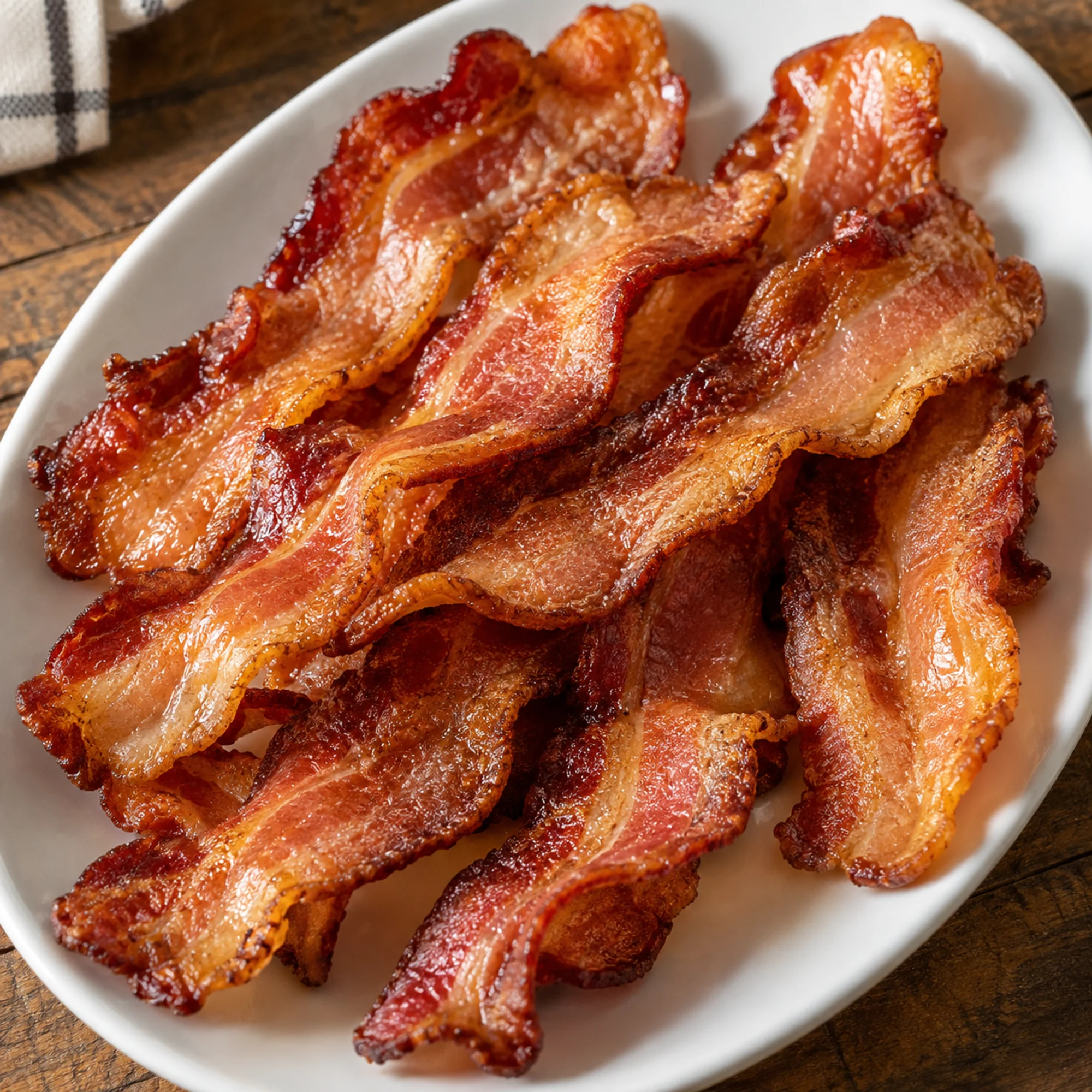
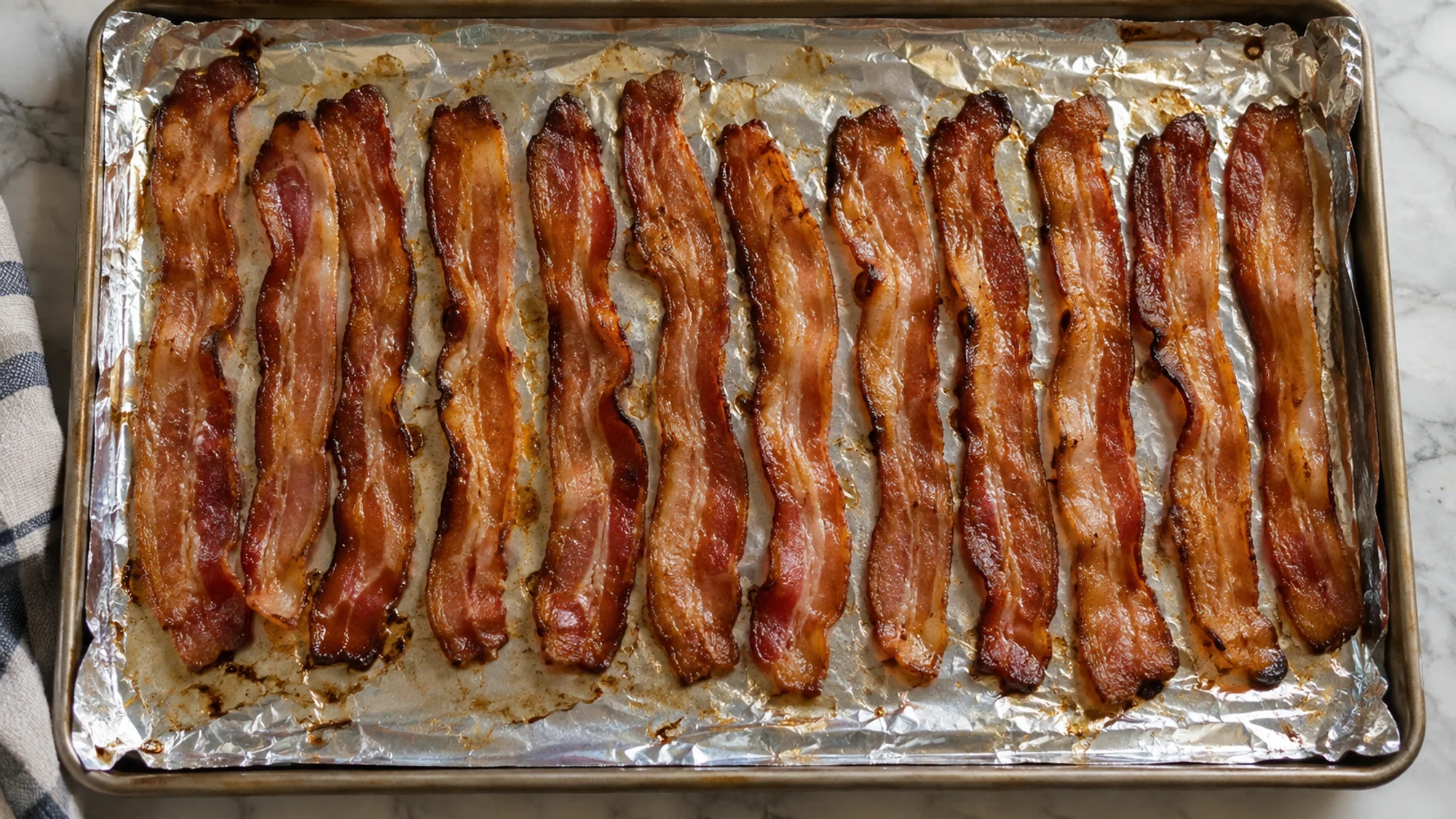
Give each strip its own space, then let the color and crispness guide the final few minutes.
I prefer this plain version because thick bacon already brings plenty of smoky, salty flavor. There is no glaze to scorch or seasoning to measure. The useful part is watching the transition from pale, soft fat to golden, crisp edges, then draining the strips before they reach the table.
Serving suggestions
Serve a few strips alongside eggs, sliced tomatoes and whole-grain toast for a breakfast with different textures. For a sweeter plate, pair bacon with French toast and fresh fruit. I would keep syrup on the toast so the bacon stays crisp rather than becoming sticky.
Beyond breakfast, crumble a strip over a baked potato, tuck pieces into a tomato sandwich or scatter a little over a bowl of soup. Its strong flavor means a small amount can season a larger meal. Add bacon just before serving when crunch matters; sitting in soup or dressing will soften it.
If everything else needs more time, drain the bacon and keep it briefly on a clean plate while you finish. Avoid stacking hot strips tightly under a cover, where trapped steam works against those crisp edges. The full batch makes six modest servings, with the actual slice count depending on the package.
Let bacon bring the crunch, then build the rest of the plate around it.
Variations
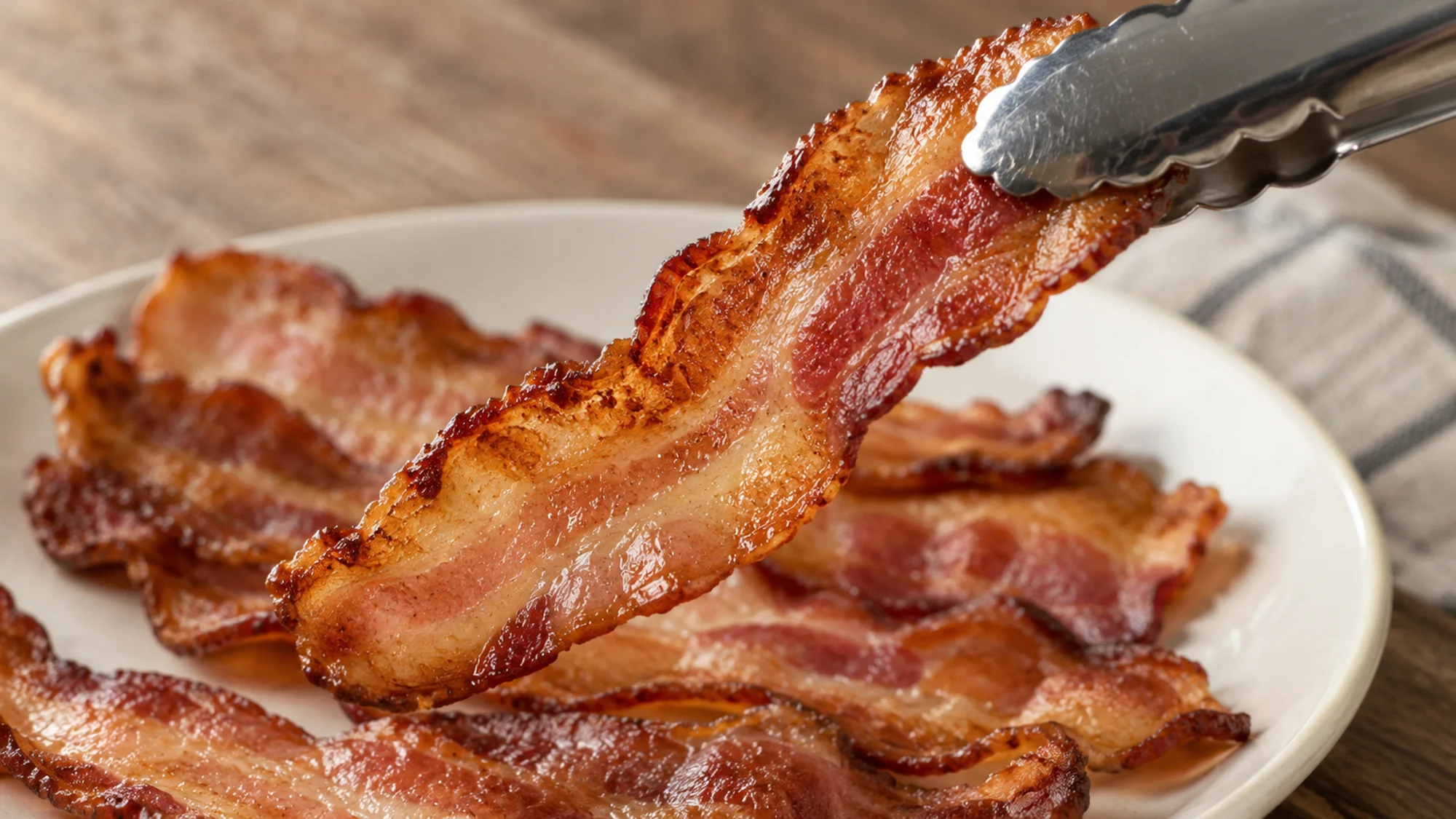
The main variation is thickness. Two packages labeled thick-cut can contain noticeably different slices, so the baking window is a starting point. Begin checking early, especially for strips near the pan edges. If some finish first, lift them out with tongs and let the remaining pieces continue cooking.
Maple-smoked and applewood-smoked bacon work with the same method, but check the label for added sugars. Sweetened bacon may darken sooner. I would skip an extra sugary coating for this recipe; plain bacon keeps the oven method straightforward and makes it easier to judge the surface color.
A wire rack is optional in many oven methods, but this version cooks directly on a lined sheet. Use a sturdy pan with raised sides to contain the fat, never a flat cookie sheet. If the pound will not fit without overlap, use two pans and swap their positions rather than making a second layer.
Adjust the space and cooking time to the bacon you actually have.
Health benefits
Bacon contributes protein, but it also contains sodium and saturated fat, so portion size deserves attention. The oven does not turn it into a low-sodium food. Draining removes surface grease; it does not remove the salt already present in the meat. Treat bacon as a flavorful part of a varied meal.
Compare packages using the same serving weight on the Nutrition Facts label. Claims such as uncured do not automatically mean low sodium. Choose according to your needs, and let vegetables, fruit and higher-fiber foods share the plate.
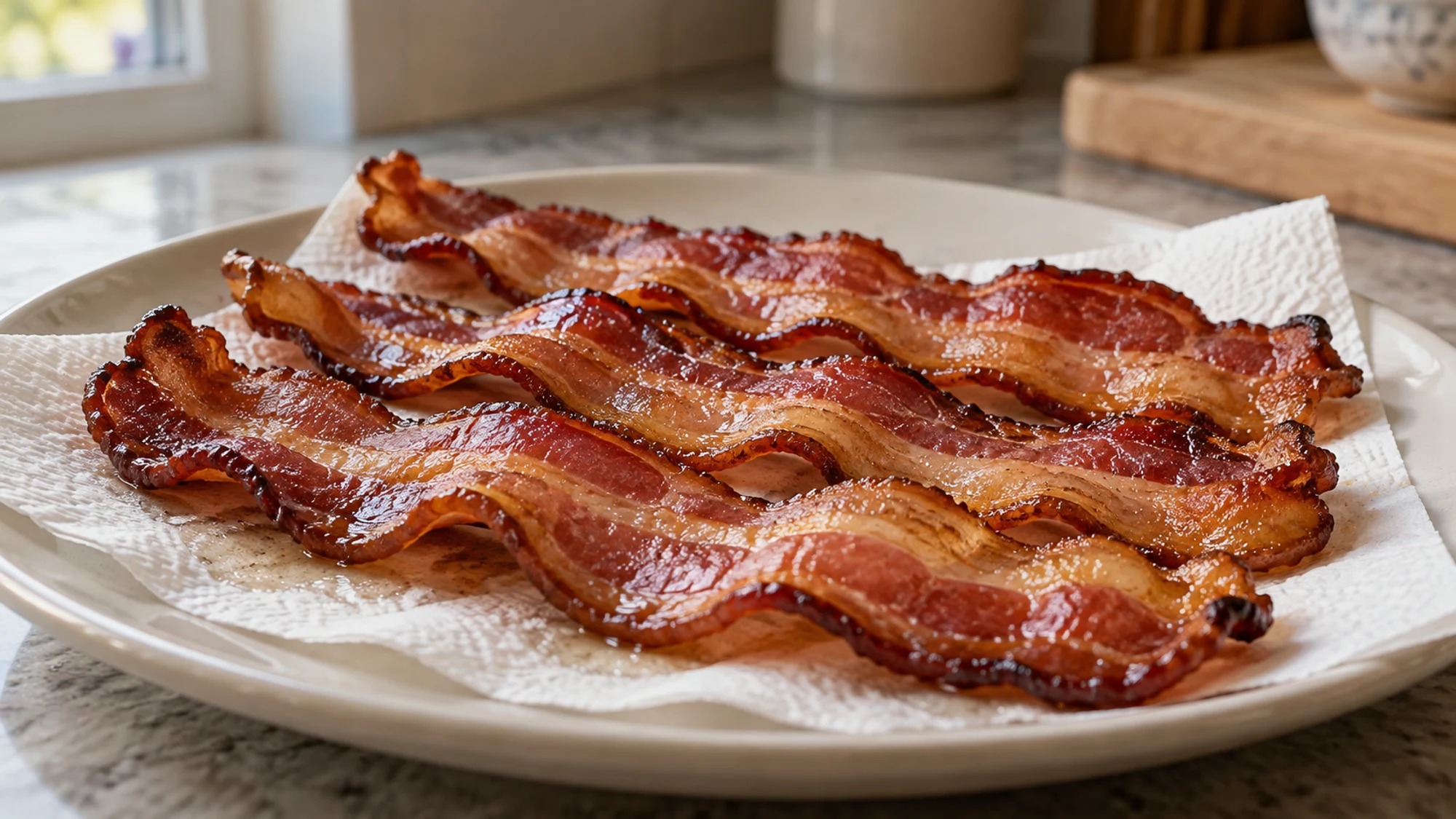
For safe bacon preparation, cook the strips completely rather than saving a partially cooked batch to finish later. Cured bacon can retain pink tones, so color alone is not a complete guide; look for fully rendered fat and crisp texture without burning.
Enjoy the flavor in a sensible portion, with plenty of variety beside it.
Motivation conclusion
This is a useful technique for mornings when you want one less pan demanding constant attention. Line the tray, leave room between the strips and stay nearby as they approach the end of cooking. The last few minutes make more difference than an extra topping ever could.
You do not need identical strips or a perfectly styled platter. A well-rendered piece with a crisp edge is the goal. Once the bacon is drained, take a bite with something fresh or soft alongside it and enjoy the contrast. Keep the timing notes nearby for your next package, since a different brand may need a different finish.
A little space on the tray makes breakfast feel easier.
Bacon Thick Cut Recipe

Ingredients
- 1 lb thick-cut bacon About 12–16 slices, depending on brand; no additional oil needed
Equipment
- Large rimmed baking sheet 18 × 13 inches; use a second sheet if needed to avoid overlap
- Aluminum foil
- Tongs
- Oven mitts
- Plate and paper towels
- Oven
Instructions
- Line a large rimmed baking sheet with foil. Set paper towels on a plate for draining.
- Heat the oven to 400°F (205°C). Arrange the bacon in a single layer on the lined sheet without overlapping. Use a second rimmed sheet if necessary.
- Bake on the middle rack for about 20–30 minutes, checking at 15 minutes and more often near the end. Rotate the sheet if browning is uneven. If using two sheets, swap their rack positions halfway through. Cook until the fat is rendered and the strips are crisp, without blackening; remove individual finished strips with tongs as needed.
- Use tongs to transfer the fully cooked bacon to the paper-towel-lined plate. Drain for about 3 minutes before serving. Let the pan and grease cool in a safe spot before handling or disposal; never pour grease down a drain.
Notes
Tried this recipe?
Let us know how it turned out!Emily Parker is DISHORA’s recipe-writing persona, bringing a warm, practical voice to everyday cooking. Her focus is simple ingredients, comforting flavors and clear steps that make a dish feel approachable. From cozy dinners to something sweet, Emily’s recipes invite readers to try something delicious and make it their own.