
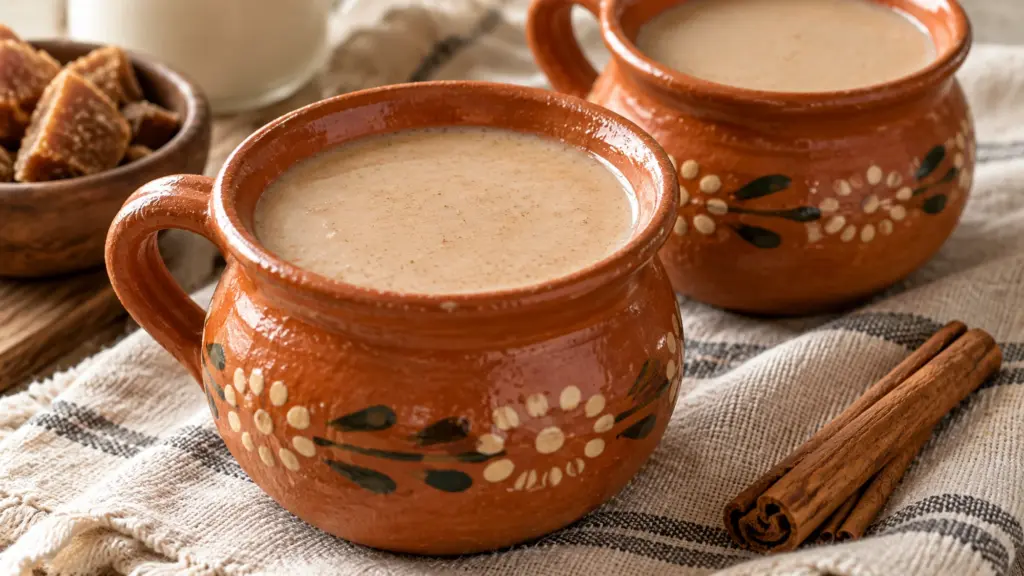
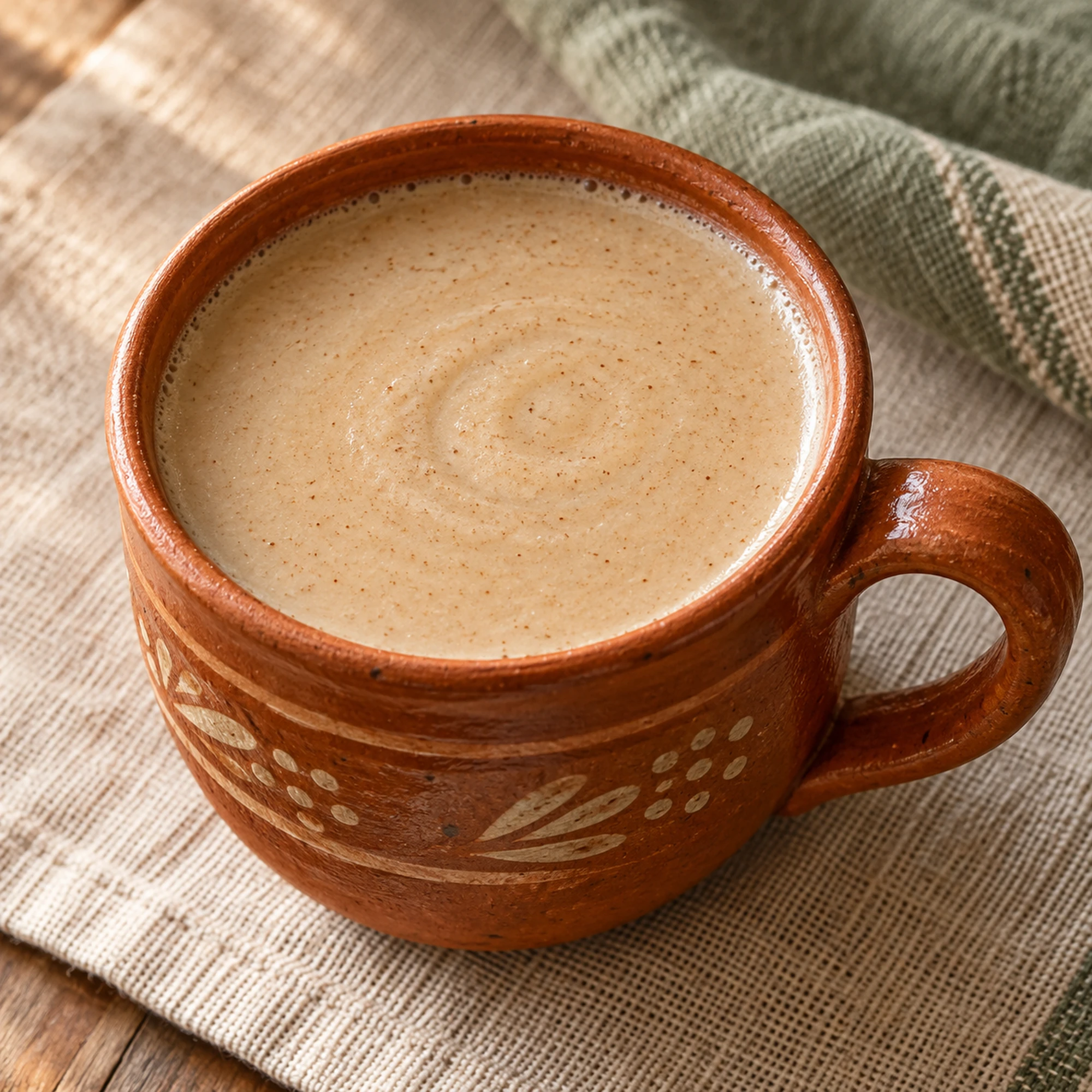
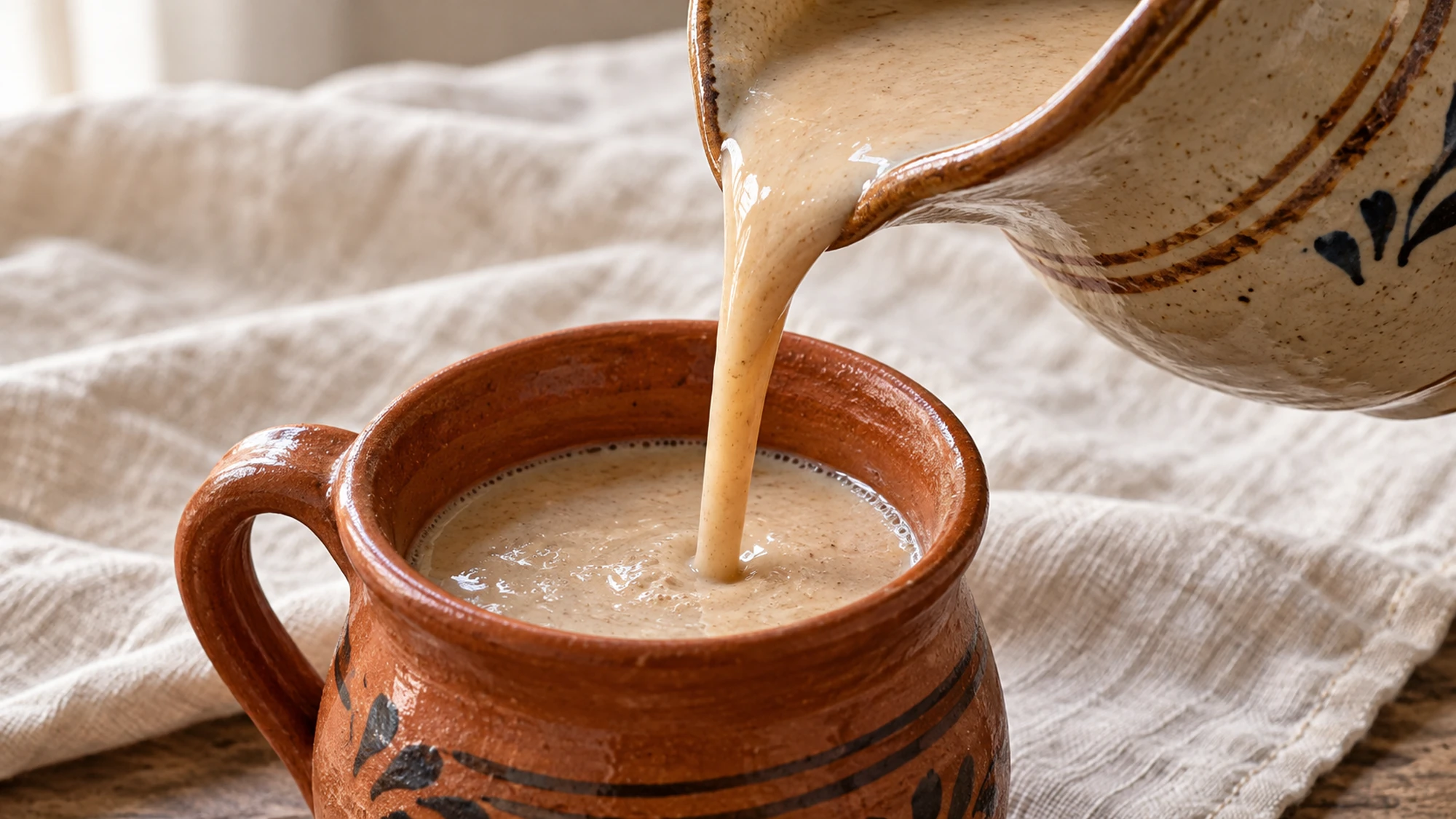
When the kitchen feels chilly and coffee sounds too sharp, a mug of atole de pinole offers something gentler: toasted corn, warm milk and a soft cinnamon aroma. This Mexican drink gets its body from finely ground roasted corn. It should flow into your cup, with a little graininess that belongs to the ingredient.
For a smooth-starting atole, whisk the pinole with cold water before it meets the hot milk. Gentle heat and frequent stirring give the corn time to hydrate without scorching the bottom of the pot.
Check your pinole’s ingredients before you begin. This recipe uses plain, unsweetened toasted white or yellow corn, finely ground, with no added sugar, cacao or spices. Other blends can be quite different. I’d choose the simplest label here so the sweetness and cinnamon stay in your hands.
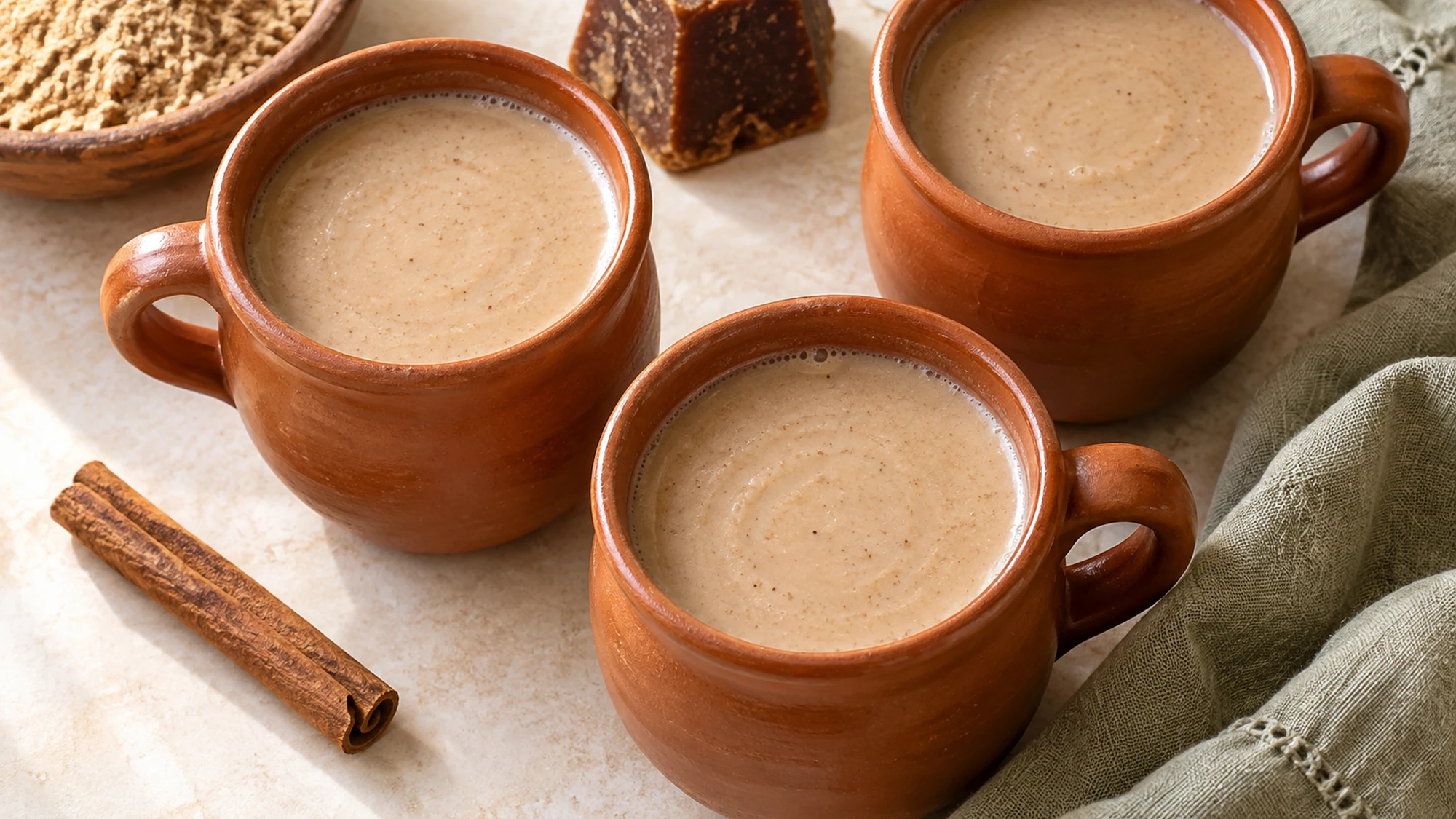
Serving suggestions for atole de pinole
Pour the atole into four small mugs and let it cool enough to sip comfortably. A brief stir before pouring redistributes the fine corn particles. The texture will thicken as it stands, so keep a little hot water nearby if the last mug needs loosening.
- Pair a modest serving with a savory breakfast, such as eggs and a warm tortilla, for a contrast to the drink’s sweetness.
- Serve smaller cups beside pan dulce when you want a simple afternoon snack. The bread brings additional sweetness, so taste the atole before adding more sugar.
- For another cinnamon-scented breakfast idea, try apple cinnamon baked oatmeal on a different morning.
Refrigerate leftovers promptly in shallow covered containers, within two hours, and use within three to four days. Reheat only what you need to 165°F, stirring and adding water as needed. Don’t leave the saucepan on the counter all afternoon.
Serve warm, stir between pours and adjust thickness a spoonful of water at a time. Atole is a drink, although the spoon may be tempted to stay.
Variations without losing the toasted-corn flavor
The plain pinole is the anchor; the liquid and sweetener leave room for preference. Piloncillo adds a deeper cane-sugar flavor, and finely grating it helps it dissolve. Avoid forcing a knife through a rock-hard cone; a stable grater is easier to control.
- For a lighter, dairy-free version, replace the milk with the same amount of water. Expect less creaminess and different nutrition.
- Use 50 grams of packed dark brown sugar if piloncillo is unavailable. The flavor changes slightly, but it dissolves readily.
- For less sweetness, begin with 25 grams of piloncillo. Taste a cooled spoonful after the corn cooks before deciding whether to add more.
- Blue-corn pinole is another option if it contains only toasted corn. It changes the drink’s color, so don’t expect the pale tan appearance shown here.
Ordinary cornmeal, masa harina and sweetened instant atole powder are not direct swaps. Their processing, grind or added ingredients change the flavor and thickening. Weigh the pinole when possible; a loosely filled half cup can vary considerably between products.
Change one thing at a time, and let the toasted corn remain recognizable. I prefer gentle cinnamon here; a heavily spiced mug can hide the pinole’s particular flavor.
Health benefits and a realistic nutrition picture
Corn contributes carbohydrate and some fiber; milk adds protein and calcium. One-quarter of this recipe is estimated at about 200 calories, six grams of protein and two grams of fiber. These are approximate values for the stated ingredients, not promises that every pinole brand has the same composition.
- Piloncillo counts as added sugar. Its color and less-refined character do not make it a sugar-free ingredient.
- Whole milk contributes saturated fat as well as creaminess. A lower-fat milk changes both the body and nutrition.
- The recipe contains milk. For anyone avoiding gluten, check the pinole’s ingredients and gluten-free labeling rather than relying on corn alone.
Enjoy the warmth and toasted flavor while keeping the portion in perspective. The nutrition estimate describes this mug; it does not turn a traditional drink into a remedy.
Make room for a warm mug
Atole de pinole rewards attention more than elaborate equipment. Start with the right corn ingredient, take a moment over the cold slurry and stay near the stove as the mixture warms. A gentle simmer is enough; a fierce boil only makes the milk harder to manage.
When the atole lightly coats a spoon and pours easily, remove the cinnamon and share it while it is warm. The card below keeps the quantities and sequence together, so you can focus on the pot and the pleasantly toasty aroma.
Atole de Pinole Recipe

Ingredients
- 80 g unsweetened finely ground pinole about 1/2 cup; 100% toasted white or yellow corn, with no sugar, cacao or spices
- 2 cups water 480 mL, divided; plus 2–4 tbsp if needed to thin
- 2 cups whole milk 480 mL
- 50 g finely grated piloncillo about 1/4 cup packed
- 1 canela cinnamon stick about 3 inches long / 2 g
Equipment
- 1 Heavy 2-quart saucepan
- 1 Whisk and spoon
- 1 Heat-safe liquid measuring jug at least 2 cups capacity, for the slurry
- 1 Kitchen scale or measuring cups weighing the pinole is more reliable
- 1 Grater for the piloncillo
- 1 Food thermometer for reheating leftovers
Instructions
- In a heat-safe measuring jug, whisk the pinole with 1 cup (240 mL) of the cold water until no dry clumps remain. Set aside briefly.
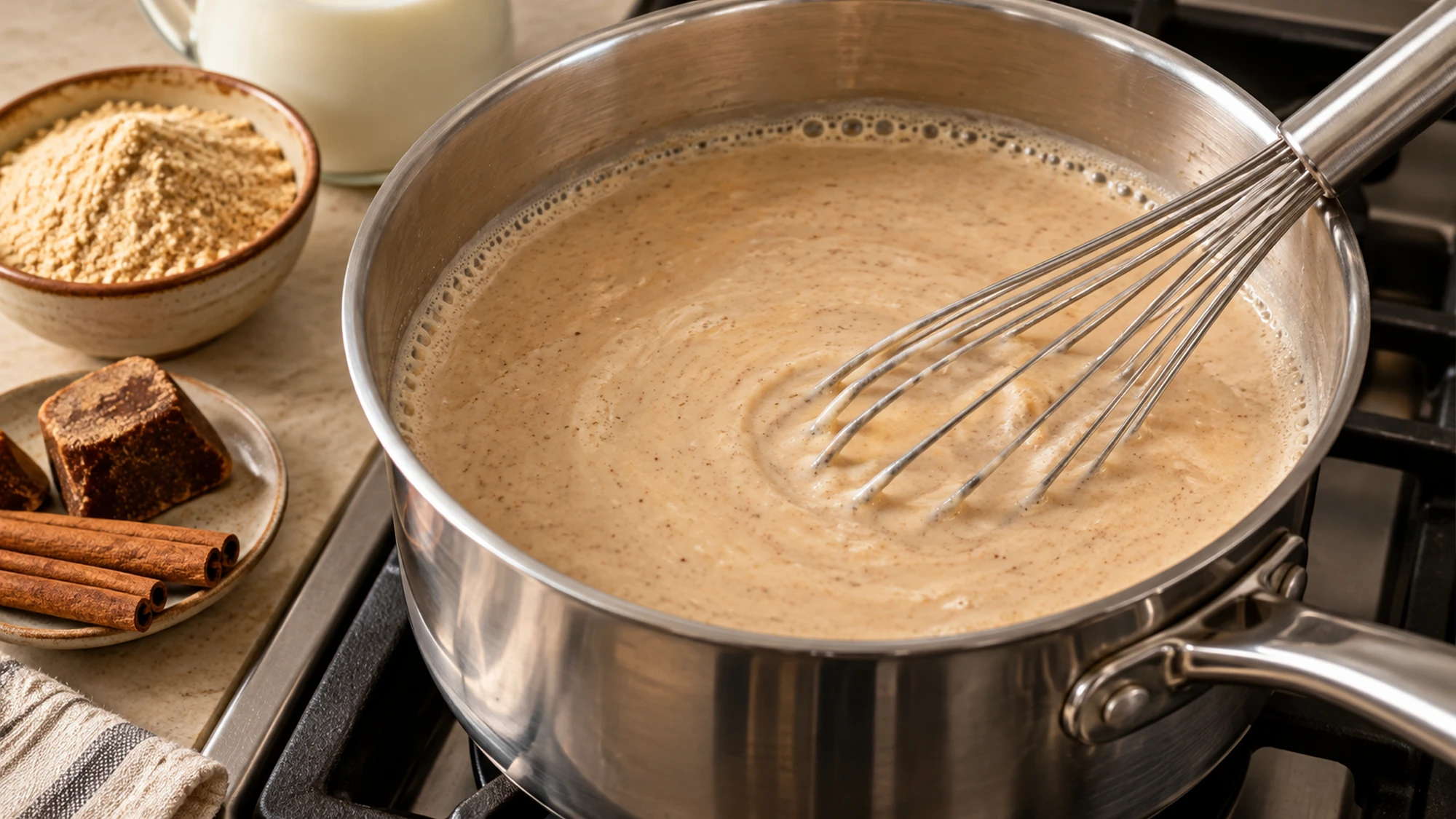
- Put the milk, remaining 1 cup (240 mL) water, grated piloncillo and cinnamon stick in a heavy 2-quart saucepan. Warm over medium-low heat, stirring to dissolve the sugar, until small bubbles appear around the edges, about 4–5 minutes. Do not let the milk boil hard.
- Whisk the slurry again, since corn particles settle. Pour it slowly into the warm milk while whisking continuously. Bring back to a gentle simmer over medium-low heat.
- Cook at a gentle simmer for 10–12 minutes, stirring frequently and scraping the bottom and corners of the pan. The atole should lightly coat a spoon and still pour easily. Fine graininess is normal. If too thick, stir in 2–4 tablespoons of hot water; cook a little longer if too thin.
- Remove and discard the cinnamon stick. Stir, divide among four small mugs and let cool to a comfortable sipping temperature. Stir again before pouring later servings; the atole thickens as it stands.
Nutrition
Video
Notes
Tried this recipe?
Let us know how it turned out!Emily Parker is DISHORA’s recipe-writing persona, bringing a warm, practical voice to everyday cooking. Her focus is simple ingredients, comforting flavors and clear steps that make a dish feel approachable. From cozy dinners to something sweet, Emily’s recipes invite readers to try something delicious and make it their own.