
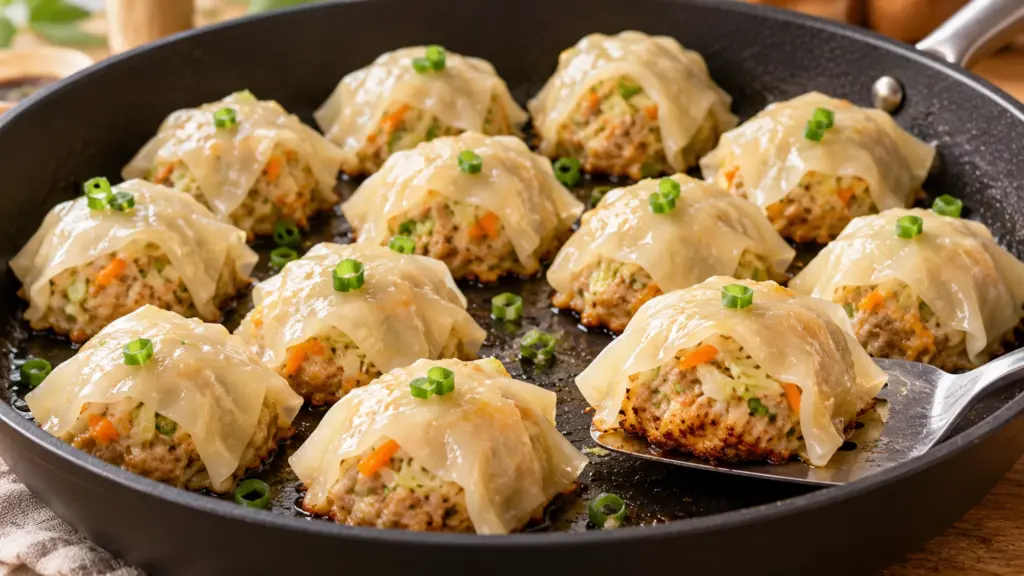
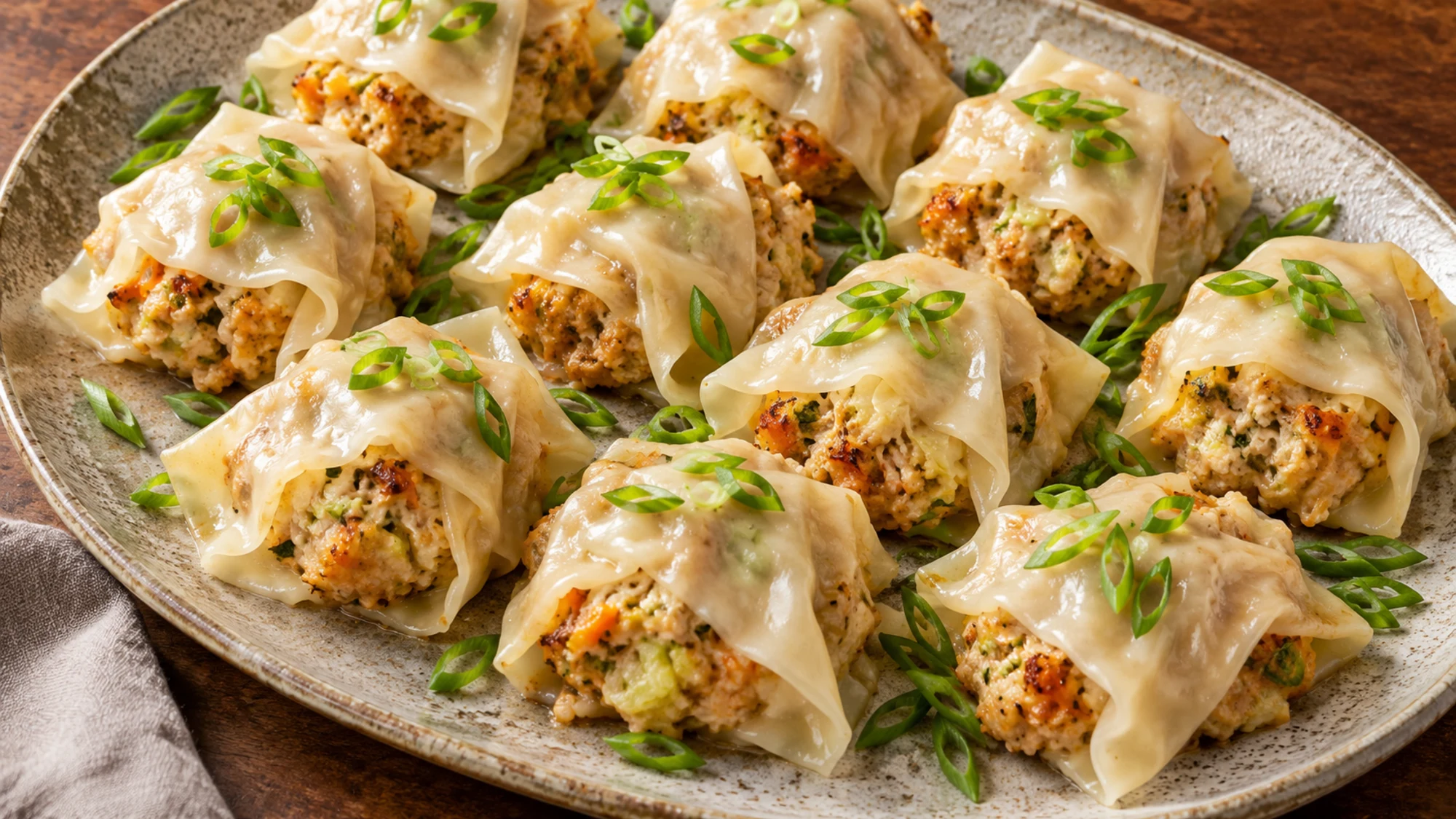
A stack of wonton wrappers can make dinner feel like a tiny craft project. Chicken blanket dumplings take a friendlier route: spoon the filling into a skillet, drape a wrapper over each mound, and let steam soften the tops while the chicken cooks underneath. You get tender wrappers, savory ginger-scallion filling, and golden bases without folding a single pleat.
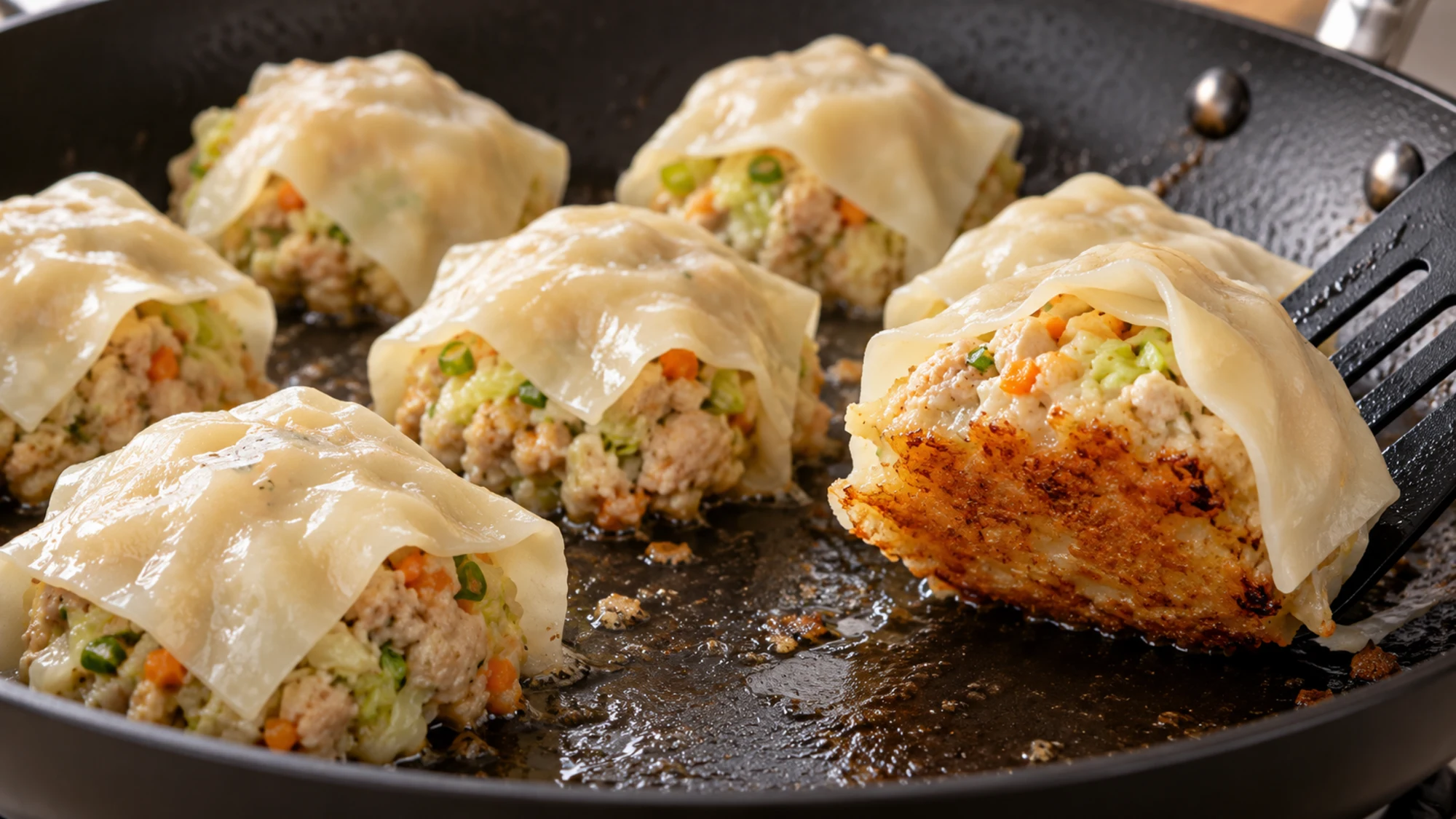
The trick is to steam first and finish uncovered. Once the water evaporates, the chicken bases can brown while the thin wonton blankets stay soft.
This version makes twelve dumplings, enough for four modest servings with sides, in about thirty minutes. I prefer a wide nonstick pan here because the exposed filling needs to release cleanly. Keep the mounds low and evenly sized; a dramatic mountain of chicken makes the center harder to cook. The wrappers are doing blanket duty, not construction work.
Serving suggestions
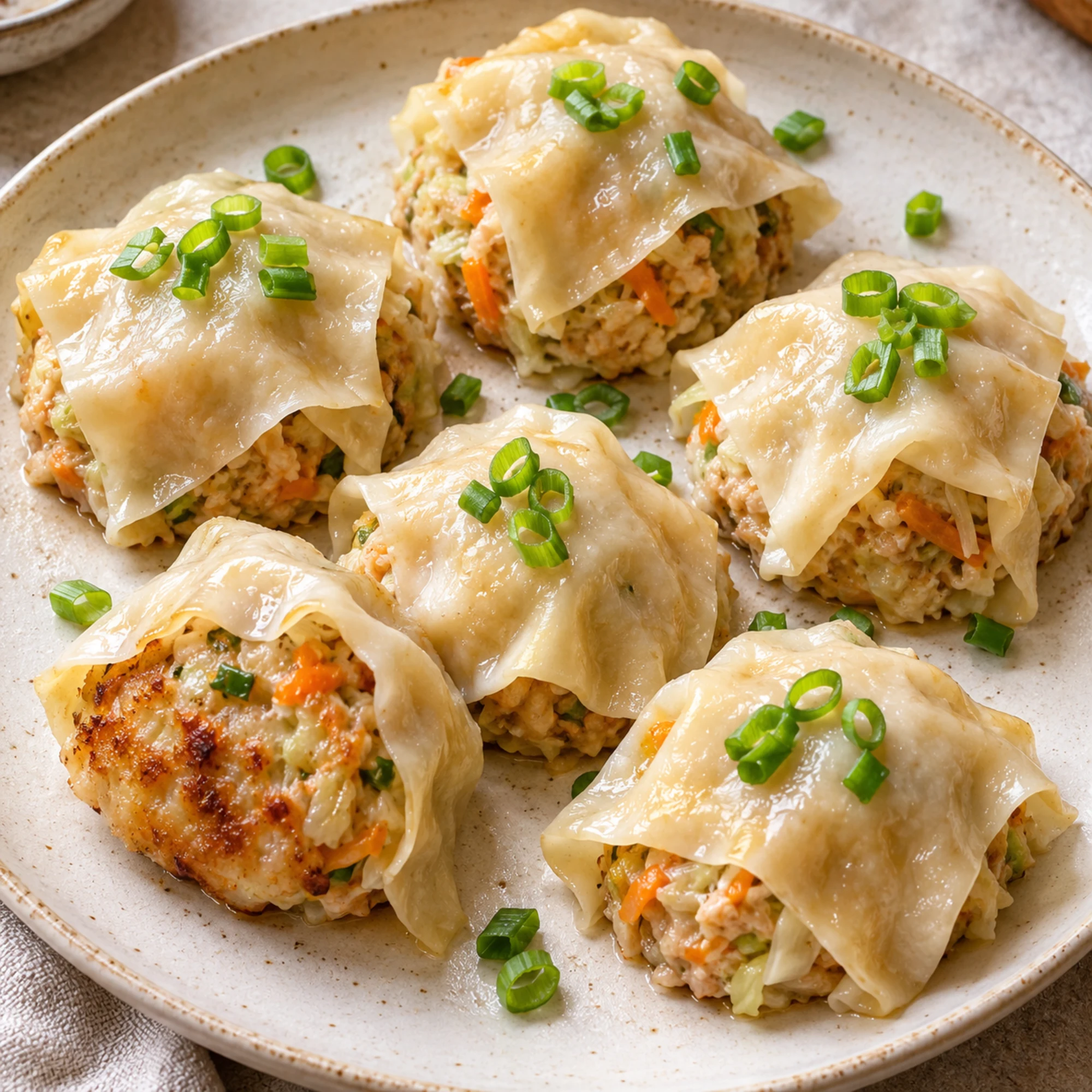
Serve chicken blanket dumplings as soon as the bases turn golden. Their contrast is most noticeable straight from the skillet, before trapped steam softens the crust. The filling already contains two savory sauces, so taste a cooked dumpling before reaching for another drizzle.
- Make a dinner plate: Add steamed rice and a crunchy vegetable side. Three dumplings per person leave room for both; bigger appetites may prefer a more generous portion.
- Keep the side bright: A cool carrot ribbon salad with sesame-ginger dressing echoes the aromatics while bringing a different texture.
- Offer heat separately: Put chili crisp or chili oil on the table instead of mixing it through the whole batch. Optional sauces and sides are extra to the card’s estimates.
For leftovers, refrigerate promptly in a shallow covered container and use within three to four days. Reheat with a splash of water under a lid, then uncover briefly. Check that the centers reach 165°F (74°C); expect softer wrappers than the freshly cooked batch.
A crisp vegetable side and a little rice give the tender dumplings a good supporting cast. Keep extra sauce on the side so each person can choose.
Variations
Thin wonton wrappers drape most easily over these small mounds. Keep the unused stack covered while you work; dry edges can crack instead of settling around the filling. This is an open-bottom dumpling, so you don’t need to tuck the wrapper underneath or pinch it shut.
- Choose a different wrapper: Round dumpling wrappers also work, but thicker dough may need additional covered cooking and a small splash of water. Check that no floury patches remain.
- Change the poultry: Ground turkey can replace the chicken by weight. Its fat content and flavor vary, so keep the same thermometer check rather than assuming identical timing.
- Adjust the seasoning: Use the measured less-sodium soy sauce as written before adding more. Oyster sauce brings sweetness and savoriness as well as salt; another spoonful changes all three.
- Keep vegetables small: Finely chop cabbage and grate the carrot. Large, stiff pieces make uneven mounds and can hold the wrapper away from the filling.
Change one element at a time and keep the portions even. Wrapper thickness and mound size matter more to timing than how neatly each blanket falls.
Health benefits
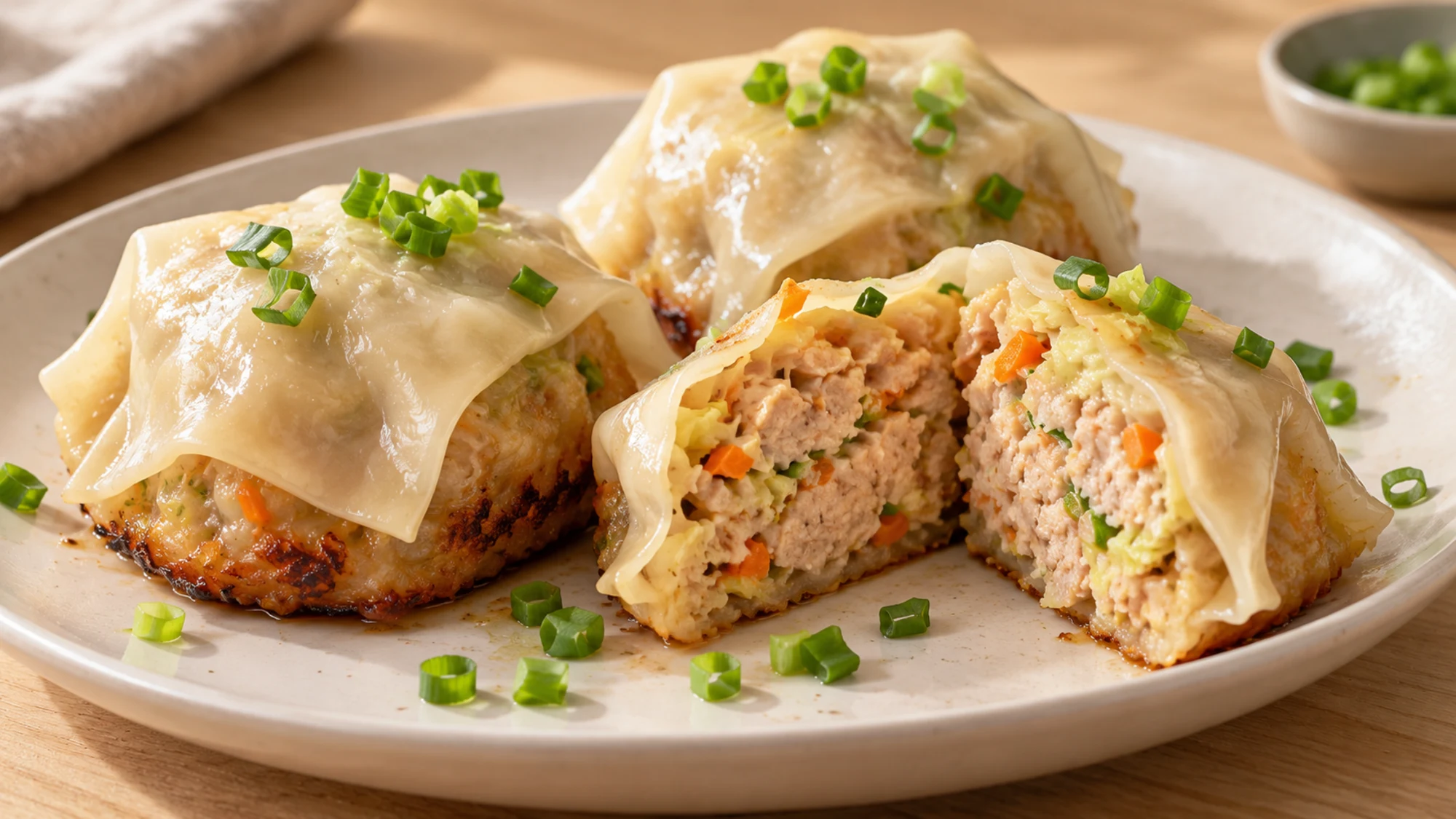
Chicken and egg provide protein, while cabbage, carrot, and scallions add vegetables to the filling. That is a useful combination, though the amount of vegetables per serving is modest. I’d still add a vegetable side rather than asking a few carrot flecks to carry the entire meal.
- Portions matter: The card estimates one-quarter of the batch, or three dumplings, including the cooking oil. Brands, wrapper weights, and ground-chicken fat content change the numbers.
- Check the labels: Less-sodium soy sauce still contains sodium. Wheat, soy, egg, sesame, and oyster ingredients also matter when checking allergies.
- Use temperature: Follow the safe internal temperature for ground poultry: 165°F (74°C). A browned bottom alone cannot confirm a cooked center.
Think of these as a protein-containing main with room for more vegetables alongside. Their appeal is an approachable dinner, without a sweeping health promise.
Motivation conclusion
If folding has kept homemade dumplings off your dinner list, this method gives you a sensible place to begin. Focus on evenly sized mounds, a snug lid, and a thermometer. Once the chicken is cooked, the last uncovered minutes are about texture: let the water disappear, listen for the sizzle to return, and lift gently when the bases release.
I’d choose those small checks over perfect-looking corners every time. Set out your side dish before the lid comes off, then bring the dumplings to the table while their tender tops and golden bases are at their best.
Chicken Blanket Dumplings Recipe

Ingredients
- 1 pound ground chicken 454 g; about 92–93% lean
- 1 cup green cabbage, very finely chopped 90 g; discard tough core
- 1/2 cup carrot, finely grated 55 g
- 3 scallions, thinly sliced about 30 g; reserve 1 tablespoon of the green slices for serving
- 1 large egg about 50 g without shell
- 1 tablespoon cornstarch 8 g
- 1 tablespoon less-sodium soy sauce 15 ml
- 1 tablespoon oyster sauce about 18 g
- 1 teaspoon toasted sesame oil 5 ml
- 1 teaspoon fresh ginger, finely grated about 5 g
- 1 clove garlic, finely grated about 3 g
- 12 thin square wonton wrappers about 80 g total; keep covered until needed
- 1 tablespoon neutral cooking oil 15 ml, for the pan
- 3/4 cup water 180 ml, for steaming; add another splash only if needed
Equipment
- 12-inch nonstick saute pan with a snug lid
- Large mixing bowl and spoon
- Measuring cups, spoons and kitchen scale
- Knife, grater and cutting board
- Thin silicone turner
- Instant-read thermometer
Instructions
- In a large bowl, mix the ground chicken, cabbage, carrot, scallions (reserving 1 tablespoon of the green slices), egg, cornstarch, soy sauce, oyster sauce, sesame oil, ginger and garlic until evenly combined and slightly sticky. Do not taste the raw filling.
- Spread the neutral oil over the bottom of a cold 12-inch nonstick saute pan. Divide the filling into 12 equal mounds, about 1/4 cup each, with space between them. Flatten gently to about 1 inch high. Drape one wonton wrapper over each mound and lightly press it onto the top and sides; leave the underside open.
- Place the pan over medium heat. Cook for about 2 minutes, until the chicken bases begin to set. Do not move the dumplings yet.
- Carefully pour the 3/4 cup water around the dumplings, keeping your hands away from splattering oil. Cover immediately with a snug lid. Maintain a steady simmer over medium to medium-low heat for about 8–10 minutes, until the wrappers are soft and the thickest chicken centers reach at least 165°F (74°C) on an instant-read thermometer. If the pan dries before the centers are done, add a small splash of water and continue covered. Follow any higher temperature specified on the chicken package.
- Remove the lid, lifting it away from you. Cook for another 2–3 minutes, until the water evaporates and the bases become golden brown. Reduce the heat if they darken too quickly. Slide a thin silicone turner beneath each dumpling, scatter with the reserved scallion greens, and serve at once. Makes 12 dumplings; allow 3 per serving with sides.
Nutrition
Video
Notes
Tried this recipe?
Let us know how it turned out!Emily Parker is DISHORA’s recipe-writing persona, bringing a warm, practical voice to everyday cooking. Her focus is simple ingredients, comforting flavors and clear steps that make a dish feel approachable. From cozy dinners to something sweet, Emily’s recipes invite readers to try something delicious and make it their own.