
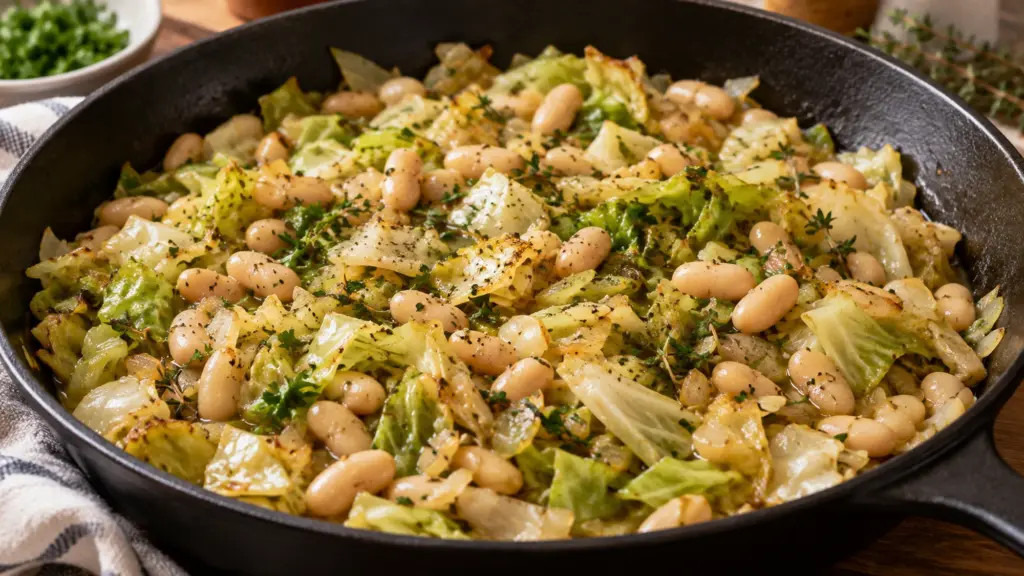
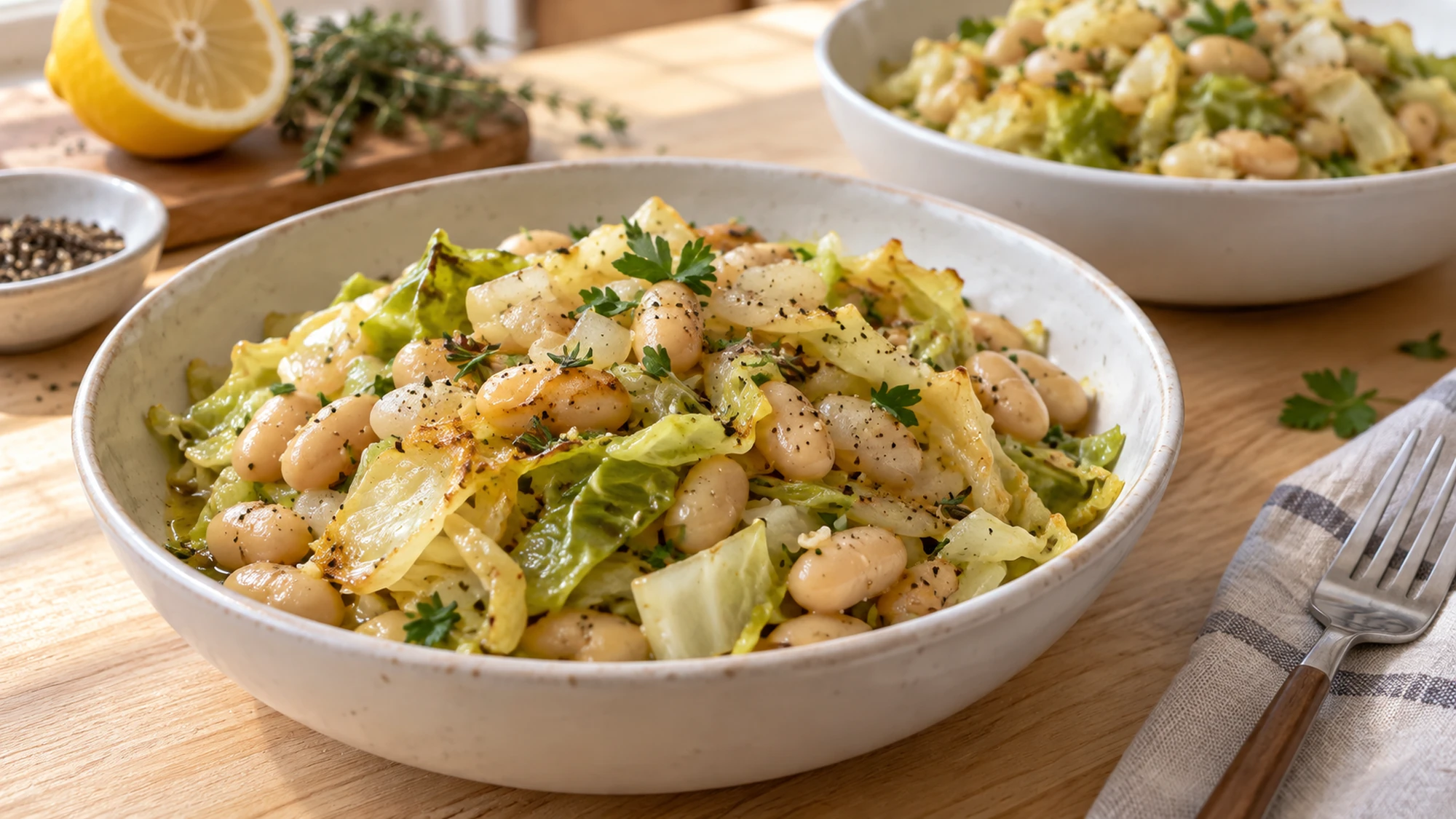
A half head of cabbage has a way of lingering in the crisper while dinner plans move on without it. This cabbage and white bean skillet gives it a useful job: soften in a wide pan, pick up lightly golden edges, then meet creamy cannellini beans, garlic and lemon. There is enough moisture to bring everything together, without turning the pan into soup.
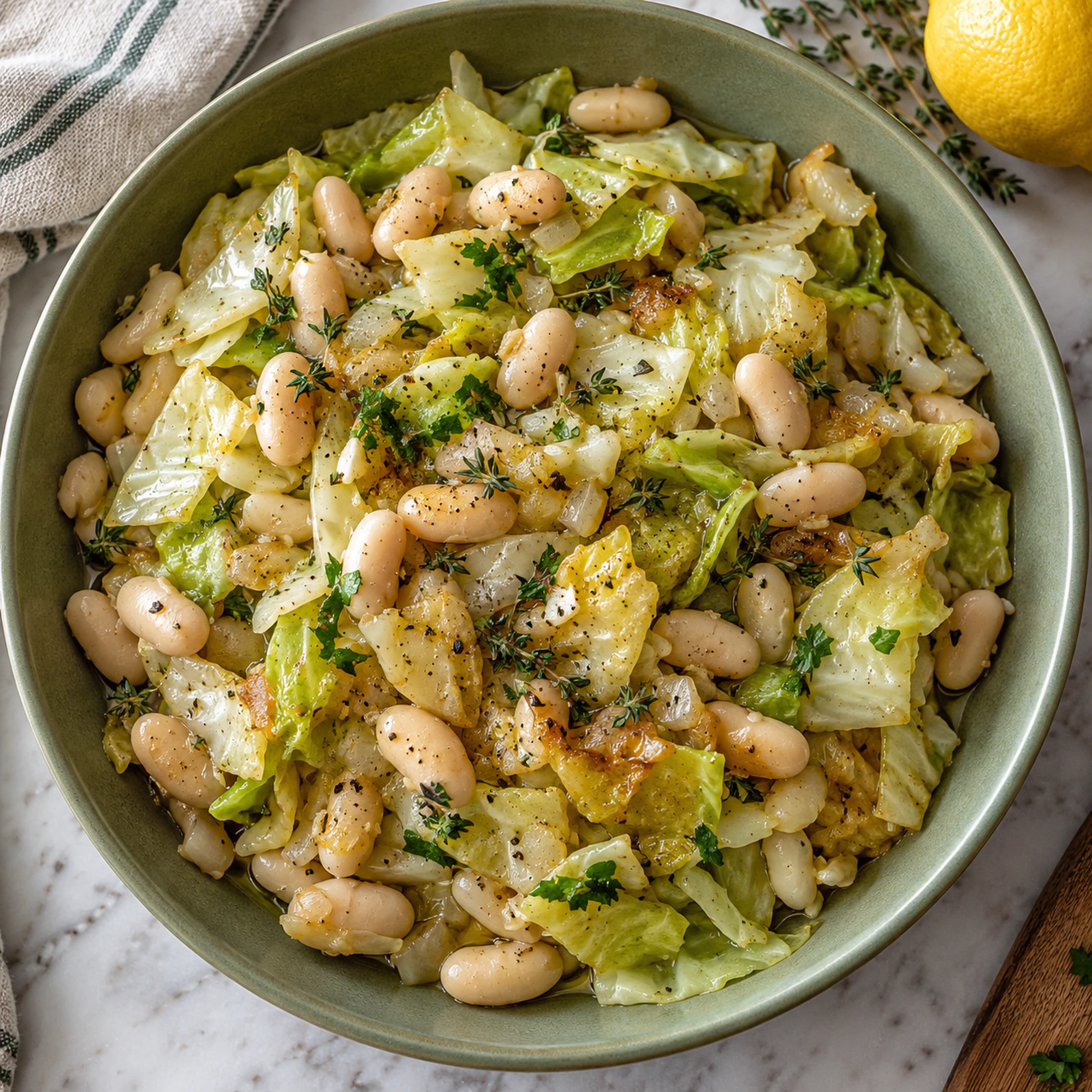
Give the cabbage room to cook before adding the beans. A wide skillet, a modest splash of broth and a bright finish create tender vegetables and intact beans in about 35 minutes.
I prefer this combination with a little bite left in the cabbage and most of the beans still whole. The contrast makes a simple vegetable dinner feel more complete. Choose firm green cabbage and ready-cooked beans; dried beans need separate soaking and cooking before they can take part in this meal.
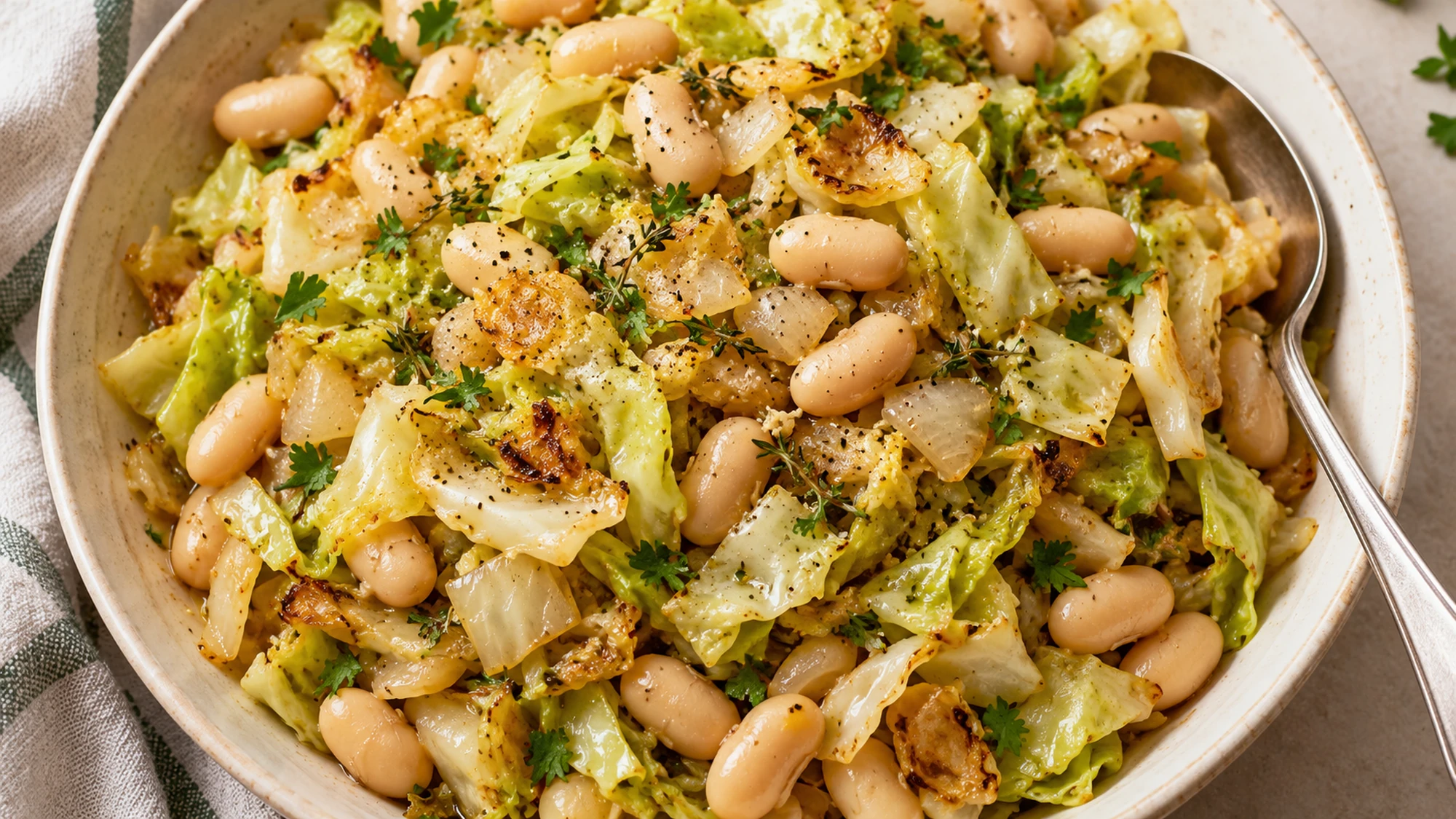
Serving suggestions for cabbage and white bean skillet
Divide the pan into four generous portions and serve it warm in shallow bowls. The lemon should lift the savory vegetables rather than dominate them. Taste after the beans have warmed through, because the broth and canned beans can bring their own salt. A little parsley gives the finished dish a fresh edge.
- For a bread-and-bowl dinner: Add slices of crusty baguette to catch the small amount of pan juices. Toasting yesterday’s bread makes it especially useful here.
- For a larger plate: Spoon the mixture beside roasted potatoes, cooked rice or a simply prepared protein. Keep strongly flavored sauces separate so the cabbage and lemon stay noticeable.
- For packed lunches: Portion the cooled skillet into shallow containers and refrigerate promptly. Reheat only the portion you need, adding a small splash of water if the beans look dry.
Choose one simple side and let the cabbage and beans remain the center of the plate. A little bread or rice stretches the meal without burying its lemon-herb flavor.
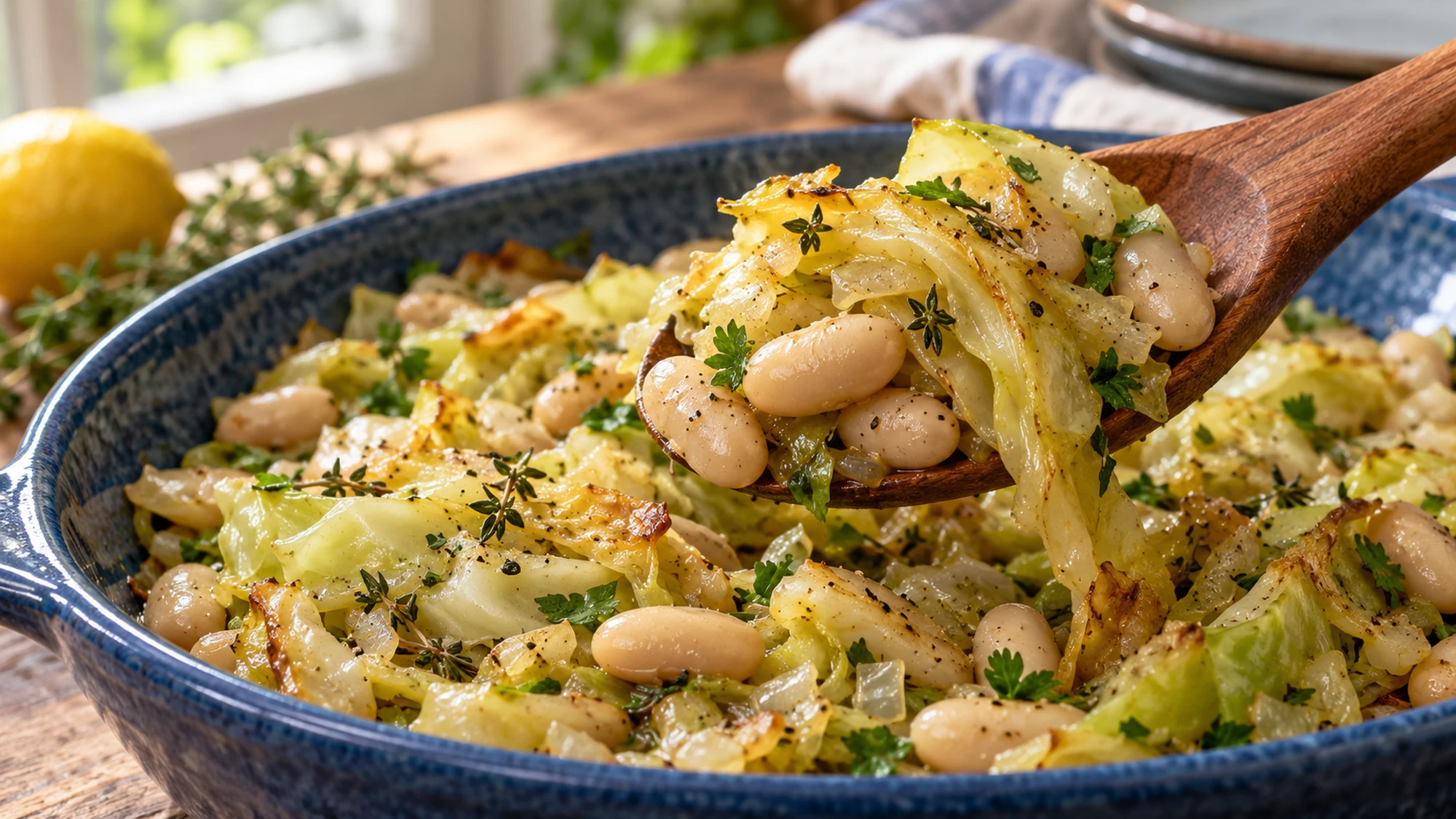
Variations that keep the beans creamy
Start with the version in the card, then change one element at a time. Canned cannellini beans are convenient, but their softness varies by brand. Drain and rinse them gently, and fold them into the pan near the end instead of stirring them through the whole cooking time.
- Different white beans: Use the same drained weight of cooked great northern beans. Butter beans are larger and more delicate, so fold carefully and expect a different texture.
- More herb flavor: Replace the dried thyme with chopped fresh thyme. A little dried thyme is sufficient for the base recipe; it should support the vegetables rather than overwhelm them.
- A softer cabbage: Cover for a few extra minutes with a splash more broth. Check frequently and stop when the thickest pieces are tender; wetter cabbage needs less added liquid.
- A richer finish: Add grated Parmesan at the table if you enjoy it. That makes the meal non-vegan and changes its salt and nutrition, so it is separate from the base recipe.
I’d avoid replacing green cabbage with an equal volume of very fine bagged slaw without watching the pan closely. Thin shreds soften faster and may contain carrots or red cabbage. If the pan becomes watery, uncover it and let excess liquid evaporate before adding more broth. Beans are patient ingredients; they do not need a vigorous boil.
Adjust the cabbage’s cooking time before changing the seasoning. Tender leaves, lightly browned edges and gentle handling do more for this dish than a crowded topping list.
Health benefits with realistic portions
White beans contribute plant protein and fiber, while cabbage and onion add vegetables to the meal. Olive oil supplies most of the recipe’s fat. These are useful ingredient contributions, rather than a promise that one skillet will change anyone’s health or replace a varied eating pattern.
- The card’s nutrition is an estimate for one-quarter of the recipe, including the measured oil. Extra bread, cheese or other sides are separate.
- Choose lower-sodium beans and broth when helpful, then taste before adding the full salt allowance. Rinsing beans does not make every brand’s sodium content identical.
- The base recipe uses no dairy or meat ingredients. Check broth and packaged-ingredient labels for the needs of anyone you are feeding.
Let serving size, toppings and the rest of the meal guide your choices. There is no need to give a comforting bowl of beans an exaggerated health claim.
Motivation conclusion: give that cabbage a clear plan
A wide pan and two cans of beans can turn an overlooked vegetable into a dinner with texture and purpose. Set out your bowls before the final squeeze of lemon, then serve while the cabbage is tender and the beans are warm. I’d keep the first batch simple: you can always choose a variation next time.
Cabbage and White Bean Skillet Recipe

Ingredients
- 2 tablespoons olive oil 30 ml, about 27 g
- 1 medium yellow onion 150 g, thinly sliced
- 600 g green cabbage cored and cut into roughly 3/4-inch pieces; about 6 loosely packed cups
- 3 cloves garlic 9 g, minced
- 1 teaspoon dried thyme about 1 g
- 1/4 teaspoon red pepper flakes optional
- 1/2 cup vegetable broth 120 ml; use a lower-sodium variety if preferred
- 2 15.5-oz cans cannellini beans drained and rinsed; about 480 g drained total
- 1/2 teaspoon fine salt about 3 g; start with less if broth or beans are salty
- 1/4 teaspoon ground black pepper
- 1 tablespoon lemon juice 15 ml, plus more to taste
- 1 tablespoon chopped fresh parsley about 4 g
Equipment
- 1 12-inch skillet with a lid A wide sauté pan also works.
- Knife and cutting board
- Colander
- Measuring cups and spoons
- Wooden spoon or spatula
Instructions
- Drain and rinse the beans gently. Trim and core the cabbage, then cut the leaves into roughly 3/4-inch pieces. Thinly slice the onion and mince the garlic. Measure the broth and seasonings.
- Heat the oil in a 12-inch skillet over medium heat. Add the onion and cook for 4–5 minutes, stirring occasionally, until softened and beginning to turn golden.
- Add the cabbage, using two additions if the pan is crowded. Raise the heat to medium-high and cook for 8–10 minutes, stirring every minute or two, until the volume decreases and some edges turn golden. Lower the heat if the onion threatens to burn.
- Stir in the garlic, thyme, optional red pepper flakes and black pepper. Cook for 30 seconds. Add the broth and salt, scrape up browned bits, then cover and cook over medium-low heat for 5–7 minutes, until the thickest cabbage pieces are tender. Add another tablespoon of water if the pan becomes dry before the cabbage softens.
- Uncover and gently fold in the beans. Simmer for 3–4 minutes, until hot throughout. If liquid pools in the pan, cook uncovered for another minute or two; the finished skillet should be moist rather than soupy.
- Remove from the heat. Stir in the lemon juice and parsley, taste and adjust seasoning. Divide into four main-course portions and serve warm.
Nutrition
Video
Notes
Tried this recipe?
Let us know how it turned out!Emily Parker is DISHORA’s recipe-writing persona, bringing a warm, practical voice to everyday cooking. Her focus is simple ingredients, comforting flavors and clear steps that make a dish feel approachable. From cozy dinners to something sweet, Emily’s recipes invite readers to try something delicious and make it their own.