
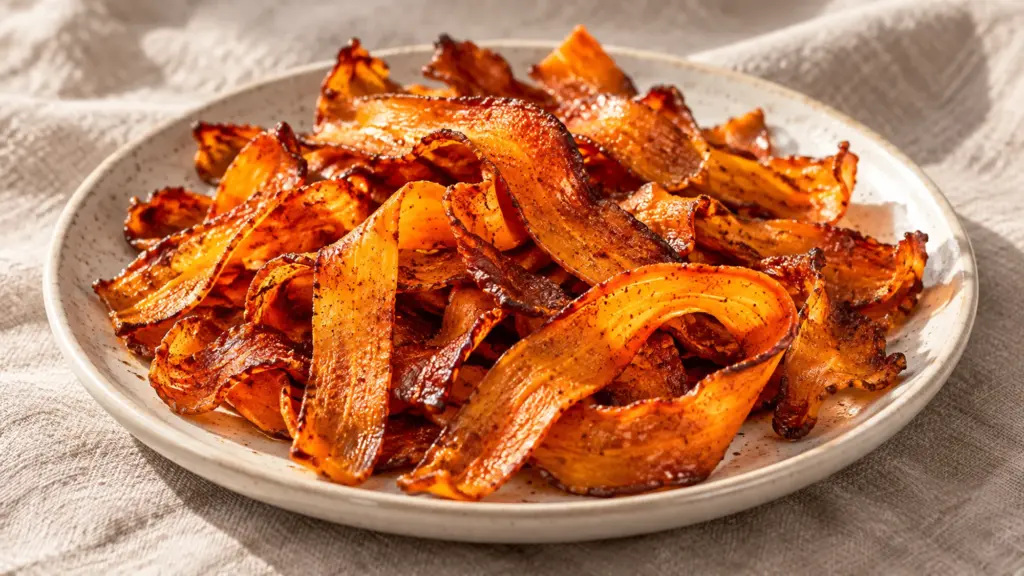
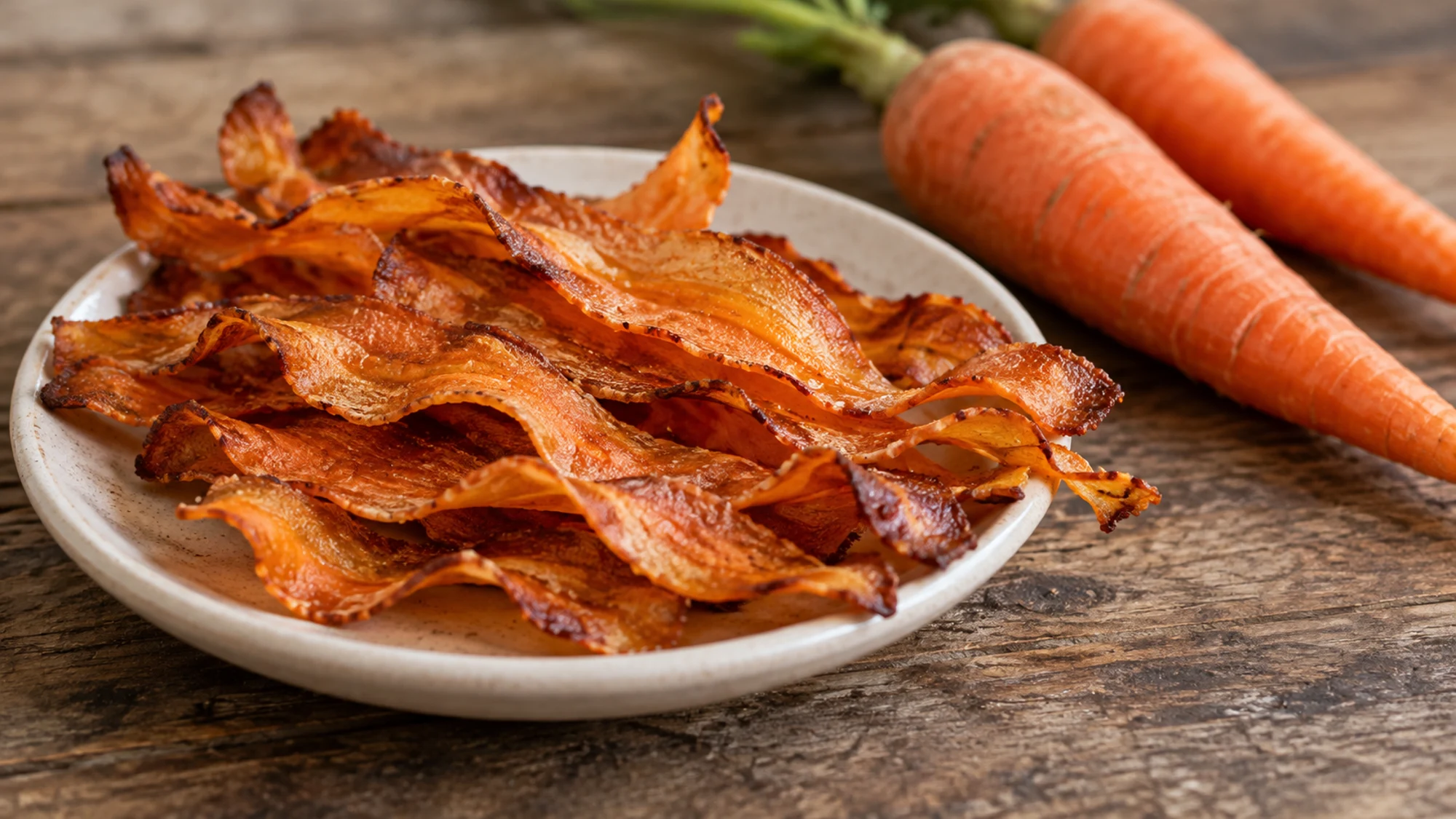
Sometimes a sandwich needs something smoky and a little crisp, without another complicated component. Carrot bacon fills that small but useful role: thin ribbons with browned edges, a sweet-savory coating and a gentle chew through the middle. The carrot flavor still comes through, which is part of its appeal.
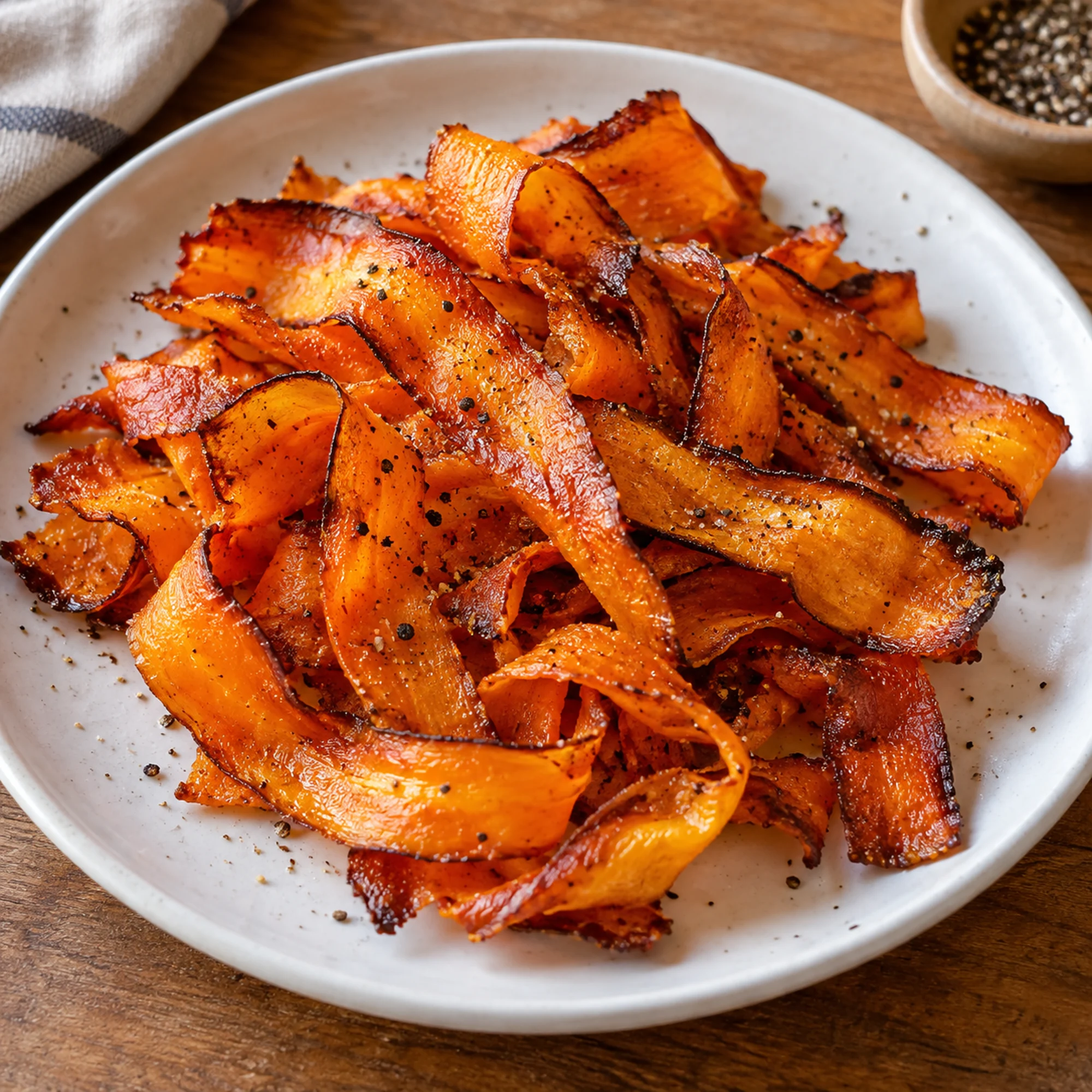
This carrot bacon uses a vegetable peeler and an air fryer to turn two large carrots into a smoky topping. Thin, even ribbons and small batches matter more than chasing a rigid cooking time.
I prefer calling this a vegetable topping rather than promising a perfect bacon imitation. It brings smoke, sweetness and texture; it does not reproduce pork fat or bacon’s protein. Choose broad carrots that feel firm, and stop peeling before the remaining piece becomes awkward to hold. Those little cores can go into soup or a snack box.
Serving suggestions
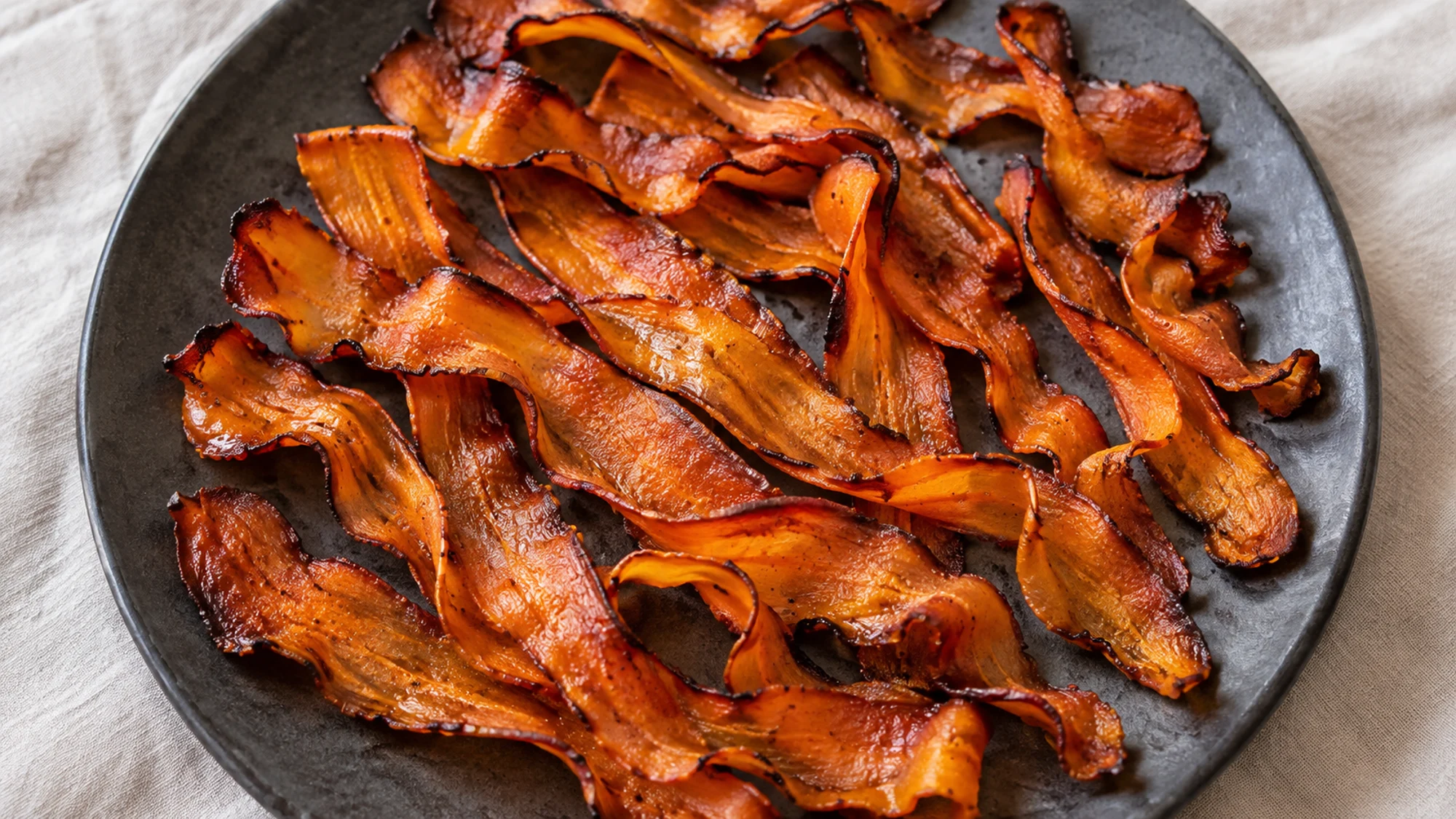
Serve the ribbons soon after cooking, once a brief rest has helped the edges firm up. Moist fillings gradually soften them, so build the rest of your meal first and add the carrot bacon at the last moment. That order makes a noticeable difference without adding another task.
- Layer it into toasted bread with lettuce, tomato and your preferred mayonnaise. Pat sliced tomatoes dry so they do not immediately soak the ribbons.
- Add a small handful to black bean burgers for extra smoky flavor and a contrasting edge.
- Break a few cooled strips over a jacket potato, or serve them beside tofu scramble. Keep sauces underneath rather than pouring them over the top.
For brunch, set out a small plate rather than burying everything in one deep bowl. A loose pile holds its texture better, and everyone can decide how much smoke they want. I’d choose a bright tomato or crunchy cucumber alongside it to balance the maple coating.
Treat carrot bacon as the finishing touch: prepare the sandwich, burger or breakfast plate first, then add the ribbons while their edges still have some crispness.
Variations
The base seasoning combines maple syrup, less-sodium soy sauce and smoked paprika. A tiny measure of liquid smoke gives a clearer smoky note, but brands differ in strength. Avoid pouring it straight from the bottle into the bowl; a measuring spoon is your friend here.
- For less sweetness, reduce the maple syrup to two teaspoons. Expect a slightly less glossy finish and watch the cooking closely.
- For a gluten-free version, use a soy sauce or tamari specifically labeled gluten-free and check the other seasonings. Ordinary soy sauce commonly contains wheat.
- For a peppery finish, add a small extra pinch of black pepper after cooking. Skip extra syrup at the end, which can make the strips sticky.
If your ribbons are thick or uneven, some will stay flexible while the thinnest pieces brown quickly. Remove finished pieces with tongs and let the rest continue in short increments. Do not keep cooking every strip until it is uniformly dark: that can turn the maple coating bitter.
Make one seasoning change at a time, and judge the ribbons after a short cooling rest. A lightly chewy center is normal; burnt edges are not the goal.
Health benefits
Carrots contribute fiber and beta-carotene, which the body can convert to vitamin A. This recipe is a way to add vegetables and a different texture to a meal, rather than a nutritional replacement for bacon or a complete breakfast by itself.
- One quarter of the batch is estimated at about 49 calories, 1 gram of protein and 1.6 grams of fiber, before bread, spreads or other sides.
- The soy sauce adds sodium even in a reduced-sodium version. Measuring it is more useful than assuming a vegetable-based topping is automatically low-sodium.
- Pair the ribbons with beans, tofu or another protein food when they are part of a main meal. Check labels for soy and wheat if cooking for an allergy.
Look at the whole plate: carrot bacon adds vegetable flavor and texture, while the other foods provide the substance and variety needed for a satisfying meal.
Motivation conclusion
A couple of carrots can make an ordinary lunch feel more considered. Keep the first batch small enough to watch, give the ribbons space, and have the rest of lunch ready. If you are unfamiliar with the seasoning, smoked paprika supplies a rounded smoky flavor without needing a grill. The complete quantities and timing are in the card below.
Carrot Bacon Recipe

Ingredients
- 200 g carrot ribbons from about 2 large firm carrots, washed, peeled and trimmed; reserve unused cores
- 1 tablespoon less-sodium soy sauce 15 ml
- 1 tablespoon pure maple syrup 20 g
- 1 teaspoon neutral oil such as canola, about 4.5 g
- 1/2 teaspoon smoked paprika
- 1/4 teaspoon garlic powder
- 1/4 teaspoon ground black pepper
- 1/8 teaspoon liquid smoke check label; concentrated brands vary
Equipment
- Basket air fryer about 5–6 quarts; cook in batches
- Vegetable peeler a Y-shaped peeler is helpful
- Cutting board
- Shallow mixing bowl
- Measuring spoons
- Small tongs
Instructions
- Wash and peel the carrots. Rest each carrot firmly on a cutting board and use a vegetable peeler to shave long, even ribbons, roughly 1 mm thick. Keep your fingers behind the blade. Stop when the core is too small to hold safely; reserve it for another use. Weigh out 200 g of ribbons.
- Mix the soy sauce, maple syrup, oil, smoked paprika, garlic powder, black pepper and liquid smoke in a shallow bowl. Gently coat the carrot ribbons and let stand for 2 minutes.
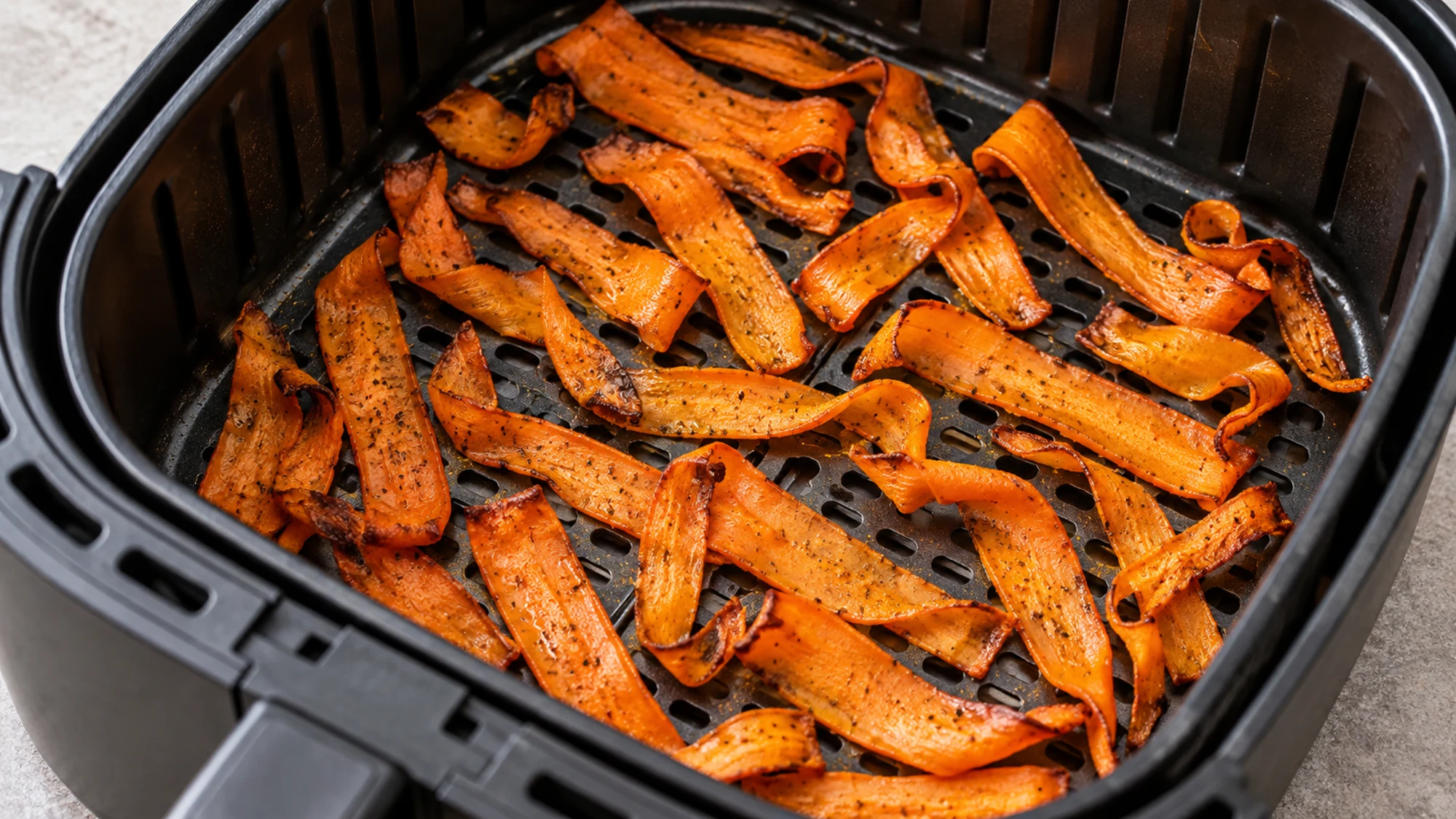
- Preheat the air fryer to 380°F (193°C), following its instructions. Lift ribbons from the marinade, allowing excess to drip back into the bowl. Arrange a single loose layer in the basket, leaving air gaps. Do not add loose parchment that could lift toward the heating element.
- Air fry for 4 minutes, then use tongs to turn and separate the ribbons. Cook for another 1–3 minutes, checking every minute, until the edges curl and brown without blackening. Remove thin pieces as they finish. Repeat with remaining ribbons; allow about 18 minutes for three batches, although basket size and ribbon thickness change the total.
- Transfer to a plate in a loose layer and cool for 2–3 minutes. The edges firm as they cool; the centers may remain slightly chewy. Divide into four topping portions and serve promptly.
Nutrition
Video
Notes
Tried this recipe?
Let us know how it turned out!Emily Parker is DISHORA’s recipe-writing persona, bringing a warm, practical voice to everyday cooking. Her focus is simple ingredients, comforting flavors and clear steps that make a dish feel approachable. From cozy dinners to something sweet, Emily’s recipes invite readers to try something delicious and make it their own.