
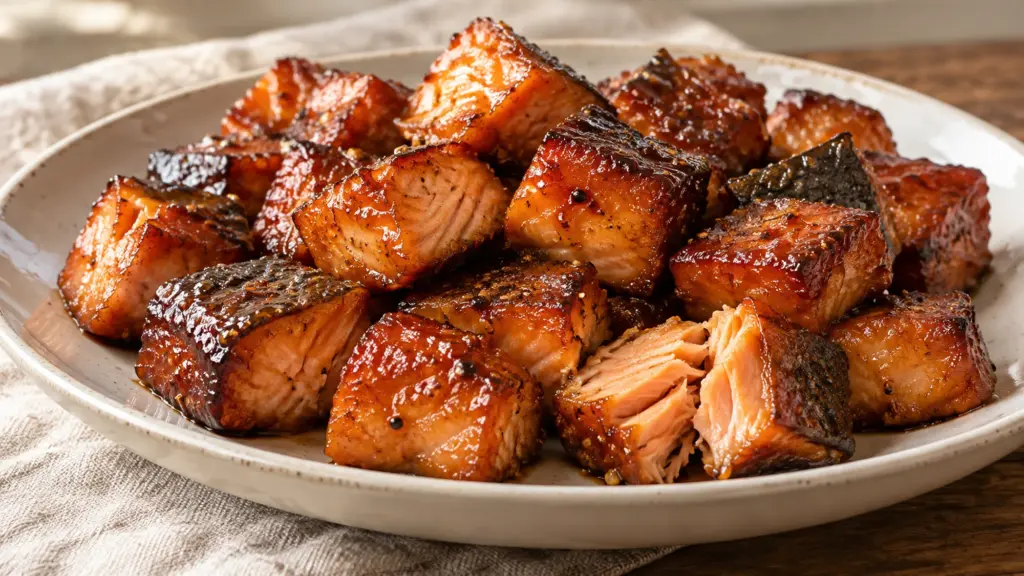
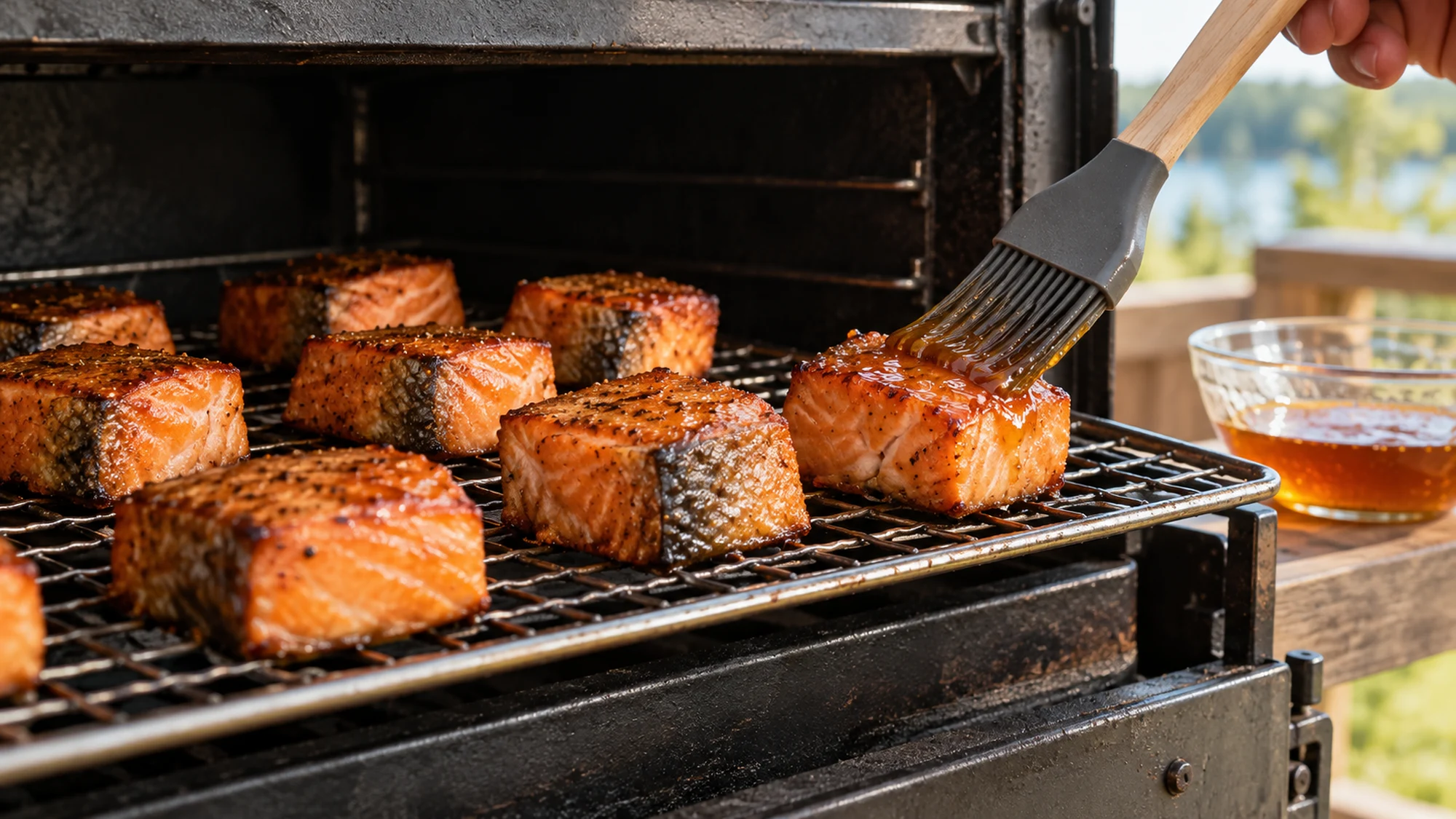
A little bowl of sweet, smoky fish can steal attention from an entire snack board. This candied salmon has a tacky maple coating, gently peppery edges and tender flakes inside. It starts with fresh salmon, spends its waiting time in the refrigerator, then cooks over indirect smoke until the thickest pieces reach 145°F.
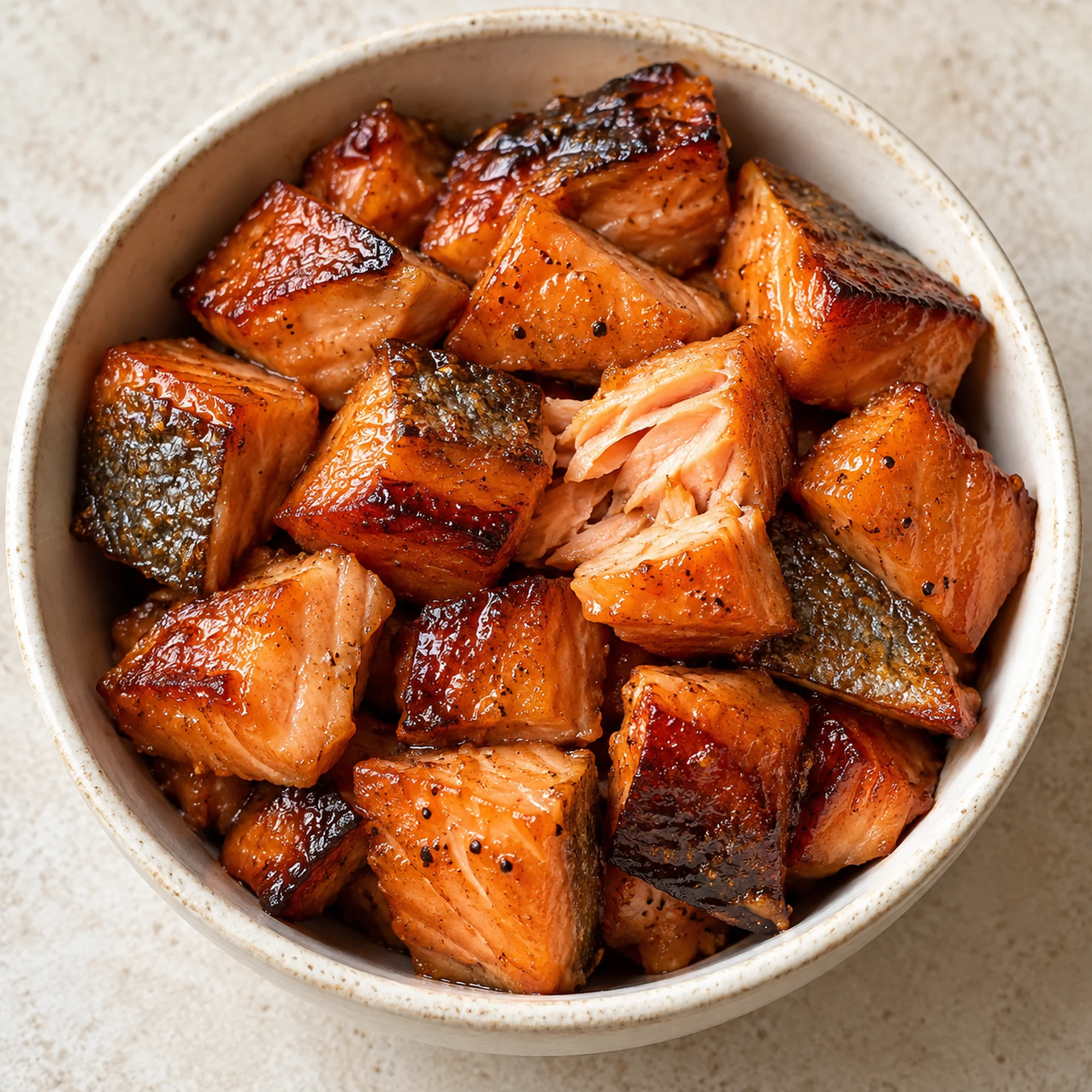
Think sticky smoked salmon bites rather than hard candy or dry jerky. A short refrigerated cure builds flavor; light layers of maple syrup give the surface its sweet finish without burying the fish.
I prefer this softer style because it works on crackers and over a bowl of rice. It needs planning, but most of the schedule is hands-off chilling. Choose a reasonably even piece of salmon so the cubes finish together, and keep a thermometer nearby rather than judging doneness by color alone.
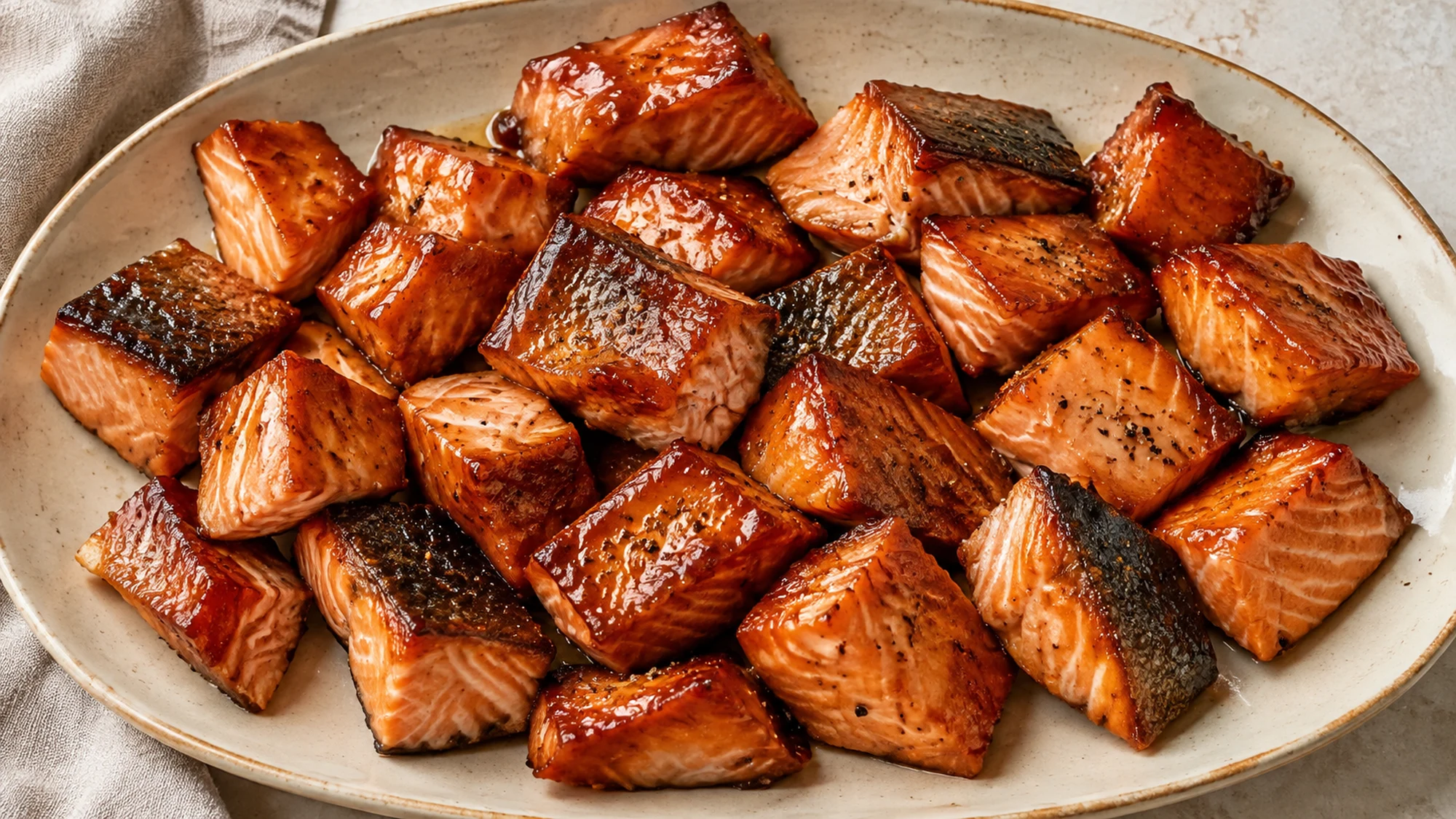
Serving suggestions for candied salmon
Serve the bites warm after a brief rest, or chill them promptly for a cold platter. Their sweetness benefits from something crisp, plain or tangy alongside. You do not need to turn the table into a delicatessen; two thoughtful accompaniments are plenty.
- For a snack board, add plain crackers, cucumber slices and pickled onions. Put out a small portion of fish at a time and keep the rest refrigerated.
- For dinner, divide the batch between four bowls of rice and vegetables. The recipe makes eight small appetizer portions, so dinner portions are naturally larger.
- For a different seafood meal, try these baked cod tacos with crunchy cabbage. Their fresh, bright toppings are a useful contrast to a sweet smoked-fish platter.
Let the salmon supply the rich, sweet element. Crunchy vegetables and uncomplicated starches make each bite feel distinct instead of adding another layer of sweetness.
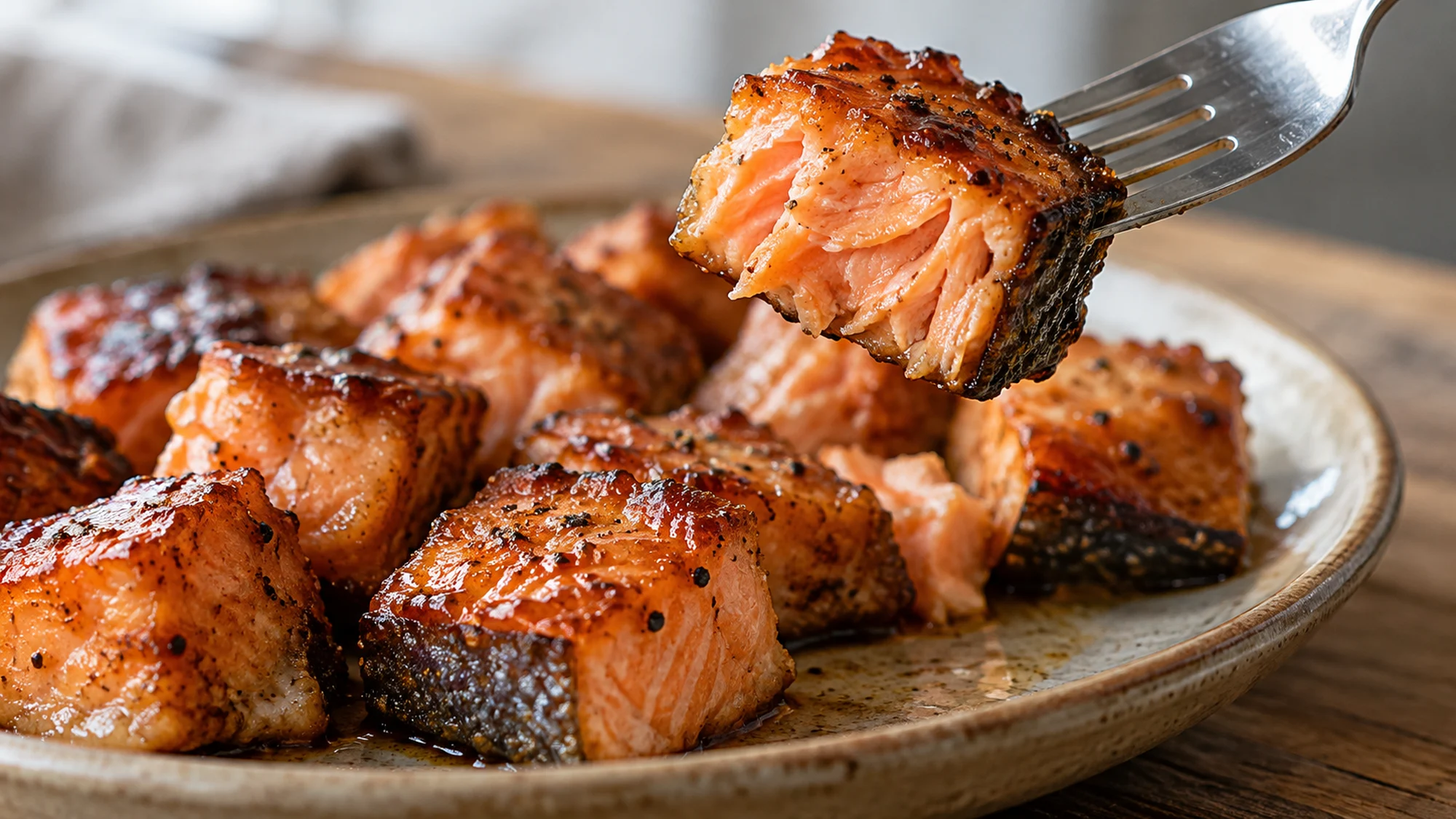
Variations that keep the balance
The glaze is a good place for a small adjustment; the refrigerated handling and final cooking temperature are not. I would keep the first batch simple, especially when learning how strongly a particular smoker flavors small pieces of fish.
- For a warmer finish, stir a teaspoon of your favorite hot sauce into the maple syrup. Its vinegar and heat change the balance, so taste the glaze before brushing.
- Use light or dark brown sugar. Dark brown sugar brings a deeper molasses note; neither turns this short cure into a preservation method.
- Choose pure maple syrup rather than pancake syrup for its distinctive flavor. Maple syrup grades and flavor profiles can help you choose a lighter or more robust bottle.
- Skinless salmon also works, but handle it gently and use a fine rack so the pieces cannot slip through. Start checking thinner pieces early.
Change one flavor at a time and keep the glaze thin. Several light brushings should coat the fish; a thick puddle underneath is more likely to scorch than become a pleasant crust.
Health benefits in perspective
Salmon contributes protein and marine omega-3 fats, but a sweetened, salted preparation deserves a straightforward description. This is a flavorful fish appetizer, not a low-sugar food or a reason to ignore portion size. Cure uptake also makes precise home nutrition calculations difficult.
- The card gives an approximate eight-portion estimate using farmed Atlantic salmon, all the maple glaze and a stated allowance for retained cure. Species, trimming and seasoning absorption change the result.
- Keep raw fish and ready-to-eat sides separate, with clean utensils for serving. For the practical details, review safe seafood storage and cooking temperatures.
- This recipe contains fish. Check any optional hot sauce and accompanying crackers for other allergens, and do not assume a shared smoker or serving board is allergen-free.
Enjoy the salmon for its flavor and protein, with vegetables alongside. The sugar and salt still count, even when the finished bites are small.
Make room for a little smoke
Clear a refrigerator shelf before you begin; that small bit of preparation makes the curing and drying stages much easier. Keep the smoker steady, leave space between the pieces and stop cooking when the fish reaches its safe endpoint. A little white protein on the surface is normal, not a reason to keep smoking until every edge is dry.
If you want salmon tonight without the chilling schedule, the crisp-skin salmon method is a more direct choice. Save this version for a day when you can enjoy the slower process and have a chilled container ready for any leftovers.
Candied Salmon Recipe

Ingredients
- 1 lb skin-on salmon fillet 454 g; pin bones removed
- 1/2 cup packed light brown sugar 100 g
- 18 g kosher salt weigh it; crystal sizes vary
- 1/4 cup pure maple syrup 60 ml
- 1/4 teaspoon ground black pepper
Equipment
- Smoker set for indirect cooking
- Oven-safe wire rack and rimmed sheet pan
- Medium bowl
- Knife, cutting board and fish-bone tweezers
- Measuring cups and spoons
- Silicone basting brush
- Instant-read thermometer
Instructions
- Check the chilled salmon for pin bones and remove them with clean tweezers. Cut into roughly 1-inch cubes, leaving the skin attached. Wash hands and clean the knife and board after handling raw fish.
- Mix brown sugar and weighed kosher salt in a bowl. Add the salmon and gently coat. Cover and refrigerate at 40°F (4°C) or below for 2 hours. Do not cure on the counter.
- Gently rinse off the cure in a bowl of cold water, avoiding splashes; discard the water and clean the sink and bowl. Pat the fish dry. Arrange skin-side down on an oven-safe rack over a rimmed tray and refrigerate uncovered for 2 hours, away from ready-to-eat foods, until the surface is slightly tacky.
- Heat the smoker to 250°F (121°C) for indirect cooking, using alder or a mild fruitwood according to the smoker instructions. Mix maple syrup with black pepper. Set the salmon rack in the smoker with space between pieces, keeping it away from direct flame.
- Smoke for about 45 minutes, brushing thinly with the maple mixture after 15 and 30 minutes. Begin checking the thickest pieces at 30 minutes. Continue until their centers reach at least 145°F (63°C); actual time varies with thickness and smoker conditions. Remove finished pieces as needed. Discard any glaze contacted by the basting brush.
- Rest briefly, then serve warm, or transfer to shallow containers and refrigerate promptly. Divide into eight appetizer portions. Do not leave out longer than 2 hours, or 1 hour above 90°F (32°C).
Nutrition
Video
Notes
Tried this recipe?
Let us know how it turned out!Emily Parker is DISHORA’s recipe-writing persona, bringing a warm, practical voice to everyday cooking. Her focus is simple ingredients, comforting flavors and clear steps that make a dish feel approachable. From cozy dinners to something sweet, Emily’s recipes invite readers to try something delicious and make it their own.