
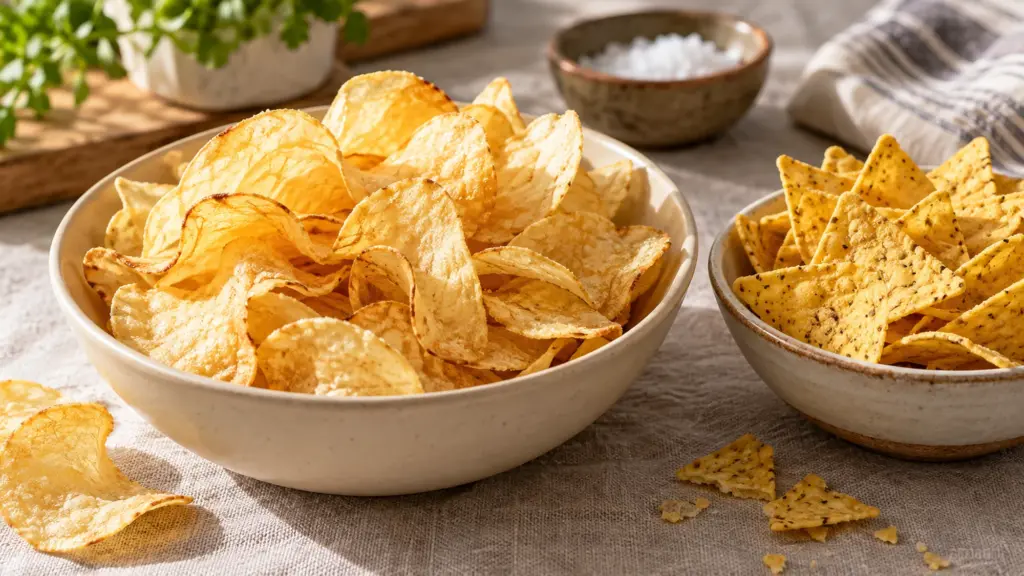
A bowl of chips should be a simple pleasure, but the snack aisle can turn a quick choice into a label-reading session. When you are shopping for gluten free chips, potatoes or corn on the front of the bag are useful clues, not the final answer.
Many chips can fit a gluten-free diet, but check the exact finished product. Look for a gluten-free claim, read the full ingredient list, and consider how the chips and their dips are prepared and served.
I’d start with the plainest option that meets the person’s dietary needs, then choose the texture I actually want: delicate potato chips for nibbling or a sturdier tortilla chip for a thick dip. The label does the safety work; preference can handle the crunch.
What gluten free chips labels actually tell you
For FDA-regulated packaged foods in the United States, a gluten-free claim has specific requirements, including less than 20 parts per million of gluten. The claim is voluntary; its absence does not prove a food contains gluten, but it leaves you with more checking to do.
Gluten comes from wheat, barley and rye. A wheat-free statement is therefore a narrower claim. Third-party certification can add information, although the FDA does not endorse a particular certification program. Read the actual words rather than guessing from a leaf-shaped logo.
- Check the exact flavor and package, even when another product from the same brand works for you.
- Read the complete ingredients, including seasonings and coatings, rather than relying only on a “Contains” line.
- If the label or manufacturer’s information leaves an important question unanswered, choose a clearer option.
Compare chip styles without making assumptions
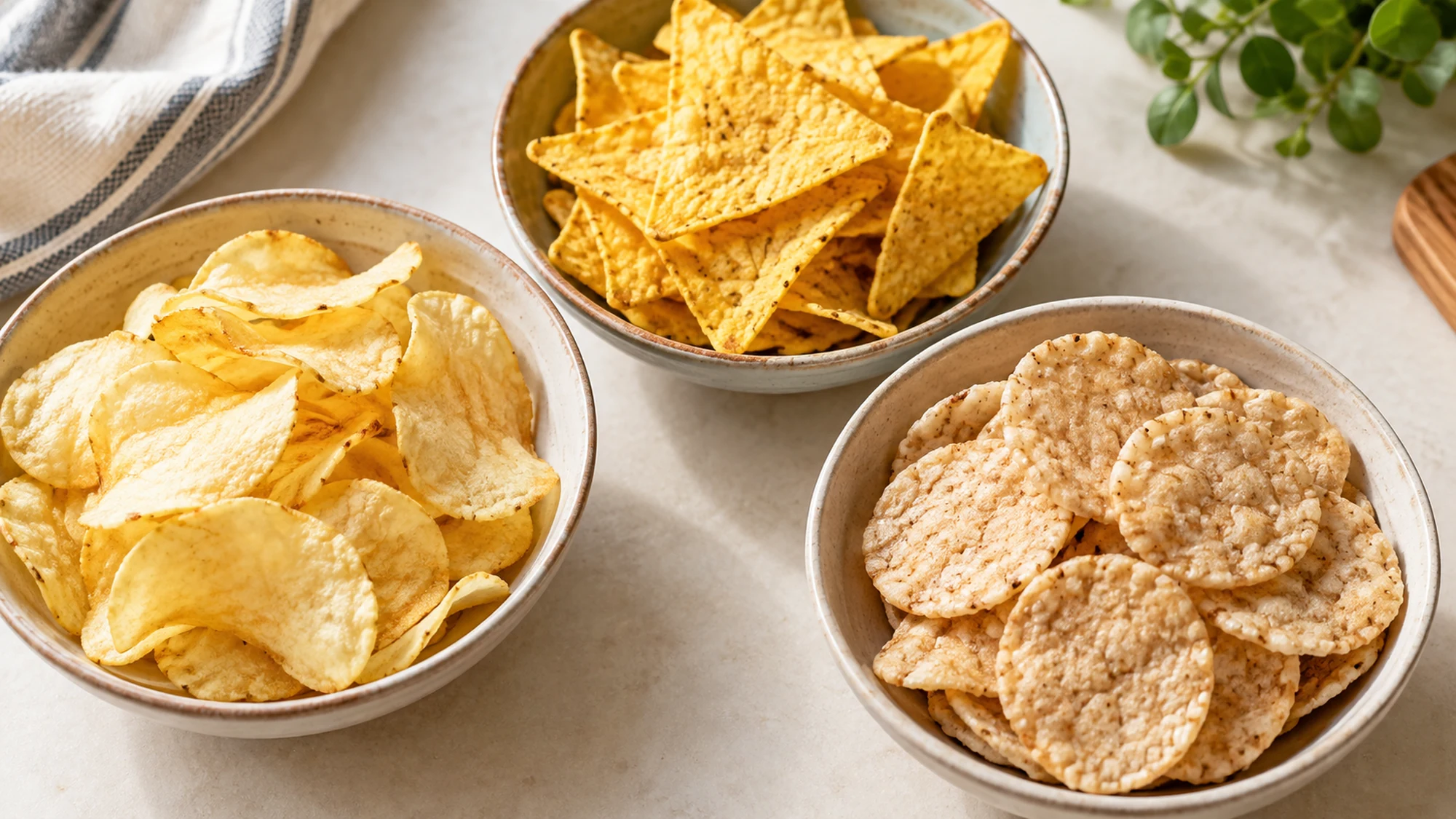
Plain potatoes, corn and rice can be gluten-free ingredients, but the finished snack may include other grains or seasonings. NIDDK’s celiac-disease guidance makes that distinction clear: ingredients and handling both matter. Treat this table as a shopping aid, not a list of guaranteed safe products.
| Chip style | Texture and use | What to check |
|---|---|---|
| Potato chips | Thin, crisp; good for light dips | Seasoning, coatings and the finished-product claim |
| Corn tortilla chips | Usually sturdy enough for chunky salsa | Mixed grains, flavorings and preparation |
| Rice or multigrain chips | Varies from airy to dense | Every grain in the blend; “multigrain” is not a gluten-free claim |
| Vegetable or bean chips | Texture depends on the full formula | Flours, starches, seasonings and the package claim |
Choose the chip for the job, then check the complete product. A familiar main ingredient cannot answer every labeling question.
Seasonings, dips and other allergens still count
A chip may meet your gluten needs and still contain milk, soy or sesame. The FDA’s allergen-label advice explains why the full ingredient list matters and why voluntary “may contain” statements have a different role from ingredients.
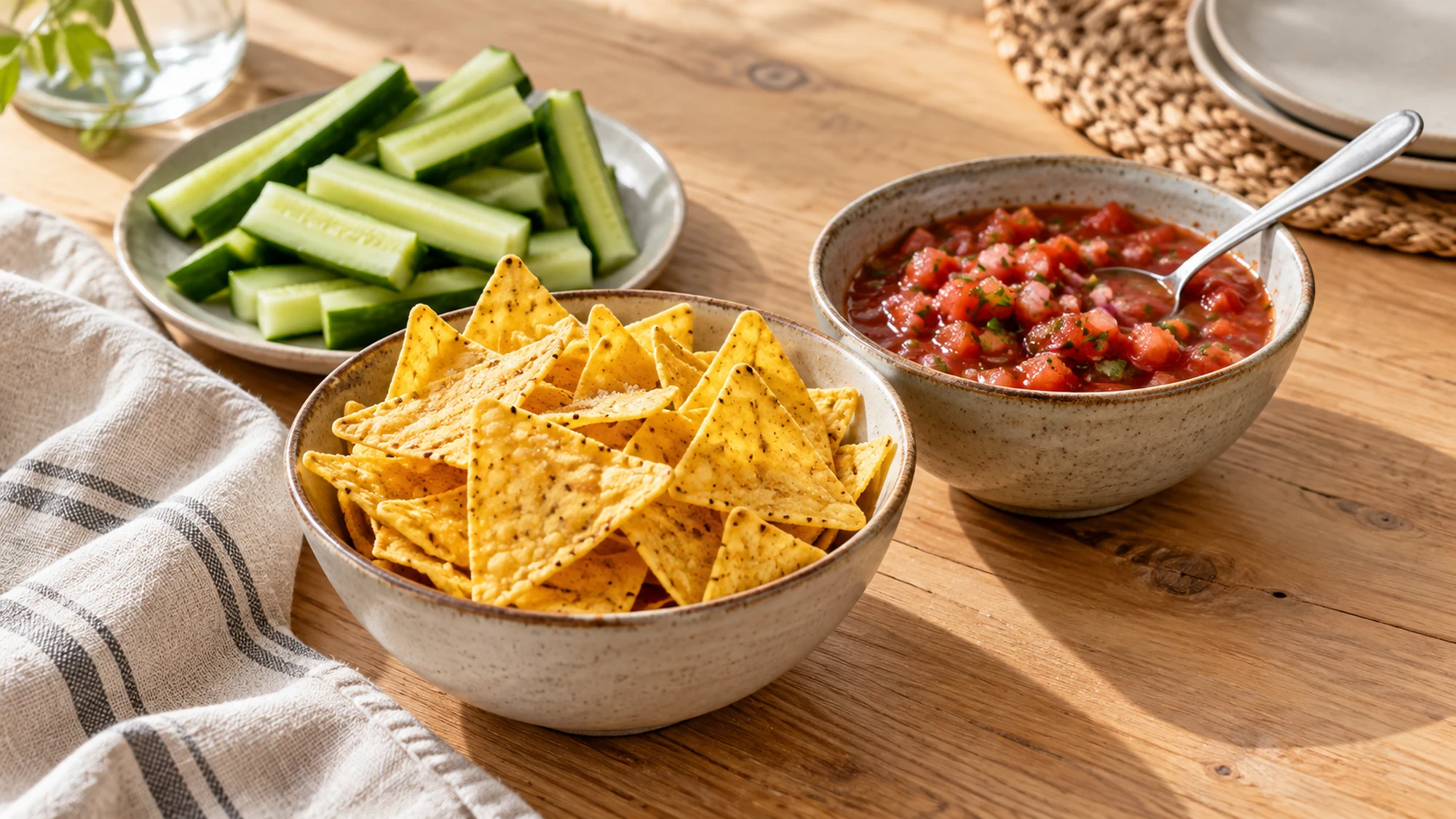
Check the dip too. A packaged cheese dip, flavored hummus or dressing has its own ingredient list. If soy sauce enters a homemade dip, our guide to soy sauce and gluten-free labels explains why ordinary soy sauce deserves attention.
- Keep the packaging available when serving guests so they can read it themselves.
- Ask about every dietary need instead of treating gluten-free as a promise about other allergens.
- Use a clean serving spoon for the dip and a separate bowl for an individual portion when needed.
The snack is the chips, the dip and the way they reach the table. Check each part rather than stopping at the bag.
Ask a different question at a restaurant
At a restaurant, the ingredients are only part of the conversation. NIDDK notes that gluten cross-contact can happen during preparation and serving. Ask staff whether chips share a fryer with breaded foods, how they are stored, and whether the kitchen can accommodate the person’s needs.
I’d ask a specific question such as “Are these fried in oil used for breaded foods?” rather than expecting a server to interpret “Are these okay?” If staff cannot establish the preparation details, an unopened labeled option may be a clearer choice.
- Explain celiac disease or an allergy clearly when that is the reason for the request.
- Ask about the seasoning and accompanying dip, not only the chip’s base ingredient.
- At home, keep crumbs, shared tongs and double-dipped utensils away from the suitable serving.
Choose a snack you enjoy, with useful information
Once the dietary checks are settled, compare the Nutrition Facts using the same serving weight. Sodium, fiber and protein vary by formula; a gluten-free claim alone does not describe them. A bean-based chip and a potato chip need their own comparison rather than a broad health ranking.
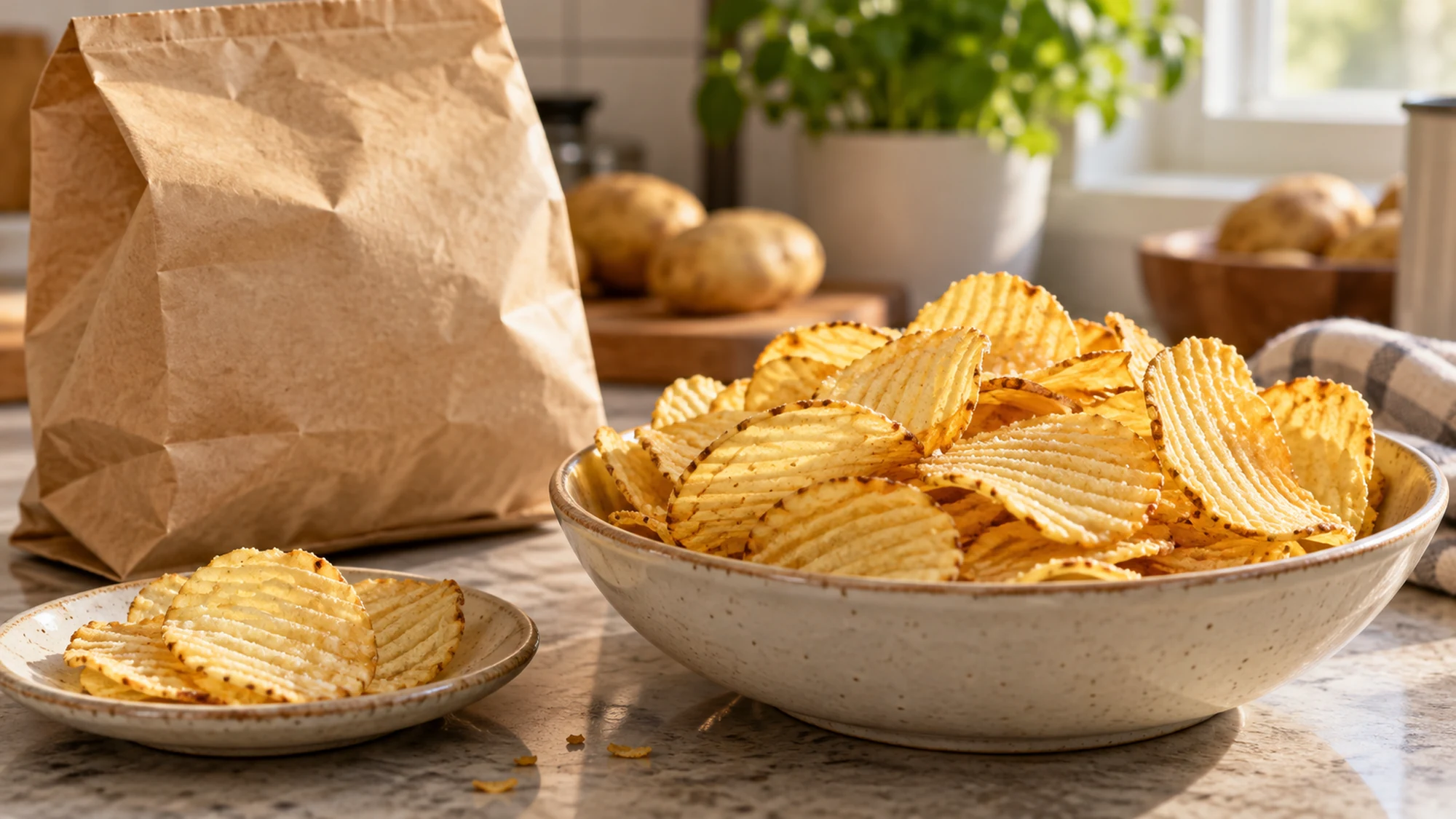
I prefer a small bowl beside something with a different texture, such as cucumber sticks or a chunky dip. It keeps the snack interesting without asking one bag of chips to do every job. Seal the remaining bag well for crispness, and keep the label until it is finished.
Clear labeling, suitable preparation and a texture you enjoy make a better decision than a sweeping “all chips are safe” rule.
Sources
- FDA: Gluten and Food Labeling
- NIDDK: Eating, Diet, & Nutrition for Celiac Disease
- FDA: Have Food Allergies? Read the Label

Emily Parker is DISHORA’s recipe-writing persona, bringing a warm, practical voice to everyday cooking. Her focus is simple ingredients, comforting flavors and clear steps that make a dish feel approachable. From cozy dinners to something sweet, Emily’s recipes invite readers to try something delicious and make it their own.