
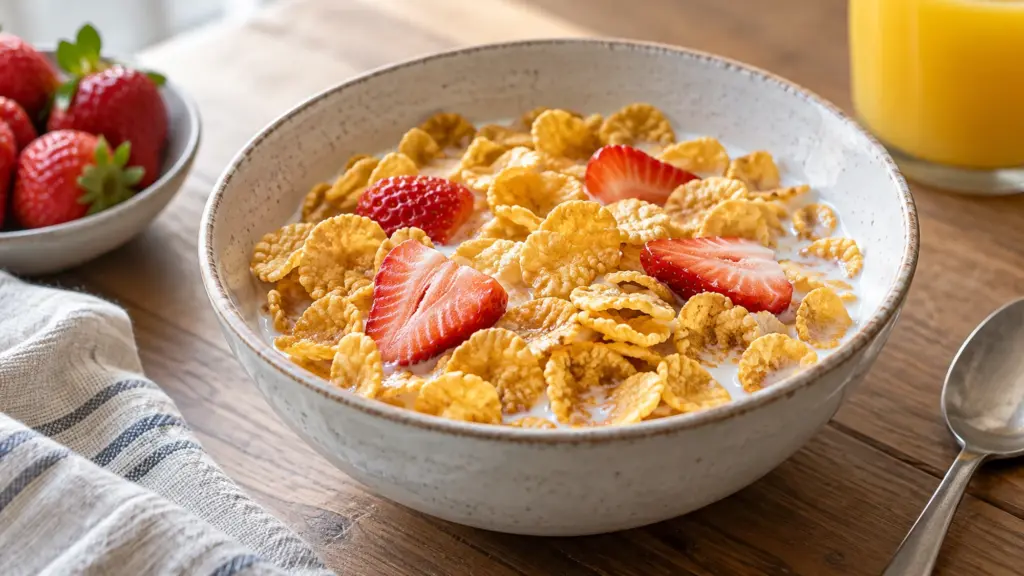
A box covered in corn or rice pictures can look like an easy breakfast decision. The grain on the front is only the beginning, though. Gluten free cereal needs a closer look at the finished product, including flavorings and the way it is made.
Choose an explicit gluten-free claim when you need gluten free cereal. Corn, rice or oats on the front does not establish that every ingredient and the finished product meet gluten-free requirements.
I’d rather spend an extra moment on a clear label than turn breakfast into detective work. Once that question is settled, compare the texture, serving size and nutrition that make a bowl useful for your own morning.
What the gluten-free label tells you
For FDA-regulated packaged foods, a gluten-free claim means the product must meet ingredient restrictions and contain less than 20 parts per million of gluten. The FDA’s labeling explanation also covers equivalent wording such as “no gluten” and “without gluten.” That is a defined threshold, not a claim of absolute zero.
“Wheat-free” answers a narrower question. It does not rule out barley or rye. A cereal can use naturally gluten-free grains and still include another ingredient that changes the answer.
| Cereal cue | Why it needs a closer look | Practical action |
|---|---|---|
| Corn or rice base | Other ingredients may contain gluten | Check the finished-product claim |
| Barley malt | Barley is a gluten-containing grain | Choose a suitable alternative |
| Oat cereal or granola | Cross-contact is common | Choose gluten-free oats; discuss tolerance |
| Wheat-free wording | Does not exclude barley or rye | Look for gluten-free information |
Give oats and malt their own check
Barley can appear as malt or malt extract, a relevant detail in some breakfast cereals. NIDDK’s celiac-disease food guidance lists barley among gluten-containing grains and explains that cross-contact can occur during growing, processing and preparation. A rice-based cereal is not automatically an exception.
- Read the ingredient list for wheat, barley, rye and ingredients made from them.
- For oat-based cereal or granola, look for gluten-free oats rather than assuming all oats qualify.
- If you have celiac disease, ask your clinician or dietitian whether oats fit your plan and in what amount.
NIDDK notes that most people with celiac disease can eat moderate amounts of gluten-free oats, but individual guidance matters. If product information is unclear, contact the manufacturer or choose a clearly identified alternative. Guessing from a bowl’s appearance cannot resolve the question.
Compare gluten free cereal by the serving you eat
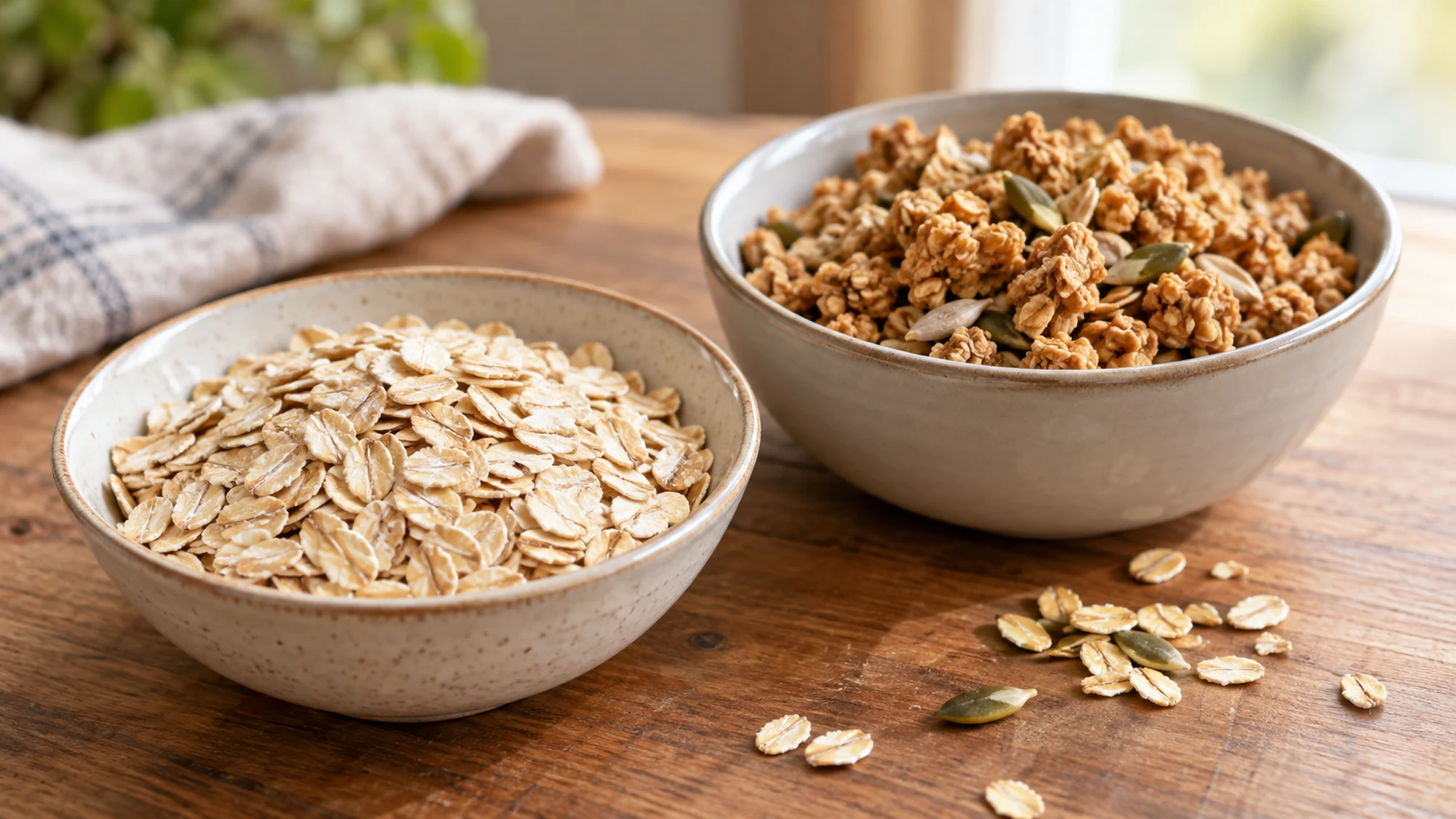
Gluten-free status does not tell you the fiber, protein or added-sugar content. Use the FDA’s Nutrition Facts guidance to compare equivalent portions. A light puffed cereal and a dense granola can have very different serving weights even when the bowls look similar.
- Start with serving size in grams, then consider how much you normally pour.
- Compare dietary fiber, protein, sodium and added sugars across similar amounts.
- Check iron, calcium or vitamin D when fortification matters to your overall diet.
- Include milk, yogurt, fruit and other toppings when thinking about the whole breakfast.
My preference is a cereal that tastes good in a portion that suits the rest of breakfast. Crunch matters, too: a delicate flake and a dense cluster do different jobs. Neither a short ingredient list nor a large front-of-box promise replaces the actual nutrient information.
Keep the bowl separate from shared crumbs
For someone with celiac disease, the home routine matters after shopping. NIDDK advises storing and preparing gluten-free foods separately from gluten-containing foods. A suitable cereal can pick up crumbs from a shared scoop, an open communal bin or a work surface used for ordinary toast.
- Keep the cereal in its closed package or a clearly identified clean container.
- Use clean bowls, spoons and preparation surfaces.
- Avoid a shared scoop that moves between ordinary and gluten-free granola.
- Check mix-ins, including cookie pieces or toppings, with the same care as the cereal.
A gluten-free cereal label is useful; a clean, separate serving routine helps preserve that choice all the way to the bowl.
Choose a breakfast you can keep using
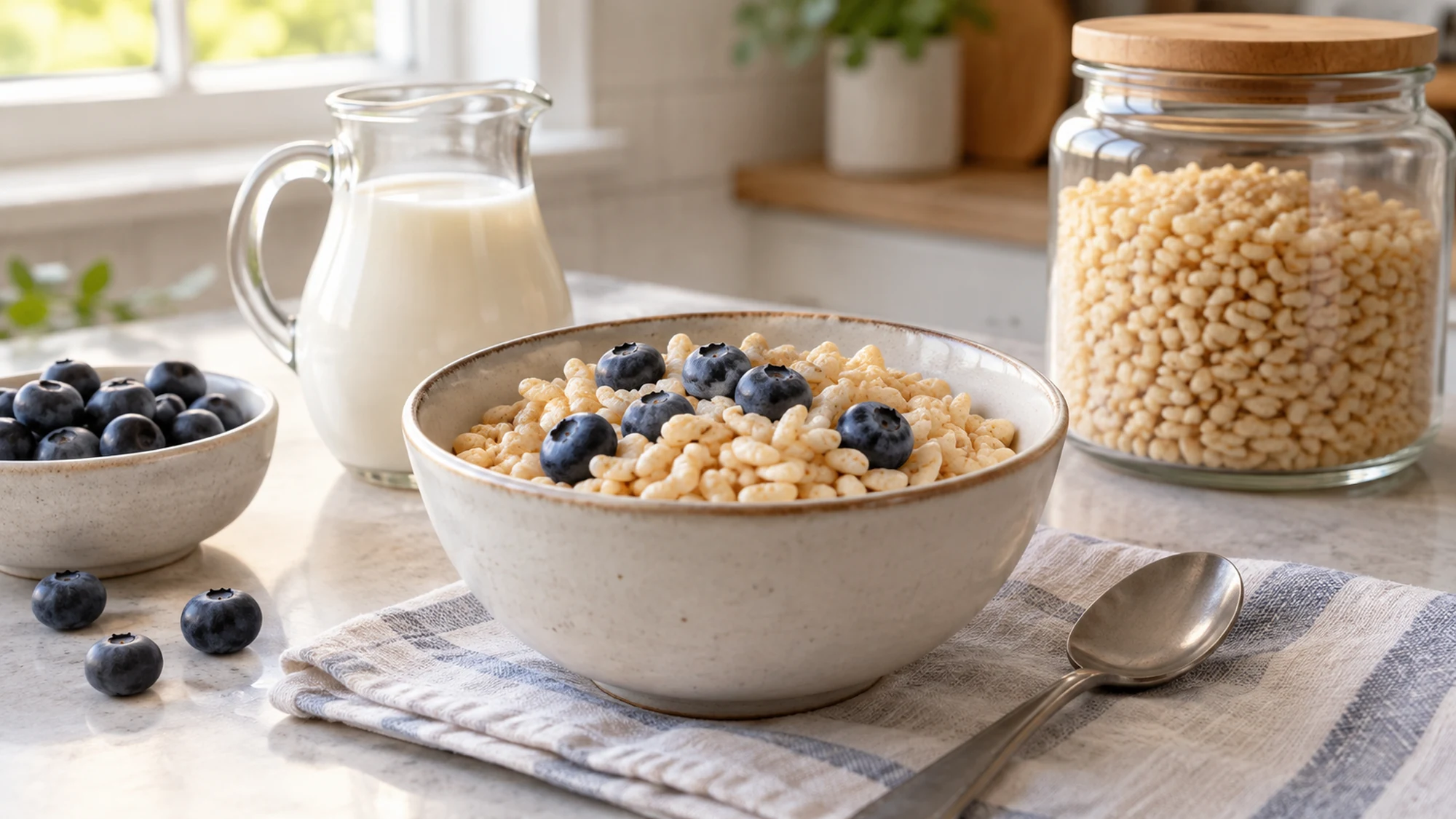
Begin with one clearly labeled box in a texture you enjoy, rather than buying several large bags at once. Compare cost by weight and the amount you will finish while it is crisp. For another everyday staple, Dishora’s gluten-free bread guide explains similar label and shared-crumb questions for toast.
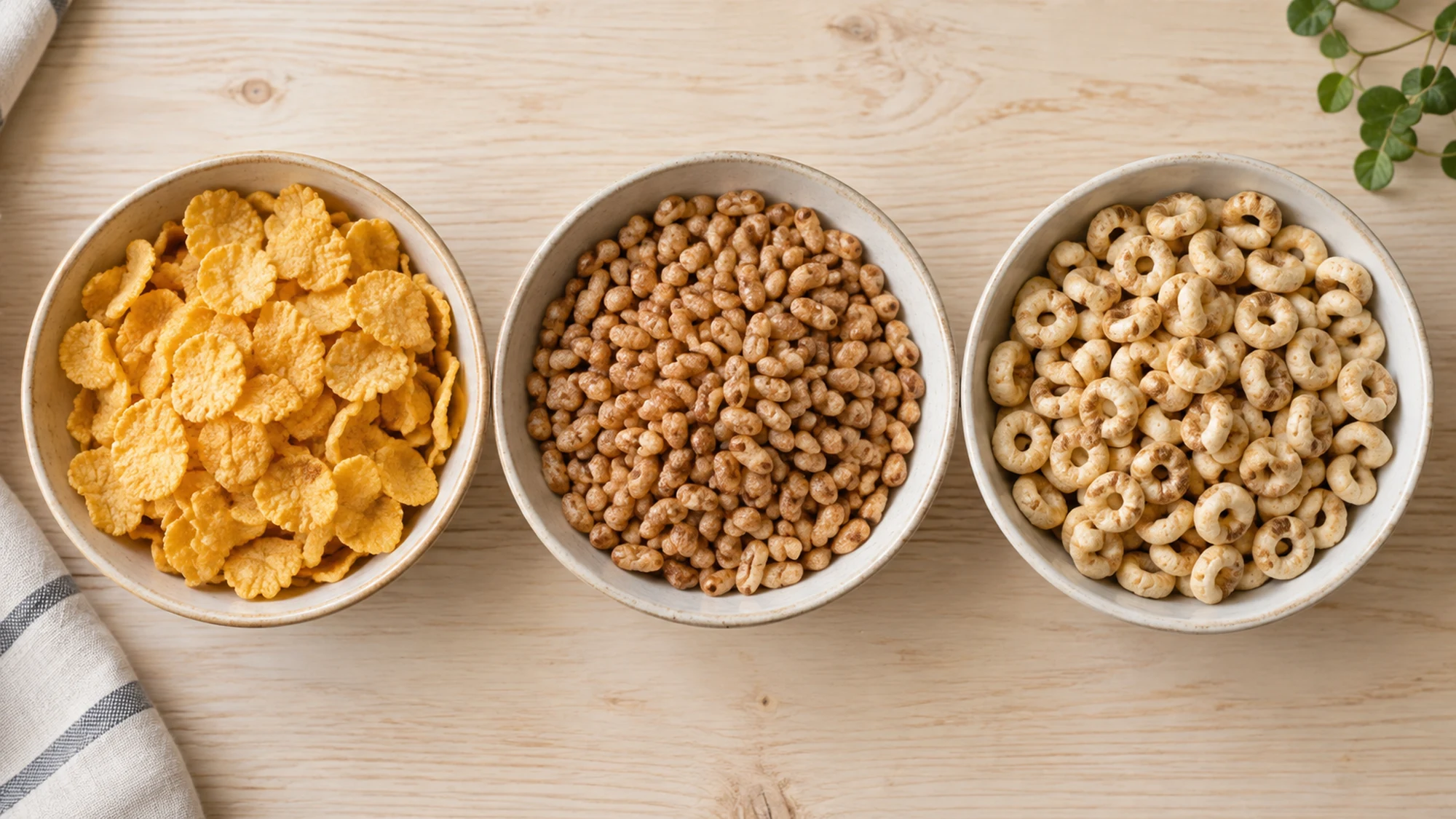
- Choose flakes for a lighter crunch, puffs for a delicate texture, or clusters for a denser bowl.
- Follow the package’s storage instructions and close it properly after serving.
- Recheck each new product rather than extending one brand’s gluten-free claim to its entire range.
The useful goal is a breakfast you can identify confidently and enjoy eating. Settle gluten-free suitability first, compare the actual serving next, and keep the preparation simple. The box can do the explaining so you can get on with the morning.

Emily Parker is DISHORA’s recipe-writing persona, bringing a warm, practical voice to everyday cooking. Her focus is simple ingredients, comforting flavors and clear steps that make a dish feel approachable. From cozy dinners to something sweet, Emily’s recipes invite readers to try something delicious and make it their own.