
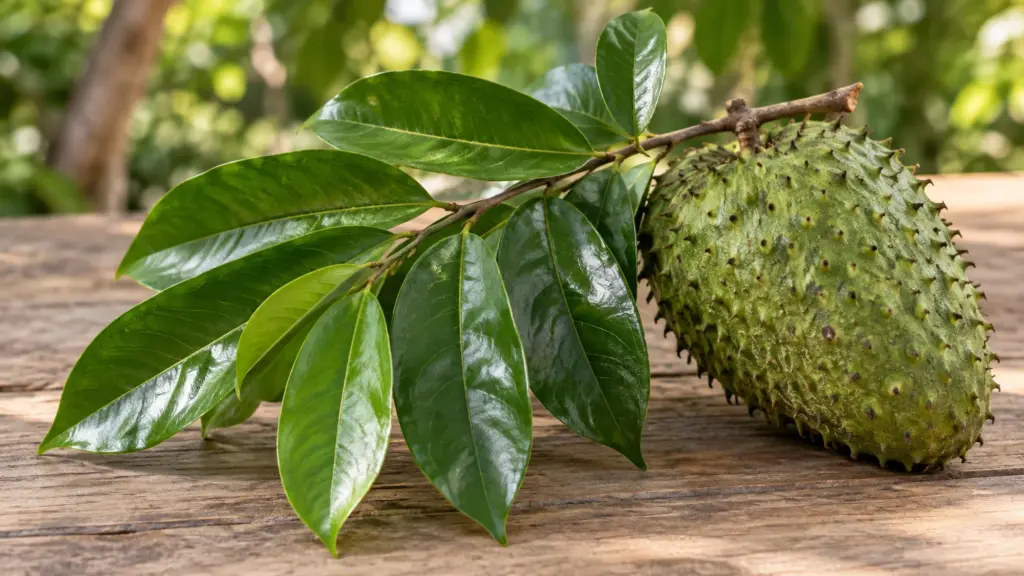
A bag of soursop leaves may arrive with a long list of promises: better sleep, lower blood sugar, or even cancer treatment. Before making room for it in a daily routine, it helps to ask what was actually studied and whether the product in the bag matches that research.
Soursop leaves come from Annona muricata, also called graviola. Laboratory findings and small human studies do not establish them as a treatment for cancer or other conditions. Possible nerve toxicity and medicine interactions deserve attention, and no evidence-based home brewing dose can be recommended from the research discussed here.
I prefer a clear account of the uncertainty to a dramatic benefit list. Traditional use can be discussed respectfully while still asking for reliable evidence of benefit and safety.
What are soursop leaves?
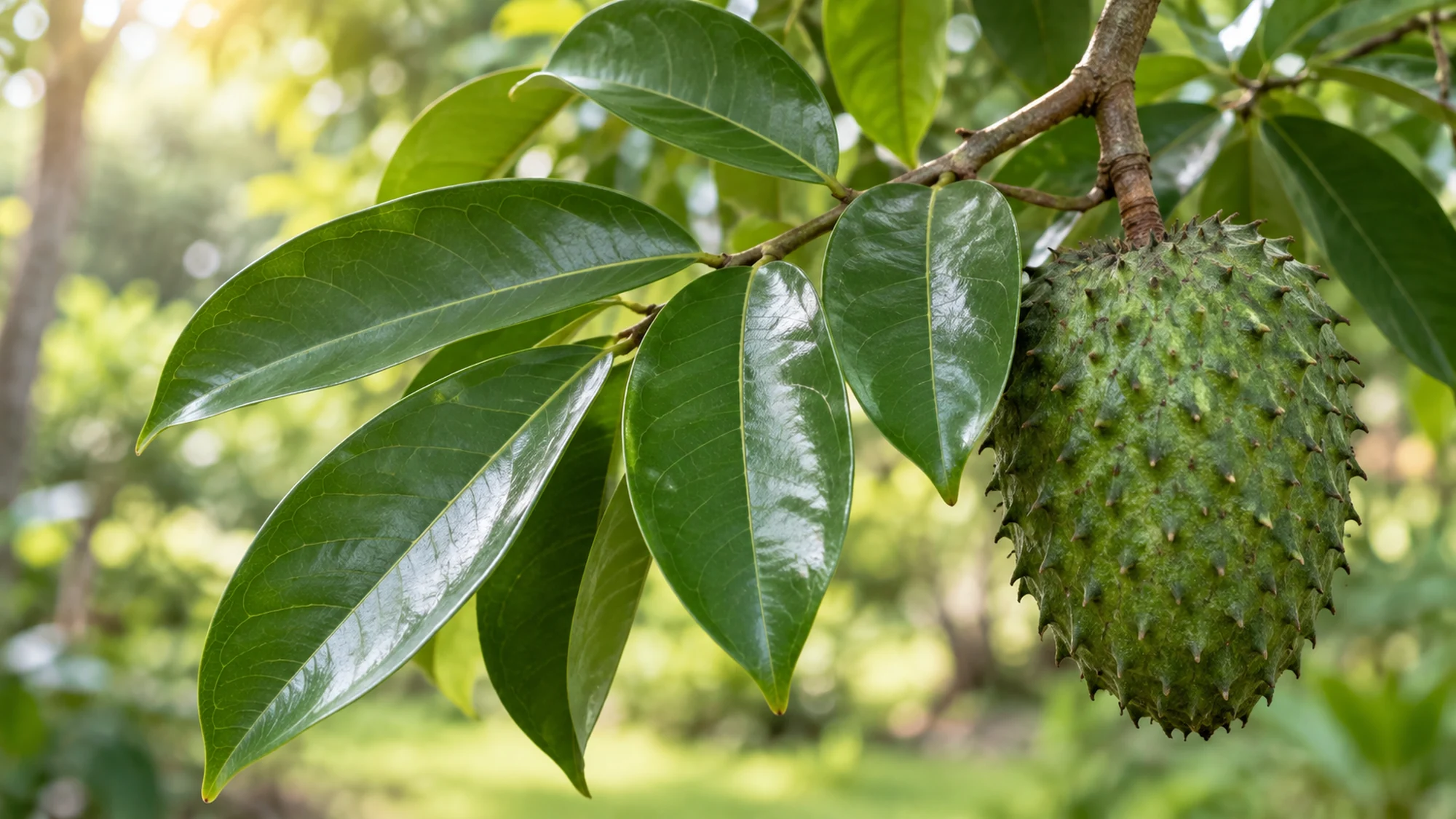
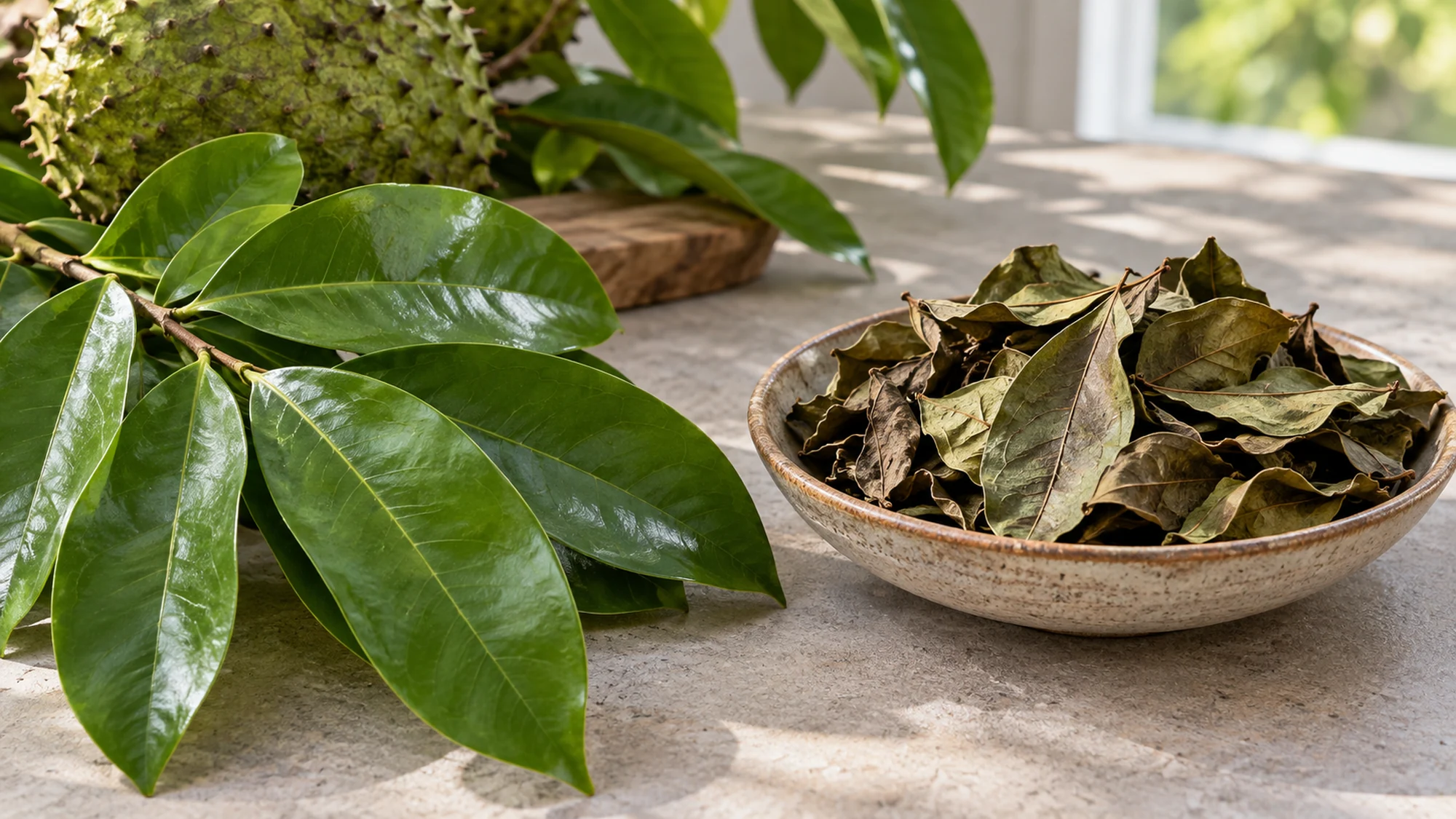
Soursop is a tropical tree whose fruit is eaten as food. Its leaves and stems also have a history of traditional medicinal use, and products are sold as dried leaves, powders, and supplements. Memorial Sloan Kettering’s graviola resource describes these different uses and emphasizes discussing supplements with a healthcare professional.
Eating fruit, drinking a leaf infusion, and taking a concentrated extract are different exposures. A familiar plant name on all three products does not make their strengths, effects, or safety interchangeable.
What the research actually measures
A 2017 randomized trial enrolled 30 people with colorectal cancer after removal of their primary tumors; 28 completed eight weeks. Researchers compared a leaf extract with placebo and tested participants’ serum against cancer cell lines. That laboratory measure does not establish that tumors shrank or that people lived longer.
| Evidence | What it can examine | What it cannot establish alone |
|---|---|---|
| Laboratory cell research | Effects on cells under controlled conditions | An effective treatment in people |
| Small, short human trial | Specific outcomes for a particular extract and group | Long-term benefit or safety of home tea |
| Observational human research | Patterns linking reported exposure and illness | That the plant caused an individual illness |
| Animal toxicology | Potential mechanisms of harm | A safe daily human serving |
A useful study description names the preparation, population, duration, and outcome. A report about an extract in a small patient group cannot automatically answer a question about daily leaf tea in otherwise healthy adults. That is a limitation of the evidence, rather than proof that every proposed effect is impossible.
Soursop leaves and cancer claims
Cancer Research UK’s review of graviola claims states that reliable evidence does not support it as a cancer treatment. Findings about cancer cells in a dish are a reason for investigation, not a substitute for clinical outcomes such as tumor control or survival.
- A testimonial cannot establish that a product caused a recovery.
- “Kills cancer cells” is incomplete without the study setting and preparation.
- Do not replace or delay cancer care because of a leaf, tea, or supplement claim.
A product promoted as a cancer cure deserves particular skepticism. Anyone receiving cancer treatment should discuss herbal products with the treating team before using them, including products sold as ordinary tea.
Why safety still needs a closer look
A 1999 case-control study in Guadeloupe reported an association between consumption of Annonaceae fruits or herbal teas and atypical parkinsonism. This was observational research involving reported past use: it cannot prove causation or calculate an individual person’s risk.
In a 2004 rat experiment, intravenously delivered annonacin, a compound found in Annona muricata, produced brain-cell injury. Intravenous purified compound is not the same exposure as drinking tea, but the finding is a reason to take potential nerve toxicity seriously.
A 2020 systematic safety review described an overall favorable tolerability profile in the literature it assessed, while calling for further human research and noting that animal doses and durations may not translate directly. That conclusion does not establish a safe long-term routine for every leaf product.
Questions before trying a product
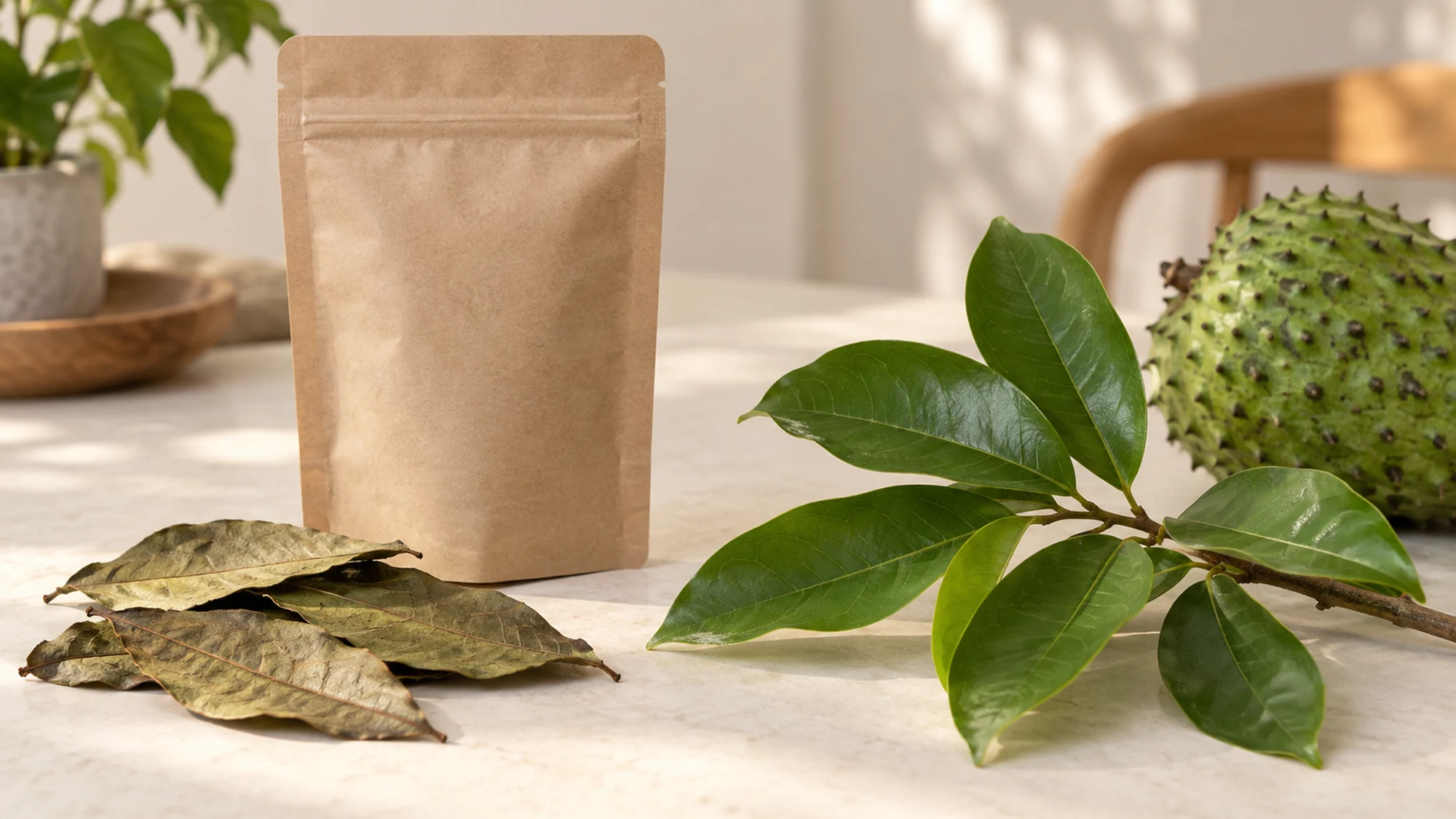
I would bring the actual package to a pharmacist or clinician rather than rely on a seller’s reassurance. The plant part, extract strength, other ingredients, reason for use, and your medicines all matter to that conversation.
- Blood sugar or blood pressure medicines? MSK flags possible interactions with medicines that lower either.
- A planned scan? Tell the imaging team about graviola; MSK warns that it can affect certain imaging results.
- Pregnancy, breastfeeding, a child, or a neurological condition? Do not assume adult short-term extract research establishes safety in these situations.
Our chamomile tea benefits guide offers another example of why brewed drinks and concentrated extracts need separate evidence. An appealing plant story is only a starting point for a health decision.
Soursop leaves are an interesting research topic, with important unanswered questions. Keep treatment decisions with your healthcare team, and do not mistake natural origin, traditional use, or a laboratory result for demonstrated long-term benefit and safety.
Sources
- Memorial Sloan Kettering: graviola
- 2017 randomized leaf-extract trial
- Cancer Research UK: graviola claims
- 1999 observational neurological study
- 2004 annonacin rat experiment
- 2020 systematic safety review

Emily Parker is DISHORA’s recipe-writing persona, bringing a warm, practical voice to everyday cooking. Her focus is simple ingredients, comforting flavors and clear steps that make a dish feel approachable. From cozy dinners to something sweet, Emily’s recipes invite readers to try something delicious and make it their own.