
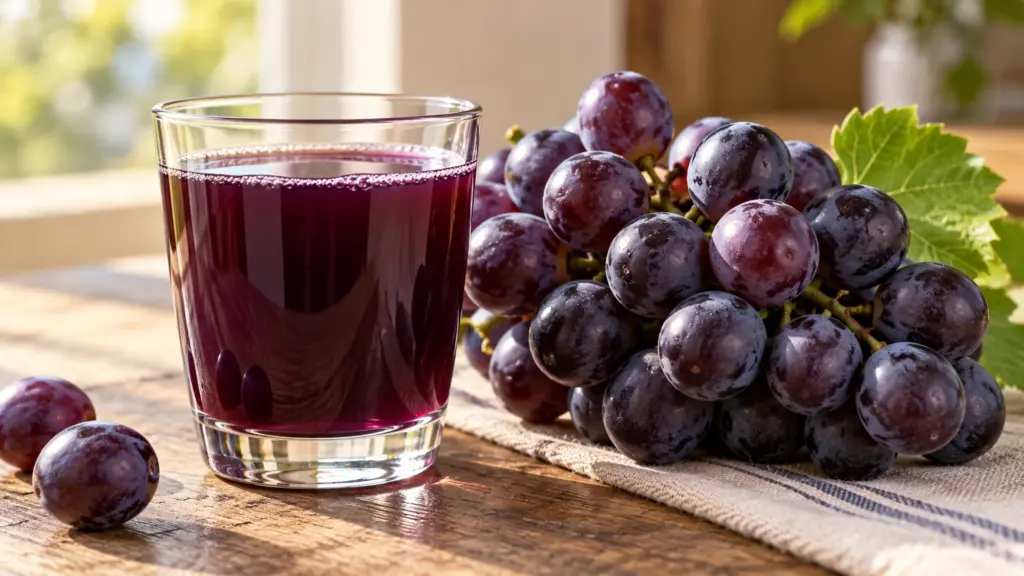
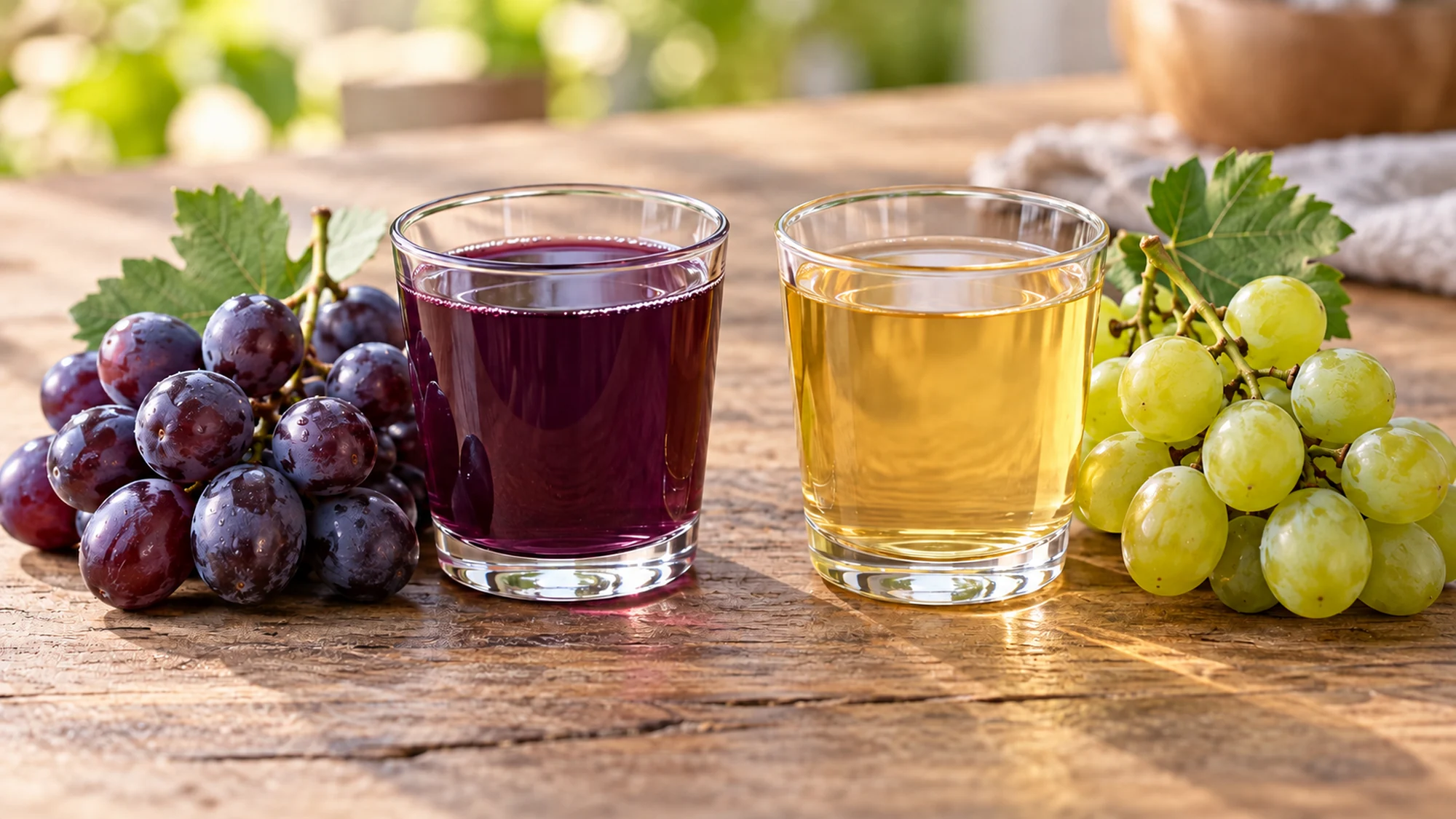
A deep purple bottle and a pale golden one can both say grape juice, while the drink next to them says “light.” Before choosing by color or a familiar front label, it helps to turn the bottle around.
Grape juice can fit into a varied diet, but 100% juice is not sugar-free and does not replace the fiber in whole fruit. Compare the actual product, serving size, total carbohydrate, and added sugar, then choose an amount that fits your meal.
I prefer a small glass when I want that concentrated grape flavor. It makes the drink a deliberate part of the meal instead of something poured simply because a large glass is handy.
What counts as grape juice?
Begin with the product’s full name and ingredients. “100% grape juice” and “grape juice beverage” describe different drinks, even when the bottles share a brand and a purple color.
A useful example is Welch’s 100% white grape juice, whose ingredients include white grape juice from concentrate, white grape juice, and added vitamin C. The brand’s Light Concord Grape Juice Beverage lists water first and includes grape juice plus the sweeteners sucralose and acesulfame potassium.
- Read the full name: Look beyond the largest word on the bottle.
- Check juice content: A juice beverage is not automatically 100% juice.
- Read the ingredients: Notice other juices, sweeteners, and added nutrients.
- Match your preference: A lighter drink and a full-strength juice serve different tastes.
Compare the actual contents, not the depth of the purple color or the size of the word “grape.”
Compare two labels using equal servings
Here are two current manufacturer examples, both measured per 8 fluid ounces (240 mL). These figures describe these particular products; they are not averages for all white or purple grape drinks.
| Per 8 fl oz (240 mL) | Welch’s 100% White Grape | Welch’s Light Concord Beverage |
|---|---|---|
| Calories | 140 | 45 |
| Total carbohydrate | 35 g | 12 g |
| Total sugars | 35 g | 11 g |
| Added sugars | 0 g | 0 g |
| Vitamin C | 90 mg | 90 mg |
The table shows why reading only added sugar can leave out useful information. Both products list zero added sugar, yet their total sugar and carbohydrate amounts differ. Both also contain added vitamin C; that vitamin figure should not be assumed for every bottle of grape juice.
I would compare carbohydrate and serving size before letting a single front-label claim decide. The better choice depends on what you want from the drink, including flavor and whether you prefer to avoid particular sweeteners.
No added sugar does not mean no sugar
The FDA explains that total sugars include naturally occurring sugars and any added sugars. A juice can therefore have zero grams of added sugar and still contain substantial sugar from the fruit.
For a smaller pour, do the arithmetic using that bottle’s panel. Four fluid ounces is half of an eight-fluid-ounce serving. It supplies approximately half the listed calories and carbohydrate, allowing for label rounding. That is portion arithmetic, not a universal recommended serving.
- Measure your usual glass once rather than guessing.
- Check whether a bottle contains multiple servings.
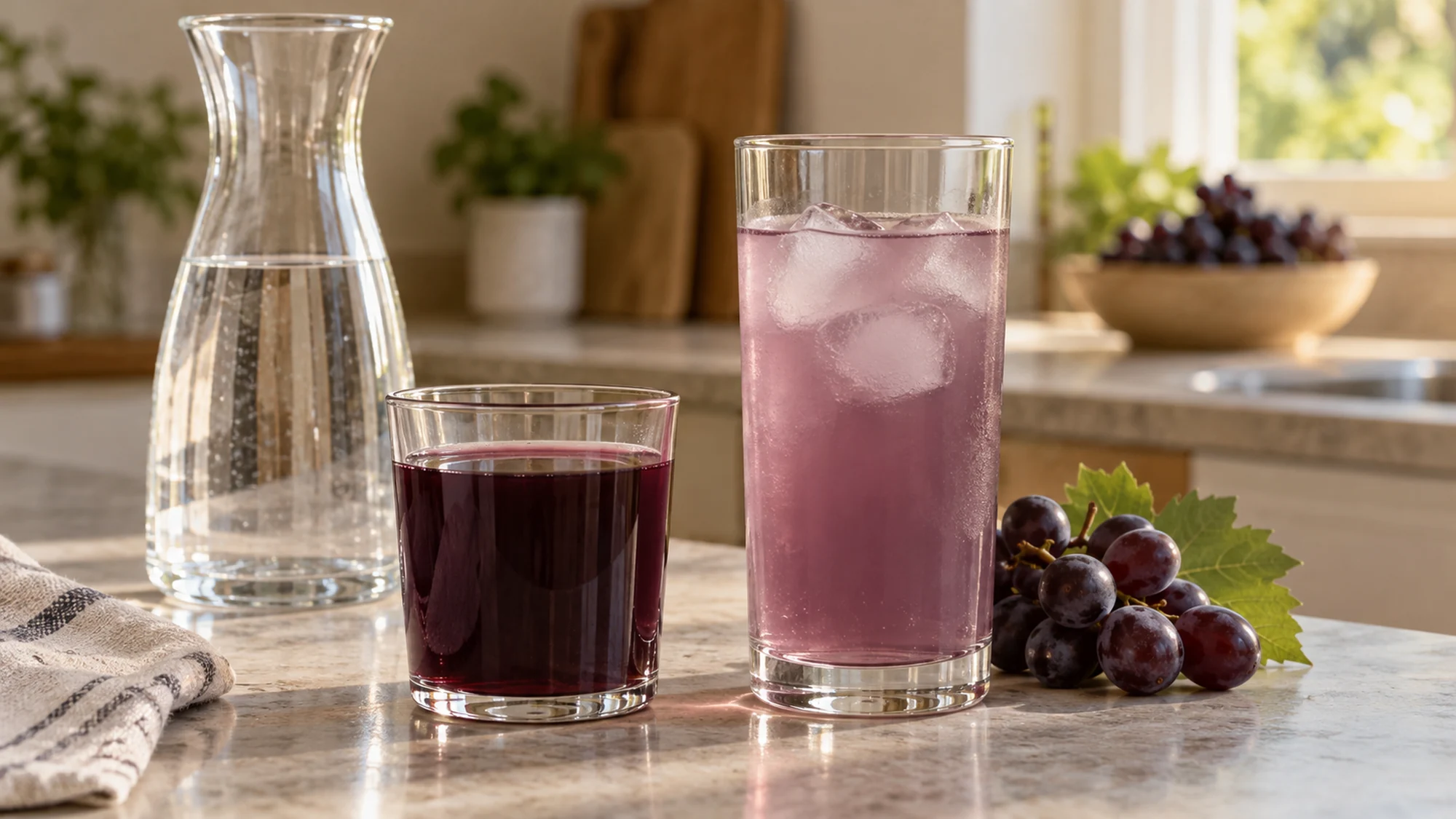
- Remember that adding water changes concentration, not the sugar already poured.
- If tracking carbohydrate for a medical reason, use your own care plan and the specific label.
Diluting a measured small portion can make a lighter drink. Diluting a large portion does not remove its sugar.
Whole grapes, juice, and children’s portions
Whole grapes retain fiber and give you something to chew, while juice is easy to drink quickly. The American Academy of Pediatrics favors whole fruit and says juice offers no nutritional advantage over it for children older than twelve months. Our guide to cherries and health claims also explains why whole fruit and juice evidence need separate consideration.
For young children, its juice-box guidance gives these daily limits, rather than targets to reach:
- Under twelve months: No routine fruit juice.
- Ages one to three: No more than 4 fluid ounces.
- Ages four to six: No more than 4–6 fluid ounces.
For young children, cut grapes into quarters lengthwise, then smaller pieces as needed to reduce choking risk. Do not offer juice at bedtime or use it to manage diarrhea or dehydration. Follow your pediatrician’s advice when a child has specific nutritional or medical needs.
Buy safely and pour with a purpose
Check whether juice has been pasteurized or otherwise treated to reduce harmful bacteria. The FDA’s juice safety guidance warns that untreated juice can cause illness, with greater risks for children, pregnant people, older adults, and people with weakened immune systems.
“Fresh-squeezed” is not a safety guarantee. Ask when treatment is unclear, especially for juice sold by the glass. At home, follow the bottle’s refrigeration and use-within directions after opening.
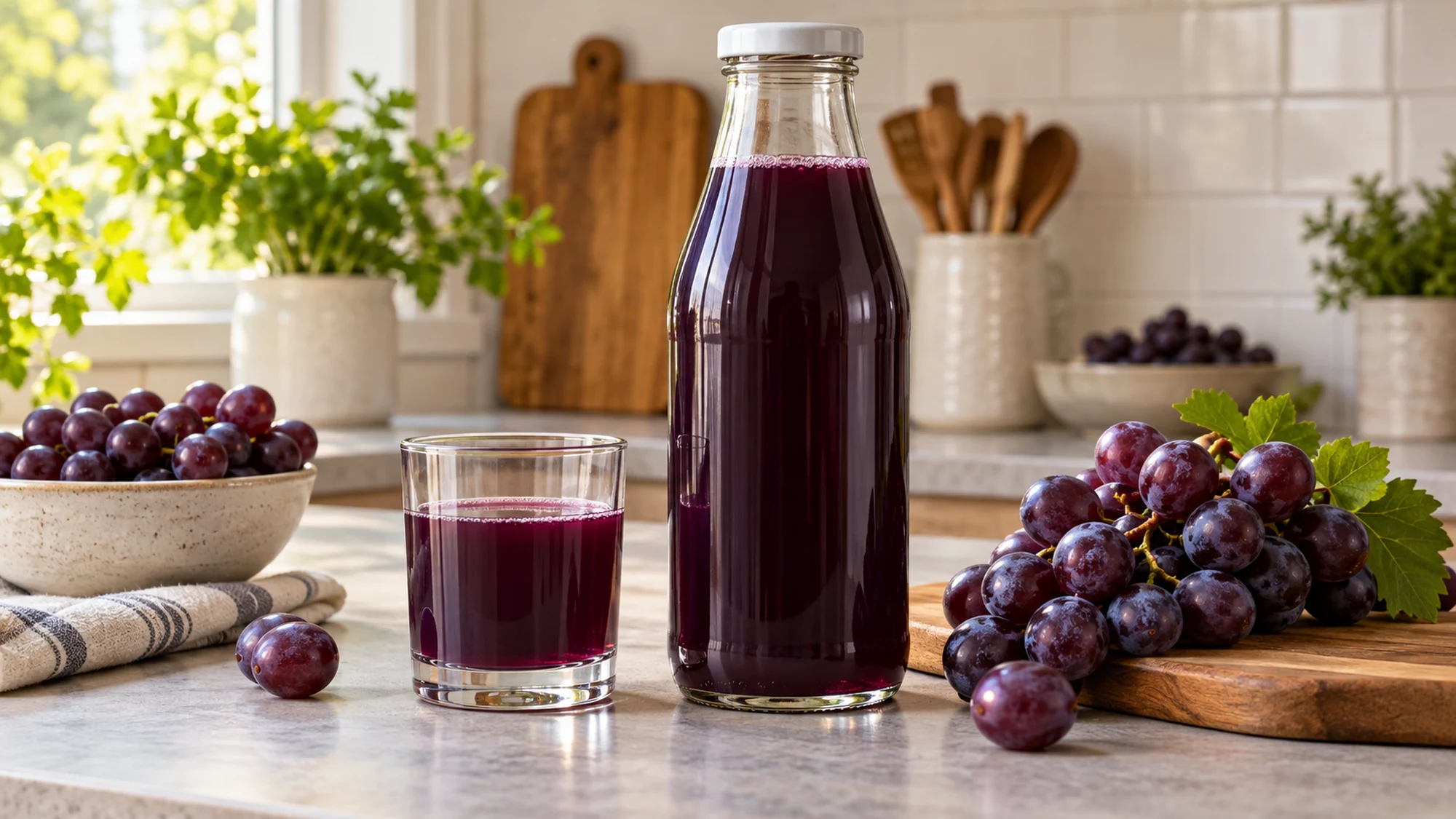
For a lighter-tasting drink, I would add a measured splash to plain sparkling water. Keep whole fruit in the picture, read the label that belongs to your bottle, and enjoy grape juice for its flavor without expecting it to prevent or treat disease.
Sources
- Welch’s: 100% White Grape Juice label
- Welch’s: Light Concord Grape Juice Beverage label
- FDA: Added Sugars on the Nutrition Facts Label
- AAP: fruit juice recommendations
- AAP: Juice Boxes
- FDA: juice safety

Emily Parker is DISHORA’s recipe-writing persona, bringing a warm, practical voice to everyday cooking. Her focus is simple ingredients, comforting flavors and clear steps that make a dish feel approachable. From cozy dinners to something sweet, Emily’s recipes invite readers to try something delicious and make it their own.