
An evening mug of green tea raises a small dilemma when you enjoy the flavor but want less caffeine. Switching to decaf sounds simple, until the questions about benefits, brewing, and bedtime begin.
Drinking decaf green tea usually means getting less caffeine than regular green tea, not eliminating caffeine completely. Choose it for a lower-caffeine tea option, follow the product’s brewing directions, and keep concentrated green tea extracts in a separate category.
I like the idea of choosing a tea because you enjoy the cup. It does not need a dramatic health promise to earn a place beside a book or an afternoon snack.
What drinking decaf green tea actually means
Green tea comes from the tea plant, Camellia sinensis. Decaffeinated green tea has undergone processing to remove much of its caffeine; it is still tea. A peppermint infusion, by comparison, comes from a different plant.
The FDA confirms that decaffeinated coffees and teas still contain some caffeine. There is no single number that reliably describes every decaf green tea, every tea bag, and every mug.
- Check the exact product: Look for a manufacturer caffeine range when available.
- Count the amount you drink: Several cups are different from one.
- Do not borrow a coffee figure: Decaf coffee’s caffeine range is not automatically the range for tea.
- Treat “decaf” as reduced caffeine: It is not a guarantee of zero.
If even small amounts of caffeine matter to you, the word “decaf” is the beginning of the label check.
Compare the drink with the right alternative
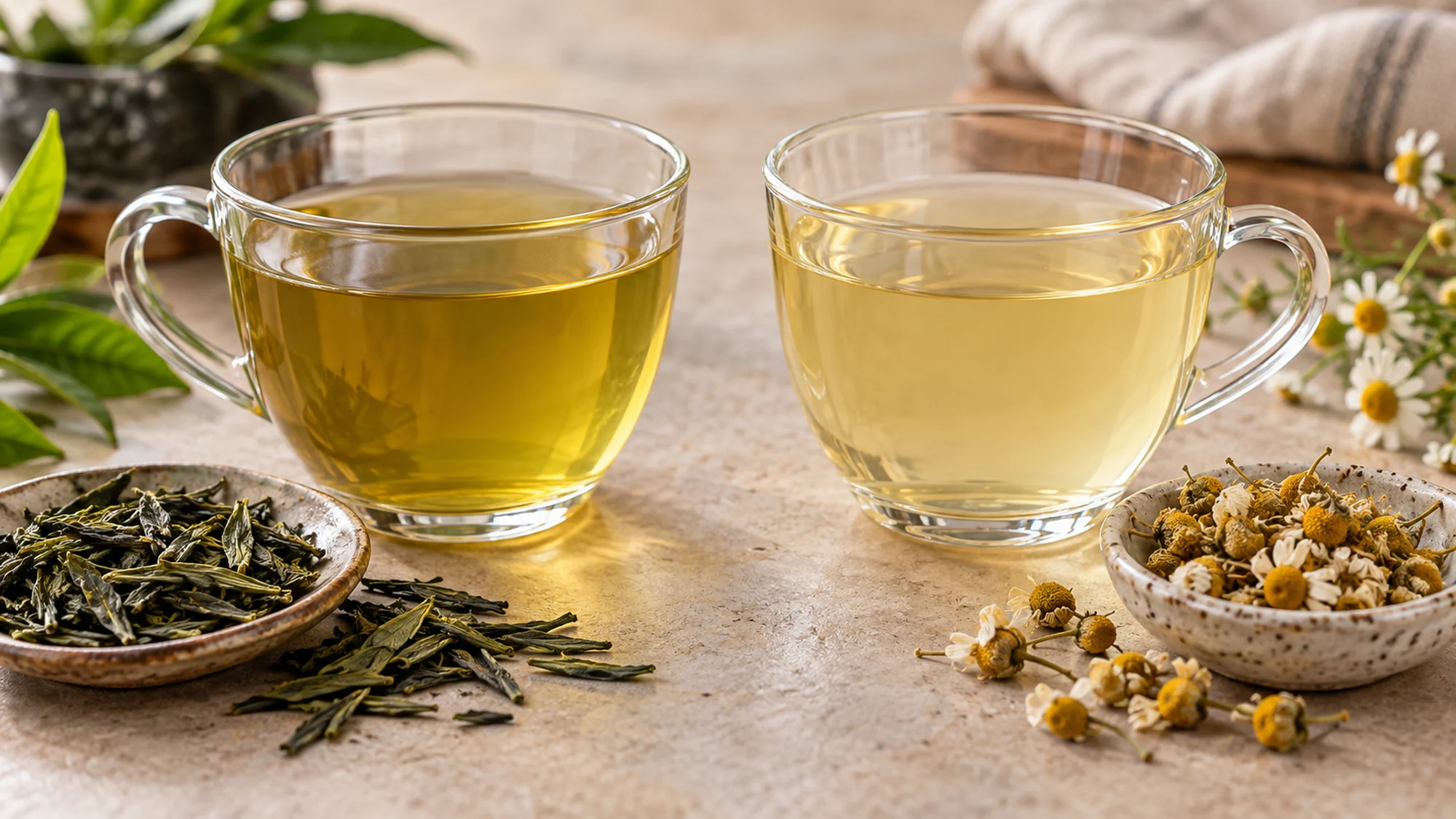
These categories answer different needs. The table describes the products themselves rather than assigning one caffeine figure to every brand.
| Option | Caffeine expectation | Useful label check |
|---|---|---|
| Regular green tea | Naturally contains caffeine | Serving size and brewing method |
| Decaf green tea | Reduced caffeine; some remains | Manufacturer’s product information |
| Pure peppermint or chamomile infusion | Naturally caffeine-free | Check for added tea or other ingredients |
| Green tea extract supplement | Composition varies | Dose, caffeine, and supplement warnings |
Twinings’ tea FAQ explains that pure peppermint and chamomile are naturally caffeine-free because they do not come from the tea plant. That does not make every herbal blend caffeine-free: read the complete ingredient list. Our chamomile tea guide also explains the limits of its sleep research.
I would choose decaf when I wanted green tea’s particular character. For strict caffeine avoidance, I would look for a clearly caffeine-free product and ask the manufacturer about anything unclear.
What about the benefits of decaf green tea?
Green tea contains plant compounds called catechins, which are often discussed in health research. But a compound’s presence does not prove that drinking a particular decaf tea will prevent disease, cause weight loss, or improve sleep.
The National Center for Complementary and Integrative Health’s green tea review says definite conclusions remain unavailable for most promoted uses. It also notes that many cholesterol studies examined extracts rather than brewed tea. Those results cannot simply be transferred to your evening mug.
- Enjoy tea as a drink rather than a treatment.
- Be skeptical of “detox,” fat-burning, or disease-prevention promises.
- Keep added honey, sugar, or syrup separate from the tea’s own nutrition.
- Remember that a comfortable ritual is a preference, not proof of a sleep effect.
Less caffeine is a clear reason to choose decaf. Broad health promises need evidence that matches the actual drink and outcome.
Brew the tea you bought
Start with the package directions rather than a universal green-tea rule. Products differ, and their instructions may call for different water temperatures and steeping times. A timer is useful here; an abandoned tea bag is a rather enthusiastic brewer.
For example, Bigelow’s decaf green tea directions call for water just below boiling and a four-minute steep. That is a product-specific starting point, not a direction for every green tea.
- Use the stated amount of water and tea.
- Follow the recommended temperature and time.
- Remove the bag or strain the leaves when the time is up.
- Taste before adding sweeteners or other flavors.
I prefer changing one thing at a time if the cup tastes too strong. Start with the maker’s directions, then adjust your next cup for flavor without assuming a shorter steep makes regular tea reliably decaffeinated.
When a little more care is useful
Lower caffeine does not mean decaf suits every situation. If you are highly caffeine-sensitive, monitor your response and seek product-specific information. During pregnancy or breastfeeding, discuss your overall caffeine intake with your clinician.
Brewed tea and concentrated supplements also deserve different decisions. NCCIH reports uncommon liver injury primarily with green tea extracts in tablets or capsules, and describes medication interactions, including with nadolol. If you take that medicine, discuss green tea with your pharmacist or prescriber; ask before using extracts alongside other medicines.
Choose a straightforward product, brew a cup you enjoy, and be clear about your goal. Decaf is a practical option for reducing caffeine, with no need to turn the mug into a supplement plan.
Sources
- FDA: caffeine, decaf drinks, and product labels
- Twinings: tea and caffeine FAQ
- NCCIH: Green Tea
- Bigelow: decaf green tea ingredients and brewing directions

Emily Parker is DISHORA’s recipe-writing persona, bringing a warm, practical voice to everyday cooking. Her focus is simple ingredients, comforting flavors and clear steps that make a dish feel approachable. From cozy dinners to something sweet, Emily’s recipes invite readers to try something delicious and make it their own.