
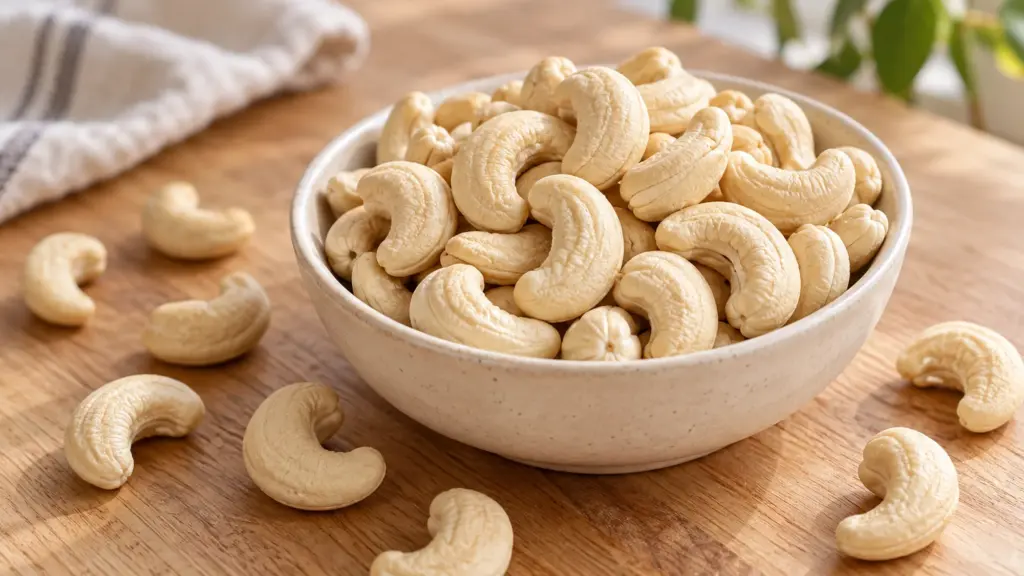
A bag of pale, curved cashews looks ready for almost anything: a quick snack, a creamy sauce or tomorrow’s lunch topping. Yet the words raw cashews raise a reasonable question. Does “raw” mean straight from the tree, or simply different from the golden roasted nuts beside them?
Raw cashews sold for cooking are shelled kernels, usually described in contrast to roasted cashews. The word “raw” alone does not confirm pasteurization or readiness to eat; read the package’s handling instructions.
I’d choose them for their mild flavor when a sauce needs creaminess without a pronounced toasted taste. First, though, separate three questions: how the shell was removed, whether the kernels received a validated safety treatment, and how you plan to use them.
What raw cashews means on the label
Commercial cashew processing removes the shell before the edible kernel reaches your kitchen. The Global Cashew Council’s processing overview describes multiple stages, including heat processing in the traditional method, shelling, drying, peeling and quality controls. A pale kernel is therefore different from a newly harvested in-shell cashew.
- Unroasted describes a culinary quality. The nut has not developed the deeper color and toasted flavor expected from roasting for eating.
- Pasteurized describes a safety treatment. Do not infer it from the word raw, organic, or from the nut’s appearance.
- Ready to eat is a separate check. Follow the specific manufacturer’s instructions rather than general internet reassurance.
For example, the current Nuts.com raw-cashew ingredient panel identifies its product as unpasteurized and recommends heat treatment before consumption. That is a product-specific warning, not proof that every bag is identical.
Raw and roasted cashews: choose by the job
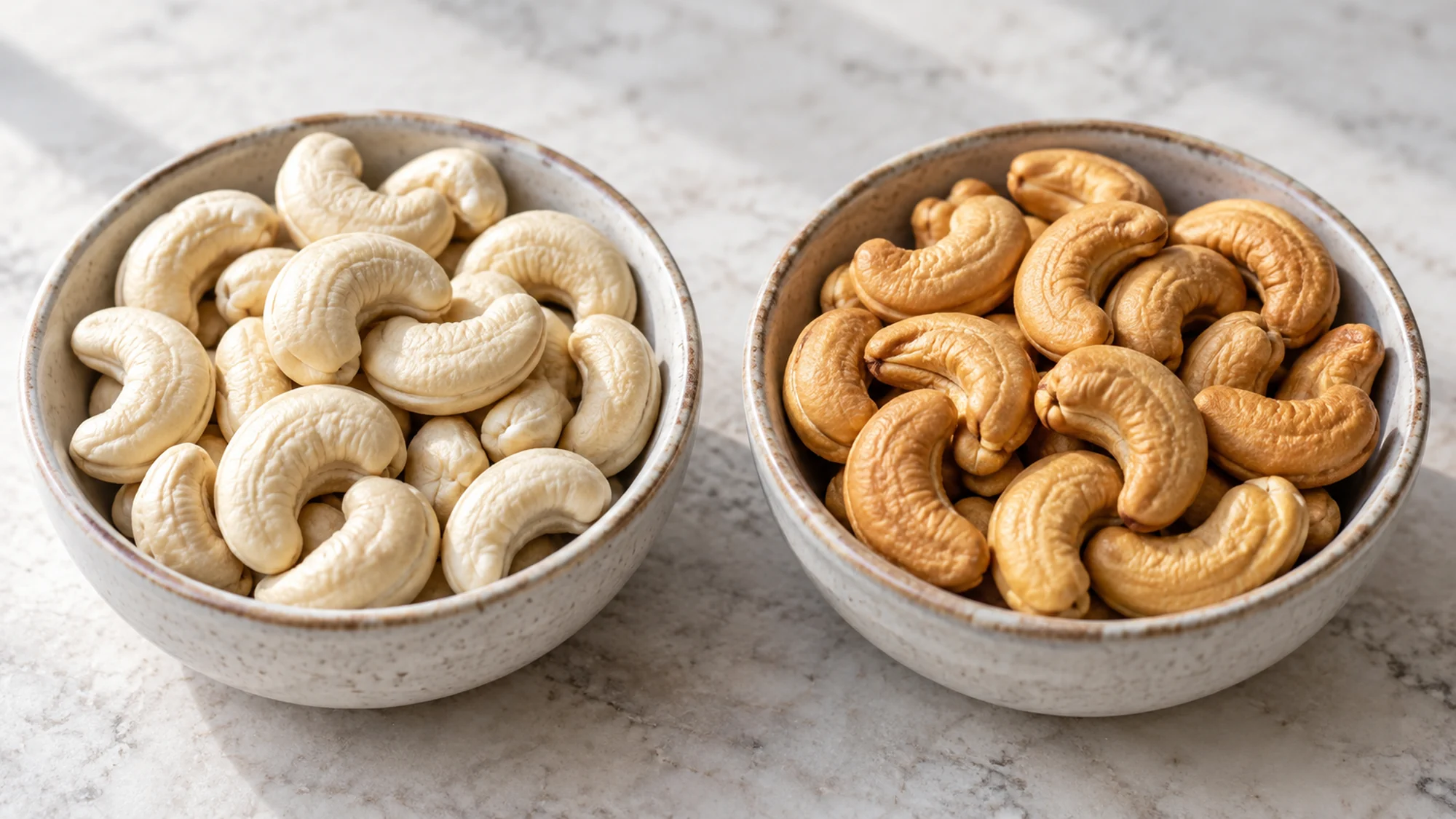
Both forms belong in the pantry, but they bring different flavors to the same dish. This comparison concerns ordinary plain kernels; coatings, salt and roasting oil depend on the product.
| Form | Useful for | What changes |
|---|---|---|
| Plain unroasted | Pale creams, sauces and adaptable cooking | Mild flavor; check handling directions |
| Plain roasted | Crunchy toppings and a toasted taste | Golden color and stronger nut flavor |
| Salted or flavored | Snacking and selected savory dishes | Added seasoning affects the finished dish |
| Broken pieces | Blending or chopping | Shape matters less; compare price by weight |
I prefer unseasoned kernels when flexibility matters. A chili-coated snack is delicious in its own setting, but it brings a rather firm opinion to a delicate cream sauce.
Where their mild flavor is useful
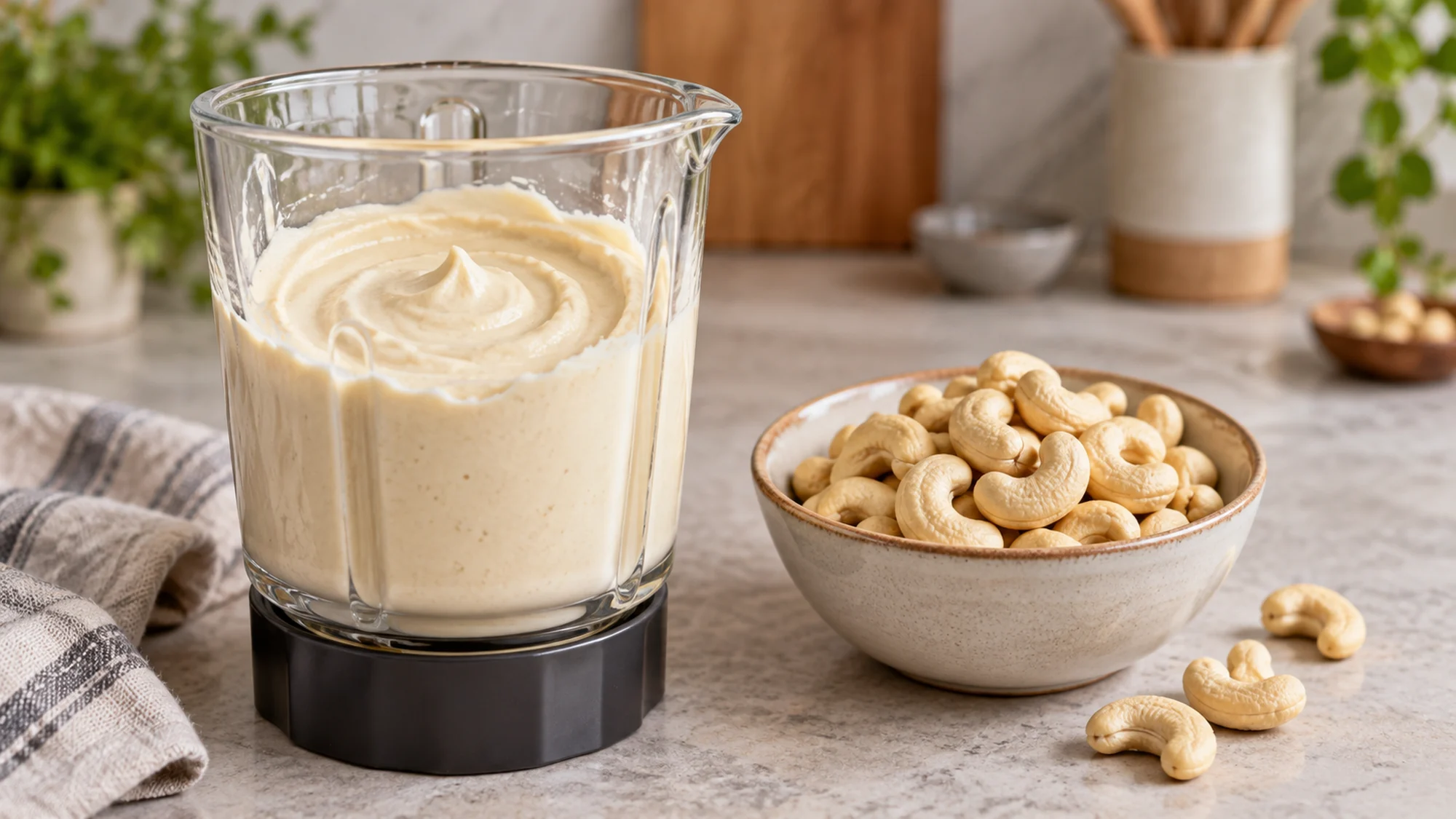
Cashews blend into creamy mixtures because the kernels contribute body as well as fat. The amount of liquid and the strength of your blender determine whether the result is a thick spread or a pourable sauce; “cashew cream” is not one fixed consistency.
- For a smooth sauce: Choose plain kernels and a preparation that follows the supplier’s safety directions. Soaking can soften texture, but it is not proof of pasteurization.
- For a topping: Decide whether you want mild pieces or a toasted crunch before substituting.
- For value: Consider pieces rather than whole decorative kernels when everything will be blended.
- For another creamy option: Dishora’s tofu-based vegan ricotta toast uses a different ingredient for its spread; it is not a cashew recipe.
Do not assume that swapping cashews for dairy preserves the protein, calcium or allergy profile. Compare the actual finished foods if that is the reason for the substitution.
Nutrition and allergy checks that matter
Cashews provide fat, protein and carbohydrate, rather than being a concentrated protein food alone. As one labeled example, the Nuts.com product lists 160 calories and 5 grams of protein per 30-gram serving. Your package is the better guide for its own serving size, sodium and added ingredients.
- Keep portions comparable. Compare equal weights when judging plain versus roasted products, rather than one handful against another.
- Read allergy information. Cashews are tree nuts. Roasting, soaking or blending does not make them an appropriate choice for someone with a cashew allergy.
- Check shared handling. Other ingredients and cross-contact information matter, particularly with bulk bins and flavored mixtures.
The FDA’s food-allergy guidance explains why reading labels and avoiding a diagnosed allergen remain essential. A dairy-free cream can still contain a serious allergen.
Buy what you will use and keep it protected
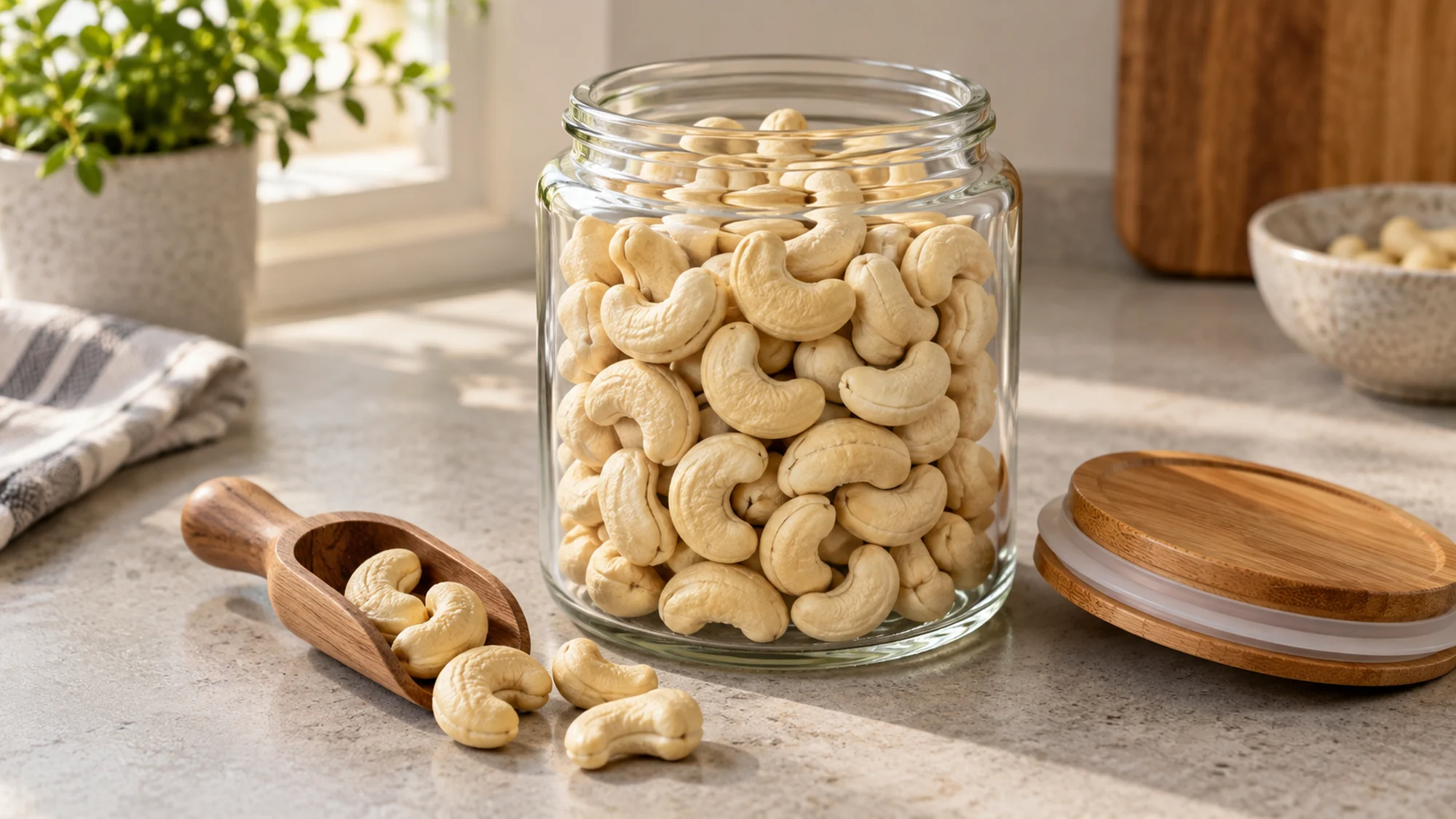
Choose an intact package, retain its lot and date information, and follow the storage directions. Keep kernels sealed away from moisture, heat and strong odors. Refrigeration can be useful when the supplier recommends it or your kitchen is warm; a closed container also prevents the nuts from picking up neighboring aromas.
- Choose smaller quantities if you rarely cook with cashews.
- Use clean, dry utensils and close the package after each use.
- Discard moldy, damp or noticeably rancid nuts; acceptable appearance is not a substitute for handling instructions.
Buy cashews for the flavor and texture you need, then let the package guide safe use. A pale color is a cooking clue, not a safety certificate.
Sources
- Global Cashew Council: processing and storage
- Nuts.com: product-specific handling and nutrition panel
- FDA: food-allergy information

Emily Parker is DISHORA’s recipe-writing persona, bringing a warm, practical voice to everyday cooking. Her focus is simple ingredients, comforting flavors and clear steps that make a dish feel approachable. From cozy dinners to something sweet, Emily’s recipes invite readers to try something delicious and make it their own.