
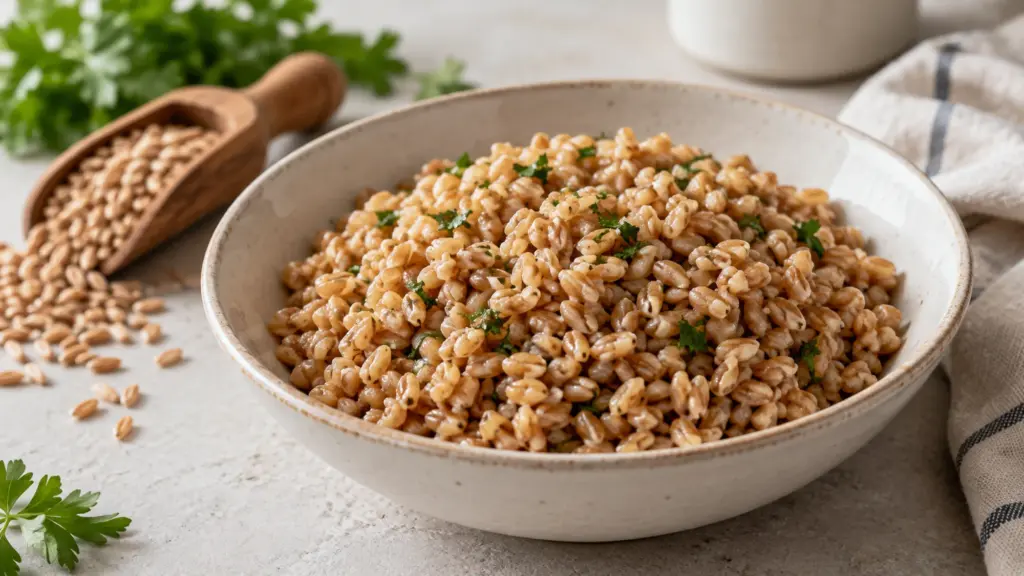
A grain bowl arrives with plump brown kernels that stay pleasantly chewy beside soft roasted vegetables. If you are wondering what is farro, start with that texture: it brings a little bite to a meal that might otherwise feel rather soft.
Farro is wheat, commonly emmer, sold as dried kernels for cooking in water or broth. It has a nutty flavor and a chewy texture. Farro contains gluten, and whole, semi-pearled and pearled versions differ in bran content and cooking time.
I’d choose it when I want a grain that holds its own against lemony dressing or a spoonful of beans. The most useful shopping skill is reading the processing description before deciding how long dinner will take.
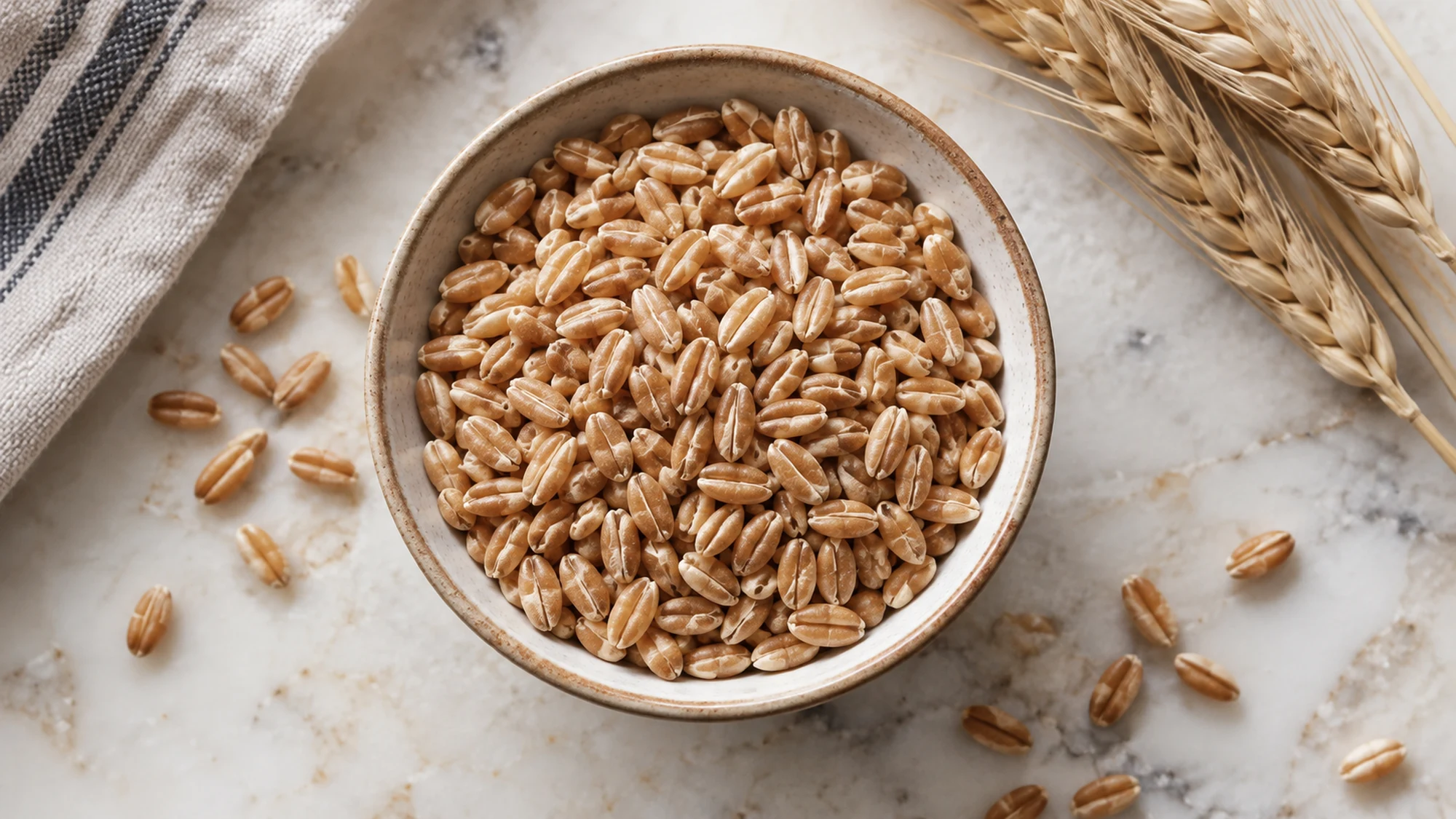
What is farro, exactly?
The Whole Grains Council identifies farro with emmer, an ancient form of wheat. Broader Italian usage can include related hulled wheats, so a package’s wheat variety and processing description are more informative than the word farro alone.
Farro is a grain rather than a pasta shape. Although the cooked kernels can resemble barley, barley is a different grain. Quinoa is different again: its smaller seeds cook into a much lighter texture. Use those distinctions to choose a result you will enjoy rather than expecting every grain bowl base to behave identically.
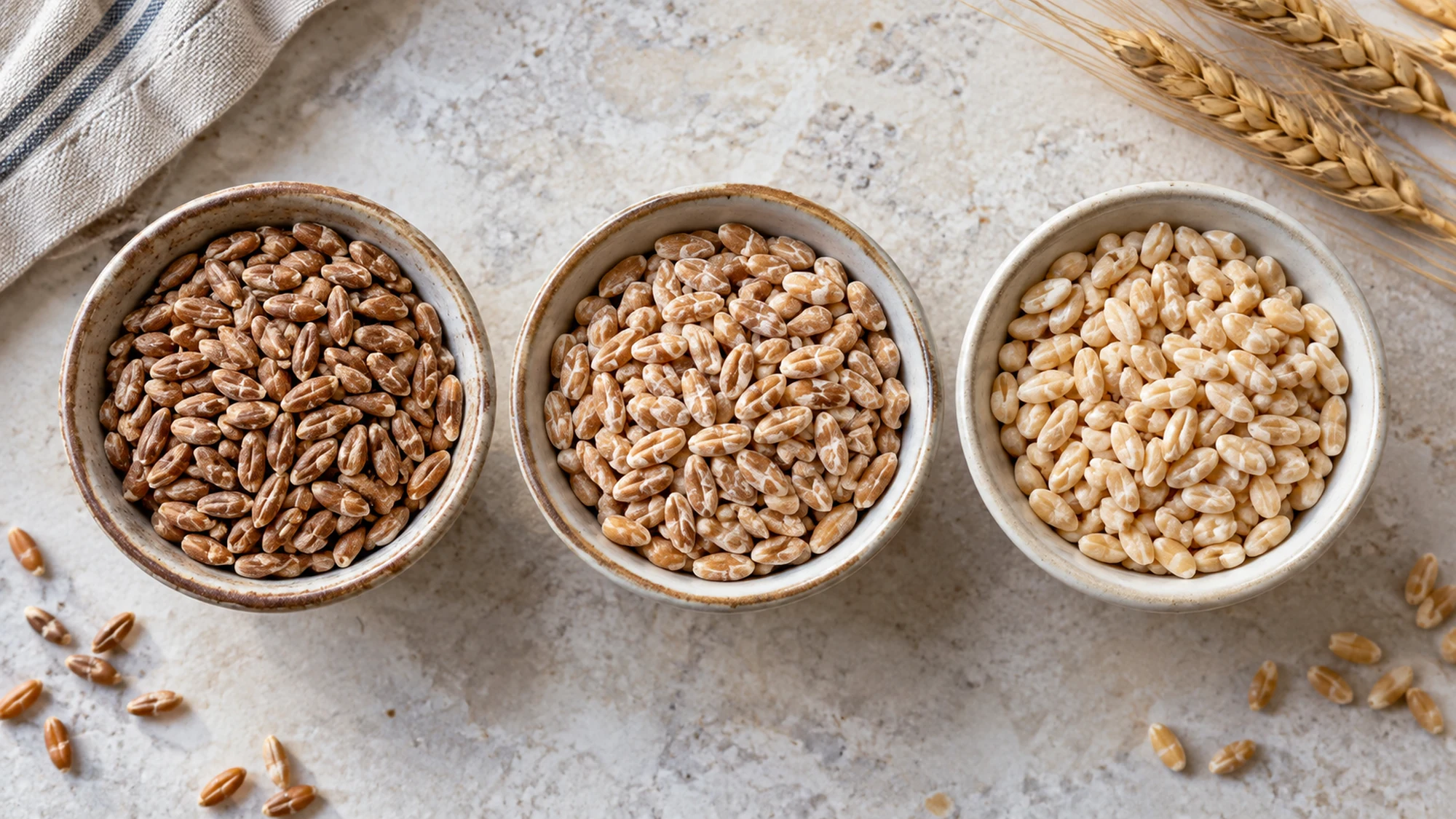
Whole, semi-pearled and pearled are different choices
Pearling removes bran from the grain. Bob’s Red Mill describes the three processing styles: whole farro keeps the kernel intact, semi-pearled loses some bran, and pearled loses the bran. Those differences affect texture, cooking and what remains in the finished grain.
| Package wording | Bran | Practical cue |
|---|---|---|
| Whole farro | Retained | Usually needs the longest cooking |
| Semi-pearled | Partly removed | Check the package’s specific timing |
| Pearled or perlato | Removed | Generally cooks faster |
| Quick-cooking | Processing varies | Follow that product’s instructions |
A product is a whole grain when its bran, germ and endosperm remain in their original proportions, as the Whole Grains Council definition explains. “Ancient” does not mean “whole,” and a brown-looking kernel is not proof. Choose whole farro if retaining the entire grain is your aim; pearled farro can be a practical choice when quicker cooking matters.
What does farro taste like?
Think gently nutty, wheaty and slightly sweet, with a more substantial chew than white rice. The exterior should become tender while the center offers pleasant resistance. A hard, chalky middle needs more cooking; an intact kernel does not automatically mean it is underdone.
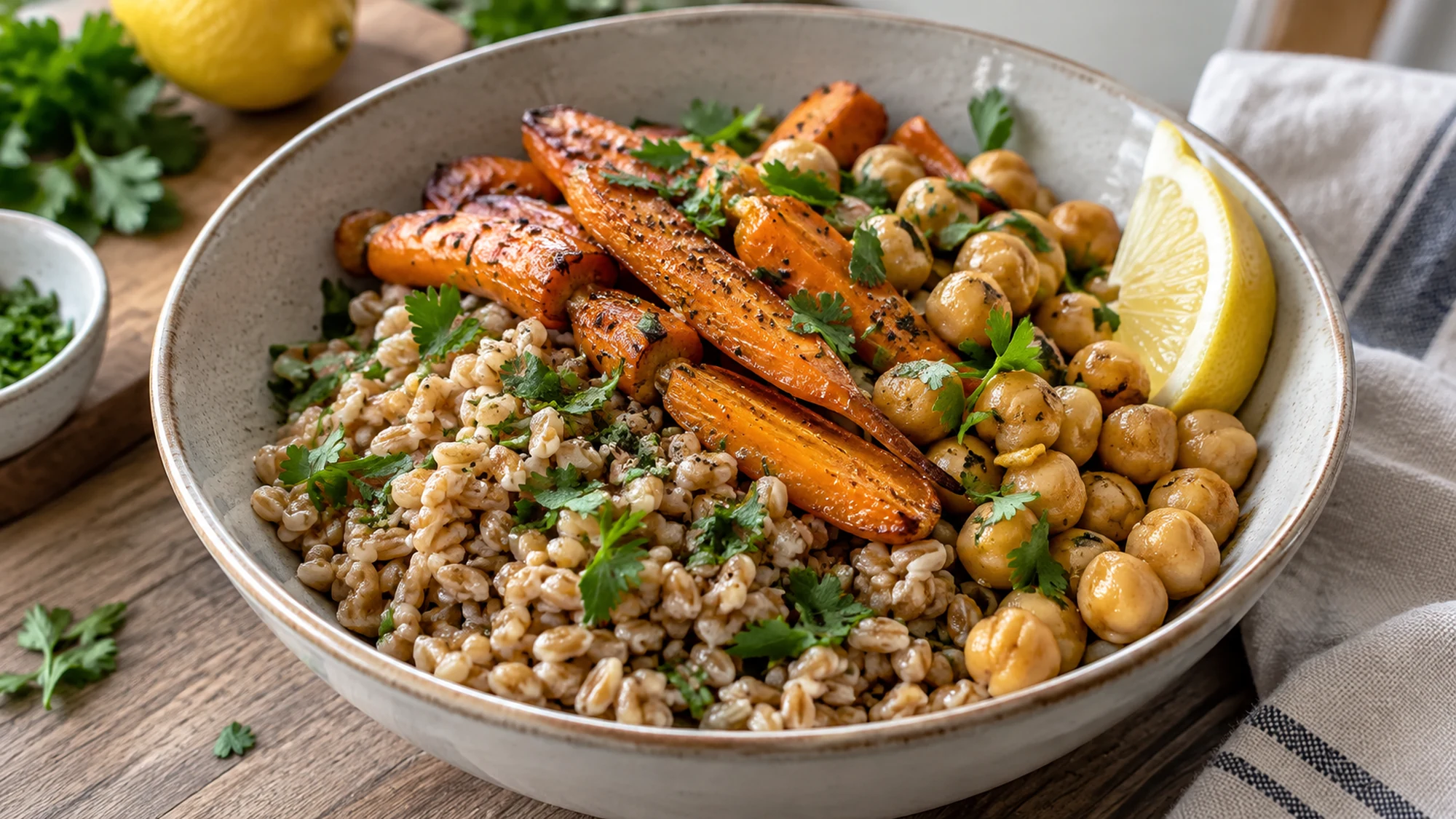
I prefer giving that chew something softer to sit beside. Roasted squash, white beans or cooked mushrooms make good partners, while a bright dressing keeps the bowl from tasting flat. For a cold salad, drain well so extra cooking water does not dilute the seasoning.
- Pair with roasted carrots, chickpeas, parsley and lemon for contrasting textures.
- Stir cooked farro into a vegetable soup near serving time when you want control over its tenderness.
- Use it beneath cooked chicken, fish or beans as the grain part of a meal.
- Try a small portion beside familiar foods before buying a large bag.
How to cook farro without guessing
Read the package first: processing, grain variety and pre-cooking can change the method. As a broad reference, the Whole Grains Council cooking guide lists 1 cup dry farro with 2½ cups liquid, simmered for 25–40 minutes, yielding about 3 cups cooked. That is guidance, not a guarantee for every bag.
- Check whether your product calls for soaking, rinsing or a particular liquid ratio.
- Simmer gently according to its instructions, then taste a few kernels before draining or serving.
- For a salad, aim for tender, separate grains with some chew.
- Remember that a quick-cooking package may need much less time than whole kernels.
Farro contains gluten, including ancient varieties
Farro is unsuitable for a gluten-free diet because it is wheat. USDA’s discussion of ancient wheats makes clear that their gluten-containing proteins rule them out for gluten-free uses. Soaking, rinsing or a traditional name does not change that.
If you need a different grain bowl base, consider a suitable gluten-free rice or quinoa product and check preparation for cross-contact. Dishora’s guide to quinoa in a rice cooker explains a lighter alternative; follow your own appliance’s instructions.
Farro’s appeal is its nutty flavor and satisfying chew. I’d start with a clearly labeled bag, match the cooking directions to that product, and pair it with foods you already like. Keep the essential distinction in mind: whole or pearled, farro is still wheat and contains gluten.
Sources
- Whole Grains Council: farro and emmer
- Bob’s Red Mill: whole, semi-pearled and pearled farro
- Whole Grains Council: whole-grain definition
- Whole Grains Council: cooking reference
- USDA: ancient wheats and gluten

Emily Parker is DISHORA’s recipe-writing persona, bringing a warm, practical voice to everyday cooking. Her focus is simple ingredients, comforting flavors and clear steps that make a dish feel approachable. From cozy dinners to something sweet, Emily’s recipes invite readers to try something delicious and make it their own.