
A chocolate wrapper can make a big promise in two small words. Turn it over, though, and the useful details are usually in the serving size, ingredient list, and Nutrition Facts panel.
Sugar free chocolate contains very little sugar under U.S. labeling rules, but it can still contain carbohydrates, fat, and substantial calories. Compare equal portions, identify the sweetener, and choose something you actually enjoy. The claim alone does not tell you how the whole chocolate fits your needs.
What sugar free chocolate means
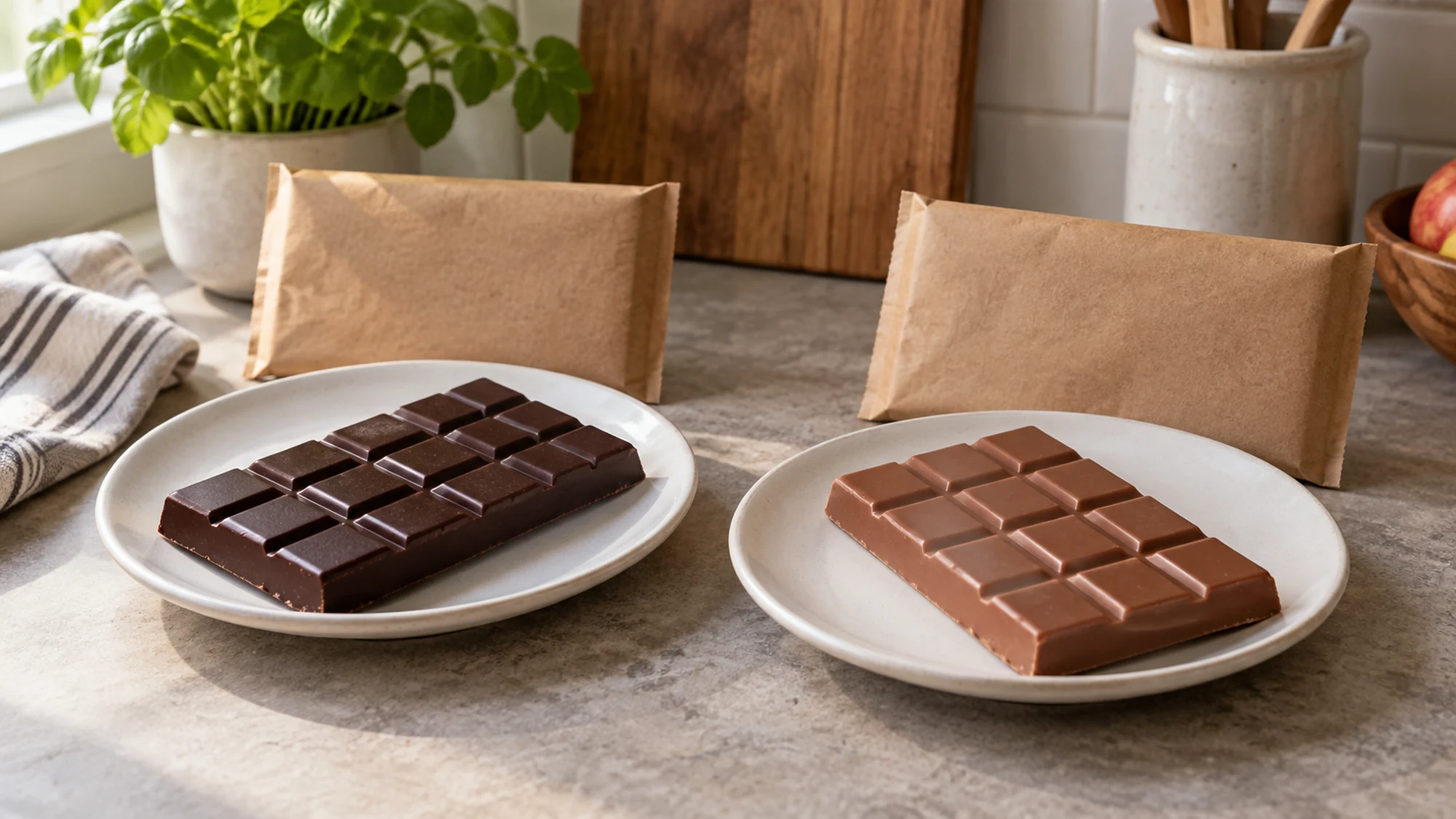
In the United States, a sugar-free claim generally requires less than 0.5 gram of sugars per reference amount customarily consumed and per labeled serving. The rule also sets conditions for sugar-containing ingredients and calorie disclosures, so “sugar free” is a defined label claim rather than a promise that every square contains absolutely zero sugar.
“No added sugar” means something different: it describes what was added during processing and does not automatically mean the finished product has no naturally occurring sugars. The current federal labeling rule explains both terms. I prefer checking the small print first; it keeps the front of the wrapper from doing all the talking.
| Label wording | What it tells you | What to check separately |
|---|---|---|
| Sugar free | A tightly limited amount of sugars | Calories, total carbohydrate, and sweeteners |
| No added sugar | A claim about added sugars during processing | Naturally occurring sugars and serving size |
| Dark chocolate | A chocolate style | The actual sugar amount |
| Dairy free | A claim about dairy ingredients | Sweeteners and any allergy information |
A dark wrapper or a high cocoa percentage is not enough to establish that a product is sugar free. Likewise, a sugar-free claim does not establish that a bar is dairy free. Read the relevant information for each requirement separately, particularly when buying a gift for someone with dietary restrictions.
What replaces the sugar?
Some products use sugar alcohols, also called polyols, such as maltitol, sorbitol, or erythritol. Others use intensely sweet ingredients such as stevia-derived sweeteners or monk fruit extract, sometimes alongside other ingredients that provide bulk. The FDA’s sweetener overview helps explain these different ingredient families.
The combination matters more than a single name printed on the front. A bar advertised with stevia can still contain additional sweeteners, so scan the full ingredient list. I would choose a small package of an unfamiliar formulation before committing to a multipack; sweetness and aftertaste are personal preferences.
- Look for the complete sweetener blend.
- Check whether the portion is one piece or several.
- Compare plain chocolate with plain chocolate, rather than a filled candy.
- Keep the package until you know whether you like the product.
Why serving size and comfort matter
The FDA notes that sugar alcohols can cause gas, bloating, or diarrhea in some people. Tolerance varies, so an ingredient that suits someone else may not suit you, especially if you eat a larger amount. A label warning about a laxative effect deserves attention.
Sugar alcohols are carbohydrates, and sugar-free foods may still supply significant calories and fat. The FDA’s sugar alcohol guide specifically recommends comparing their Nutrition Facts with the regular versions. If carbohydrate management is part of your medical care, use your individualized plan and the actual panel rather than assuming a zero-sugar claim makes a product an automatic fit.
For a useful comparison, work through the label in this order:
- Match serving weights in grams.
- Compare calories and total carbohydrate.
- Read total sugars and added sugars.
- Check saturated fat and the ingredient list.
- Consider the amount you intend to eat.
Choose for the way you will use it
For eating a few squares, prioritize a texture and flavor you find satisfying. For baking, choose a product the manufacturer identifies for that use and follow a recipe written for it. Swapping chocolate can change sweetness and how a finished dessert behaves; a front-label claim does not guarantee an equivalent result.
I like the idea of a smaller amount of chocolate that tastes right to me, rather than buying a large bag solely because of a nutrition claim. Price matters, too: compare cost per ounce, then consider whether an unfamiliar flavor or texture is likely to leave most of the package uneaten.
Our tahini date bark illustrates another label distinction: a treat made with dates and dark chocolate still contains sugar. It is not a sugar-free recipe.
A better way to shop for chocolate
Start with your purpose, whether that is reducing sugar, finding a particular flavor, or choosing something for baking. Then let the complete label answer the practical questions. There is no need to turn the chocolate aisle into an exam, but two minutes of comparison can prevent an expensive mismatch.
Sugar free chocolate can be one option on the shelf. Choose it for a clear reason, compare a realistic portion, and pay attention to both enjoyment and digestive comfort. The best information is the full label, not the biggest words on the wrapper.
Sources
- Federal sugar-content claim requirements
- FDA: sweeteners used in foods
- FDA: sugar alcohols and Nutrition Facts

Emily Parker is DISHORA’s recipe-writing persona, bringing a warm, practical voice to everyday cooking. Her focus is simple ingredients, comforting flavors and clear steps that make a dish feel approachable. From cozy dinners to something sweet, Emily’s recipes invite readers to try something delicious and make it their own.