

A lemon slice can make an ordinary glass of water feel like something you chose on purpose. If you are looking up lemon water benefits, the most reliable answer is refreshingly simple: it supplies fluid, and its bright flavor may make water a more appealing everyday choice.
Lemon water can help you stay hydrated and replace a sugary drink when you leave it unsweetened. Lemon adds flavor and some vitamin C, depending on the amount of juice, but a glass is not a detox treatment or a proven fat-burning shortcut.
I’d give the lemon credit for making water taste interesting, without asking it to perform a medical miracle. Cold, room-temperature or comfortably warm is largely a matter of what you enjoy.
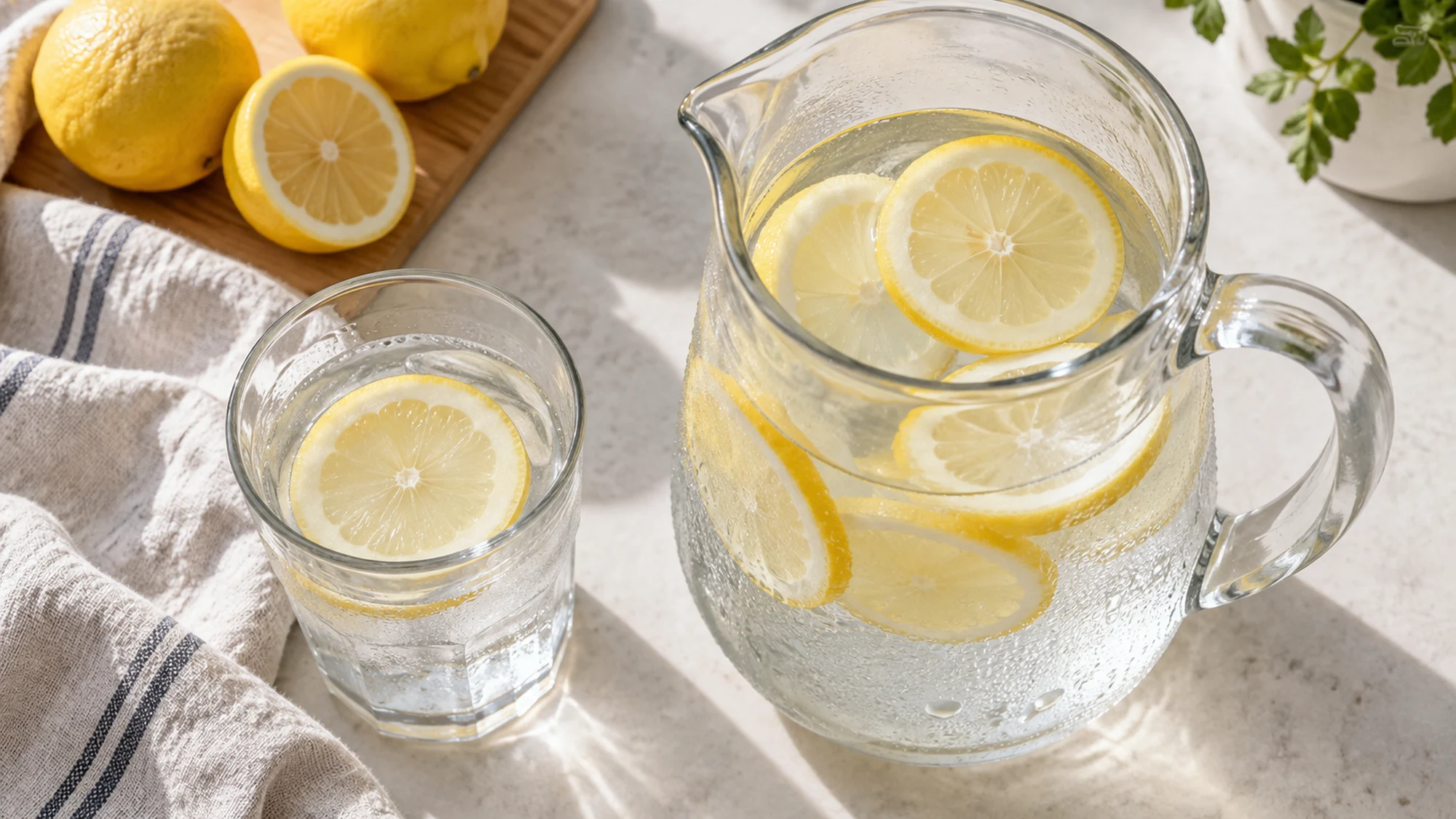
The clearest lemon water benefits start with the water
The CDC’s guidance on water and healthier drinks explains that water supports temperature control, joints and waste removal. Adding lemon does not create those functions; it gives you another way to drink the fluid your body needs.
Replacing a sugary drink with unsweetened lemon water can reduce the calories and added sugar coming from that drink. Adding it alongside the same drinks and meals is a different situation, so the swap matters more than the lemon itself.
- For everyday drinking: Keep plain water available, and use lemon when you want a change.
- For sweetness: Remember that honey, sugar and sweetened mixes change the drink.
- For fluid needs: Heat, activity and individual health needs affect the amount; more is not automatically better.
A useful habit is one you can repeat comfortably. There is no special morning deadline or requirement to drink lemon water before breakfast.
What lemon adds—and what a slice cannot promise
Lemon is a citrus fruit, but lightly flavored water is not nutritionally identical to eating a serving of fruit. The amount of juice squeezed in matters; a floating slice does not establish a reliable vitamin C amount.
The NIH Office of Dietary Supplements explains vitamin C’s roles in collagen formation, iron absorption and normal immune function. Those roles do not prove that a small squeeze prevents illness or produces visible skin changes.
| Choice | Useful distinction |
|---|---|
| Plain water | Hydration without citrus acidity or added sugar |
| Water with a little lemon | Fluid plus citrus flavor; vitamin C depends on juice amount |
| Sweetened lemonade | Sugar and calories depend on the ingredients and portion |
| Whole citrus fruit | A food with edible flesh; not interchangeable with flavored water |
I prefer thinking of lemon water as a drink choice. A varied plate does more nutritional work than trying to make one glass cover everything.
Detox, weight loss and kidney-stone claims need context
NCCIH’s review of detoxes and cleanses finds no compelling research supporting detox diets for removing toxins or managing weight. Calling lemon water a cleanse does not make the claim evidence-based, and it is not a reason to replace meals.
Kidney stones also need more nuance than a universal lemon-water instruction. NIDDK emphasizes adequate liquid, mainly water, and advice tailored to stone type. A casual squeeze is not a prescribed citrate treatment or a replacement for a prevention plan.
- Weight: A lower-calorie beverage swap can help reduce intake; lemon itself is not a proven shortcut.
- Stones: Ask about the type of stone and the fluid plan appropriate for you.
- Medical fluid limits: Follow your clinician’s advice instead of a blanket online water target.
The sensible benefit is the drink you actually choose. Avoid turning a pleasant flavor into a promise about disease.
Protect your teeth from frequent acid exposure
Lemon juice is acidic. The American Dental Association’s dental-erosion guidance explains that repeated contact with acidic drinks can wear tooth enamel, even when a drink contains no added sugar.
That is a reason to think about drinking habits, especially if you tend to nurse one tart bottle all afternoon. A stronger lemon flavor is not a higher-benefit score, and sourness does not tell you exactly how your teeth will respond.
- Have acidic drinks with a meal rather than repeatedly between meals.
- Do not swish or hold the drink around your teeth.
- Rinse with plain water afterward; avoid brushing immediately after an acidic drink.
- Ask your dentist about sensitivity or existing enamel erosion.

Choose the version that suits your day
Use washed fresh lemon and clean drinking equipment, then adjust the flavor to your preference. You do not need an elaborate ritual, a special bottle or a concentrated shot. If citrus bothers you, plain water remains a perfectly useful option.
For a different drink project, DISHORA’s guide to making iced tea explores tea flavor and preparation. Keep sweetener and caffeine in mind when comparing it with simple lemon water.
Enjoy lemon water because you like its fresh taste and it helps you choose water. Keep the rest ordinary: regular meals, appropriate fluids and a little consideration for your teeth.
Sources
- CDC: water and healthier drinks
- NIH Office of Dietary Supplements: vitamin C
- NCCIH: detoxes and cleanses
- NIDDK: diet and kidney-stone prevention
- American Dental Association: dental erosion

Emily Parker is DISHORA’s recipe-writing persona, bringing a warm, practical voice to everyday cooking. Her focus is simple ingredients, comforting flavors and clear steps that make a dish feel approachable. From cozy dinners to something sweet, Emily’s recipes invite readers to try something delicious and make it their own.